Capturing the soft spirit of rocks and stones
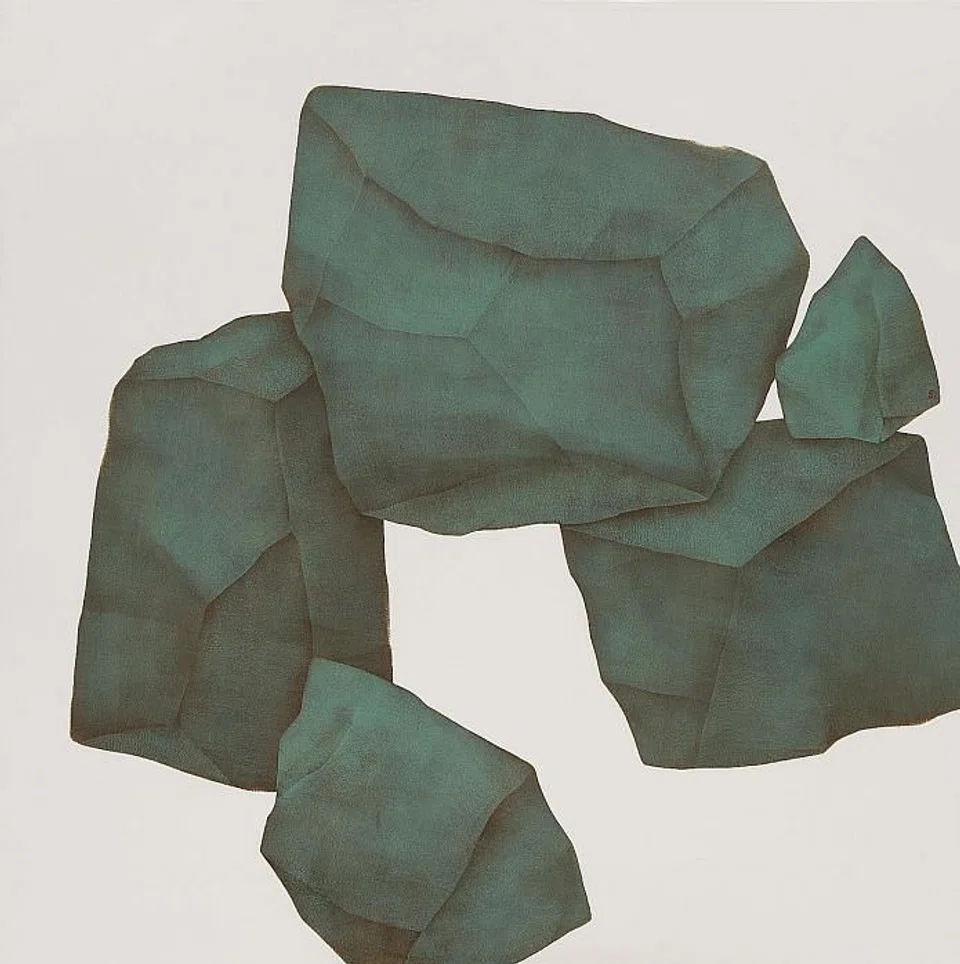
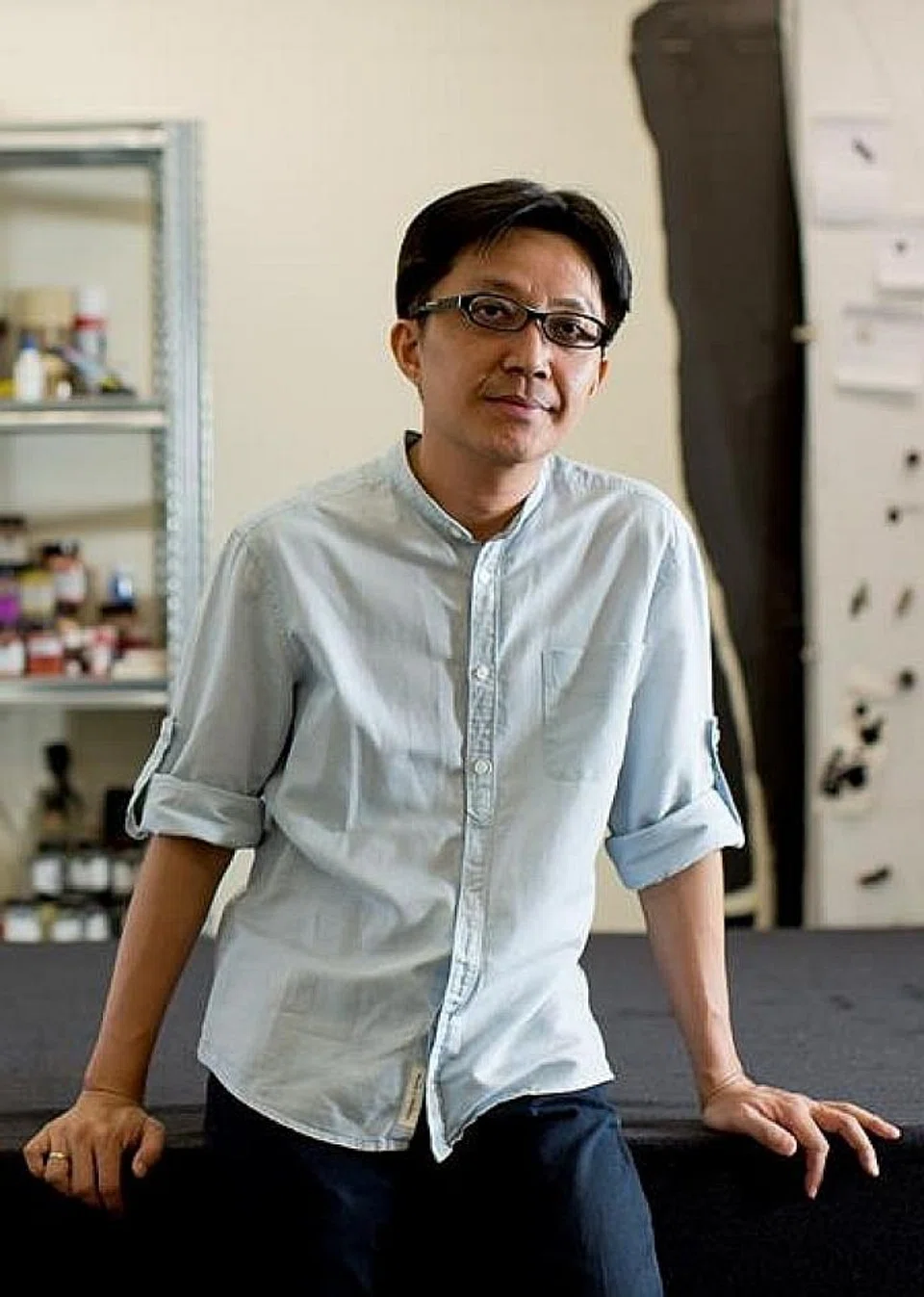
BEST-known for his delicate ink-on-rice-paper "rocks and stones" series, Chinese artist Tay Bak Chiang has added a new dimension to his works - by switching to canvas.
"It's a new development for me," relates the 41-year-old artist who started his rocks series in 2009, after being struck by the formations at the stone quarry in Bukit Timah Hill.
Despite the change of media, he still carries on the traditional Chinese art of emphasis on nature, while imbuing his static subjects a sense of inner spirit.
"I switched to painting on canvas because I could get a wider range of sizes, and it was also difficult to find good quality rice paper and to get them backed and framed well," he explains.
The switch was initially for practical reasons, but once he started - he liked the feeling and the result. Tay still uses the same materials he used before - such as the pigment powder and Chinese brushes, but for canvas, he gives it a base layer of water-based acrylic paint first. "It's like watercolour, but doesn't peel off when dry."
The "rougher" base gives his painting a different effect, and as the background is no longer plain white, Tay started giving his paintings a 3D dimension. "I was back to a new point - so I had to reconsider my execution," he adds.

For his 2009 series, Tay painted the rocks in black and white, and then in colour."
He returned to the hill two years ago and noticed that over the years, the rocks and boulders had changed colour. "They can be in shades of orange or even purple, and this time I took more notice of the formations," he relates.
The formations so fascinated him that he could even find a link to symbolism in classical Chinese literature. He spotted the beak of a crow, for example, and the shape of a dragon. He named the works Vermillion Bird and Azure Dragon respectively. These animals are considered guardians of the gods in Chinese tradition.
Giving the stones a sense of personality was not intended by the artist, who did it almost subconsciously until it was pointed out by independent art writer and former Singapore Art Museum director, Kwok Kian Chow.
For this exhibition at iPreciation, Tay did a total of 26 new paintings, with two works reflecting his early crossover from rice paper to canvas, when he still painted the stones with a 2D perspective. Paintings from 100cmx100cm are now priced from S$7,500 while the largest painting, 2x3metres, is priced at S$33,000.
There is a general view that canvas is most long-lasting, but in fact, points out Tay, good quality rice paper can last very long as well. "In Chinese art, the saying is that paper can last 1,000 years, and that like a human being, it has a life." Now on canvas, it's Tay's paintings of rocks and stones that have gained a new life, one reflected in their artistic 3D depictions.
'Cleavages Fractures Folds' - a solo exhibition by Tay Bak Chiang is on from now until Oct 25. The artist will conduct a walk-and- talk session on Oct 4, at 11.30am. iPreciation is located at 50 Cuscaden Road HPL House #01-01. Gallery hours are from Mon - Fri: 10am - 7pm and Sat: 11am - 6pm
Share with us your feedback on BT's products and services