

CGSI boosts financial literacy for people with intellectual disabilities
The investment firm runs workshops to give guidance on handling money, receiving change, comparing prices and saving


[SINGAPORE] Three dollars for a slice of cake is normal, but $30 would be a rip-off. Seven dollars for a plate of roti prata with curry chicken sounds about right, but $70 would be daylight robbery.
Most Singaporeans instinctively know this. But for a person with intellectual disabilities, these everyday price signals are not always intuitive. Many struggle to recognise notes and coins, understand what things should cost, or calculate the change they should receive.
Sometimes, they freeze at the cashier and hold up queues as they try to figure out how much they have.
To bridge this gap, CGS International Securities Singapore (CGS SG) has launched a financial literacy programme tailored for those with intellectual disabilities – some of whom have been cheated at shops, or have avoided buying things altogether because of low confidence.
At a recent two-hour workshop at the Minds Bukit Batok Satellite Hub, participants learned how to recognise money, distinguish needs from wants, compare prices, understand basic spending and saving concepts, and spot suspiciously inflated prices.
The session culminated in a practical exercise where they bought simple items – fruit, biscuits, soap, pencils and other goods – from a makeshift shop manned by CGS SG staff.
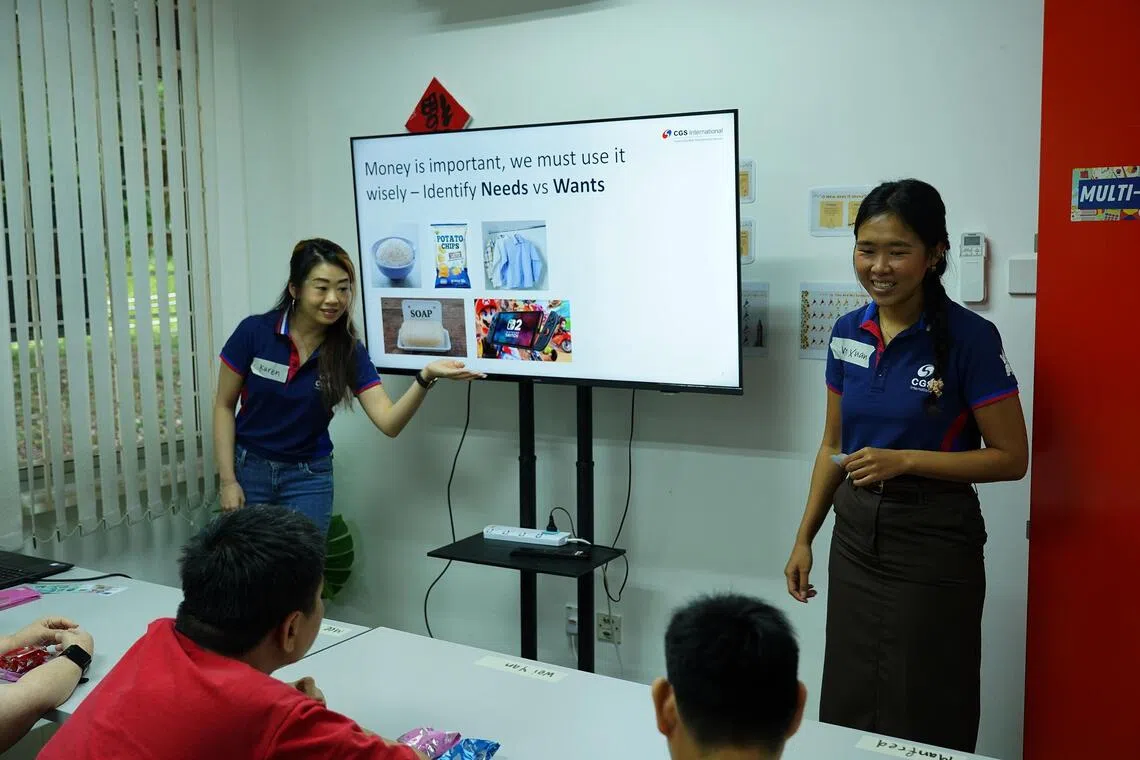
CGS SG chief executive officer Malcolm Koo said: “Financial literacy shouldn’t be reserved for investors or adults with full cognitive abilities. Basic money skills are part of living with dignity, and we believe everyone deserves access to that.
“Knowing what a fair price looks like, recognising money, and having the confidence to complete a transaction without fear – these are skills we want to impart to make real-world situations feel safe for our participants.”
The workshop is part of a broader commitment by CGS SG, which signed a memorandum of understanding with social service agency Minds in November 2024 to make financial literacy more accessible to persons with intellectual disability and their caregivers.

The firm also runs money-management programmes for people living with dementia, and has collaborated with Minds, TRCL and The Business Times on an art competition for artists with intellectual disabilities under the 13-19 Art Prize banner.
For the programme to be truly effective, repetition and real-world exposure are essential, said Adele Wong, senior manager for strategic communications and engagement at Minds.
“Financial literacy is something we strongly want to advocate. But we don’t always have the resources or the expertise to teach it in a structured way. That’s why partnerships like this are important,” she said.
The Bukit Batok participants in a recent workshop were mostly higher-functioning adults considered “moderate” on the spectrum. Wong, noting the differences in abilities among them, said: “Some can grasp concepts like giving $10 and receiving $7 change, but others may not connect the dots. They get overwhelmed by variable price items like economy rice and lose confidence.”
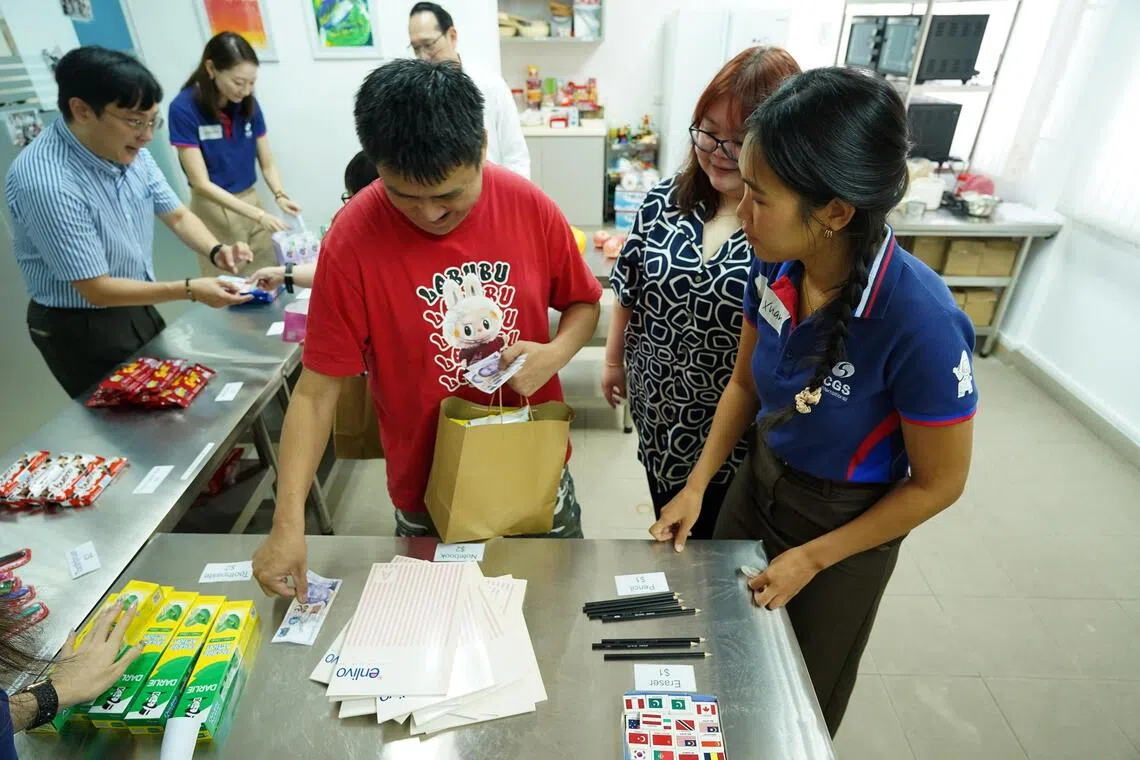
Under future phases of the programme, clients, guided by volunteers, will visit nearby mini marts or supermarkets to practise handling real cash. Handling cashless payments is also on the curriculum.
For caregivers like Chia Lee Chin, whose intellectually disabled daughter Mee Fong turns 50 next year, the programme offers reassurance. “She understands money, but she never really sees the price – she just likes to buy things,” Madam Chia said with a laugh.
For Koo, success is measured not in arithmetic but in confidence. “If a participant can walk into a shop, choose what they need, pay fairly, and walk out feeling in control – that’s financial literacy. That’s inclusion.”
Decoding Asia newsletter: your guide to navigating Asia in a new global order. Sign up here to get Decoding Asia newsletter. Delivered to your inbox. Free.
Copyright SPH Media. All rights reserved.
TRENDING NOW

Once staunchly pro-China, Malaysian Chinese businesses are now distancing themselves from Beijing

Looking beyond looming CEO succession, should UOB potentially pursue a transformative merger?

Could stablecoins be the future of money?

Grab CEO’s wife Chloe Tong on life with Anthony Tan and finding her purpose

