
Charities need to make money, too
As the giving landscape evolves, these organisations need to be more entrepreneurial without losing their core purpose
 Add BT as a preferred source

[SINGAPORE] Innovation, sustainability and long-term. These buzzwords surround not just for-profit organisations, but charities and social service agencies, too.
As more of these organisations have emerged to address new and diverse social causes including the environment, arts and sports, competition for funding has intensified as well.
That’s backed up by an increase in the number of charities. Case in point: There were 2,398 registered charities – social service agencies included – in 2023, based on the Ministry of Culture, Community and Youth’s (MCCY) annual Commissioner of Charities report for that year. That was up from 2,217 in 2015.
With more giving platforms available, charities must also find new ways to stand out and sustain support, noted Abhimanyau Pal, chief executive officer of SPD. The local charity focuses on helping individuals with disabilities.
“(They) are expected to be innovative, tech-enabled and sustainable in how they run their operations – much like businesses,” he added. “Funders and donors also expect good governance, transparency, measurable outcomes and compelling impact stories.”
But the reality is that impact is not always easy to track or quantify – especially for social services, where change can be lengthy and complex, he said.
Navigate Asia in
a new global order
Get the insights delivered to your inbox.
“In our experience, current economic uncertainties have also made long-term partnerships harder to come by, posing an additional challenge for charities seeking sustainable, multi-year support.”
Therefore, government support – such as the S$7.5 million fund launched by the National Council of Social Service in July this year – remains crucial.
However, “the funding criteria and compliance requirements have become more stringent, with higher expectations placed on accountability such as governance, data and cybersecurity, as well as outcomes”, Pal noted.


Charles Tan, senior director of philanthropy at The Majurity Trust, also noted that the giving landscape has changed.
“Donor expectations have changed. They are more engaged and want to understand the impact of their support. Charities that cannot articulate their impact will struggle to secure funding,” he said.
“At the same time, government funding for social and health sectors appears to be moving towards anchor-partner models, which can make it harder for younger or emerging charities to access multi-year support.”
In this environment, charities need to build new capabilities so they can diversify their funding sources and work towards enduring impact, he added. “It is understandable to see this as growing competition for a finite pie.”
Yet even as charities recognise the need to grow their income, it does not mean they must function like businesses and be profit-driven.
How charities and businesses differ
Although the narrative seems to be changing, the core function of charities remains the same: to help their beneficiaries.
Tan said: “The aim is not to turn charities into businesses, but to encourage them to be more entrepreneurial in order to meet the needs on the ground more sustainably and effectively. I would describe (this process) less as blurring the lines (between charities and for-profit companies), and more as blending.”
In other words, the core purposes of businesses and charities are still distinct from one another – one aims to generate profits and deliver value to shareholders, while the other exists to address societal needs.
“What has evolved is the willingness of both sectors to learn from each other,” Tan noted. “Companies are more aware of their social responsibilities and want to operate in ways that contribute to a better society. This is a positive shift.”
He added: “For charities, exploring revenue streams like introducing a tiered fee-charging model for services or starting a social enterprise initiative is not about becoming commercial. It is about diversifying income so they are less exposed to fluctuations in donor or grant funding.”
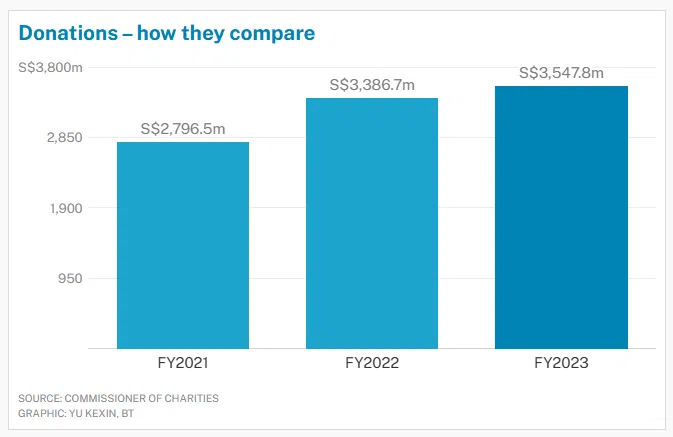
For example, when Covid hit, the sums charities raised fell from S$3.12 billion in the 2020 financial year to below S$3 billion in FY2021, the Commissioner of Charities Annual Report 2022 showed.
“This (therefore) helps ensure they can continue to serve the communities they support because the needs remain even if funding is cut. Any revenue activity must still align with their mission and avoid drifting away from the communities they serve,” Tan added.
However, it is important to note that such revenue activities are unable to replace the role of funding.
Therefore, while it is thus important for charities to become more efficient and disciplined in managing their resources, they must ensure that their core focus – to serve their beneficiaries – and the quest for profits do not blur.
“If charities were to operate primarily like businesses, with profit as the priority, services could become less accessible or less affordable,” Pal said.
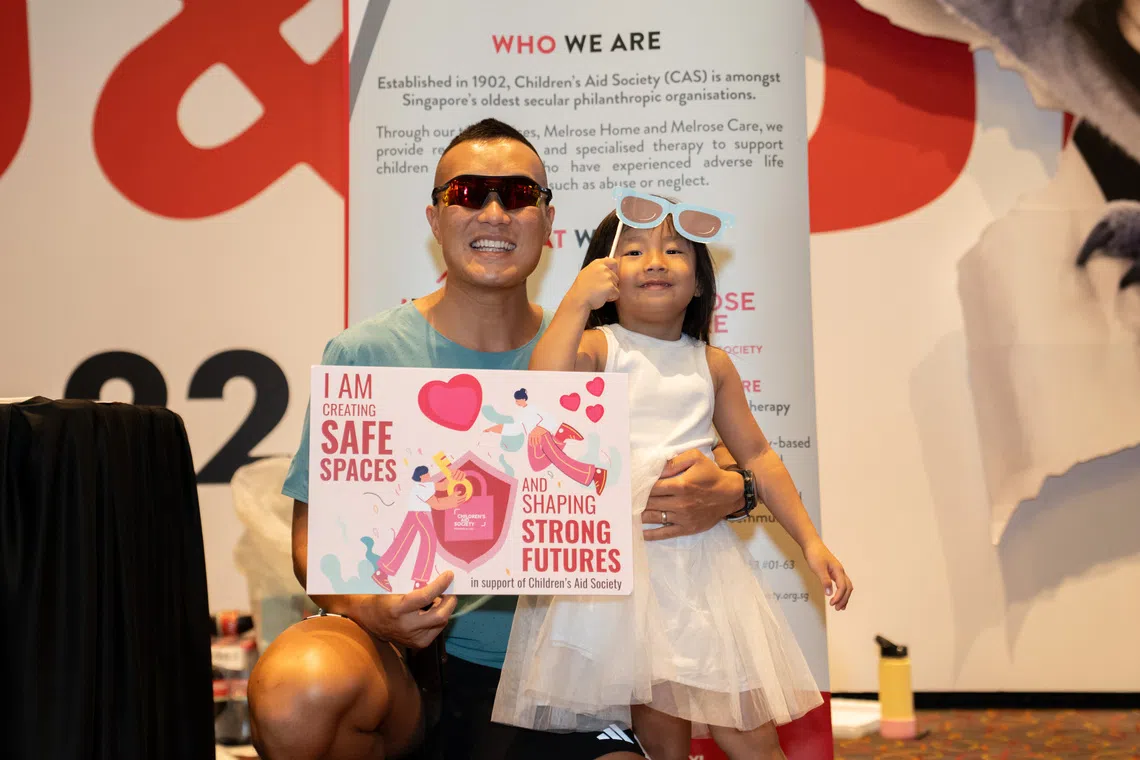
Alvin Goh, the executive director of Children’s Aid Society, added: “Success in our work cannot be measured through profit or efficiency. The support we provide must be tailored to each person’s needs and circumstances, and cannot be reduced to standardised procedures.
“This makes the work complex and resource-intensive, especially when restoring mental well-being and family relationships.”
Community Chest chairman Chew Sutat said that giving has evolved beyond donations and now includes volunteering or skills-based support, which are equally valuable. “However, donations still matter,” he noted.
“With more complex social needs, coupled with growing demand for more effective services, sustainable funding is required on two fronts: for social service programmes to support those in need, as well as projects and initiatives that help strengthen the (social service agencies) in areas such as digitalisation, innovation and volunteer management.”
“Sustained sources of donations will be critical to enable them to plan and deliver services more effectively and efficiently to more service users,” he added.
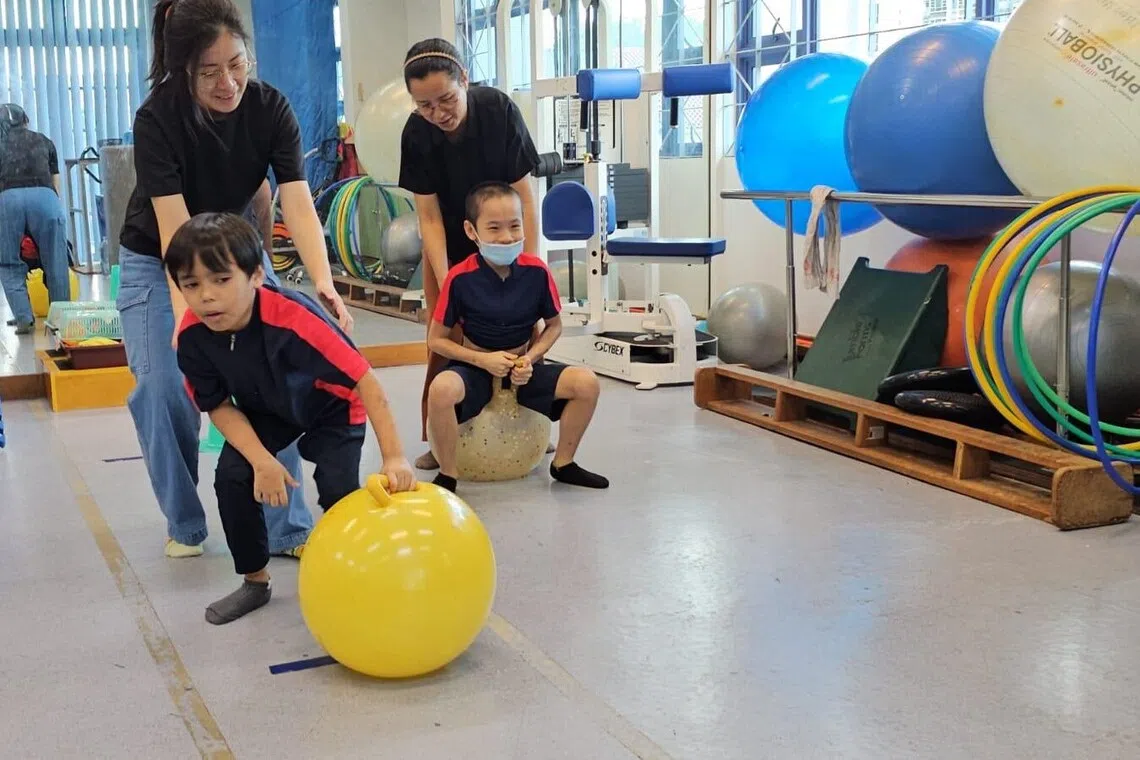
Jennifer Loh, vice-principal of Minds Towner Gardens School, said that donations support the school’s curriculum by enabling syllabus customisation for individual students.
The school is aware of current trends such as digital art and is trying to prepare its students with the relevant skills. That is only possible with financial support.
For the financial year ended Mar 31, 2025, Minds received close to S$2 million in donations. Meanwhile, this proportion is small compared to the net cash flows from financing activities, including capital and operating grants, which were S$103.5 million.
One of these revenue contributors is Minds Bakers, a social enterprise programme that trains and employs individuals with special needs in baking.
What next?
Based on data from MCCY’s charities unit, total donations to the sector – excluding government funding – rose from S$2.8 billion in FY2021 to S$3.5 billion in FY2023.
Tan from The Majurity Trust noted that the number of single-family offices has also expanded significantly, from a few hundred just a few years ago to about 2,000 today.
“There is real potential for more of them to deepen their philanthropy, both locally and regionally. The opportunity lies in helping donors connect to causes they care about and supporting charities to demonstrate grounded, meaningful impact,” he said.
The social service sector has become more professional over the years, Pal noted, which has improved quality and credibility.
But if taken too far, it can unintentionally disempower communities, make social issues seem like “someone else’s job”, and risk relationships with beneficiaries becoming transactional, he added.
“As social needs grow more complex, compounded by manpower shortages, the challenge is to reduce over-reliance on government, nurture community and corporate involvement, and invest in talent – all while keeping people grounded in the mission and purpose of social service,” Pal said.
Decoding Asia newsletter: your guide to navigating Asia in a new global order. Sign up here to get Decoding Asia newsletter. Delivered to your inbox. Free.
Copyright SPH Media. All rights reserved.

