

China automakers flood Australia with budget-priced luxury cars
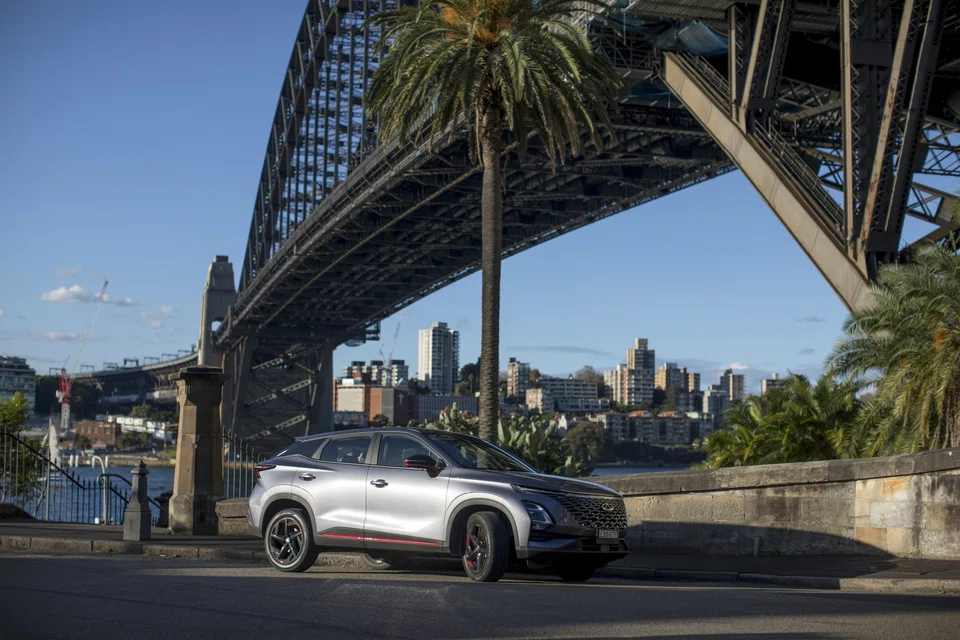
NEVER mind the auto industry’s relentless push towards electrification, Chery Automobile is the latest Chinese carmaker trying to win over Australians with petrol-powered SUVs pitched at the lower end of the market.
Chery’s mid-size Omoda 5 is selling across Australia for as little as A$32,000 (S$28,789) for the base model. For the high-end version, It’s stuffed with extras you’d normally find in luxury cars – think heated steering wheel and exterior puddle lights – and costs not much more than A$35,000.
Australia’s best-selling car, Ford Motor’s Ranger pickup, can go for more than double that price.
Wuhu-based Chery joins Chinese rivals Great Wall Motor and SAIC Motor – owner of the MG brand – in pouring relatively affordable cars into an Australian market that’s been slow to turn to electric vehicles. Chery was China’s second-biggest car exporter worldwide last year.
With inflation in Australia still untamed by almost a dozen interest-rate hikes, Chery’s Omoda is a clear pitch on price in a market famed for its love of SUVs and pickups. Sales of vehicles sourced from China have increased 69 per cent in Australia. And there are more to come: Chery aims to start selling its larger Tiggo 7 Pro and Tiggo 8 Pro SUVs later this year.
Australia’s best-selling Ford Ranger starts at around A$50,000 and pushes close to A$100,000 at the top end. The country’s next-best sellers are Toyota Motor’s Hi-Lux pickup and its mid-sized SUV, the RAV4.
To some degree, the Omoda and other cars in a similar price bracket are also a test of Australia’s willingness to switch to electric vehicles.
EVs accounted for 8 per cent of Australia’s new car sales in April, up from just 1.1 per cent a year earlier, according to the Federal Chamber of Automotive Industries. While an improvement, the country still trails way behind market leaders like China, where almost one-in-four new car sales are electric. Two of the main roadblocks in Australia are price (a new Tesla Model 3 costs A$61,300 in Sydney, for example), and a lack of choices – though government plans to introduce tougher emissions standards may soon encourage global automakers to offer more EVs here.
How did the Omoda 5 stack up in the flesh?
The car’s technology, at least in the better-equipped EX model, appears to punch above its weight. There’s a powered passenger seat and tailgate, heated front seats and an electric sunroof.
Most startling of all, a 360-degree camera system can beam onto the driver’s display a semi-translucent image of the vehicle, as if you were looking at it from outside.
While the Omoda drives nicely and the red exterior trim gives it a sporty appearance, it risks claiming a victory of form over function. Puddle lights that beam “Omoda” on the ground next to the car have limited utility in the world’s driest continent after Antarctica.
The car’s all-round vision, using the human eye at least, is particularly unmemorable. Maybe you do get what you pay for, but for people chasing luxury stylings at budget prices, the Chery may be worth a drive. BLOOMBERG
Decoding Asia newsletter: your guide to navigating Asia in a new global order. Sign up here to get Decoding Asia newsletter. Delivered to your inbox. Free.
Share with us your feedback on BT's products and services
TRENDING NOW

GCash parent Mynt rises in market debut after South-east Asia’s top 2026 IPO

In the age of AI, what is a university education for?

Singapore to use ‘every legal and regulatory lever’ against companies linked to haze: Shanmugam

‘IPOs are not the only vehicle’: KKR heads for record exits even as firms stay private for longer

