Chinese embrace America's culture - but not its policies
Beijing
WEARING a hoodie emblazoned with an oversized US dollar bill, Zhao Yixiang sells an American brand of skateboards for a living and admires much about the United States, including its raucous rap music and tradition of unfettered expression.
"America is a country full of free speech," he said at his shop in downtown Beijing. "You can say what you want, go where you want, choose your own lifestyle. I admire that a lot. But on territorial and military issues, we're pretty far apart. I think a lot of people in my generation think like that," said Mr Zhao, 26. "We really like American culture, but we also like to have a government that doesn't show weakness abroad."
As China's president, Xi Jinping, wrapped up a visit to the US with a speech at the United Nations on Monday, young Chinese citizens like Mr Zhao present a quandary for US policymakers, who hope their country's vast cultural reach offers a beachhead into making opinion here more receptive, if not sympathetic, towards the US.
In some ways, American cultural influence reaches into China deeper than ever. Despite censorship, restrictions on cultural imports and heavy Internet barriers, American television, films, music and technology are widely and avidly consumed. During his visit, Mr Xi nodded to that influence, citing American authors, the popular television series House of Cards and several Hollywood movies, as well as meeting with prominent business leaders from Silicon Valley.
Yet, studies and surveys show that many Chinese citizens, including the young, remain wary of the United States and hostile to Washington's foreign intentions, especially when China's territorial claims and rising influence are at stake. China is not unique in that regard, but its increasing prominence makes the contrast between cultural attraction and political distrust especially stark.
"Even when you have cultural soft power and cultural attractiveness, that doesn't mean that people identify with or support your policies," said Xie Tao, a professor at the Beijing Foreign Studies University who studies public opinion and Chinese-US relations.
Among his students, he said: "You can sense that the undergraduates identify with American culture - its higher education, basketball, so on. But when you discuss American policy, many people - many of the same people - are highly critical."
People here were subjected to Chinese news coverage of Mr Xi's American visit, which smothered audiences with images and accounts of the leader as a strong, poised statesman, winning the respect of President Barack Obama, American tech executives and ordinary Americans.
"Chinese state visits to the United States are primarily domestic choreography for the Chinese public," Prof Xie said. "This state visit, with the reception by President Obama and the US media attention, is to show that he has international stature and deserves and receives respect."
The promotional drive for President Xi sometimes went to fanciful extremes. State news media likened the trip to Deng Xiaoping's in 1979, which helped re-establish diplomatic relations. Foreign students were recruited into offering dewy-eyed praise for Mr Xi in an online video. The newspaper China Daily claimed that a survey found that nearly 80 per cent of American youth were interested in his visit.
It was too much for some Chinese, even those usually inured to high-pitched propaganda.
"A state visit to America is a major event," said Mary Li, an English-language student at a Beijing university, who asked not to use her Chinese name to avoid getting into trouble at school. "But we know the United States doesn't revolve around China. The pope was there, too, wasn't he?"
But opinion surveys indicate that many Chinese people back their government's views on international relations, even if they admire other aspects of American life. Research by the Pew Research Center and other institutions indicates that admiration for American enterprise, and even some American values, is often mixed with wariness, especially of the government's intentions abroad. (The surveys show that many Americans reciprocate.)
In the latest survey, based on polling this year, 67 per cent of Chinese respondents said that their country would replace, or has already replaced, the US as the world's leading superpower. (In Western countries, many respondents agreed.) A majority, 54 per cent, of Chinese said the US was seeking to prevent China from becoming as powerful as itself.
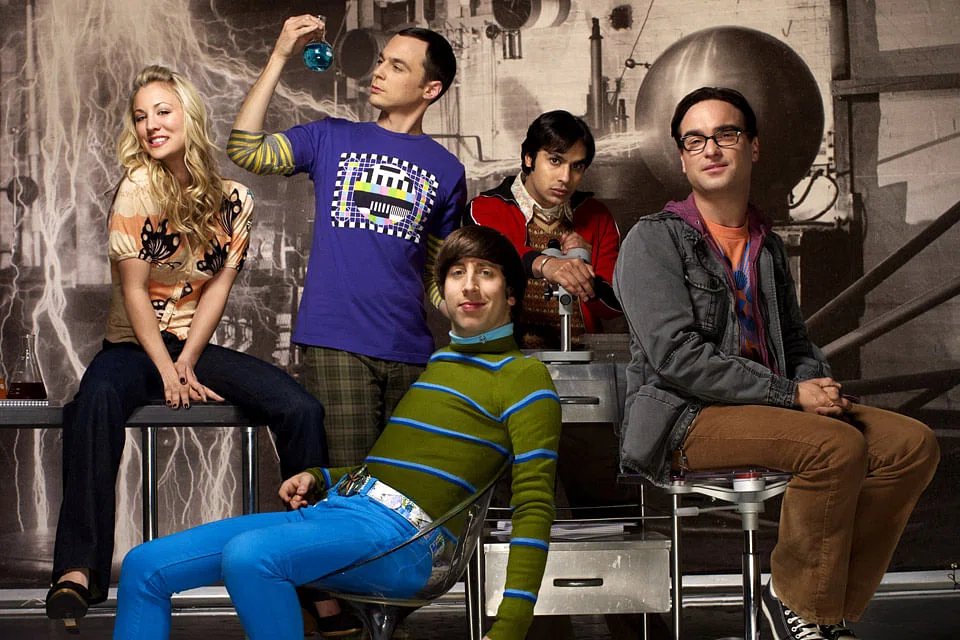
Distrust towards the intentions of the US persists despite the popularity of American entertainment. For instance, over the past month, the eighth season of The Big Bang Theory has drawn over 45 million views on Sohu.com, an online viewing service. NYT
Share with us your feedback on BT's products and services