

Clash of the TV titans
Samsung is expanding its new MicroLED TV market and is pulling out all the stops for its 8K TVs while LG has unveiled 14 new OLED TVs
Samsung QLED 8K
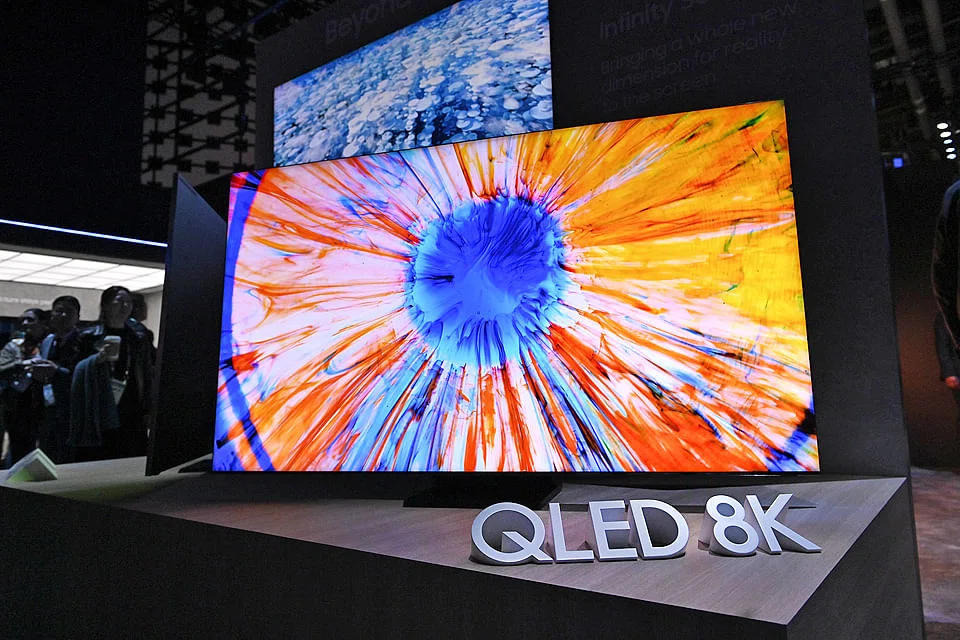
SAMSUNG may be working hard to expand its new MicroLED TV market with new consumer models, but that's not to say the Korean manufacturer is taking its eyes off its QLED range. In 2020, Samsung is pulling out all the stops for its 8K TVs. The QLED 8K lineup has two new series. The Q950TS, available in 65, 75 and 85-inch screen sizes, offers the best picture and sound quality and the swankiest design Samsung's display group can come up with. The Q800T, available in 55, 65, 75 and 82-inch screen sizes, drops a few features that are on the flagship to achieve a lower price point.
The hot take this week at CES is the lack of bezels on the flagship Q950TS. Yes, TV makers have been touting bezel-less TVs for years now, but none of today's TVs is truly bezel-free. The upcoming Q950TS makes the best case, though: with just a hint of a rim around it (mostly along the bottom), the Infinity Screen on the Q950TS takes up an impressive 99 per cent of the TV's face. And when when this 14.9mm-thin TV is mounted on the wall with Samsung's own No Gap Wall Mount (okay, there's a 0.5mm gap), it looks as dramatic as LG's W series 'wallpaper' OLED TV. The completely flat back is impressive, too.
That said, TVs have bezels for a reason. For one thing, they act as structural support but driver electronics and their connections may also be housed there. To achieve the Q950TS' zero bezel feat, Samsung has essentially fused the panel more closely with the main chassis. Durability is my first concern, but a Samsung engineer assured me that the design has passed rigorous testings.
Local availability and pricing for this all-screen Q950TS QLED 8K TV is not known at the moment.
Dramatic design aside, the 2020 QLED 8K TVs will have improved Direct Full Array tech, increasing the brightness of highlights by as much as 20 per cent without using more power. The Quantum Processor 8K gets an upgrade and now has an artificial neutral network that can restore fine details in complex images during upscaling. Also new is an Adaptive Picture feature that automatically adjusts brightness and shadow levels based on the brightness of the room. By Ng Chong Seng

Samsung MicroLED TVs
Meanwhile, Samsung has been investing heavily on MicroLED for a few years now, which is the chief reason it has been reluctant to explore large-size OLED panels for its TVs. MicroLED uses super-duper tiny LEDs (each with its own RGB sub-pixels) to create the picture. Because these LEDs generate their own light, like OLED, MicroLED has no need for a backlight and is thus capable of those inky blacks that OLED is so famous for. At the same time, MicroLED TVs can go very bright, which is great for bright room use and HDR content. Since the material makeup is inorganic, MicroLED should last very long (up to 100,000 hours) and have no risk of burn-in, two shadows that have been looming over OLED for years. And since no colour filters are involved, purer colour reproduction is also expected.
But because this is still very new tech, MicroLED remains very difficult to manufacture - which translates to very limited options in the market and extremely high prices.
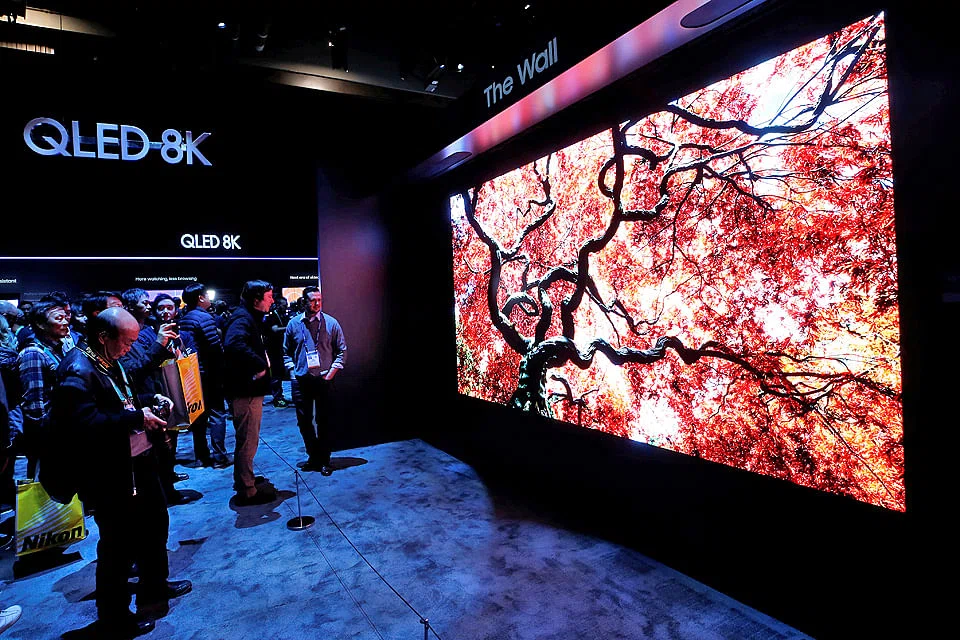
Moving forward, Samsung is making both fixed size and modular MicroLED TVs (the former designed for the consumer market). Anything above 100 inches will be modular and anything from 70 to 100 inches will be fixed. At CES, Samsung unveiled its very first MicroLED lineup with six screen sizes: 192 inches, 150 inches, 110 inches, 93 inches, 88 inches and 75 inches.
Samsung has not revealed when its smaller B2C MicroLED TVs will arrive in stores. The best answer I managed to get is "later this year". Pricing hast not been revealed either. But to give you an idea, a current 146-inch The Wall Luxury - a modular display that makes use of several MicroLED panels - costs S$500,000. By Ng Chong Seng
LG OLED TVs
At CES 2020, LG unveiled 14 new OLED TVs led by three new art-inspired GX Gallery series 4K Ultra HD models. In 55-inch, 65-inch, and 77-inch class models, they are able to hang completely flush on a wall thanks to an ultra-thin form factor; the 65-inch model being a mere 20mm thick for example.
There are two classes of 8K TVs from LG in 2020, all exceeding the stringent requirements needed to display the official industry 8K UHD logo from CTA. There're the 88-inch and 77-inch ZX OLED Real 8K models and the NanoCell TV lineup with six more Real 8K TV models (75-inch and 65-inch models) in the Nano99, Nano97 and Nano95 series.
LG is also offering new versions of its CX and BX 4K UHD models in 77- inch, 65- inch, and 55-inch sizes. LG is also bringing OLED picture quality to an all-new screen size, a 48-inch CX 4K UHD, which reproduces even sharper picture quality with eight million-plus pixels on a 48-inch screen. That's a pixel density comparable to that of a 96-inch 8K TV.
LG is also adding key features. An advanced AI processor will employ deep learning to improve on picture quality and enable a host of specialised features for various types of content. Filmmaker Mode delivers images the way directors intended by disabling certain post-processing effects (such as motion smoothing, noise reduction and sharpening) while perfectly preserving correct aspect ratios, colours and frame rates, to deliver the director's original vision.
2020 LG OLED and LG NanoCell TVs users will have access to more programming from content providers through apps and services such as Disney+, Netflix and CBS All Access. Sports Alert helps users keep track of their favourite teams and schedules, notifying them as soon as a team scores.
LG's 2020 TVs will also have NVIDIA G-SYNC support for gamers.
Share with us your feedback on BT's products and services






