

A closer look at the iris
This piece of eye tissue can always give a clue or two about your body and health
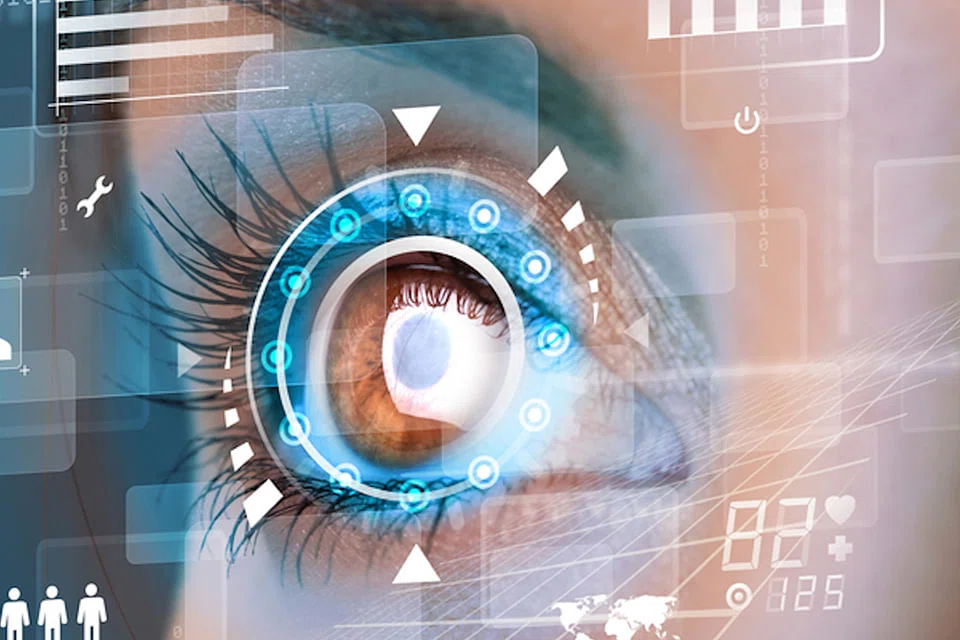
IRIS is the name of a beautiful flower, the name of a Greek goddess of the rainbow and also the part of the eye anatomy that gives it its colour, perceptible to the observers. As an ophthalmologist, the iris is the part of the eye that fascinates me the most because of its uniqueness and beauty, and also how strongly yet subtly it controls our vision.
So excited was I about this wonderful piece of eye tissue that several years ago I took myself to a "mini-fellowship" in the United States for a month to learn all about how best to repair it, and in the process co-wrote a textbook chapter on it too.
In the eye, the iris functions like camera shutters, partitioning the eye into front and back, and controlling the amount of light that enters through the pupil, the round aperture in the centre of the iris (which is constricted in light and dilated in the dark) to reach the retina at the back of the eye, where light-induced signals are converted into tiny electrochemical signals that are relayed through our optic nerve to our brain.
The brain in turn feeds information back to the iris muscles which then either constrict or dilate to adjust our pupil size. The iris functions hence influence the quality of vision through its control on our pupil.
The fact that no two irides are the same has recently led to it becoming a form of identification much like a thumbprint, and not long ago iris-recognition was incorporated into the national identity registry in Singapore. It is now used in a few government military and some airports worldwide for border control. This is a laudable move to improve safety in the society.
However, the ease with which an iris scan can be obtained when technology further improves in the future also makes one worry (imagine just a glance and you give your identity, and worse still, bank account details, away). But I am sure when science fiction comes to pass safety would be a high priority.
The uniqueness of one's irides is a feature that had been much used in some eye laser surgeries for more than a decade. The Lasik and excimer laser vision correction surgeries that I perform for patients wanting to reduce their dependence on spectacles and contact lenses routinely employ a highly sophisticated iris-tracker that can track eye movements to the speed of a tiny fraction of a second (as short as a thousandth). In cataract surgery, I also use iris-tracking to position intraocular lens implants to correct astigmatism. The high accuracy of iris-trackers has led to them being de rigueur in these eye surgeries.
As a Lasik surgeon, I pay a lot of attention to the pupil size of the eye, as larger pupil size can often cause visual aberrations in the dark, and hence affect the results of laser treatment. In such situations, finer laser planning such as using customised ablation or even switching to lens surgeries is called for. The same principle of attention to details translates into better results in cataract surgeries as well. A large pupil will similarly cause more side-effects following cataract surgery with multifocal lens implants, hence treatment plans should be tailored accordingly.
In contrast to the iris, the sclera or white of eye is featureless and rather uniform in appearance hence they are not useable for identification purposes. They too, however, can indicate diseases like jaundice when they turn yellow or brittle bone disease when they turn blue.
That your iris and pupil can tell one quite a bit about you, including to your ophthalmologist, are due to the fact that the iris is a tissue laden with pigment, nerves, muscle and blood vessels. What is it that you cannot hide from your eye doctor?
Firstly, your racial origin shows in your iris. A tan can be faked and hair dyed, but not the iris (cosmetic iris implants are, to date, dangerous and coloured contact lenses are unnatural and easily spotted).
Secondly, in paler eyes more so than in darker eyes, your pupil size which is controlled by the iris can give away your emotional state and your state of health. Pupil size is smaller when faced with "fight or flight" (medical school parlance for stress), and larger when relaxed.
Older folks tend to have smaller pupils, and diseases involving the eye nerve and retina affect pupil size and reaction.
A dilated pupil on one side can indicate an impending stroke, while fixed and dilated pupils on both sides are a sign of brain stem death.
Pigment cells on the iris can waste away due to infection and inflammation, the result of which can be a speckled iris and seeing glare. As with all other pigment cells on the body, freckles or moles (naevus) on the iris can indicate sun exposure. They are harder to detect cursorily in darker-coloured eyes but easier on the ophthalmologist's slit lamp eye examination. Very occasionally, these grow in size and may need to be watched as rarely they may harbour malignancy.
Furthermore, iris blood vessels can multiply or become engorged in cases of diabetes and other retina diseases, or when the neck arteries are blocked. In these cases, they can often lead to glaucoma, a disease that affects one's visual field irreversibly and can culminate in painful blindness. In many cases of glaucoma sufferers, the pupil size can be enlarged due either to a weakened eye nerve or a damaged pupil sphincter, ruptured from an attack of glaucoma.
Predicting risk of glaucoma
Interestingly, a research performed in Singapore and published in peer-reviewed journals a few years ago found that iris features such as crypts and colour may even predict one's risk of getting a form of glaucoma called primary angle closure glaucoma, commoner in Asia.
A very rare hereditary disease called aniridia sees a small number of families born with rudimentary irides. This is usually a severe disease with grave prognosis, accompanied by glaucoma and cornea disease. Another rare disease is called iris coloboma, where a natural defect occurs on the iris giving rise to a keyhole-shaped pupil, which can affect vision in downward gaze.
The iris can be traumatised in surgery and in accidents involving the eye. In mild cases, a scar or defect results on the iris. Occasionally these are noticeable to the patients as they can affect cosmesis and sometimes result in visual symptoms.
In more severe cases, vision can be badly affected even when all other eye structures are intact (just imagine a camera with broken, displaced or odd-shaped aperture: what sort of photos will you get?). In such cases, a repair of the iris is necessary to restore vision.
Recently, I operated on a few cases of iris repairs using a new medical flexible iris implant that can be customised to the desired size and colour, which means to say patients can choose their post-operative eye colour. As my patients were dark-eyed and the cases were semi-urgent, we decided on a standard dark-coloured implant which was in stock. The results of surgery are still highly acceptable cosmetically although there was slight unintentional eye colour change.
Some of these patients were victims of glaucoma attacks, and one was involved in an unfortunate accident that resulted in a severe eye injury, whose eye repair surgery was the first of its kind in Asia. These are cases that had all been turned away by other eye surgeons including due to their relative complexity, and yet they are some of my happiest patients after their surgical recovery.
These surgeries can indeed be long and technically-demanding, involving stitching of devices to the eye, unlike the everyday cataract operation.
It takes a bit of gumption to drive a bandwagon rather than jump on one. I am glad to have championed these iris repairs, seeing how well my patients now see.
The best thing I learnt from my Saturday morning medical school Ophthalmology lectures at the University of Melbourne, my alma mater, is the adage "if you don't look, you don't see". The next time you look into the mirror, try having a closer look at your iris. It just may give you a clue or two about your body and health. Of course, if in doubt (yes it is nigh difficult to check darker irides particularly when one is presbyopic), call your friendly ophthalmologist.
Share with us your feedback on BT's products and services






