

Collaboration in the office - a necessity or a chore for workers?
Companies should aim to break down silos and encourage knowledge sharing but they should implement these thoughtfully
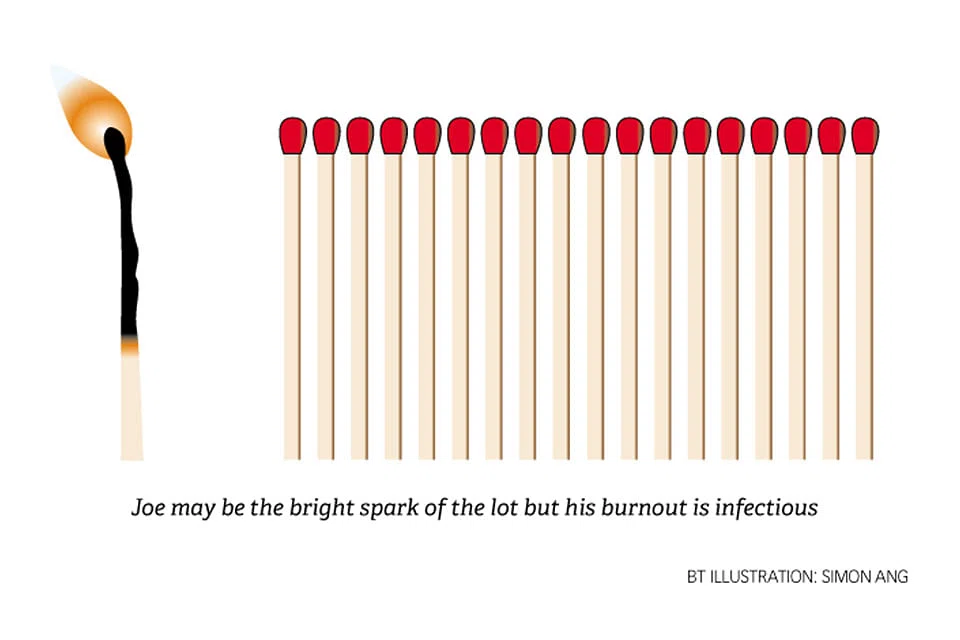
FUELLED by the rise of open-plan offices and growing emphasis on collaboration, employees find themselves working together more than ever.
For the average employee, a good chunk of the day is spent at meetings and discussions that leave him or her drained. Even after work hours, this collaboration doesn't stop, thanks to the proliferation of WhatsApp chat groups. To cope, many end up doing most of their actual work at night or over the weekend. Or worse, some resort to hiding from colleagues to accomplish tasks without interruption. If this sounds familiar, you might be suffering from collaboration burnout.
Corporations may be on the right track when it comes to breaking down silos and encouraging knowledge sharing, but if such measures are implemented mindlessly, they can lead to an overworked workforce that is ironically all talk and no action.
The problem with open concept
To have a proper conversation about collaboration, we need to understand what it entails, explains Peter Andrew, senior director, Workplace Strategies Asia-Pacific, CBRE. Collaboration is not simply about working together on projects as some people imagine.
Being located near teams you need to work with, bumping into colleagues from other teams that you rarely see and end up sharing ideas, creative brainstorming, or just sitting side by side with a colleague working on an activity together - these are all various forms of collaboration. He points out that collaboration usually takes up 10 per cent to 15 per cent of a person's day, depending on the vocation and the company's work culture. Most of what we do is, in fact, individual work.
The problem is, most traditional open-plan offices are a "one size fits nobody" solution designed to maximise real estate and fail to support effective collaboration, he says.
Mr Andrew notes that such offices deny people the ability to get into deep thought, which is essentially focused thinking to figure out complex problems. "Instead, people drift from meeting to meeting and spend their days responding to e-mails and getting little effective work done. Some say that the 'off' switch is the most important piece of technology that we have," he adds, tongue-in-cheek. The key to a high-performance workplace, he believes, is to enable mobility so that employees can work from different settings to meet their needs.
Mr Andrew says: "The ability to choose where you sit to get different tasks done can help productivity, but also help introverts to find places they feel comfortable working in, as well as extroverts."
New ways of work need new ways of managing
One company with an open-plan concept is travel booking site Skyscanner. Its Asia-Pacific head of Talent Kathleen Urquhart says that as a people-first business, one of its mantras is to 'collaborate to complete' - and collaboration is inherently social. Its office may be open-plan, but there are also quiet spaces and private pods for those who want to focus or need privacy.
She says: "The key is to give individuals the choice, whether they choose to have their own desk, prefer to hot-desk or choose to work from home where required." This culture of flexibility has cascaded down to the employees at Skyscanner, who understand and respect different ways of working.
Ms Urquhart adds: "We trust them to do their jobs and manage their time, and we get the best results from this as a result."
While she hasn't seen instances of collaboration burnout in the company, she says the company is conscious of it and takes "active steps" to prevent it, such as through constant review of their work practices and collaboration tools.
Employees, too, can play a role. For a start, they need to take a hard look at what's on their plate - what is core, what is secondary, what is irrelevant - and make conscious decisions about how they can work in the most efficient way.
Collaboration burnout tends to happen when employees don't know how to invest their time or fail to balance competing needs effectively. Without an idea of their priorities, they allow themselves to be dragged into pointless meetings or get caught up in discussions.
However, Mr Andrew cautions that there is a fine line between working in a quiet area to get focused work done versus escaping from human contact, which is detrimental to team collaboration. He points out: "The space is just a metaphor for behaviour. So if you are hiding, the chances are that there are bigger issues that need to be addressed."
For workers who prefer quiet spaces, he suggests that they have open conversations with their direct boss and colleagues as to what is acceptable behaviour to prevent any misunderstandings. Also, keep an eye out for unhappy colleagues who are frustrated because you are not physically in the middle of things.
It can also be disconcerting for leaders to manage their staff who are physically in different places as they are accustomed to managing by presence. But Mr Andrew believes that moving towards the direction of managing by performance would be a much better outcome for teams in the long run.
If performance is equal between a worker who prefers to use a quiet space to get work done and another who is seen in every discussion and meeting, managers need to recognise the effort and reward the deserving employee.
Building fancy, open-concept offices to encourage collaboration is pointless if employers are not open-minded enough to empower staff to decide how they can work best.
When it comes to the future of work, collaboration will only continue to gain traction - but so will highly-focused deep thinking. Learning how to balance these two sides at work will be key to sustainable high performance instead of death by collaboration.
Share with us your feedback on BT's products and services
TRENDING NOW

Fed hike throws Singapore banks a margin lifeline; UOB most likely to feel impact

He built the Vingroup empire. Now South-east Asia’s richest man is handing some key roles to his sons

Real-estate veteran Desmond Sim quits from CEO roles at Realion, ETC

Chagee, Mixue and Luckin won the market. Sustaining their edge is the harder part

