Conscious carpentry: ‘It’s more than just wood’
Architects, designers and carpenters are pivoting towards sustainable woodwork for the good of the environment. But challenges abound

RESPONSIBLY sourced materials. Minimising waste. Prioritising craftsmanship and quality over mass production. These are some of the beliefs that modern Singapore carpenters hold in the pursuit of sustainable woodwork for the greater good of the environment.
But the reality is much more challenging than that, with the cost of wood nearly doubling since 2020 due to timber supply chain disruptions following the pandemic and the Russia-Ukraine war (Ukraine is a major supplier of timber). Besides this, the potential closure of the sawmills in Sungei Kadut following the government’s plans to redevelop the area might also impact the supply of wood.
Facing this uncertain future, some architects, designers and carpenters are still looking at ways to champion wood, which remains a more renewable and biodegradable resource, and registers much lower carbon emissions in production, than other building materials such as concrete and steel.
We speak to its advocates, from a lauded architect to the smaller players, who are thinking out of the box to pave the way for conscious carpentry.
Type0 Architecture
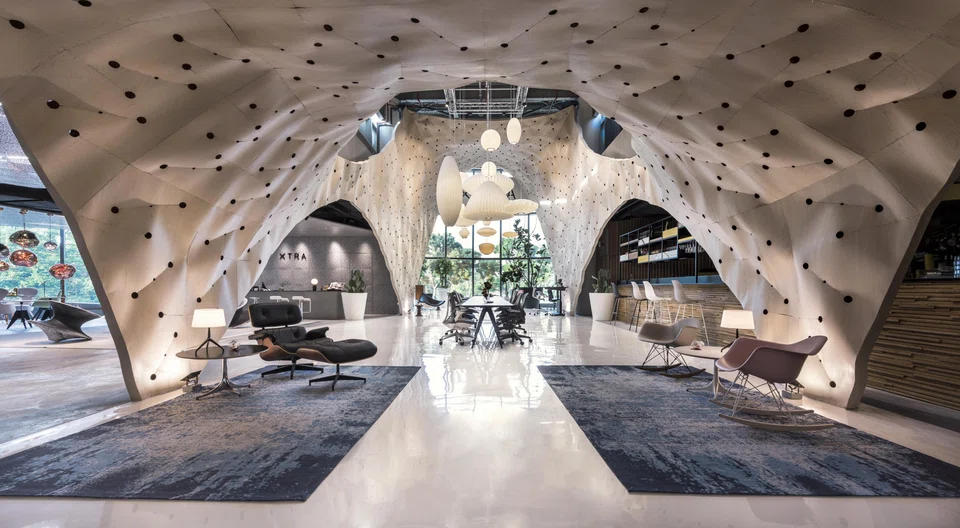
Type0 founder Pan Yicheng has always loved wood. As a child, he often made small playthings with his wood carving set. Now, as a professional architect, he frequently incorporates wood into his designs. These include distinctive projects such as the Xtra x Herman Miller shop in Marina Square and the Lien Foundation office, with their gorgeous undulating wood canopies drawing oohs and aahs. (Some of these projects were carried out by Produce and Superstructure, two other design studios Pan co-founded.)
At Type0, Pan is currently working on the first Mass Engineered Timber (MET) residential project in Singapore. Called “The Plinth House”, it is a four-storey bungalow in Sentosa whose attic and second level, as well as the roof, are constructed in MET. (MET are large-scale engineered wood products that are strong and durable enough for structural application in construction; they’re also treated with fire-retardant elements to meet fire-safety standards.)

Pan says: “Using MET significantly lowers the embodied carbon in construction. Since the residential sector contributes to more than 50 per cent of our building stock every year, it is particularly important that the residential sector transits towards building in MET in order to meet our long-term carbon targets.
He believes that the house he is working on can “set a precedent to encourage a wider adoption of mass timber from regional sources.”
Although wood costs can be higher – MET cost at least 10 per cent higher than steel construction and 20 per cent higher than reinforced concrete construction – the firm is working on a digital MET construction platform for landed properties where the MET components will be modularised. That way, the cost of working with MET will become comparable or lower than steel construction.




The firm now takes every opportunity to convince its clients on the benefits of MET. Pan says: “We believe that if we do nothing to transform our building industry, the cost to the environment will soon far outweigh the cost savings achieved in the short term.”
Roger&Sons
Another advocate for conscious carpentry is Roger&Sons, a second-generation boutique firm headed by brothers Morgan, Lincoln and Ryan Yeo – all sons of the eponymous Roger who passed about a decade ago. Since then, the three have rebranded it by championing sustainable woodwork, which includes utilising locally felled wood and promoting eco-centric practices such as furniture restoration and customised minimal-waste carpentry.
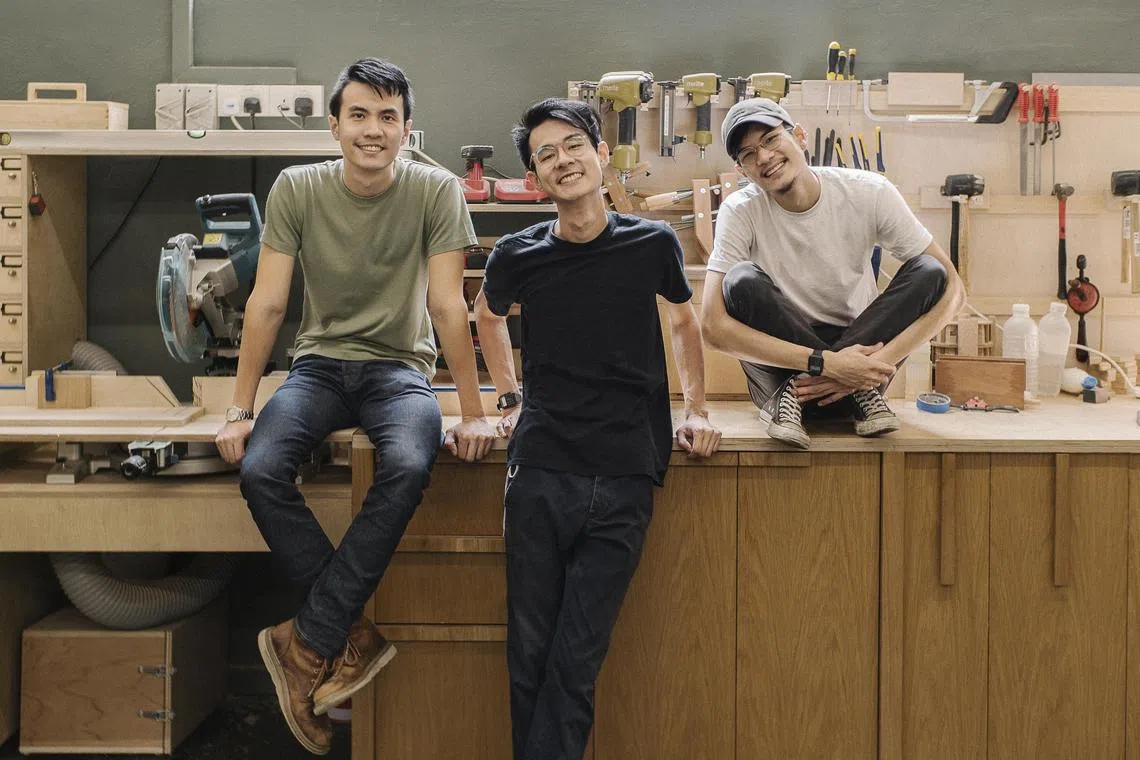
But the path to becoming an environmentally sustainable company has been littered with obstacles. Morgan Yeo, the eldest and director of the company, says: “On average, 100 trees are cut down each day in Singapore. They arrive at sawmills, with no immediate purpose other than to be turned into wood chips or shipping pallets… If we can make use of these available logs, that would certainly cut down on the need to import so much timber.”
However, before fresh logs can be turned into usable timber, they have to be dried in kilns. In Singapore, the kiln-drying facilities are expensive, which is why most woodworkers opt to import timber from other countries to keep costs down. Furthermore, the potential closure or downsizing of sawmills in Sungei Kadut following the government’s decision to redevelop the area will likely impact the supply of locally sourced wood.
These developments are certainly testing Roger&Son’s commitment to championing local wood. But Yeo says it’s hard to make headway unless there’s a governmental alignment to advance these efforts.

“Right now, our core business is making bespoke furniture for clients who genuinely believe in creating something that’s unique and not mass market... During the pandemic, we had actually launched our own furniture line, but we found it difficult to sustain the business due to stiff price competition with mass market brands. “
Yeo says that his 15-member team had to continuously adapt to the changing circumstances. “Our focus now is to believe in and be proud of what we make, find clients who are willing to pay a bit more for quality carpentry, and create a good experience for all involved.
“We believe that good furniture instantly adds value to anyone’s life – so that’s what we’ve focused on doing.”
Mokko Wood Studio and Snug Woodwork
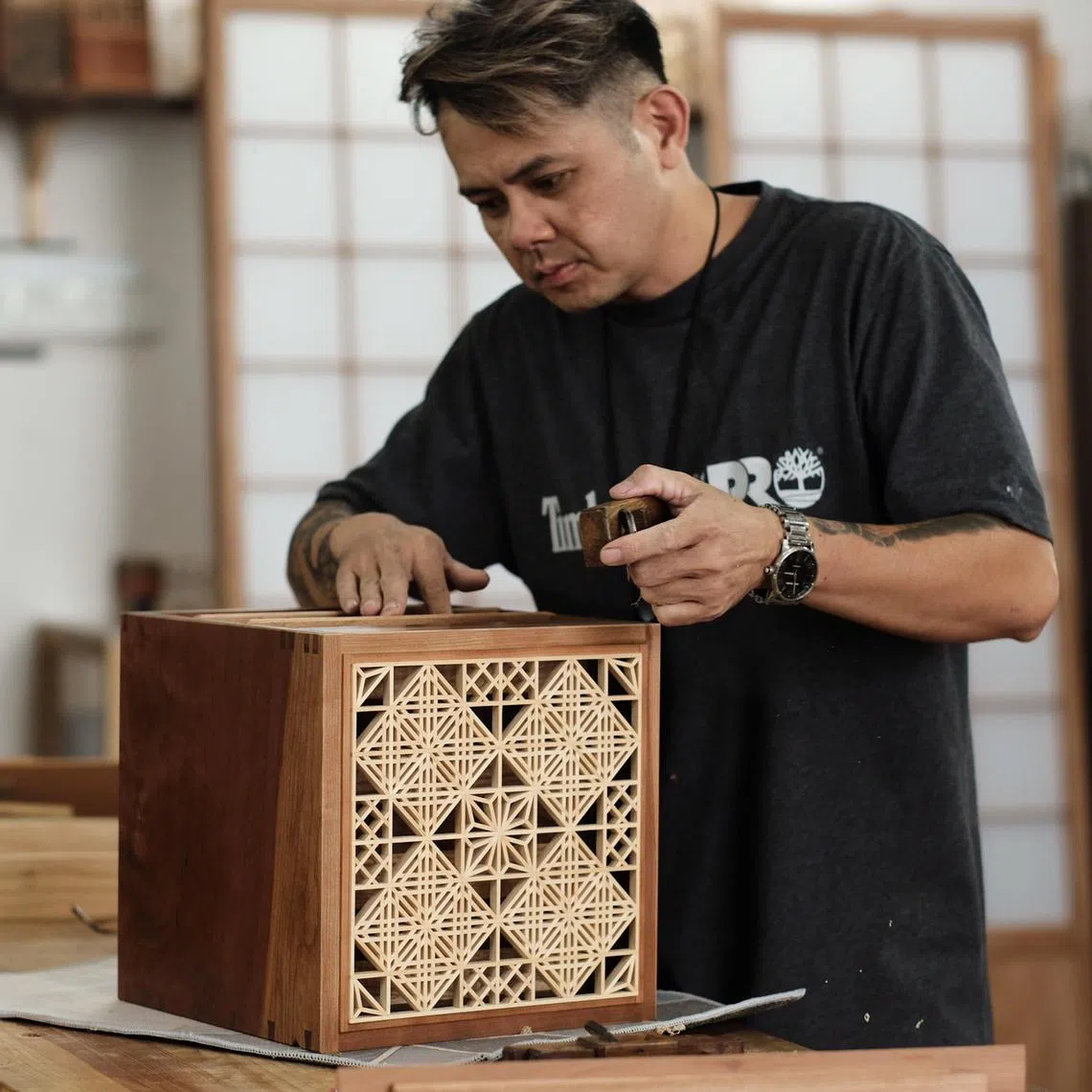
Meanwhile, smaller outfits are also pushing the drive towards sustainable woodwork. Mokko Wood Studio, founded by Alvan Koh, produces bespoke furniture pieces either from locally sourced wood or imported wood from responsibly managed forests.
Working mostly through commissions, he creates classic and durable pieces, utilising strong traditional joints, so that they may be passed down from one generation to the next.
“To facilitate that,” he says, “we have to ensure that the designs are classic and timeless. We take inspiration from Japanese and Danish designs, which lean towards the quiet and simple, as opposed to something that’s loud and trendy.”
Koh first picked up carpentry on YouTube before enrolling in Japanese carpentry schools. He’s since become adept at kumiko, a traditional Japanese woodworking technique that involves creating intricate geometric patterns using wooden pieces, without the use of nails or glue, and assembling them into decorative panels or screens.
As a former teacher, he also runs classes on carpentry to encourage Singaporeans to create things with their hands. “We all play a part in keeping traditional practices alive.”
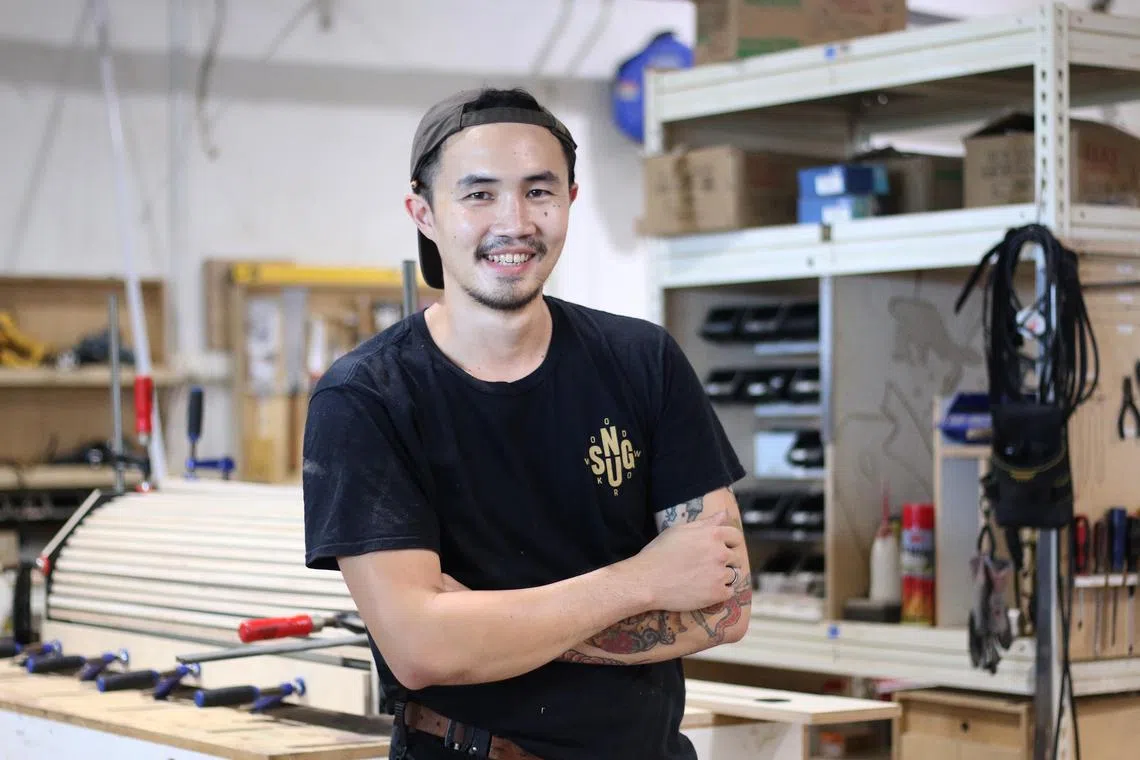
Meanwhile, at Snug Woodwork, founder Linus Yuen also learnt the basics of carpentry from YouTube, before opening his own studio during the pandemic to create sustainable furniture. He says: “We typically use natural wood and apply natural finishes such as oil and wax. We want our material to be honest to what they are, and let their beauty shine through without artificial touches.”
One of Yuen’s proudest moments is working with old doors from a black-and-white colonial house and repurposing them into various contemporary objects such as a laundry trolley.
Yuen says: “To me, it’s more than just wood. The material itself can be very unforgiving. But when I’ve done the work properly and finished the piece well, the final aesthetic is very pleasing. Even though there are challenges from start to finish, and it’s a very sweaty process, the feeling of gratification is what keeps me going.”
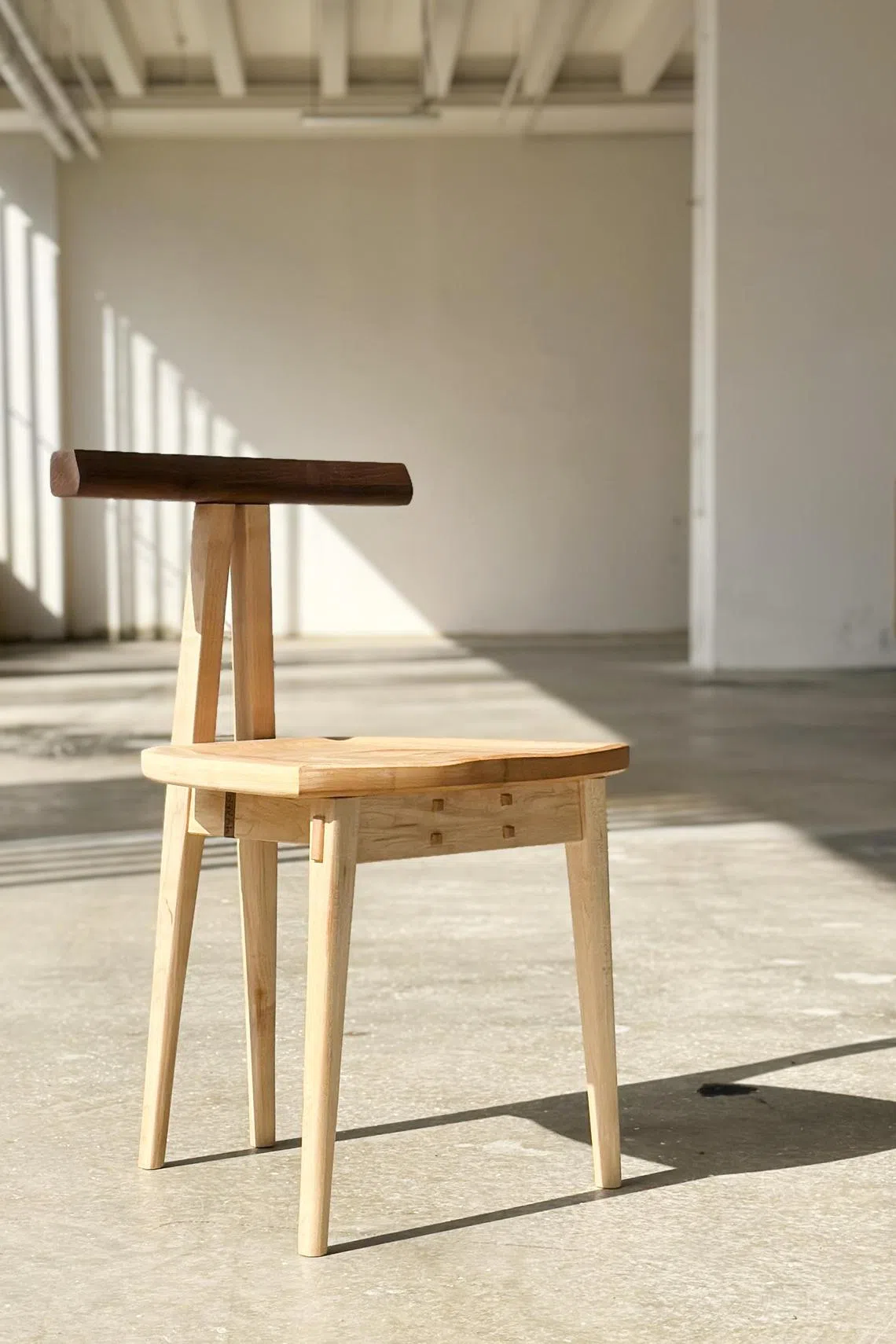
Both men say that the costs of working with sustainable wood are ballooning. Koh says: “The challenge of being socially responsible is always cost. The rising costs of rent, labour and materials are impacting the industry significantly. For our part, we can only try to be more efficient and mindful, and make gradual improvements to our craft everyday, so the outcome can be a better one. But there are also many factors beyond our control.”
Decoding Asia newsletter: your guide to navigating Asia in a new global order. Sign up here to get Decoding Asia newsletter. Delivered to your inbox. Free.
Copyright SPH Media. All rights reserved.