With Corsican reds, a case study of identity
Webservice User
Eric Asimov
WINE assessment is often depicted as dispassionate evaluation in which wines are judged solely on their sensory characteristics, free of bias or commercial involvement.
This is crucial in the professional sphere: In a single sitting, scores of bottles are assessed and scored, affecting the livelihoods of many people in the wine trade and the trust of consumers everywhere.
But wine analysis is not a science. Two bottles of the same wine can seem quite different, depending on the context in which they are tasted or consumed. Assuming they are wines that have not been processed to achieve the sort of stability found in soft drinks on grocery shelves, different bottles can vary in surprising ways.
This partly depends on the atmosphere, temperature, time of day, company and accompanying foods. But it’s also contingent on the emotions we bring to a wine.
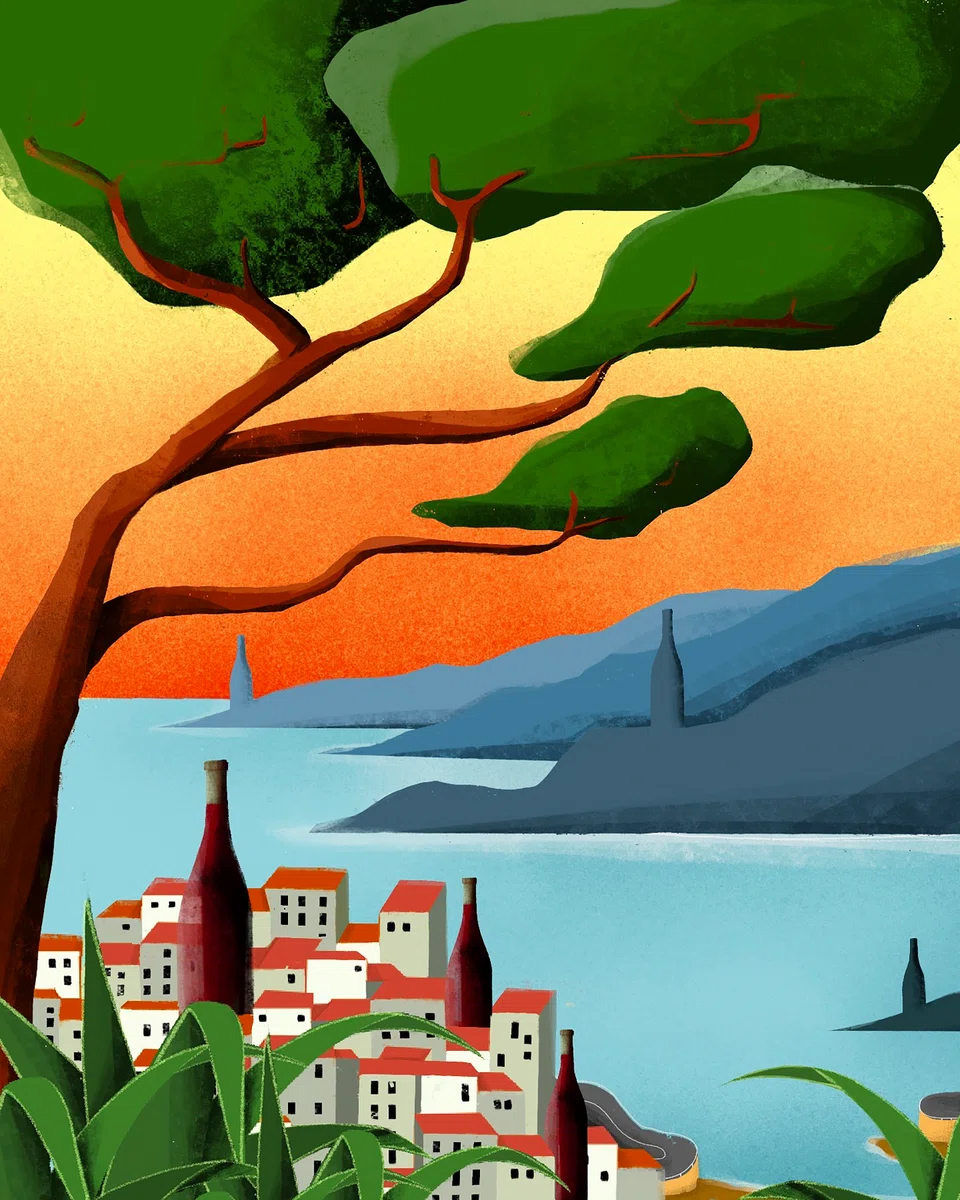
I am emotionally attached to Corsican wines. Perhaps that comes from having visited this beautiful, rugged island — adjacent to Italy, yet part of France — where I met so many fascinating, proud wine producers. I sensed first-hand the cultural and emotional struggles that come from trying to reconcile the feeling of being both Corsican and French, separate yet one.
When I drink good Corsican wines, these feelings come flooding back. This beautiful capacity of wine to express a sense of place and culture is unmatched. I don’t have remotely the same feeling when drinking a bottle of Corsican mineral water, as good as it can be.
Wine producers capitalise on creating these sorts of connections. Wine tourism pays off not simply by selling a few bottles to visitors, but by drawing them into a winery’s cultural orbit, creating long-time fans and repeat customers.
Sometimes, wine companies play on these emotional ties purely for their own benefit. But when this link is forged with a place rather than a commercial entity, it can profoundly enhance one’s understanding of a wine.
This is not to say that understanding Corsican reds, which we have been examining over the last month, requires a trip to Corsica. Of course not. But such a trip helps to understand why these wines can seem so singular and distinctive.
As I do each month, I suggested 3 wines for our exploration. They were: Domaine Maestracci Corse Calvi Clos Reginu 2019, Domaine Pinelli, Vin de France 2020, and Domaine Comte Abbatucci Vin de France Cuvée Faustine 2020. All are farmed organically or biodynamically.
You may have noticed that only 1 of these wines has a specific appellation. Maestracci’s Clos Reginu is labelled Corse Calvi — Corse is Corsica in French and Calvi is a sub-zone around the city of Calvi in the north-west of the island.
The other 2 are both labelled Vin de France, which in theory indicates a lowly table wine not worthy of a more specific appellation. But increasingly over the last few decades, Vin de France often indicates dedicated producers who, whether frustrated with the bureaucracy or because they make a style of wine that does not conform to the mainstream, have chosen to go their own way.
I don’t know their rationales for using Vin de France, but both Pinelli and Comte Abbatucci fall into this category. Pinelli is a new producer working in the Patrimonio area in the north, and Abbatucci is one of Corsica’s greatest producers, situated near Ajaccio in the west.
Each of these wines is made with Corsica’s 2 leading red grapes, niellucciu and sciaccarellu, which are genetically identical to sangiovese and mammolo, a Tuscan blending grape that rarely steps out on its own.
Many older Corsican vineyards also contain familiar southern French grapes such as grenache, syrah, cinsault and carignan, mostly planted in the 50s and 60s by French expats in northern Africa who settled in Corsica after French colonial rule ended.
The Maestracci, for example, is 35 per cent niellucciu, along with 30 per cent grenache, 15 per cent each sciaccarellu and syrah, and 5 per cent mourvedre, blended into a seamless whole.
If I try hard, I can detect individual elements, like the savoury thrust of syrah, but honestly it’s thoroughly distinctive, fresh and lively with lingering flavours of sweet, tart fruit. It’s not sweet and bitter as I might find in an Italian red, but different: tart, maybe, but not at all heavy, and sturdy enough to stand up to a thick steak that I cooked using the reverse-sear method.
It was a delicious wine, though one reader, Peter of Philadelphia, found "an overwhelming odour of barnyard". I found nothing like it in 2 separate bottles, nor was it reported by other readers. Dan Barron of New York called a 2018 Clos Reginu "a wine of mountains and sea, brush and rock, of France and Italy and somewhere else entirely". I can only guess that Peter had a flawed bottle. It happens, though it’s infuriating when it does.
The Pinelli was a combination of sciaccarellu, niellucciu and grenache, though the proportions were not available. Does that matter? I don’t think so. This, too, was a smooth, coherent blend, a little more intense and forceful than the Maestracci — 14 per cent alcohol as against Maestracci’s 13 per cent. It was earthy, spicy, pale ruby in colour — VSB of San Francisco called it “the palest red wine ever in my experience” — yet structured with tannins that felt slightly dry in the mouth.
I very much enjoyed this wine, too. It was the first time I’ve had a wine from this producer, Marie-Charlotte Pinelli. I’m looking forward to trying more of her wines in the future.
The Abbatucci, 70 per cent sciaccarellu and 30 per cent niellucciu, was juicier, richer and more intense, at 14.5 per cent alcohol, than the other 2 while still refreshing. It was almost silken, smooth as the floral and fruit flavours lingered. It left a fine, gravelly, mineral and tannic impression in the wake.
Three wines, each different yet all very much of a piece. I’m enthralled, not only by the deliciousness of the wines, but why they strike me as distinctive.
A mammolo wine in Tuscany tastes nothing like the Abbatucci. Admittedly, I’ve had very few. Mammolo is not often made into a varietal wine there. Still, nobody in Tuscany likens it to pinot noir, as Sebastien Poly of Domaine U Stiliccionu, a fine Corsican producer who makes varietal sciaccarellu wines, once did with me.
How can this be? Does growing the grape in the specific soils and climates of Corsica enhance its potential? Or maybe, because it’s a major grape in Corsica rather than a minor addition, the growers lavish it with care in a manner seldom seen in Tuscany. Could the Corsicans have better clones of the grape? Is it culture? Or a combination of all these things?
Pondering these questions is one of the joys that comes with drinking the wines.
Decoding Asia newsletter: your guide to navigating Asia in a new global order. Sign up here to get Decoding Asia newsletter. Delivered to your inbox. Free.
Share with us your feedback on BT's products and services