

Couple becomes parents with technique pioneered 20 years ago
US ban on mitochondrial transfers led to scientist abandoning his work; couple had procedure done in Mexico
New York
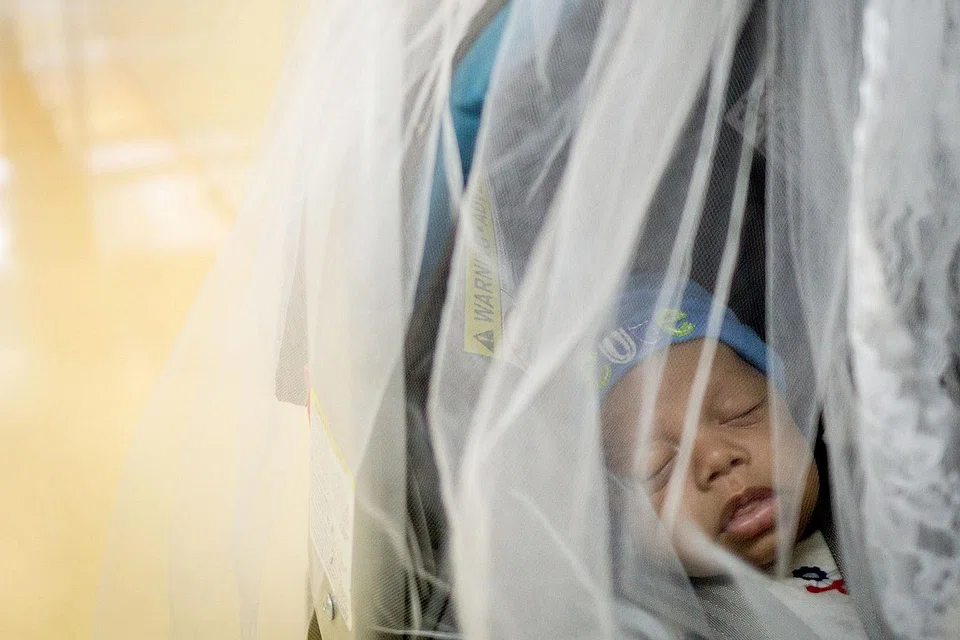
A few months ago, after a fertility procedure at a Mexican clinic, a healthy baby boy was born in New York to a couple from Jordan. It was the first live birth of a child that has been called - to the dismay of scientists who say the term is grossly misleading - a three-parent baby.
Richard J Paulson, president-elect of the American Society for Reproductive Medicine, said soon after the birth was reported on Tuesday by New Scientist magazine: "This is huge."
The method used to help the couple is one that reproductive scientists have been itching to try, but it is controversial because it uses genetic material from a donor, on top of that of the couple trying to conceive.
The purpose is to overcome flaws in a parent's mitochondria that can cause grave illnesses in babies. Mitochondria, the cell's energy factories, are separate from the DNA that determines a child's inherited traits. But mutations in these little organelles can be devastating, resulting in fatal diseases of the nerves, muscles, brain, heart, liver, skeletal muscles, kidney and the endocrine and respiratory systems that often kill babies in their first few years.
The technique that led to the healthy birth entailed moving the DNA from an egg of the mother, who had faulty mitochondria, and placing it in the egg of a healthy egg donor - after first removing the healthy donor's nuclear DNA from her egg cell. That egg, with its healthy mitochondria and the mother's DNA, was fertilised.
More than a decade ago - before controversy forced the work to stop - researchers tried a simpler technique that did not involve swapping nuclei between eggs. Instead, they injected some healthy mitochondria into an egg in an attempt to help with repeated failures in in-vitro fertilisation. This was not, however, a method that could be used to prevent the birth of children with mitochondrial diseases.
The story of the Jordanian couple's procedure began in 2011, when they consulted New York University's James Grifo, a professor of obstetrics and gynecology who had pioneered the method in studies with mice.
He referred them to his former student, John Zhang, medical director of the New Hope Fertility Center in New York. Dr Zhang had tried the method in 2003 in China, but the 30-year-old woman's twins were born prematurely and died, though their mitochondria were normal.
When Dr Zhang told the Jordanian couple about the technique, they hesitated. They already had a child who was very ill with Leigh syndrome, a mitochondrial disease, but there was a chance they could have a normal baby on their own. A quarter of the woman's mitochondria were mutated, but the fact that mitochondria are distributed at random in eggs made it a lottery. If an egg with mostly good mitochondria happened to be fertilised, the baby would be fine. The couple decided to take their chances.
They returned to Jordan and had a baby, who was born with the same mitochondrial disease, Leigh syndrome. Dr Zhang said babies with this terrible disease progressively lose their ability to move and breathe. The baby had a tracheotomy and a feeding tube, he said, and the parents had to suction its lungs every hour.
Their first child had died at age six; the second did so at eight months.
The couple returned to Dr Zhang, ready to try the mitochondrial transfer technique.
New Hope Fertility Center has a clinic in Mexico, so he suggested doing the procedure there because it was banned in the United States. More than a decade ago, the Food and Drug Administration ordered clinics to file an application to do such work. Later, Congress attached a rider to a Bill to block the funding of such research.
The woman became pregnant again. Six months in, she said she already knew this baby was different. It kicked constantly - unlike the others who, affected even in the womb, had hardly moved.
Her son, now five months old, is healthy and has normal mitochondria.
Specialists in reproductive medicine say they hope this success will change attitudes toward mitochondrial transfers. Dr Grifo said the term "three-parent baby" is misleading and "caustic", as it degrades patients who need the treatment.
Dr Paulson stressed that mitochondria do not define a person, because the genes for traits that make up a person's appearance and other characteristics are carried in the nuclear DNA. If a white woman got mitochondria from an Asian woman, for example, her babies would be white, with no traces of the Asian mitochondrial donor. The ban on mitochondrial transfers is thus neither scientific nor rational, and is not evidence-based, he said.
Reproductive scientists who have been frustrated by the ban are gratified by Dr Zhang's success and angry that it took so long. Britain recently allowed research on mitochondrial transfers, but the ban is still in force in the United States.
The basic research showing that the DNA swapping method could work was done more than 20 years ago, in Dr Grifo's lab, using mice. When all work on mitochondrial transfers came to a halt in the US, he abandoned his studies.
The success now, he says, is long overdue. "This could have happened in 2002," he said. NYTIMES
Share with us your feedback on BT's products and services
TRENDING NOW

Singapore identifies 7 firms responsible for haze fires, notices issued urging action: Grace Fu

Could stablecoins be the future of money?

Singapore should prepare for prolonged haze until November, says Grace Fu

High Court rules against Julius Baer’s Singapore trust arm in US$50 million family trust dispute

