Creepy, growing success
Filmmakers here are putting their stamp on Asian horror as the genre gets increasing recognition in Hollywood, reports DYLAN TAN
IT'S not just sex that sells; horror seems to be doing just as well. Whether it's locally made, from the region or Hollywood, in cinemas or on TV, local audiences love a good scare with flicks like Gilbert Chan's 23:59 (2011) performing strongly at the box office; Japan's The Ring and Ju-On franchises becoming cult hits here; and television series like American Horror Story enjoying a strong following on cable.
Fans of the genre can look forward to more tales from the dark side as four upcoming local horror productions are slated to hit the big and small screens in the coming months.
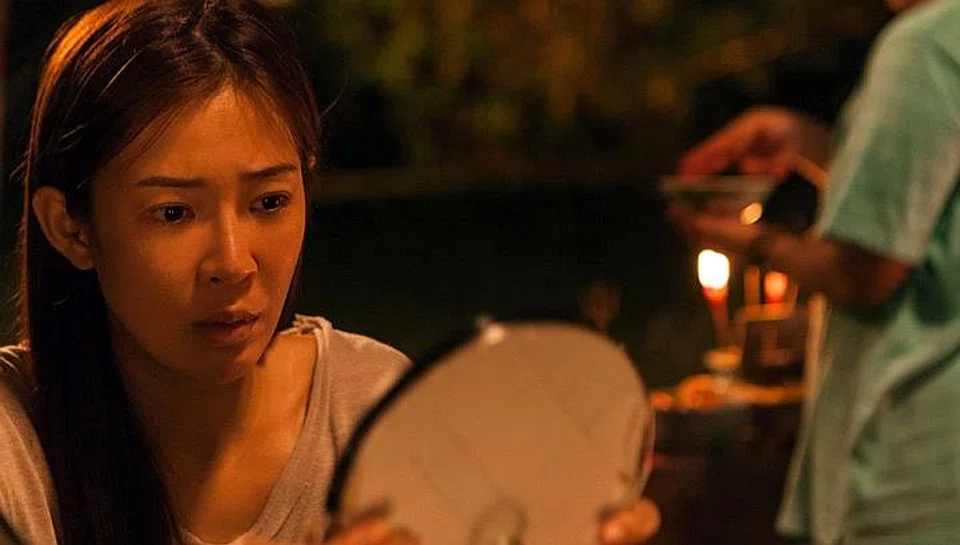
Opening in cinemas next week is Afterimages by Singapore-based American filmmaker Tony Kern; cable network HBO Asia will premiere its new in-house mini-series, Grace, in October; hit director Kelvin Tong has just started shooting his new Hollywood-bound English film, The Faith of Anna Waters, this week; and award-winning veteran television- writer-producer-director Lee Thean- Jeen, recently wrapped up his first-ever horror feature, Bring Back The Dead.
Though all four works fall under the same genre, the makers say it doesn't mean they will all look the same.
Kern, for instance, explains that each segment of his omnibus film, Afterimages, features a different style. "None of the five stories looks the same and only three have ghosts in them," shares the writer-director, whose previous two features - Haunted Changi (2010) and A Month of Hungry Ghosts (2008) - also dealt with the afterlife.
Likewise, Grace's director, Tony Tilse, clarifies the series isn't about the supernatural per se. "We try to tell a complex story - it's about family dynamics. The horror is more a separate layer to it and not just the essence of Grace," says the veteran Australian filmmaker, who shot the four-parter in Singapore with international actor Russell Wong leading the ensemble cast.

Lure of Asian horror
Both Tilse and Kern reveal, as foreigners, the Seventh Month Hungry Ghost Festival celebrated here and in the region played a part in inspiring their brand of horror. The latter says when he first heard of the ghost month, it blew his mind, and the research he did on it culminated in his debut feature, A Month of Hungry Ghosts.
Tilse reveals he saw the festival being celebrated while shooting another HBO Asia production, Serangoon Road, last year; and some of the tradition and mythology behind it fascinated him enough to work its way into Grace.
Lee, whose film Bring Back The Dead is slated for release next year, feels that because Asian culture is so rich in superstition, "there is so much more collective fear to creatively exploit".
Which explains why Thai, Japanese and Korean horror films are popular not just in their domestic markets but also across the world, as well as here in Singapore, despite the language and cultural barriers.
"All the best horror comes out of this region anyway - and then gets badly remade by the Americans . So it's exciting for me to come here and do Grace!" says Tilse.
HBO Singapore's head of programming & production, Erika North, adds: "The Asian horror canon is so diverse, matured and well-defined that it's a wonderful palette to start with . . . plus we also know the genre works across the region."
Tong, who found breakthrough success with Singapore's first horror film, The Maid (2005), notes the appeal of horror in Asia lies mainly in the concept of retribution.
"Whether you're Chinese, Japanese or Thai, we can understand each other's horror films because we all fear retribution and believe in karma: if you do something bad, it's going to come back and get you," he explains.
"It's very different from America, where it's more about a deranged psychopath like Saw or Friday The 13th - their movies are seldom about the supernatural."
Minimal budget
The horror genre has also been enjoying a revival of late with Hollywood producer Jason Blum turning low-budget films like the Paranormal Activity franchise and, more recently, last year's The Purge and The Conjuring into huge box-office hits.
That has led veteran Hong Kong producer Peter Poon to try and replicate that formula with Tong's The Faith of Anna Waters, which is being touted as the first Hollywood film to be directed by a Singaporean filmmaker. He's confident of recouping the film's modest budget of US$5 million (S$6.26 million) because of the current appetite for the genre in the West as well as its potential to crack Hollywood since it's filmed in English and stars American TV actors Elizabeth Rice and Matthew Settle from Mad Men and Gossip Girl respectively.
Tong reveals the project, originally titled, Email, was meant to be an indie project that he was going to shoot himself for S$1 million with no stars attached until Poon got hold of the script and caught Hollywood investors' interest because of the genre and the story.
The Faith of Anna Waters' other co-producer and veteran filmmaker, Kat Goh, however, goes as far as to say horror films typically don't even need a marquee name to front it because its biggest selling point lies in the horror elements itself.
Another reason budgets can be kept low is that when it comes to scaring the audience, less is actually more.
"Action films are about showing stuff like fast cars and helicopters and then blowing them up; horror, on the other hand, is about not showing you anything because it plays on your subconscious - it's all in your mind and in the shadows," notes The Faith of Anna Waters' third co-producer, Leon Tong. "Not only that, unlike comedies which are often culture-specific, horror transcends boundaries because when something jumps out at you - be it American, British or Japanese - it works the same!"
Not just about ghosts
While Kern and Tong are returning to genres that have shot them to fame, both say they are not doing it for commercial reasons.
For Kern, Afterimages is the product of five years of blood, sweat and tears that began with his "research piece", A Month of Hungry Ghosts; and Haunted Changi, which was made to test the market's appetite for local horror films.
Tong counts himself fortunate that the timing is now right for him to make The Faith of Anna Waters and have a crack at Hollywood because of the interest in Asian horror with films like Japan's The Ring, Thailand's Shutter and Hong Kong's The Eye being remade in English over the last couple of years.
"I see horror from the East and West converging already, so I'm very lucky to be at this juncture," he says. "It is very different from the time I made The Maid, when there were very few ghost films and mostly just slasher films. So I think Americans now are more familiar and accepting (of our brand of horror)."
The need to stay fresh and on the cutting edge are challenges most of these filmmakers face when it comes to scaring their audience.
"Horror fans are the hardest to please simply because they've seen everything out there. So you can't just copy - or else you'll be punished for it with what they'll write on the Internet," observes Tong.
Lee adds: "I think the biggest challenge of this genre aren't the scares themselves, really, but creating a compelling story and characters that an audience can emotionally invest in, that they can root for when the scares come."
More than that, horror films are never really just what they look like on the surface, with Tong citing zombie films like Danny Boyle's 28 Days Later and 28 Weeks Later as social commentaries on modern societies.
Kern adds Afterimages - which is based on the concept of burning paper cameras for the dead in return for films from hell - also makes a statement about people who go to the murky depths of the Internet to illegally download movies. Another segment that revolves around a woman who takes a photo of a suicide jumper is inspired by people who take spy photos of other commuters on trains and then post them online.
Tong sums it up best by stating: "Horror is the conduit through which we express something darker in humans . . . so although they might be about supernatural things, it's really about human beings."
Share with us your feedback on BT's products and services