

DBS Foundation donates S$14.5 million to ITE to prepare youth for ageing
About 24,000 students from lower-income families will benefit over three years
Sudeshna Dhar
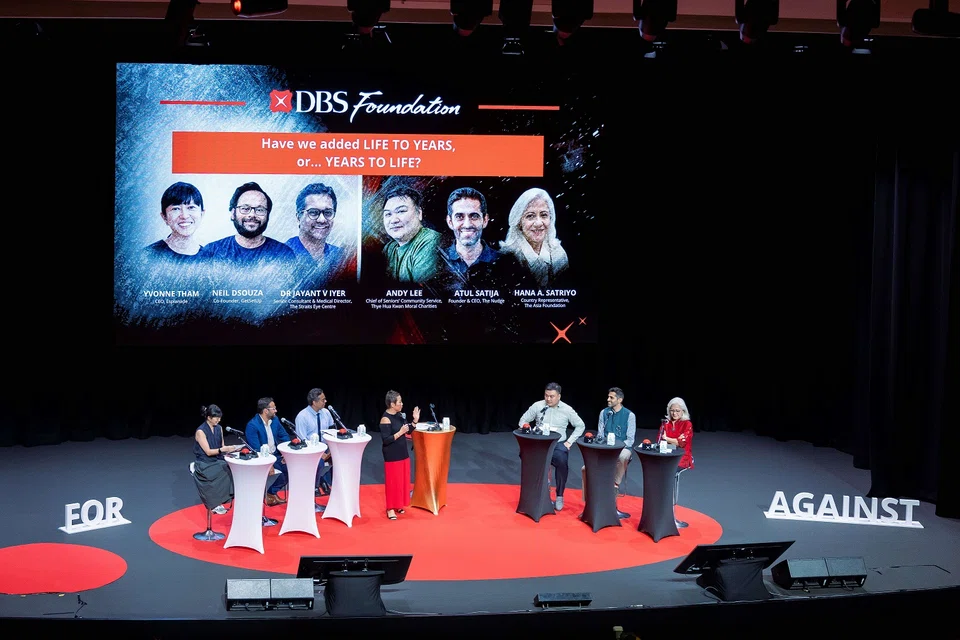
[SINGAPORE] DBS Foundation said on Friday (Nov 7) that it has contributed S$14.5 million to the Institute of Technical Education (ITE) in the largest one-off donation to the institution to date.
The move will see about 24,000 students from lower-income families – who have completed a financial literacy module – benefiting over three years.
The Career Readiness Programme is the latest mentorship and financial literacy outreach effort between DBS Foundation and ITE, to guide students in building long-term financial resilience.
The foundation said the project is meant to prepare Singapore’s youth for ageing.
Head of DBS Foundation Karen Ngui said the issue of staying active and healthy as they get older is one that the youth of today will have to eventually face.
“As societies age, we are not just facing a demographic challenge; we’re being offered an opportunity to redesign it,” she said.
“Ageing is one of those universal journeys that no one can run from. Whether as a policymaker, innovator, a business or simply as people – we are all in this together.”
Dealing with ageing societies
The launch also featured a dialogue about the future of ageing societies.
Speaking in favour of economic empowerment for the elderly, GetSetUp chief executive Neil Dsouza noted the potential in capitalising on them as a resource to serve the wider community.
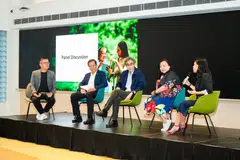
For decades, people have had to retire “not because they lost (their) ability, but because society did not know what to do with their skills”, he said.
“Today, technology has changed that equation… all you need is a little bit of curiosity, a Wi-Fi connection and maybe ChatGPT, and you can start a business,” he said at the DBS Foundation Impact Beyond Dialogue held at ITE College Central.
GetSetUp is a US-based organisation that provides digital-literacy training, as well as health and wellness coaching to seniors. Dsouza shared that as its CEO, he has witnessed 70 to 80-year-olds guide their peers online in using technology for services as simple as setting up an iPhone.
“They have made money out of that,” he added. “I have seen people build businesses because they now have the skills and the tools to actually (serve other aged people) with their skill set.”
He also noted the existence of a market where such individuals could find employment, terming it the “silver economy” – a “trillion-dollar industry in the next couple of years”.
“They actually have an advantage over all the young people. They have the networks, relationships, wisdom and domain knowledge.”
However, fellow panellist Atul Satija, founder and CEO of India-based non-profit The/Nudge, cautioned about the current reality facing the elderly.
On average, an elderly individual today depends on their children, has basic healthcare, and cannot fully rely on their pension for a living, he said.
Describing the notion of 70-year-olds assisting their older peers as “romantic”, he pointed out that the average senior citizen in Asia does not have a job available beyond the age of 55.
In fact, only a small percentage do.
“In a formal market, only 12 per cent will have any re-employment opportunity,” he said. “They are shunned out of the workplace, and the work environment, before they actually get to 60.”
Retirement income is often insufficient, with only a small proportion of people having adequate pension to cover their monthly expenses.
This leaves them in an “extremely distressing situation”, he added, mentioning that 25 per cent of Asian lower-middle-class families are often one healthcare emergency away from financial distress.
As a result, this would only increase inequality in the quality of life, he said.
“Cultural revolution” to accommodate elderly in the workforce
Hana A Satriyo, country representative of The Asia Foundation, shared about the need for a “cultural revolution” of sorts to popularise the recognition of the elderly as an economic resource.
“We are blessed in Asia to live in a society that respects elders,” she said. “(But) we are not equal in terms of preparing humans to age.”
She added that Singapore is known as a “blue zone”. The term refers to regions that cater to ageing societies and ensure high life expectancy, through the promotion of a healthy and active lifestyle.
Other countries, however, devote their resources to focus on prosperity.
Reversing this would require a “serious conversation”, noted Satriyo, which is something that society at present is not prepared for yet.
Accepting that the elderly would indeed be capable of contributing towards the workforce, as described by Dsouza, would require a “cultural, not just scientific revolution”, she added.
Decoding Asia newsletter: your guide to navigating Asia in a new global order. Sign up here to get Decoding Asia newsletter. Delivered to your inbox. Free.
Share with us your feedback on BT's products and services
TRENDING NOW

Once staunchly pro-China, Malaysian Chinese businesses are now distancing themselves from Beijing

Looking beyond looming CEO succession, should UOB potentially pursue a transformative merger?

Could stablecoins be the future of money?

Grab CEO’s wife Chloe Tong on life with Anthony Tan and finding her purpose

