Beyond The Surface
Look inside this deceptively opaque house to discover its surprisingly cool and spacious interiors.
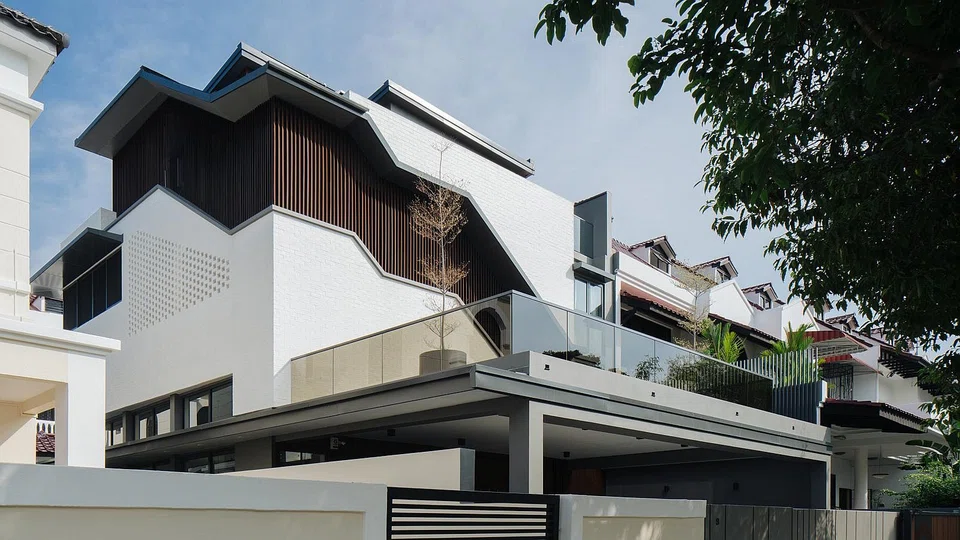
THIS NEW HOUSE in Bukit Timah has attracted its share of gawkers, and it's not surprising why. From the outside, it seems to be comprised of just one single spatial volume set back from a large balcony. Where are the windows, glass doors and stratification of floors that characterise many of its neighbouring homes?
Designed by architect Wu Yen Yen of Genome Architects, this corner terrace is anything but airless and claustrophobic inside, despite its opaque exterior. On the contrary, her design provides this family home of five with spacious and airy quarters that adopt an eco-friendly approach to cooling as well. However, how the house achieves all this is only evident on the inside.
"You can't tell how many floors there are from looking at the façade," says Ms Wu of the 3,900 sq ft, four-storey house. This was intentional on her part, to circumvent the usual wedding cake-style architecture of multi-storey homes. The form of the building is also a natural consequence of the heat-mitigating measures Ms Wu employed to prevent the west-facing home from getting too hot for comfort.
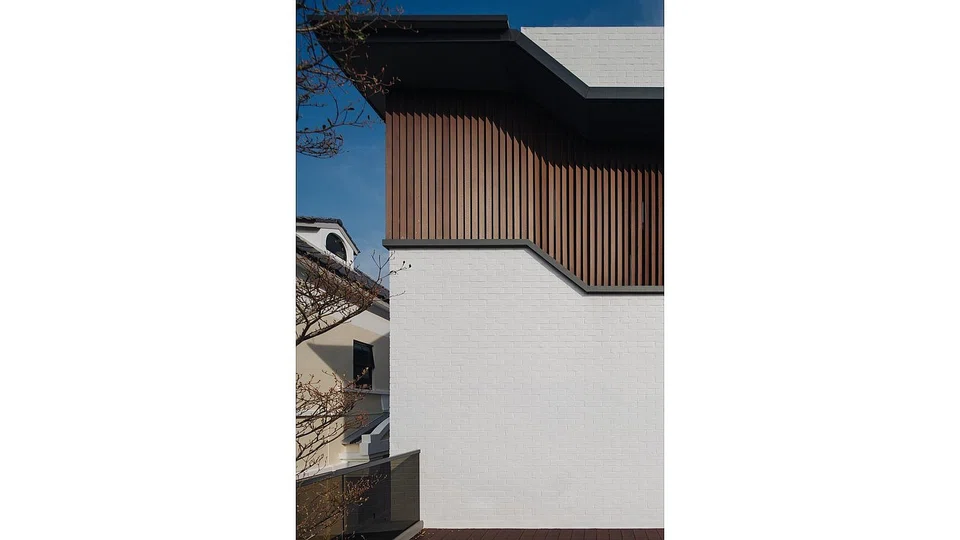
The structure's defining feature, the jagged timber slat 'sash' that wraps around its facade, is no mere decoration. It's a crucial element in helping the house keep cool.
The homeowners, a couple in their forties with three kids, wanted Ms Wu to design a climatically suitable, eco-friendly home, which also addresses their concerns about privacy, as the site sits along a busy thoroughfare leading to a popular school.
They contacted Ms Wu two years ago, when the husband was impressed by a house she designed for his friend. "That house was spacious, functional and well-ventilated, and my husband was so excited, he came home and said he found our architect," recalls the wife.
The partnership turned out to be so amicable that Ms Wu's proposal for the house was accepted without further changes. That is saying something, for some of the ideas she had were nothing short of radical.
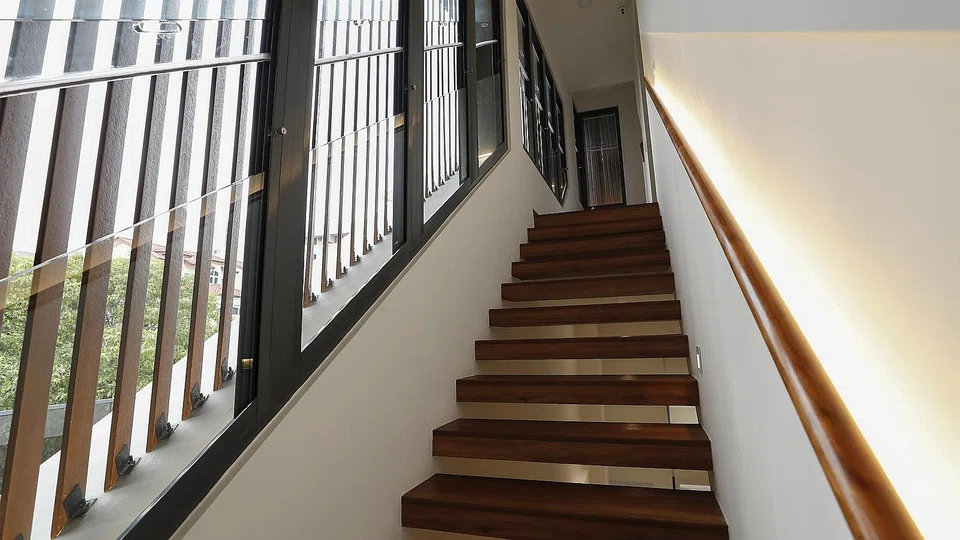
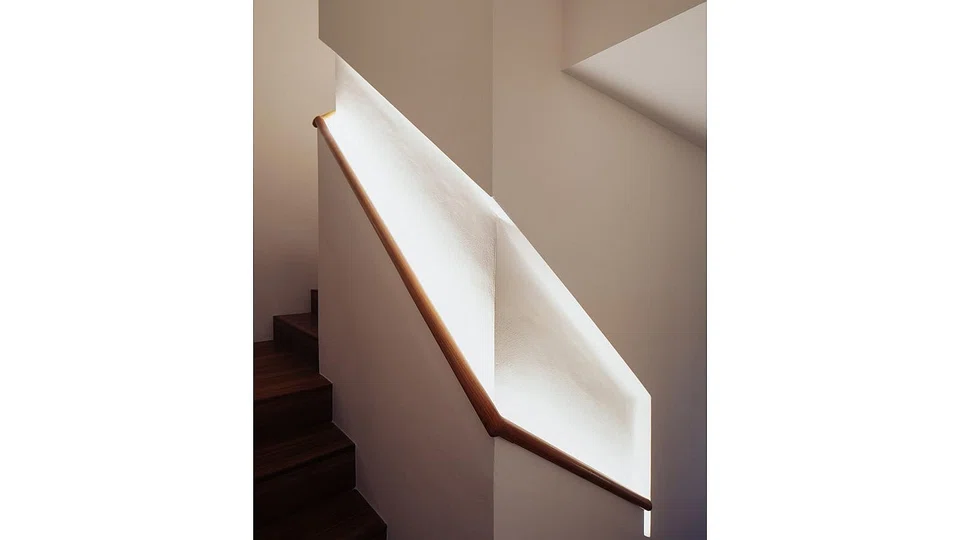
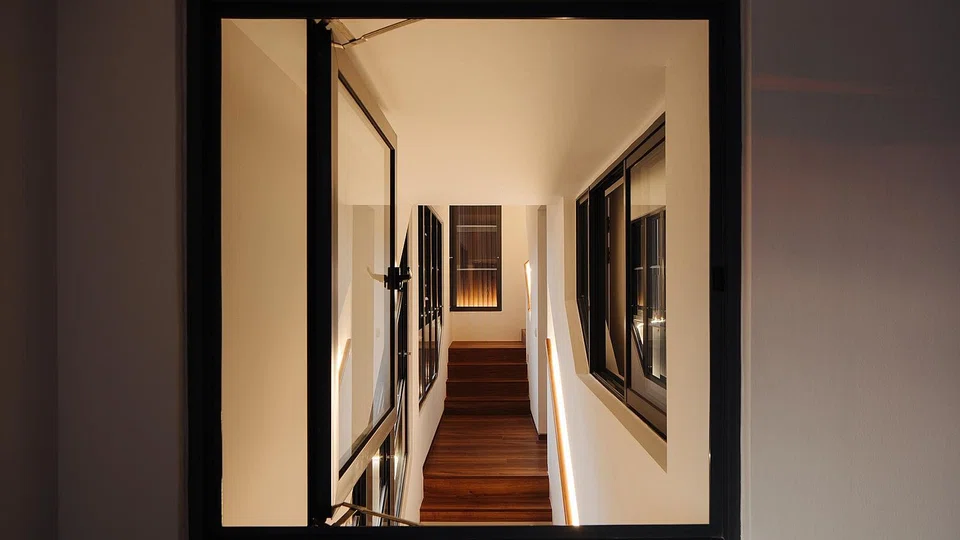
The staircase, for example, wraps around the house instead of being conventionally sited within the living space. Doing this milks every inch of space from each floor, getting rid of "usually under-utilised large landing areas and long corridors," explains Ms Wu. "Why should we give so much real estate to staircases?" More importantly, the staircase also acts as a buffer between the interiors and the hot air outside.
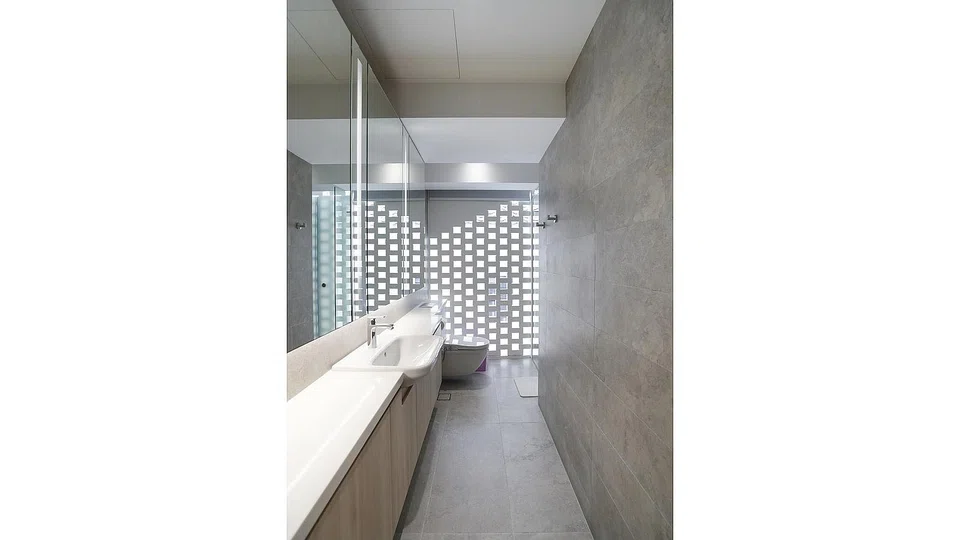
Enhancing this heat buffer is a double-layered brick wall with an air pocket in between for insulation. The tactility of the white fairface brick surfaces is more evident at night with the glow of illumination from within the house. A generous metre-wide overhang shades the windows, yet another heat-reducing strategy in Ms Wu's arsenal.
The openness of the staircase is tempered by concrete timber slats which are precisely angled so that one can see clearly out from the inside, without giving people outside the same privilege of looking in. The row of slats, which run in line with the profile of the staircase, forms the jagged 'sash' seen outside. Unique frameless windows called sashless windows, which open and close from the top and bottom instead of to and from the sides, were installed along the staircase. But more often than not, the family leaves these windows open to naturally ventilate the home. The open stair treads (also made from concrete wood) encourage the flow of natural air throughout the interior spaces as well.
These natural cooling strategies suited the easy-going homeowners perfectly. The couple had in fact asked Ms Wu whether it was possible not to have air-conditioning in the home. As it became clear that the couple were inadvertently building a 'green' home, with their decision to install solar panels, a water heater which runs on ambient heat, and LED lights, Ms Wu submitted the project for the Building and Construction Authority's Green Mark certification - it obtained a Gold award.
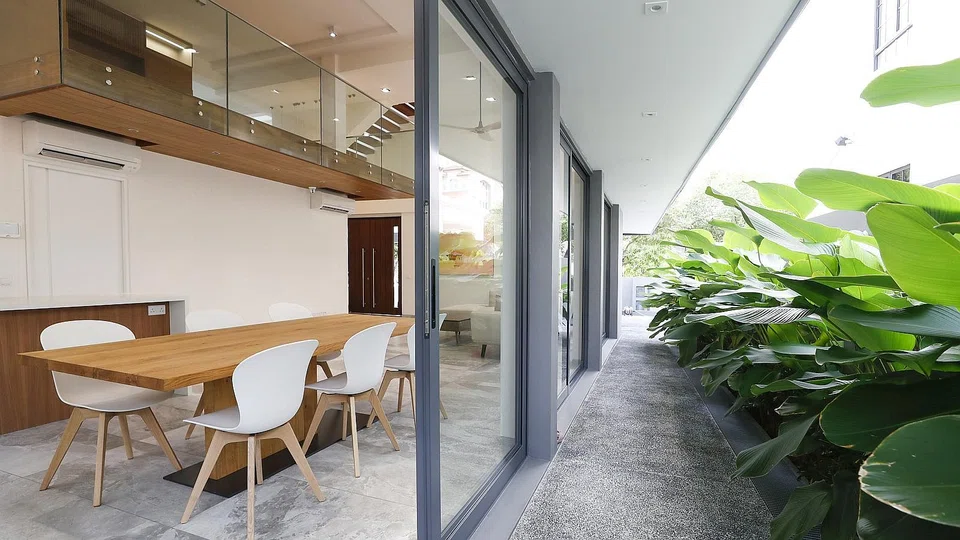
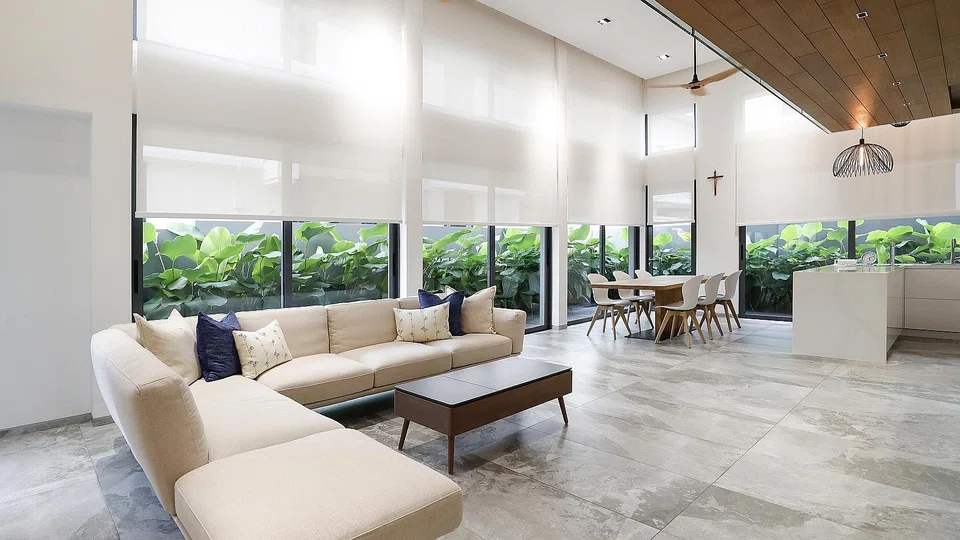
Ms Wu believes that functionality doesn't have to be at odds with design. "It's still important for homes to look like homes," she says. To bring ample daylight into the open concept living, dining and kitchen area, she designed a 4.5m-high double volume space on the ground floor enclosed by floor-to-ceiling laminated glass doors along two walls. The mezzanine overlooks the public spaces and provides a visual connection between the two floors.
To make space for a bedroom the couple wanted on the ground floor for future needs and a powder room for guests, Ms Wu moved the laundry area to the second floor - and the home is better for it. The family enjoys larger communal living and dining spaces, while back-end utilities are tucked out of sight on the second storey.
The helpers' room and a huge balcony suited for barbeques take up the rest of the second floor. The daughter's room and master bedroom are located on the third floor, while the two sons have bedrooms with large balconies on the fourth floor.
Of the house, which cost S$1.6million to build over two years, Ms Wu says, "The greatest satisfaction was bundling what the couple wanted in one compact structure. I wanted the house to stay compact, but create a variety of spaces. It had to achieve the functions of being well-ventilated and regulate heat, have an interesting facade, but also look like a home."
Share with us your feedback on BT's products and services