

Revolution in suburbia
At the Tsao residence, there's none of the usual opulence one would associate with a multi-million dollar home as the family invests instead in green technology.
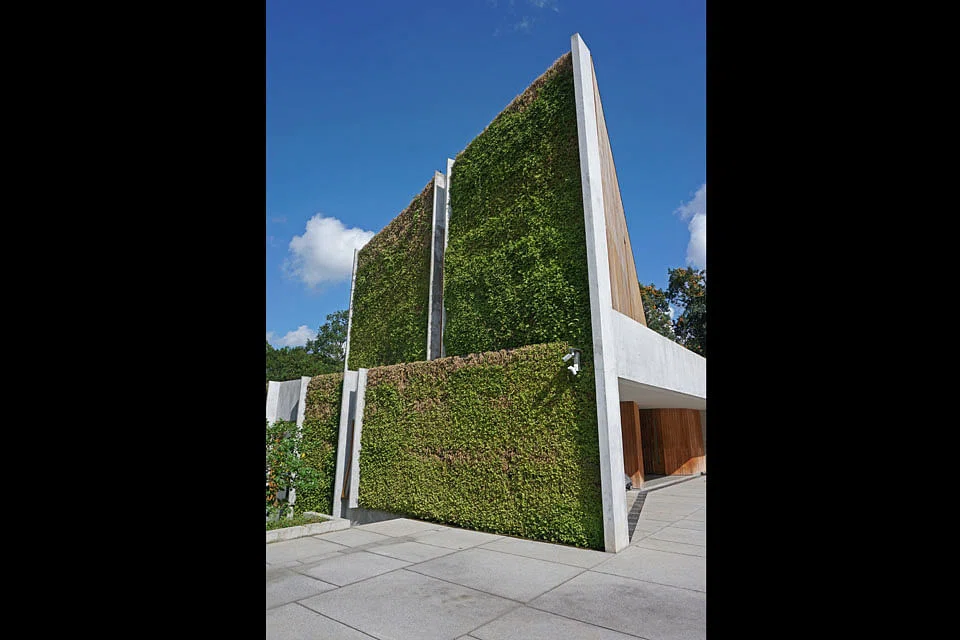
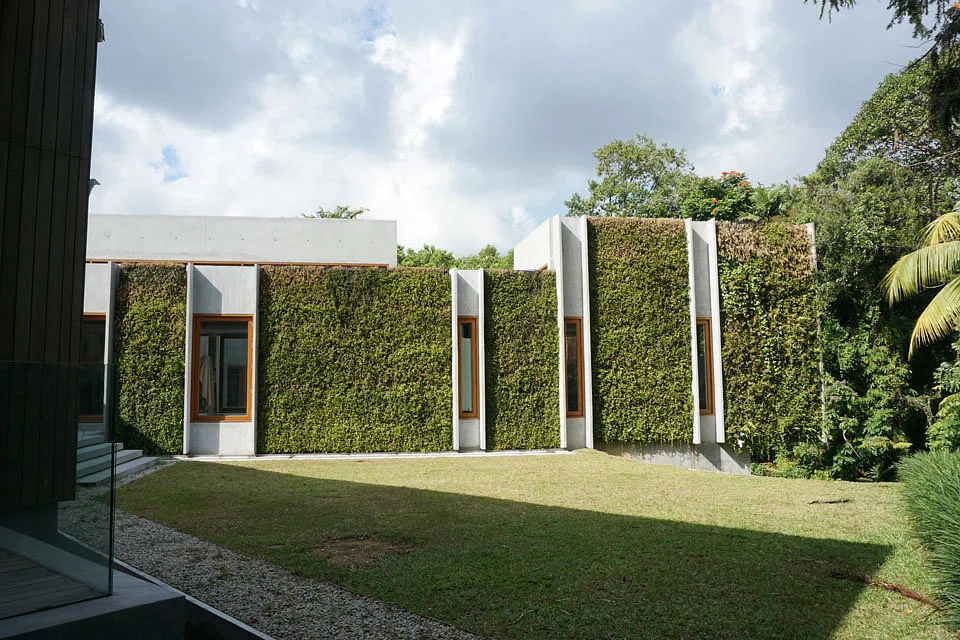
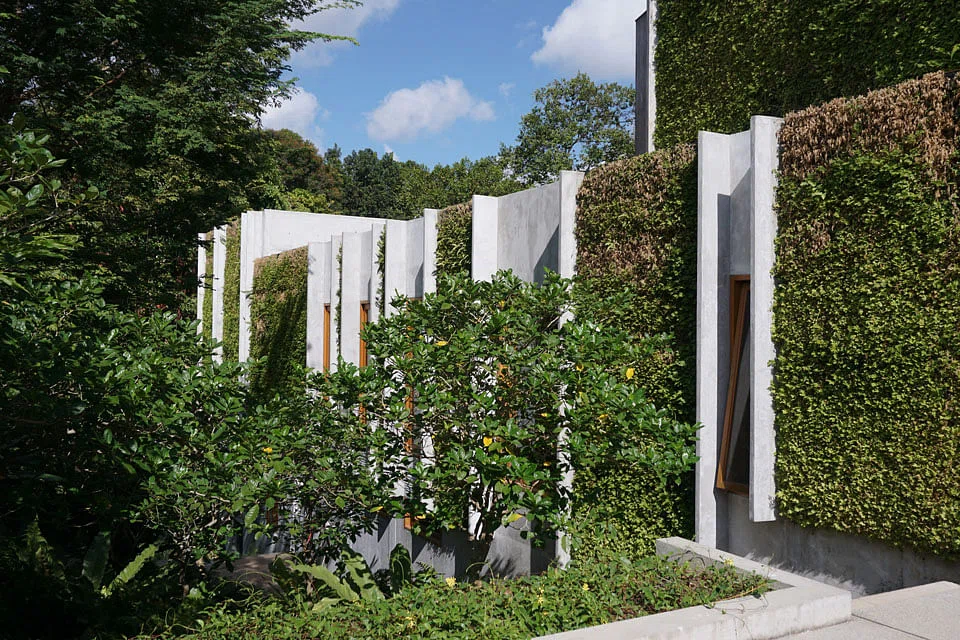
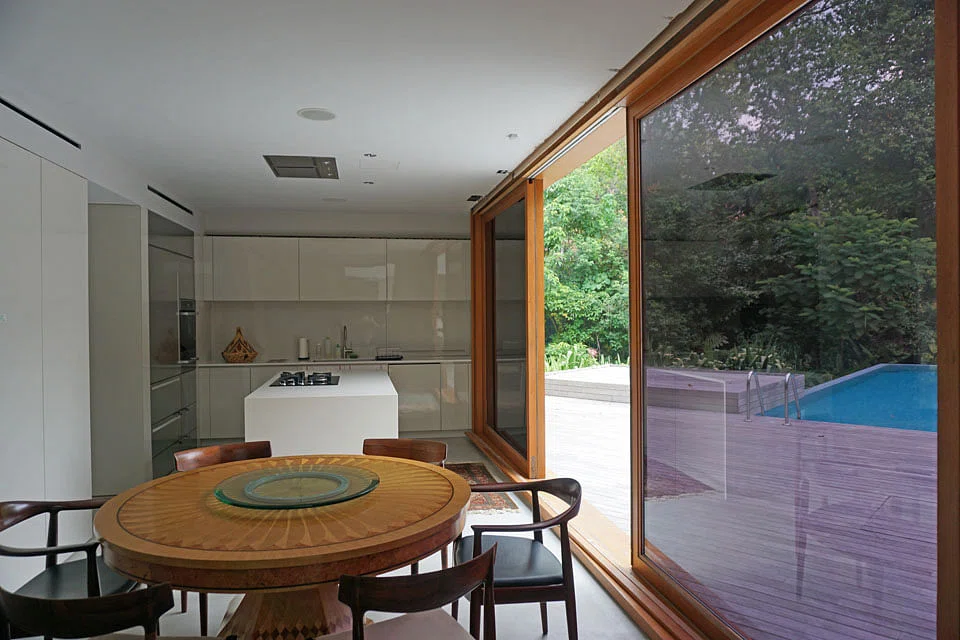
FOR a multi-million dollar house, some might find the new home of Darani Winnie Tsao a little underwhelming. Nestled in District 10, one of Singapore's most exclusive neighbourhoods, its nondescript facade - partially covered with vertical planted walls and weather-worn timber cladding - seems to almost fade into the surrounding green verge while neighbouring mansions of shiny glass, stone and steel vie with one another for prominence.
But at the cost of around S$1,000 per sq ft to build, the 20,000 sq ft Tsao residence, which has a built up area of 7,000 sq ft, was not cheap. So where's the Carrara marble and titanium cladding one usually associates with luxury homes?
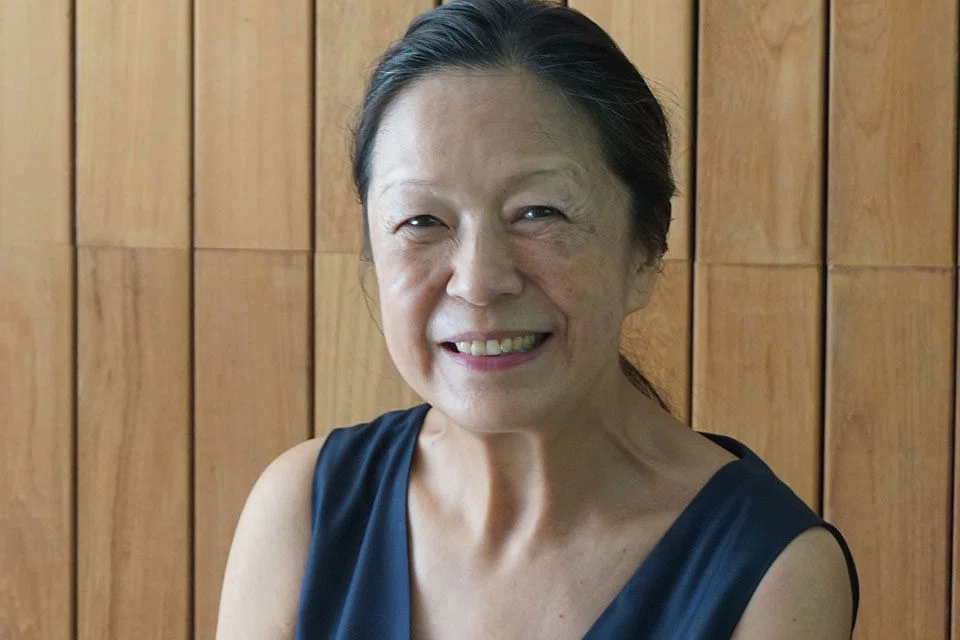
Dressed in a simple (but stylish) black tunic, with hair tied back in a ponytail, and sans makeup, Mrs Tsao reveals that much of the cost went into the "intangibles" required to build a house that is environmentally sustainable. "The initial investment for green (technology) is not cheap," she adds.
It is apparent that Mrs Tsao is not one of your average tai-tais or ladies-who-lunch. She is one who can actually hold a conversation on water bio-retention (she did her own research by visiting HDB bio-retention systems). Her own bio-retention point is at the bottom of the sloping plot of land where runoff rainwater is treated non-chemically. "We had to have the sand (for water purification) replaced five times to get it right," she adds, also revealing her hands-on approach to the construction of the house.
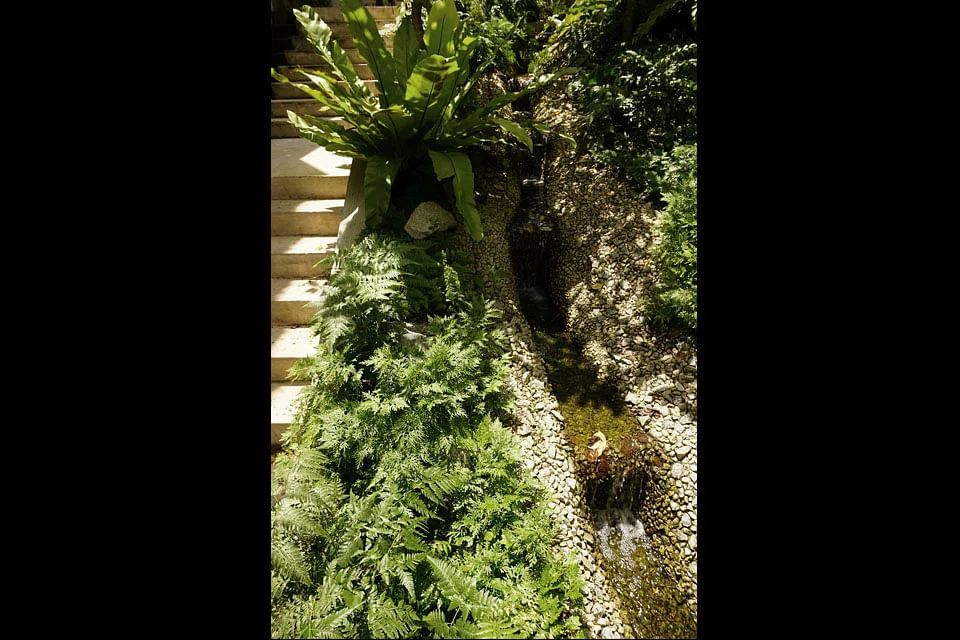
Bio-retention here is part of an elaborate system devised to recycle runoff rainwater to be used for maintenance of the garden, swimming pool and flushing of the water closets. After the rainwater from the roof swales has been channelled to the bio-retention point through a network of drains that have been artfully designed to look like small streams, it is collected in tanks that are hidden under the timber decking in the courtyard where the swimming pool is also located.
The timber for the outdoor decking also warrants mention because some of it came from the single-storey house that used to stand on the site.
"We salvaged the wood from the wooden trusses of the old house," explains Mrs Tsao. Taking the notion of recycling close to the extreme, she adds that even the rubble from the old house was used to build the landscape walls in the garden of the new house.
Non-toxic building materials were also a high priority, so while the floors are mostly finished in concrete (and not marble) the Tsaos live with the comfort of knowing the specially imported concrete from Italy will not give off any toxic fumes. The timber cladding of sustainably farmed teak was also not finished with toxic chemicals: hence it has weathered naturally. "The fewer finishes the better," adds Mrs Tsao.
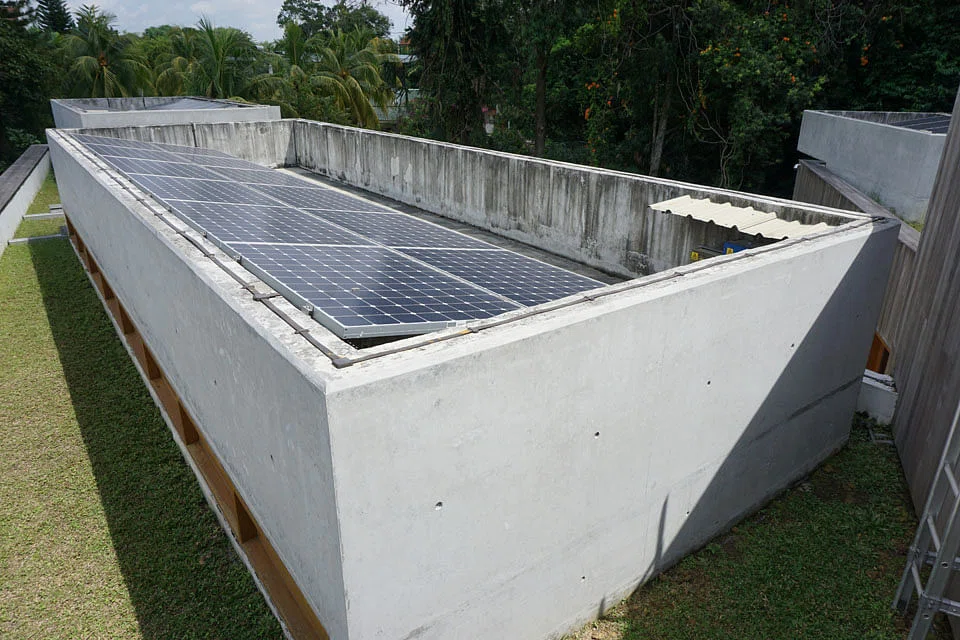
The piece de resistance of this home, however, are the photovoltaic cells or solar panels on the roof that generate solar power. Referred to as "PVs" in this household, Mrs Tsao expects these cells to recoup their cost within five years through savings on the electricity bill. More impressive is that this suburban mother of two has also made it a point to understand the technical aspects of monitoring the storage of the solar energy in special storage cells as well as the daily household energy consumption. "If I can't manage this house, it could become very stressful," she adds.
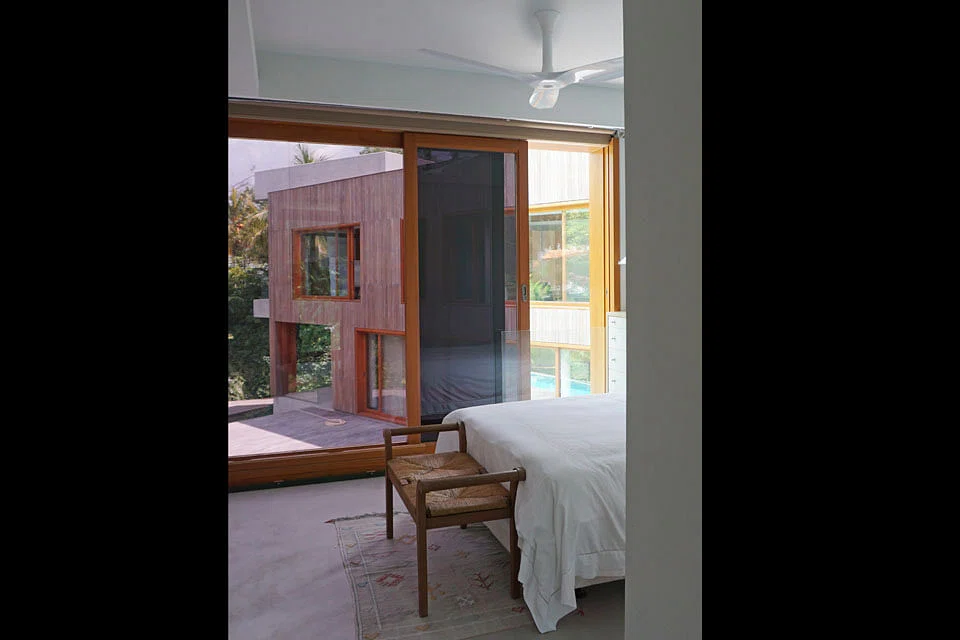
To further keep electricity costs in check, the house was also designed with several aspects of passive energy conservation in mind. Designed by her brother-in-law's architectural firm, Tsao & McKown, special attention was given to creating a home that could be naturally ventilated. To achieve this, the architectural massing of the forms of the house is broken down into three components or "fingers" connected at the very understated main entrance.
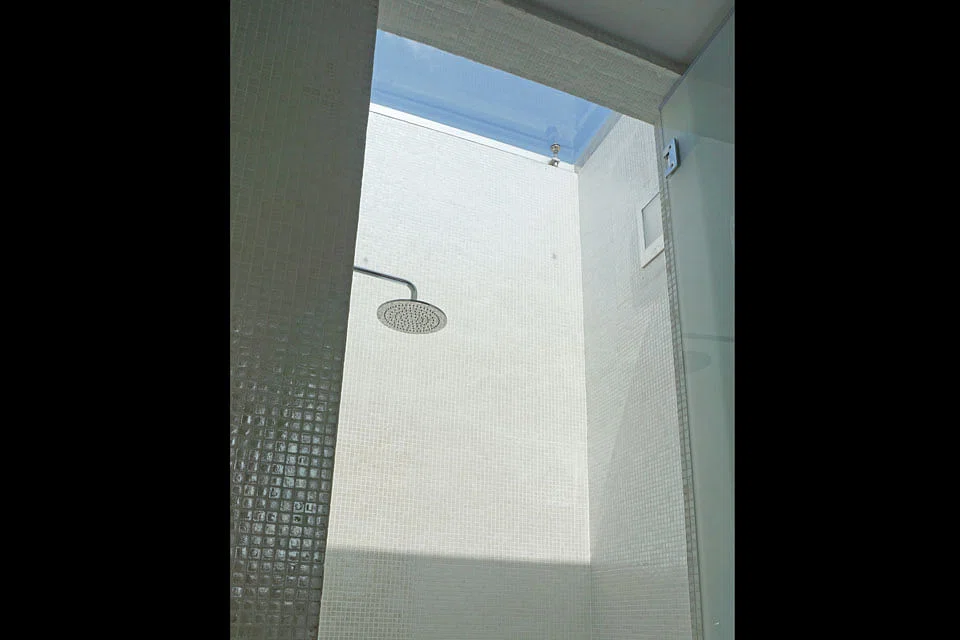
Mrs Tsao and her husband Frederick - who is also the chairman of IMC Pan Asia Alliance - occupy one finger while the remaining two fingers are for their two children. By reducing the mass of the house, cross ventilation is easier to achieve, as most rooms will have windows or openings on more than one wall. Natural light is also maximised and where possible, skylights have been added. Studies to optimise self-shading of the architectural forms had also been done to reduce heat retention.
The efforts of the Tsaos to create an environmentally friendly home have not gone unrecognised. The Building and Construction Authority (BCA) recently awarded the Tsao residence a BCA Green Mark Platinum Award, citing the use of recycled materials and solar energy as some of its accomplishments. It also estimates that energy savings might be as high as 63 kWh/yr (kilowatt hours per year) and water savings at 1,380 m³/yr (cubic metres per year).
While anyone can appreciate saving money, for Mrs Tsao, the real reward comes from the satisfaction of knowing that she has made a contribution to her community. "It is an investment in social capital," she adds. Quietly starting a revolution of her own, she reveals that her home has since become a test lab of sorts for students and individuals interested in advancing the cause of sustainable living.
Apart from architecture students from the National University of Singapore, who were invited to provide feasibility studies during the conception stage of the house, she will also be letting students from the Institute of Technical Education plant an edible garden (and irrigated with collected rainwater). An apiculture (beekeeping) specialist will also set up hives for honeybees so that honey can be added to the menu. It is a small contribution towards solving the world's problems but as Mrs Tsao notes, "As a homeowner, you can do your bit."
Share with us your feedback on BT's products and services






