

Designed and made in Singapore
An exhibition of everyday products explores local manufacturing capabilities

Tay Suan Chiang
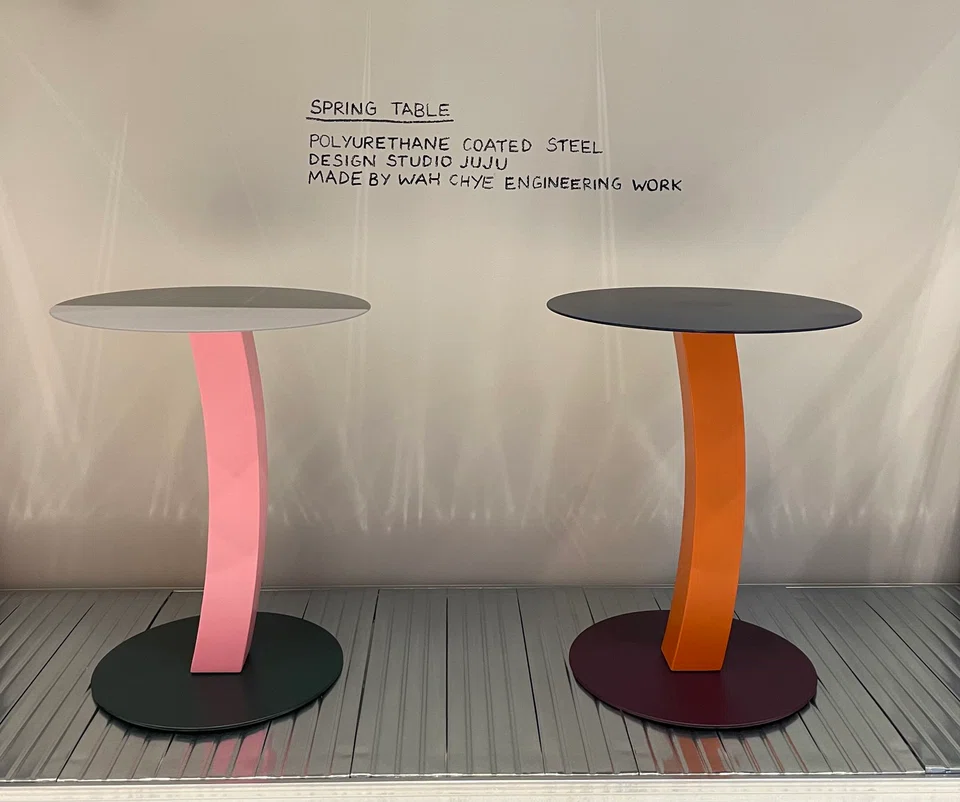
PICK up any item and chances are it comes with a ‘Made in China’ label, because production costs there can be kept low. But what if it said ‘Made in Singapore’ instead?
Not many may know, but Singapore has its own manufacturing industry too, producing items such as Energizer lithium batteries and Dyson’s motors for its vacuum cleaners and hairdryers. But these are considered higher value products and are made more for international brands. On the other hand, while there are products designed by Singaporeans, they tend to be produced overseas due to the lower costs as well.
But local designers Timo Wong and Priscilla Lui of Studio Juju wonder if it has to be this way. Having worked with international manufacturers such as Italian brand Living Divani to produce homeware and furniture., they know only too well that it makes better financial sense to outsource production to foreign manufacturers.
But that hasn’t stopped them from exploring ways that manufacturing locally could be made viable. In early 2020, they planned to start on 2 projects - the first to create a directory of manufacturing resources for Singaporean designers, and the second to create and produce their own products. In the end, they combined the two ideas.
“Pre-pandemic, it used to be easy to visit the overseas manufacturers, but lockdowns put a stop to that, so we began looking at the prospects and constraints of manufacturing in Singapore,” says Wong. That led them to New Optimistic Works - a case study of the possibilities of designing and manufacturing in Singapore.
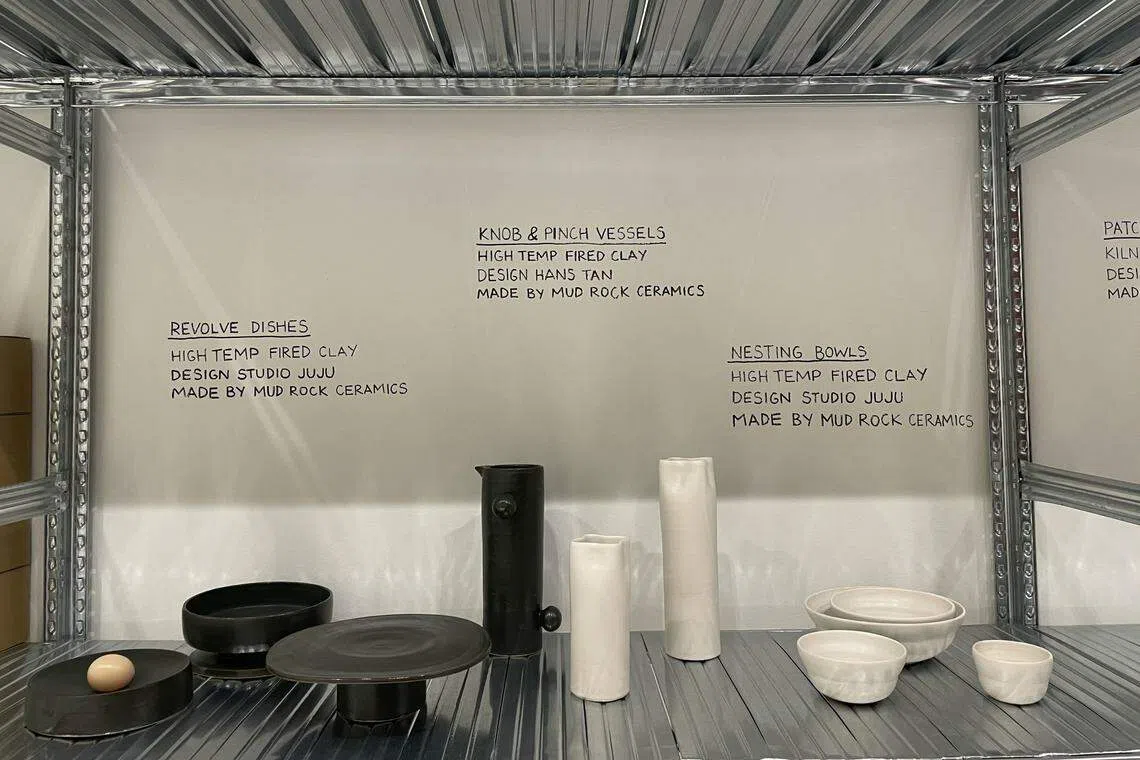
As part of the case study, Wong and Lui roped in fellow Singaporean designers such as Nathan Yong and Hans Tan, for their experience and perspectives on furniture and object production.

Each designer worked with a local maker to create an everyday item. Some items turned out well while others are still a work in progress. “Through experimentation, we recognise strengths to work with, and challenges to work around,” says Lui.
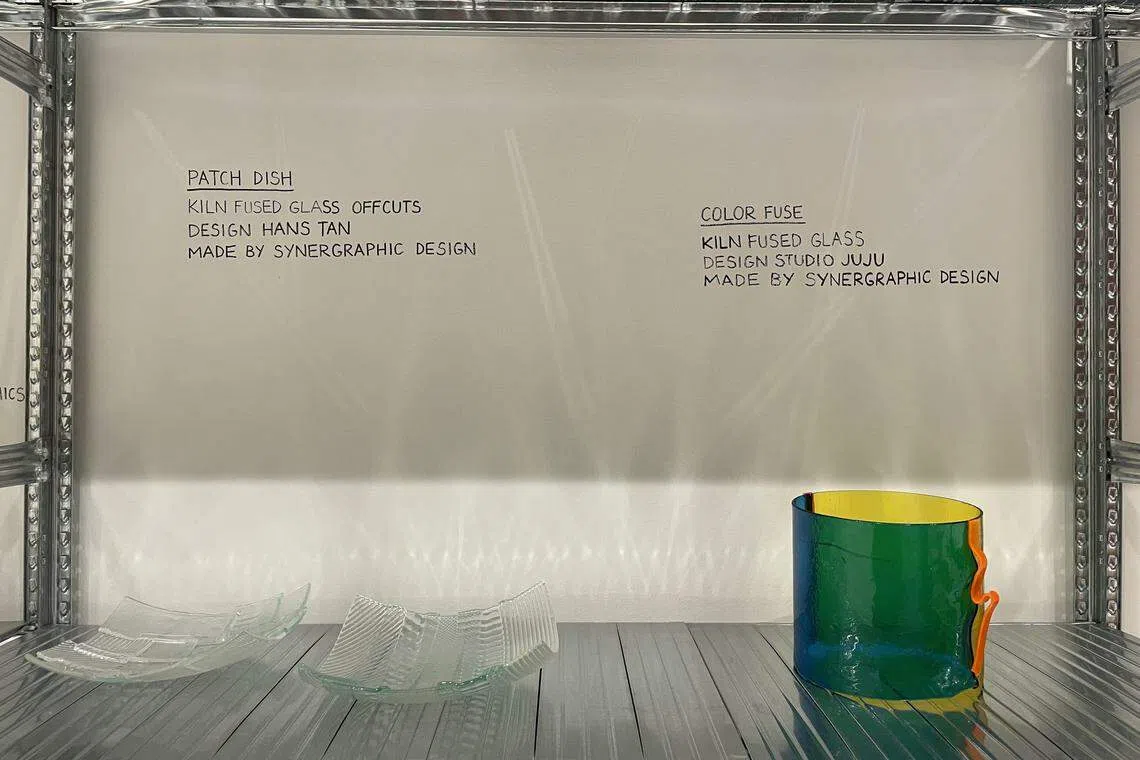
For example, Tan collaborated with glass design studio Synergraphic Design to create a set of dishes made from fused glass offcuts. While that was a success, Color Fuse by Studio Juju and Synergraphic Design didn’t work out as planned, as a piece of glass turned out misshapened during the fusing process.
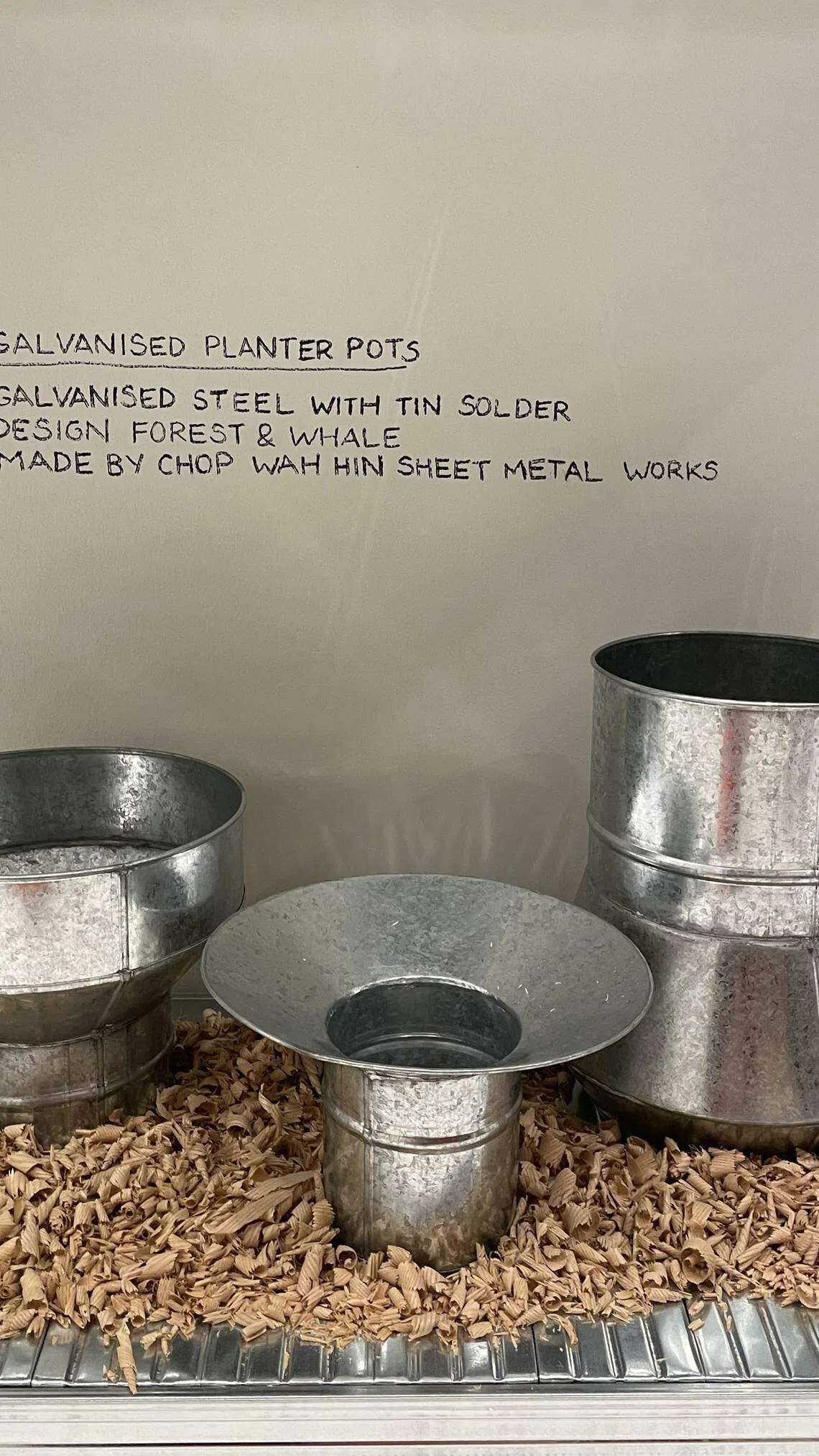
Other notable pieces in the collaboration include a set of galvanised steel planter pots, designed by Forest & Whale and made by Chop Wah Hin Sheet Metal Works.
SEE ALSO

The latter is the only traditional metalsmith remaining in Balestier. Jimmy Chin, who runs the business, usually crafts industrial items such as pipe joints. He says that while there are still metal sheet fabricators in Malaysia, he is one of the last few in Singapore. “Everything produced in Singapore is high-tech. It’s part of progress, and I’m alright with that,” says Chin. He agreed to be part of the project, “so that future generations will remember that Singapore once had a sheet metal fabrication industry.”
Lui recalls that finding the makers brought them all over Singapore, and they are a mix of family-run factories, small workshops and independent artisans.
“There are a few artisans, who are older in years, and we had to pay them multiple visits to show our interest in working with them,” says Lui.
Other makers openly welcomed the designers into their workshops where they also shared their manufacturing processes and concerns about their dying trades. There were some makers that Studio Juju wanted to work with but couldn’t do so, due to time constraints and unrealistic high production costs.
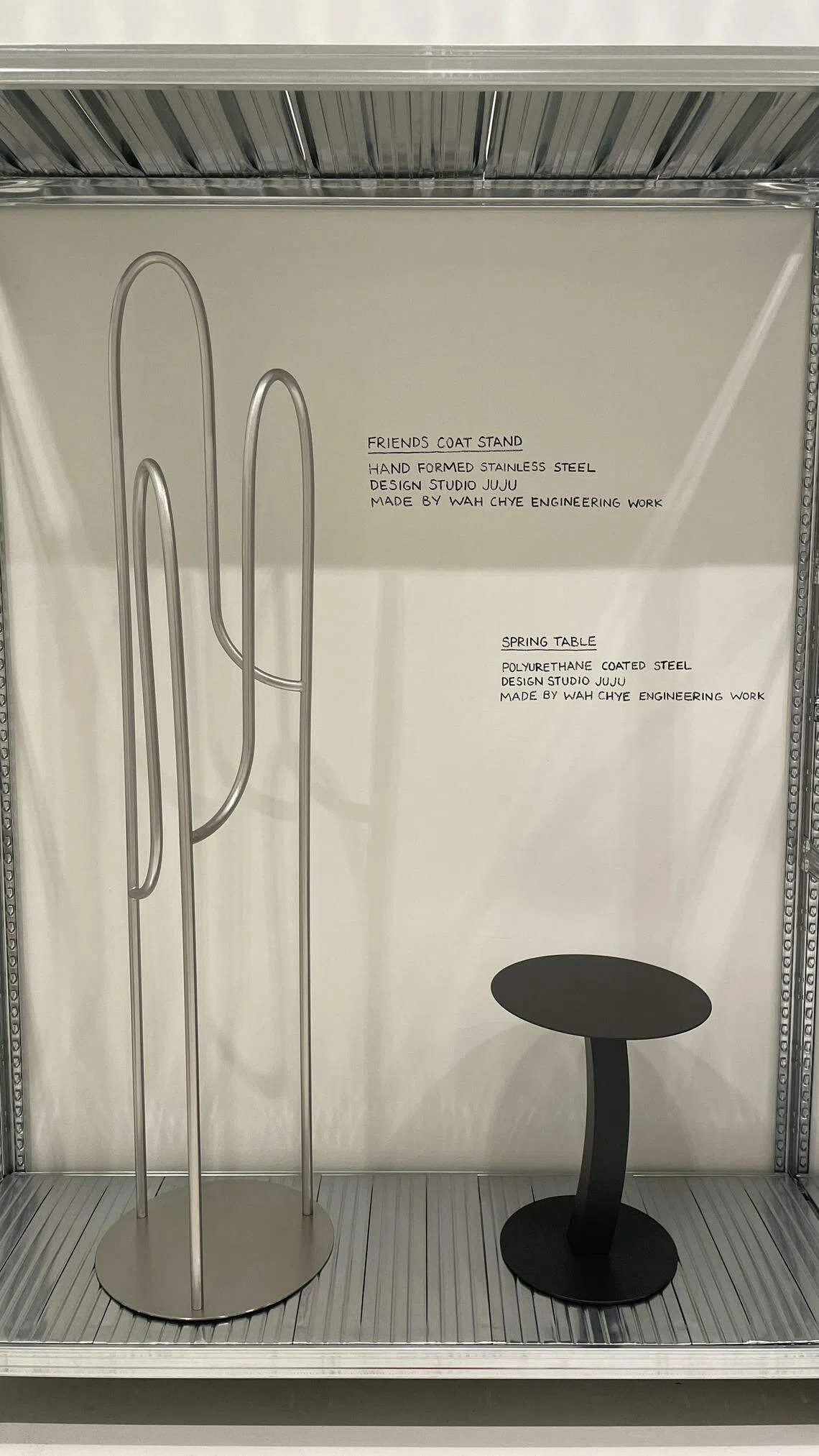
While the premise of designing and making in Singapore sounds simple, Wong says this wasn’t so. Apart from having to deal with manpower issues and streamlining workflows, manufacturers have little need to develop capabilities beyond what is needed to serve their existing customers.
“This outlook makes it less appealing for designers to approach makers or manufacturers in Singapore, and so, many choose to produce their design overseas,” says Wong.
Despite this, there are plans to add more pieces to the collection.
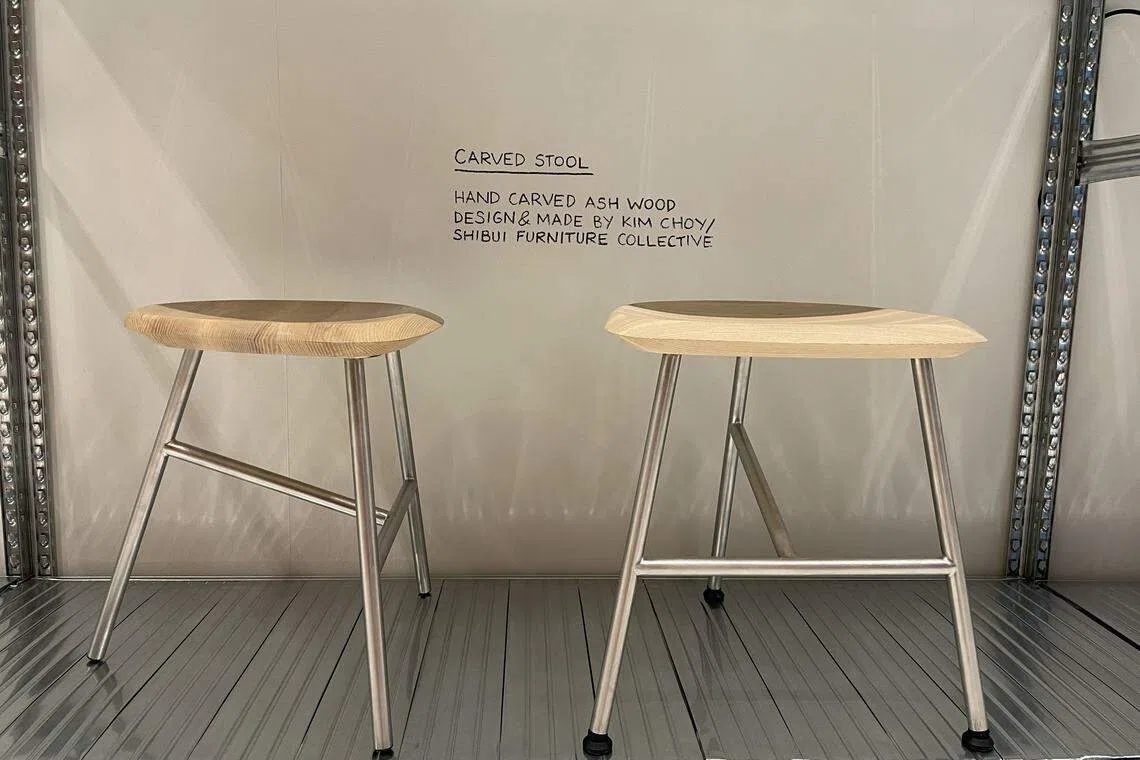
“We created New Optimistic Works to practise design as an optimistic endeavour to uncover possibilities and to foster new narratives in designing and making,” says Wong.
When logistical and production issues are smoothed out, “we want to put these products on sale too,” he adds. New Optimistic Works is on till Aug 29 at the National Design Centre, Pop-Up Gallery #01-01.
Decoding Asia newsletter: your guide to navigating Asia in a new global order. Sign up here to get Decoding Asia newsletter. Delivered to your inbox. Free.
Copyright SPH Media. All rights reserved.
TRENDING NOW

Nvidia reinstates Jensen Huang as CEO; Trump says move poses no national security risk

Indonesia’s coal tycoon Low Tuck Kwong replaced as Bayan Resources president-director

Nvidia surges 33% after reinstating Jensen Huang, reviving AI trade; stocks soar in US and Europe

Consider lowering homeownership barriers for some non-resident foreigners

