

Desperate for a drink: Indonesian villagers dig up dry river bed in drought
 Add BT as a preferred source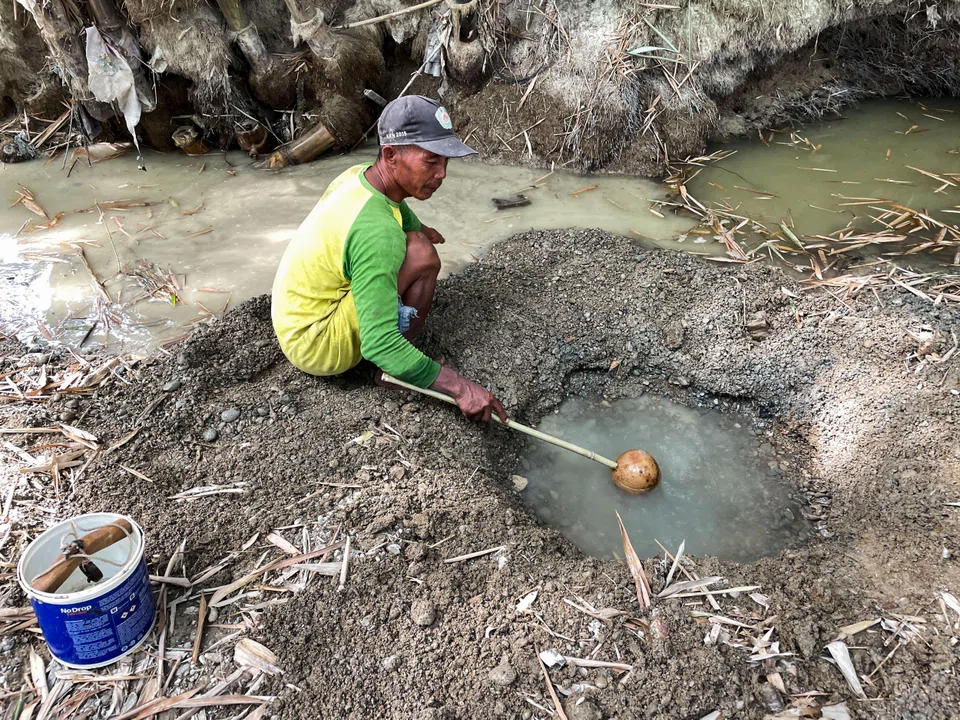
DeeperDive is a beta AI feature. Refer to full articles for the facts.
IT HAS been four, long, hot months since Sunardi’s village has seen any rainfall as an El Nino-induced drought parches Indonesia, so the tobacco farmer does the only thing he can do to get water: dig up a dry river bed.
In an hour or two, water – salty and muddy – will fill the freshly dug hole. Sunardi, who only goes by one name, and scores of other residents in Karanganyar village in Central Java province, then take the water home to drink, wash and irrigate their slowly dying crops.
“The drought in this village has been felt since April, and there has been no rain until now. The wells in this area have dried out, so residents can only get water from the river bed,” Sunardi told Reuters.
“The plants here, such as corn, have all withered. Tobacco can live, but it doesn’t grow optimally, so we have to keep watering it with the river bed water too.”
Sunardi’s village has been digging up the river bed since June, when the water in their wells ran out.
Indonesia’s weather agency (BMKG) said the El Niño weather phenomenon, which brings prolonged hot and dry weather, is affecting more than two-thirds of the vast nation, including all of Java, the northern areas of Kalimantan and all but the coastal areas of Sumatra.
Navigate Asia in
a new global order
Get the insights delivered to your inbox.
The population of those areas exceeds 70 per cent of Indonesia’s total population of more than 200 million people, Ardhasena Sopaheluwakan, deputy head of climatology at the BMKG, said.
Scientists say El Niño has caused record heatwaves in cities from Beijing to Rome, increasing the risk of forest fires and affecting crops such as wheat, palm oil and rice.
Agriculture accounts of nearly 14 per cent of Indonesia’s GDP, and a third of the labour force works in farming, government data shows.

Tris Adi Sukoco, an official at the BMKG in Central Java, said that with rainfall rates in the region drastically lower, villagers like Sunardi should alter their crop patterns.
The farmer, however, said it was too late.
“Even if the river here is completely dry, we’ll have to find it wherever it is,” he said. REUTERS
Decoding Asia newsletter: your guide to navigating Asia in a new global order. Sign up here to get Decoding Asia newsletter. Delivered to your inbox. Free.
Share with us your feedback on BT's products and services
TRENDING NOW

Vietnam formalises new state leadership, redefining ‘four pillars’ power balance

‘Largest Singapore commercial S-Reit proxy’: analysts say buy CICT shares after Paragon acquisition

From 1MDB to ‘corporate mafia’: Is Malaysia facing a new governance test?

Why where you park your joint venture matters: Lessons from a US$689 million shareholder dispute

