

Dhaka’s growing stake in the art world
Dhaka Art Summit is winning hearts with art shows by day, parties by night

DHAKA, the capital of Bangladesh, has been climbing the ranks of cool cities because of art. By day, the biennial Dhaka Art Summit (DAS) keeps art lovers occupied with its showcase of contemporary art. By night, they are dancing at parties thrown by some of the hippest and wealthiest people in the country. It’s all enough to make foreign visitors endure bad traffic and overcrowded airports to get to the city.
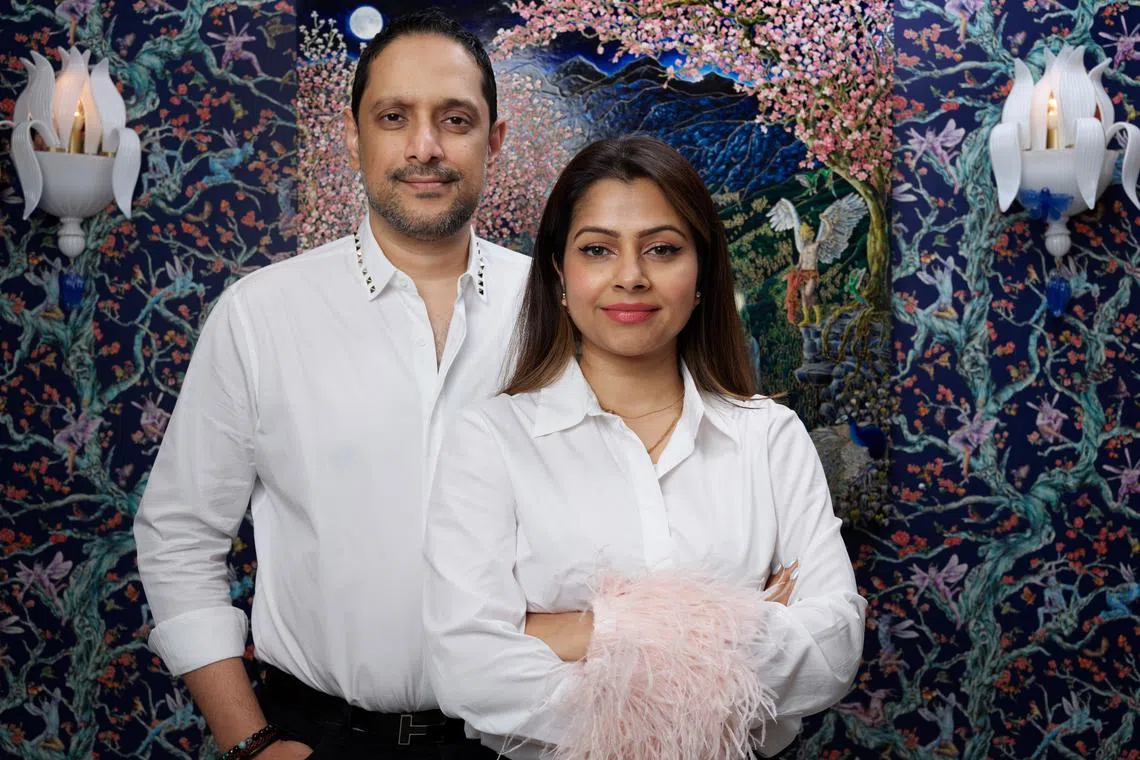
This year’s DAS had works by over 160 artists, architects and designers. In an ocean of biennales and triennales, it distinguishes itself with a high percentage (approximately 50 per cent) of newly commissioned works, as well as an emphasis on South Asian art. Its founders and funders, the glamourous industrialist couple Rajeeb and Nadia Samdani, have rightfully credited DAS in helping draw global attention to art from this part of the world.
DAS’ last edition in 2020 drew over 500,000 locals and foreigners – an impressive feat for a nine-day event in a country hitherto not known for its arts scene.
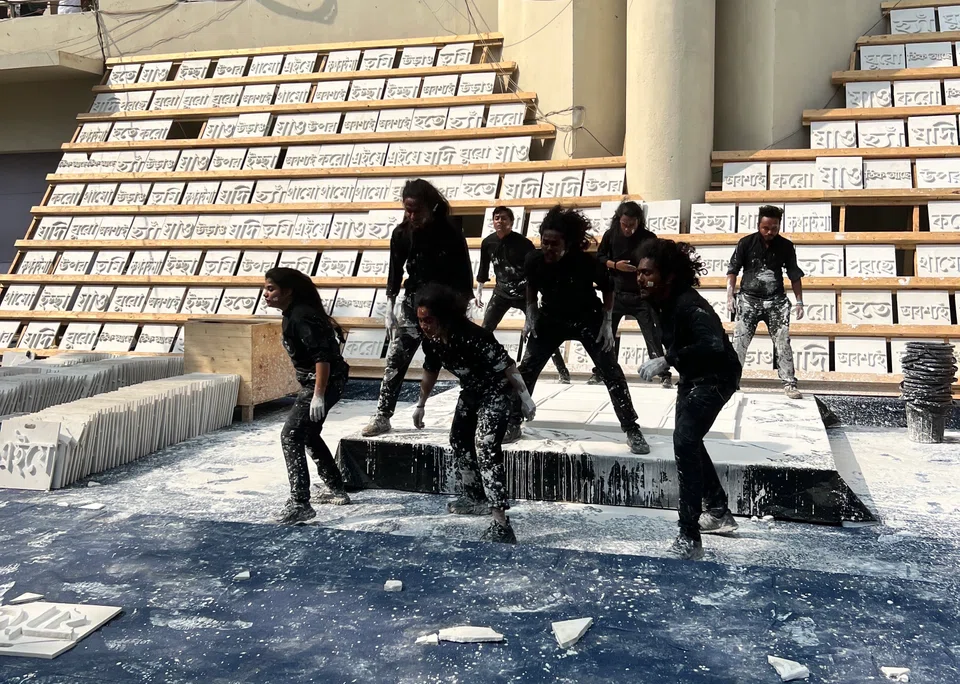
Running at the Shilpakala Academy, DAS 2023 opened with an electrifying dance performance titled Chant For Hope choreographed by Belgian artist Miet Warlop. Eight dancers dressed in black cavorted on stage, surrounded by square pieces of plaster embossed with Bengali words such as “Go”, “Aspire” and “Forward”. At various points, the dancers carried the heavy plasters and gave them away to the audience. They were token reminders to stay hopeful in a post-pandemic world still riven with conflicts and tragedies.
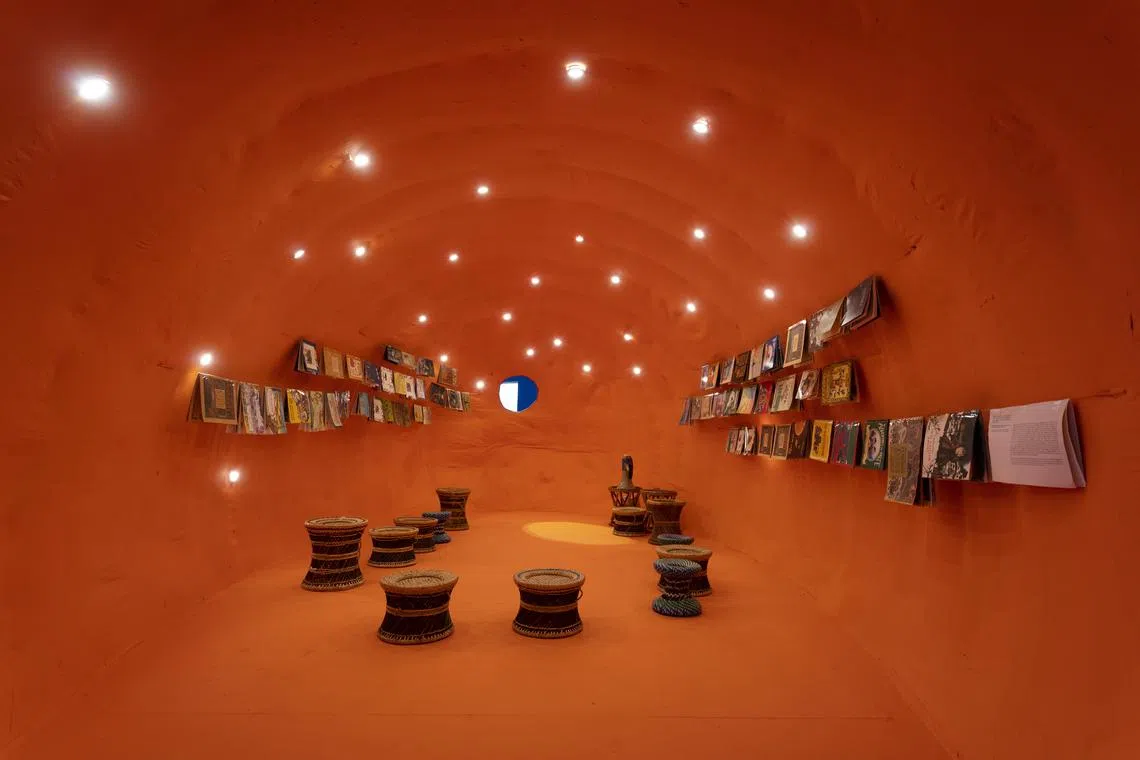
Elsewhere, Turkish-born artist Ahmed Ogut staged a protest with performers on bamboo stilts to highlight the scarcity of certain food products in Bangladesh, while Prasad Shetty and Rupali Gupta created a strange liminal space for the transmission of stories and information. South African artist-architect Sumayya Vally conceived a “reverse rain dance” with traditional dancers, as a kind of plea with the weather gods to protect Bangladesh from bad floods.
It’s in the water
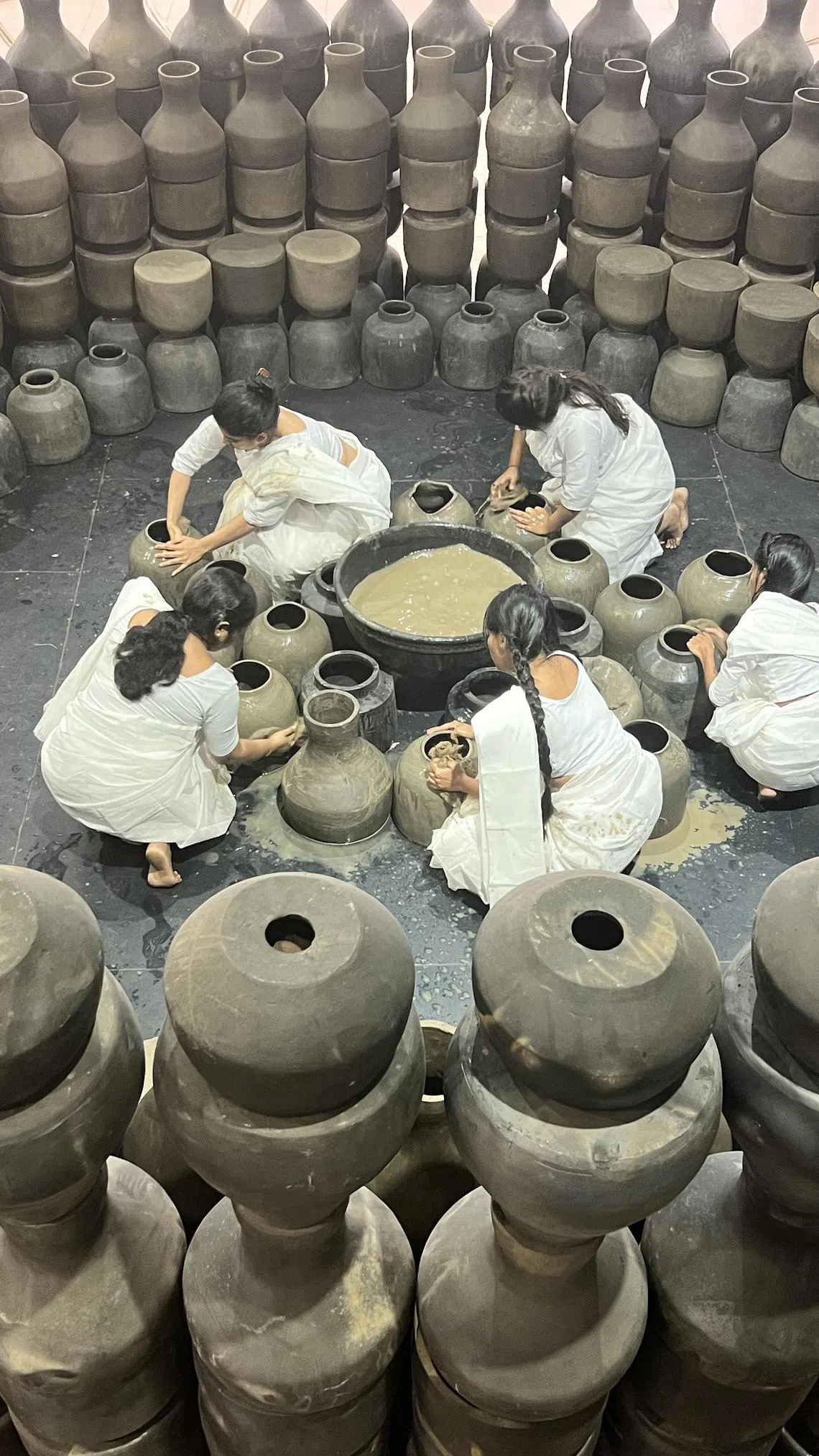
Bangladesh, after all, is a flood-prone country. Located on the Brahmaputra River Delta and the many distributaries flowing into the Bay of Bengal, the country experienced its worst floods in 2022 when heavy non-stop rain engulfed the north-eastern parts of the country. Because of that, the summit’s chief curator Diana Campbell titled this year’s event Bonna – which means “flood” in Bengali, but is also a common name given to girls.
Campbell insists that the name isn’t in any way ominous. Flood signifies “loss and destruction, but it can also stand for abundance and regeneration,” she says. “In Bangladesh, a flood does not simply translate into a singular connotation of ‘disaster’. If anything, we want to challenge these binaries of bad vs good, male vs female, adult vs child, and so on. We don’t want to reduce anything down to one rote definition. We want to think more expansively.”
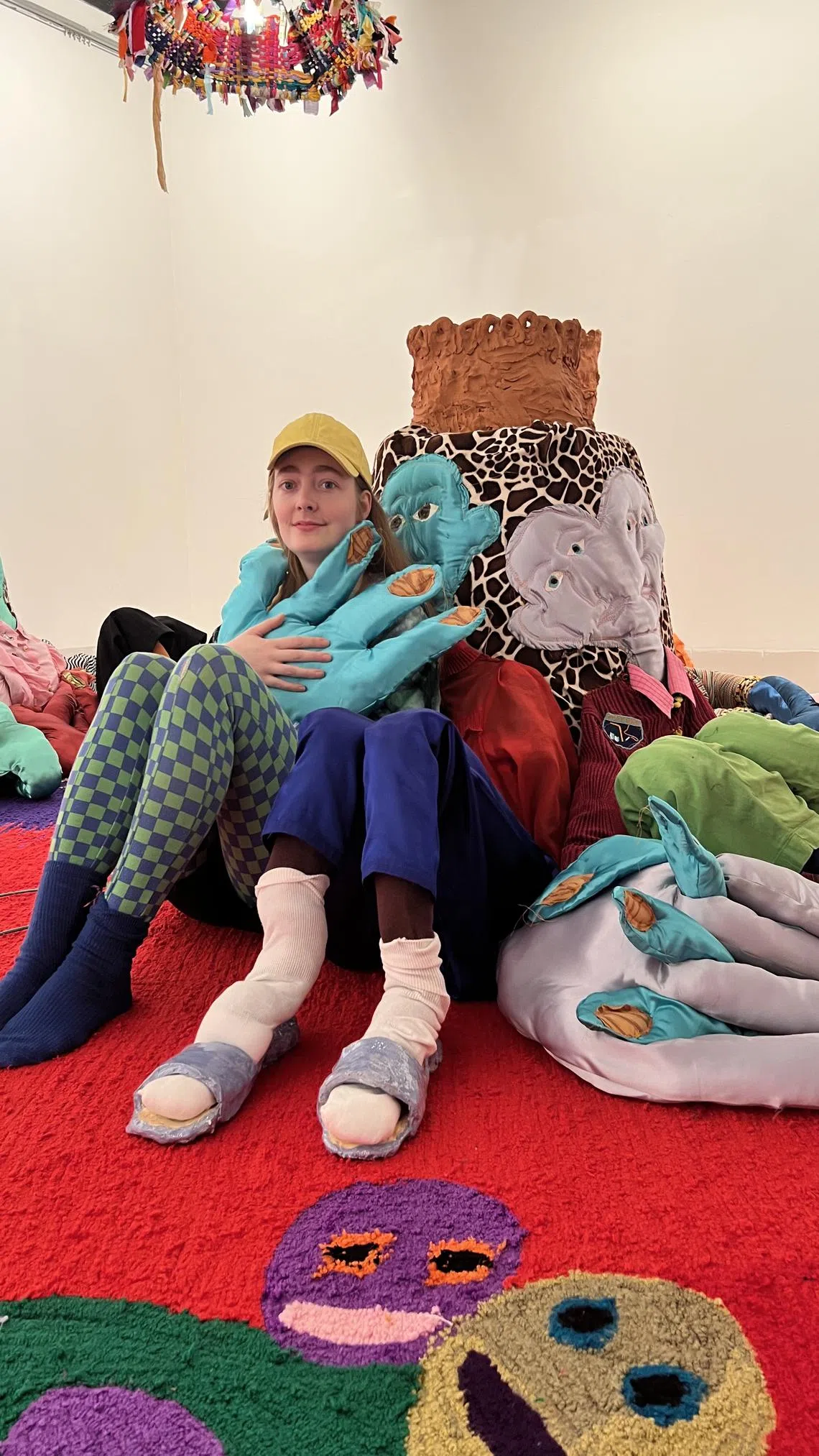
The DAS has different shows spread out across the various galleries. The one co-curated by Campbell, Akansha Rastogi and Ruxmini Choudhury is deliberately playful, inviting audiences to jump on trampolines, sit on swings, play house and doodle. The works on display include a life-size plush toy installation by Dutch artist Afra Eisma, animation by Simon Fujiwara and the comic book illustrations of Lokesh Khodke and Wong Yuk-long.
For a high-profile event in a Muslim country, DAS has been daring in tackling the issues of the lesbian, gay, bisexual, transgender and queer (LGBTQ) rights. Several works by young artists nominated for the inaugural Samdani Art Award deal overtly with queer issues. Dipa Mahbuba Yasmin creates pink campy paintings of SM Sultan (1923 - 1994), a famous Bangladeshi artist who in his lifetime wore saris and deflected attempts to be classified as male or female. Rasel Rana reimagines the Garden of Eden when Adam and Eve are both genderless. Sumi Anjuman photographs LGBTQ individuals often hiding their faces to avoid persecution.


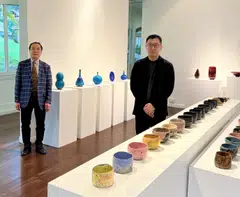
Nadia Samdani, one half of the founding couple, says: “My daughters have many friends and teachers who identify as LGBTQ individuals. As a family, we feel strongly about promoting diversity, inclusivity, tolerance and acceptance in Bangladesh.”
Party people
The art was impressive, but so were the parties. The Samdanis threw an extravagant opening reception at the Intercontinental Dhaka with several hundred guests dressed to the nines. Nadia turned up in an exquisite hand-embroidered gown and cape designed by Mehruz Munir. She said: “I told him that, whatever it is, I just want it to be ‘extra’. Give me that ‘extra’.” Rani Kohenur, India’s famous drag queen, belted out a gamut of hit songs, from Hindi classics to Abba’s dance tunes The celebrations dragged past 3 am as the party continued in various guests’ rooms.
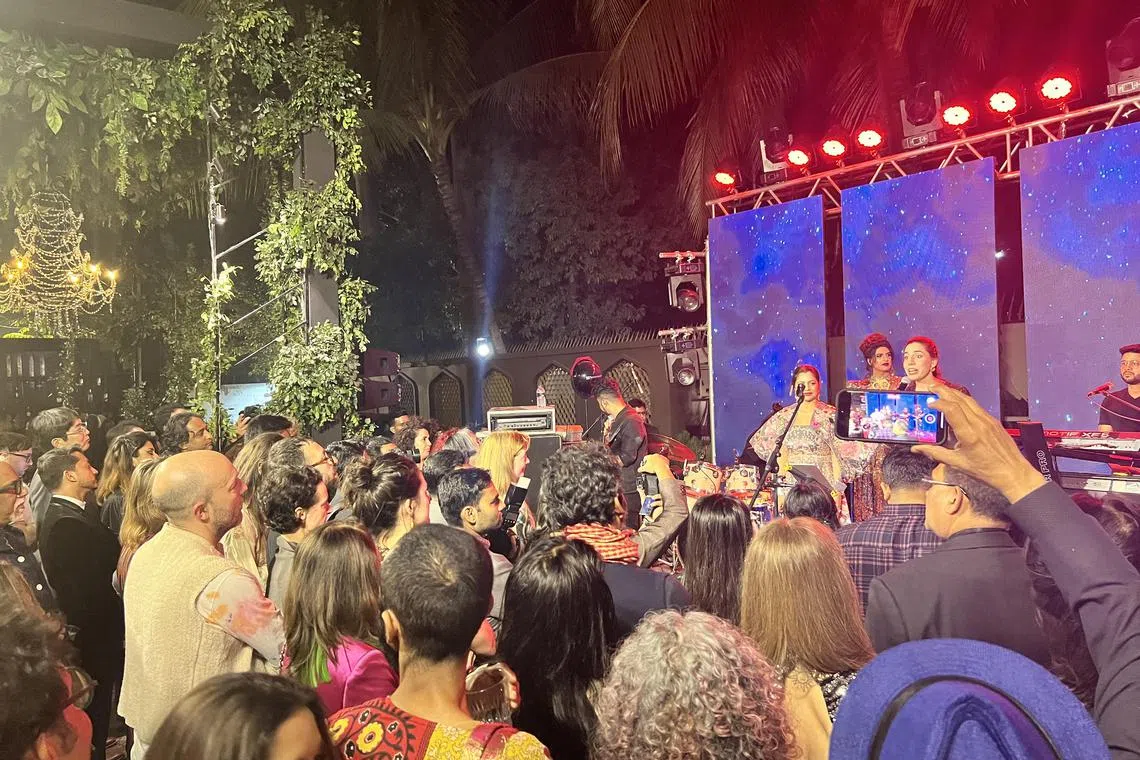
On the following nights, major patrons of the arts – including the country’s state minister for energy Nasrul Hamid and the entrepreneur Enayetullah Khan, with their wives Seema and Tehmina respectively – organised separate soirees with live music and mouth-watering spreads. For anyone who didn’t score an invitation to these VIP events, there were club raves and house parties organised by the artists and their friends that welcomed just about everyone.
Nadia says: “The summit has grown by leaps and bounds. It’s now become the anchor event around which other events have sprouted. Foreign curators leave the city with good memories of what they’ve seen and experienced. Works shown here have been acquired by Tate, the Guggenheim, Metropolitan Museum of Art and Centre Pompidou. Exhibitions that debuted here have been invited to other parts of the world… Our long-term plan has always been to take South Asian art to the rest of the world, and we’re making strides in that.”
Three Satellite Shows
Outside the summit, the satellite exhibitions are no less striking.
At the Bengal Foundation (located at 42, road 16 Dhanmondi, Sheikh Kamal Sarani), there is a strong solo exhibition by senior Bangladeshi artist Dhali Al Mamoon. His drawings, paintings, video art and kinetic sculptures critique Bangladesh’s colonial legacies, power structures and violence in no uncertain terms. The most provocative work here are three sculptures of dogs lifting their legs to urinate – with their heads replaced by those of colonial rulers.
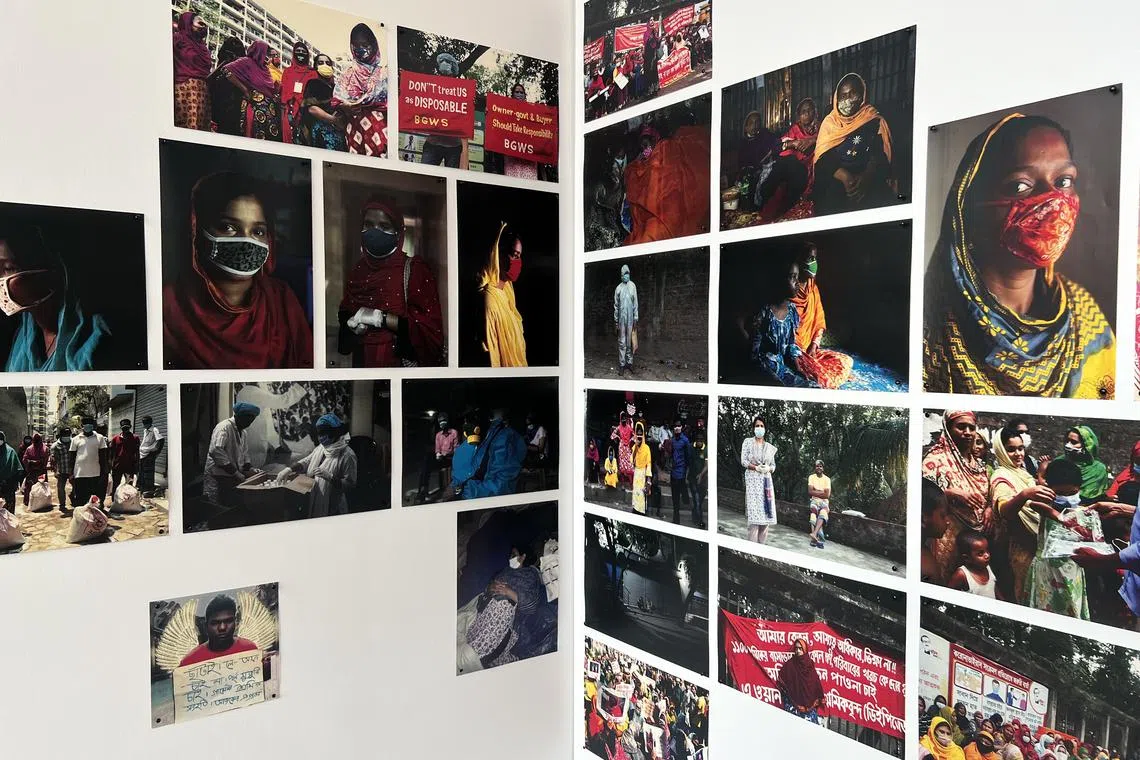
Another place worth visiting is Pathshala South Asian Media Institute, a renowned photography school started by Bangladesh’s award-winning photographer-activist Shahidul Alam. Located at 6, DrikPath Bhobon, Panthapath, it currently has a terrific showcase by young Bangladeshi photographers, in a project supervised by Sarker Protick.
They include Taslima Akhter and Suvra Kanti Das’ stirring photographs of a nation battling the pandemic, Md Fazla Rabbi Fatiq’s visual diary of the mundane things in his home he took more notice of during the lockdown, and Habiba Nowrose’s witty images of food that have been sliced and shaped to look like contemporary sculptures.
Finally, there’s Britto Art Trust (located at 33 Green Mart, first floor, space number 208-210, Green Road). This artist-run non-profit collective has a video art exhibition titled The Oceans And The Interpreters, curated by Takamori Nobuo. Inspired by Wole Soyinka’s 1965 novel The Interpreters, Nobuo has assembled seven video works by artists from Africa and Asia to look at the issues of identity, culture, transmigration, memory and exile.
A particularly moving work is Tuan Andrew Nguyen’s video parsing the relationships between Vietnamese women and Senegalese soldiers who were deployed in Indochina by their French colonial rulers during the 1940s and 50s. As the French empire waned, many of these couples either separated or moved to West Africa together. The video examines the social and emotional repercussions through interviews with the couples or their children.
The DAS is an accomplished show in itself, but these satellite shows offer further proof of the city’s growing artistic vitality.

The DAS runs till Feb 11, 2023.
Decoding Asia newsletter: your guide to navigating Asia in a new global order. Sign up here to get Decoding Asia newsletter. Delivered to your inbox. Free.
Copyright SPH Media. All rights reserved.
TRENDING NOW

Malaysian king buys stake in Singapore-listed mining firm expanding into rare earths

Family offices ‘kept captive’ by relationship managers turn to independent advisers, direct deals

Once staunchly pro-China, Malaysian Chinese businesses are now distancing themselves from Beijing

Could stablecoins be the future of money?

