

Digital theatre is here to stay
In some ways, online plays are more exciting than traditional plays.

Helmi Yusof
HOW can theatre carry on in the age of social distancing? Since physical stages went dark in April, some Singapore practitioners have arrived at successful digital solutions, while others appear to be biding their time till theatres reopen.
The most adaptable theatre-makers are the ones used to creating original works. They've quickly reformulated their scripts to stage them virtually and incorporate Zoom, Instagram, WhatsApp and Telegram elements to engage the audience technologically.
Meanwhile, practitioners who are used to taking popular Broadway or West End scripts, and then staging them for a Singapore audience - more often than not achieving much more commercial success than original Singapore works - have been much slower to adapt. After all, there are very few scripts in the global market that are written for the digital stage - theatre was always meant to be experienced live.
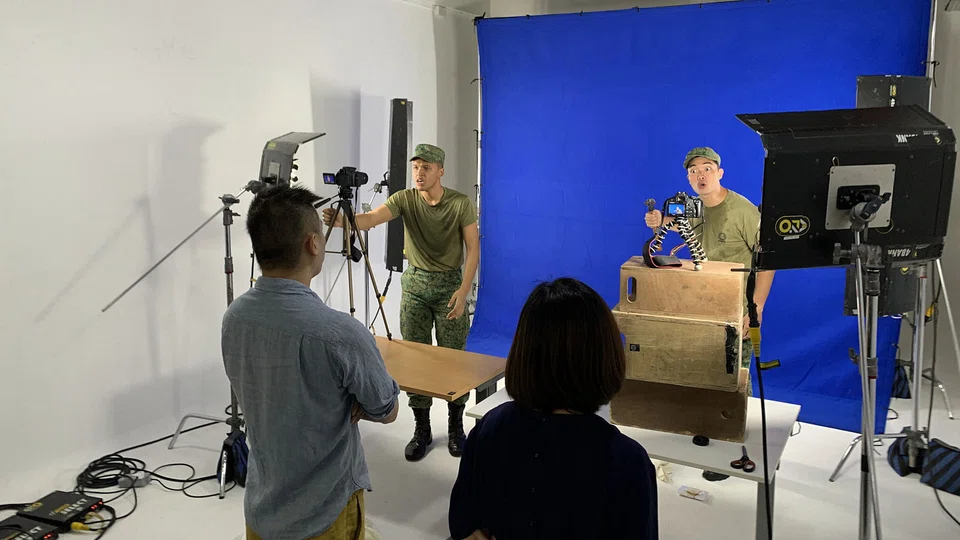
And yet these past few months have yielded some surprisingly good digital plays. Sight Lines Entertainment's Murder At Mandai Camp was among the first of these successes. Written and directed by veteran theatre-maker Chong Tze Chien, the entire play unfolded online with audiences at home playing investigators sifting through information they receive on their computers, laptops and/or smartphones.
The actors performed often separately against green screens to tell the story of the death of a young SAF soldier whose body was found disemboweled in the jungle. Two soldiers are suspected of foul play. But there is a supernatural element at play here - a pontianak (a female spirit in Malay mythology) is said to haunt these parts.
Perfect for millennials
Murder At Mandai Camp is the perfect play for both the millennial generation and the audiences stuck at home. Not only did the plot unfold in short videos seemingly shot on smartphones, the audience also got to interact with each other online, making comments as the play progressed, and finally coming together to solve the case. The play felt like the pandemic equivalent of escape rooms, which have grown in popularity because of their interactive team-building elements.
Recently, Chong and Sight Lines Entertainment teamed up with tech startup Xctuality to provide an immersive online theatre experience that combines virtual reality and 360-degree streaming. Called The Future Stage, the digital platform circumvents the problem of not knowing when the audience can return to the theatre. But, more than that, this clever use of the technology might produce an even more satisfying theatre experience for stuck-at-home audiences.
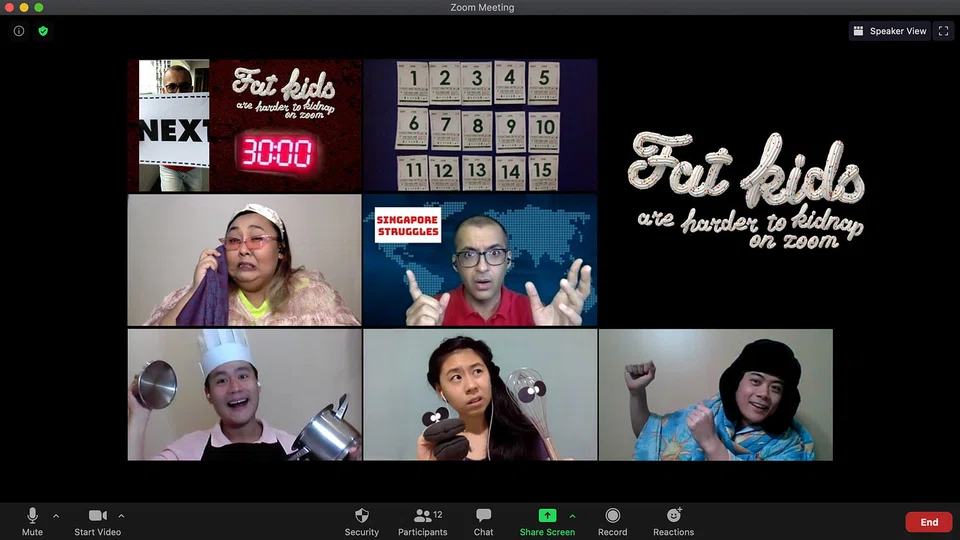
And then there was Fat Kids Are Harder to Kidnap On Zoom by How Drama which, like Murder At Mandai Camp, was smart to capitalise on the habits of millennials and Gen Z. The Zoom production involved an interactive element (the audience could decide on the order of the 15 short comic plays to be presented) and often mimicked the visual language and humour of TikTok and Instagram stories.
The brevity of each play appealed to short attention spans of home audiences prone to the distractions from other members of their household as well as their own digital devices. The show received almost unanimously rave reviews.
Global collaborations
Finally there was Who's There by The Transit Ensemble, an international production on Zoom that tackled the thorny issue of racism not just in Singapore, but also in the US and Malaysia. Topics such as Black Lives Matter and the Workers' Party politician Raeesah Khan's social media posts were dramatised provocatively through various story threads.
Here the creators have also smartly exploited Zoom as a medium, with polls and discussions simultaneously running in the sidebar, and technical hiccups deliberately embedded within the show for tonal and symbolic effect.
The international cast that includes Singapore actress Rebekah Sangeetha Dorai and Malaysian actor Ghafir Akbar were directed by veteran Singapore helmer Alvin Tan of The Necessary Stage, as well as New York-based Singaporean Sim Yan Ying. No doubt Tan's vast experience in tackling provocative sociopolitical issues helped in making the jagged little pill easier to swallow.
Interactivity is addictive
For all the three plays, the interactive element feels vital and even addictive because it allows opinionated viewers - which, in this social media age, are many - to have their say instantaneously in chatboxes and WhatsApp or Telegram groups.
Live theatre puts us under the spell of human drama happening right before our collective eyes. But digital theatre promises a brand-new thrill of spontaneity and discovery. As we share and exchange views with complete strangers, we feel ourselves transcending the boundaries of the plot and joining a bigger hive of opinion and information.
Notably, the costs of staging these digital plays are also lower than traditional stage plays, and there is the possibility of drawing audiences beyond Singapore, who can simply log on wherever they are.
Of course, there have been several other digital Singapore plays debuting these past months, but they've tended to be video or audio recordings of traditional plays, with little audience interaction apart from the occasional virtual post-show Q&A. If one had to guess, these old-fashioned forms of presentation are not quite as appealing for today's audiences as the new formats.
Traditional theatre will no doubt return in the post-pandemic world when it's safe again to sit next to a stranger. But some of us have had a taste of these new hybrid forms we still call theatre, and would be reluctant to return completely to the old ways.
For a taste of digital theatre, check out Body X: The Culprit running from Sept 9 to 13, 2020. Performed in Mandarin with English surtitles. Visit bodyxtheculprit.peatix.com
Decoding Asia newsletter: your guide to navigating Asia in a new global order. Sign up here to get Decoding Asia newsletter. Delivered to your inbox. Free.
Copyright SPH Media. All rights reserved.






