

Dos and don'ts on social media
Exercise prudence when airing your views on the Internet

Vivien Ang
THE dust has settled somewhat over General Elections 2020.
Although there are still some shockwaves reverberating through social media over the results, it is nowhere near the cacophony produced during the campaigning stage. Through those nine days, we were navigating a largely virtual GE campaign trail due to Covid-19, and boy, was it noisy. Overnight, it seemed, everyone was a political analyst.
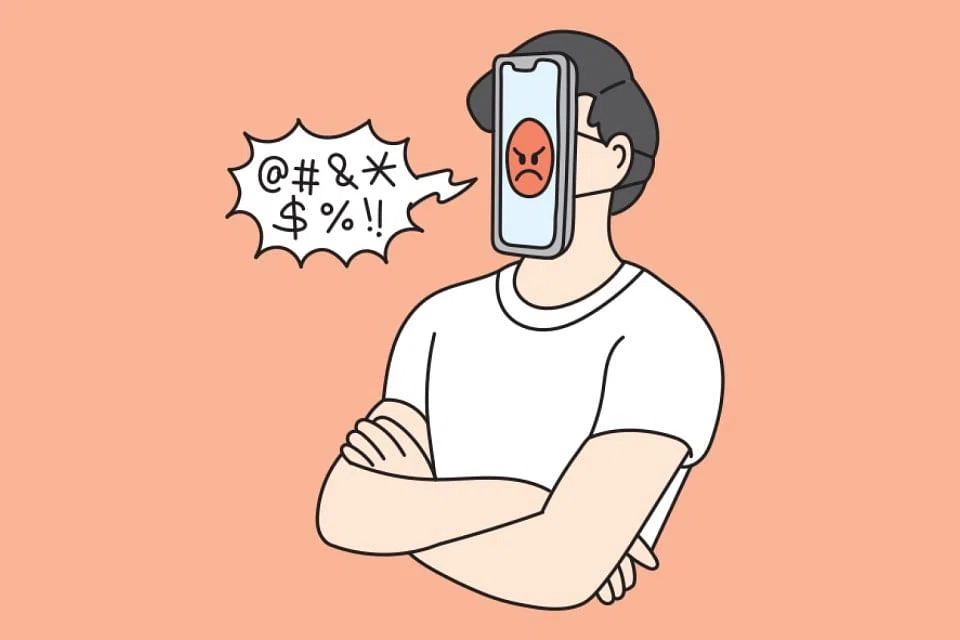
Everyone seemed to have an opinion on the GE news, and had no qualms expressing it on Facebook or YouTube. In fact, discussions among a few friends rapidly devolved into arguments and while it was fortunate that the incidents did not lead to a BFF (best friend failure) situation, it was definitely unnecessary stress for a neutral party like me. In the social media age (and these Covid times), online interaction has replaced physical ones, and people inevitably leave their footprint in the digital space.
But, the question is, should one engage in a debate online and risk getting trolled, or simply stay away? And why is it that hidden behind the cloak of anonymity, people seem so keen to get their two cents' worth of opinion out to the public?
Victor Seah, senior lecturer of psychology at Singapore University of Social Sciences, says: "The first thing to note is that we all have our two cents. This is especially the case with contentious issues like politics. However, our two cents is often not thoroughly thought-out as it is likely a result of our automatic intuitive thinking."
He adds that people tend to be more disinhibited online, especially when they believe that they are anonymous. This can lead to people expressing opinions that they would never voice in face-to-face conversations, and sometimes, this leads to tensions online.
Martin Hill, director, human resources, at Randstad Singapore, says that in the event that discussions on social media start to escalate, the best thing to do is to agree to disagree, and disengage immediately. But of course, it is easier said than done, especially when emotions are in the equation.
Dr Seah says: "Perceptions can lead to the same piece of information being interpreted differently. For example, studies have found that fans from opposing sports teams judge the same referee to be biased towards the opposing team. Likewise, the same news report can be judged to be partial to the rival by both competing political parties."
However, lashing out online can sometimes lead to backlash and cause unintended consequences, such as loss of a job, or identity theft. Mr Hill says: "There have also been reported cases of some companies letting go of employees over opinions posted on social media due to misalignment of values and beliefs. Therefore, employees should be mindful that what they do outside of work does not damage their own and the company's reputations."
Serkan Cetin, technical director, APJ, One Identity, says: "Even when posting views and opinions can open up some great constructive dialogues, as a cybersecurity professional, what is more concerning is the amount of personal data which is freely posted on socials. This data can be used to compromise an individual's digital identity, their accounts, and can potentially extend to compromising their identity at their workplace."
Hence, when posting issues on social media, there are certain etiquettes to be observed. Ong Pei Ching, partner, Litigation & Dispute Resolution, from TSMP Law Corporation, says that it is good to observe the three no's and two yes's of social media.
"No falsehoods - don't say anything which you know is factually untrue; no doxxing - don't publish someone's contact details, in an effort to harass the person; no attacks - don't stir up hatred, especially against a racial or religious group. Yes to following community guidelines and rules of the social media site you are posting on; yes to always considering what would happen if someone took your post out of context."
Ms Ong adds that legal recourse over online squabbles ought to be the last resort. "In the heat of the moment, one of my clients was sued for defamation over a couple of Facebook posts, which he deleted shortly after publication. By the time the matter was settled at the doorstep of trial, the parties had spent more time and energy on those short-lived posts than was warranted," she says.
All said, it is best to exercise prudence when airing one's views online, and remember that on the Internet, nothing is ever truly deleted. As Mr Certin says, all you can delete are your accounts, but anyone who has seen the post or data could easily have taken a screenshot or shared the data with others, either through the same social platform or other means.
Decoding Asia newsletter: your guide to navigating Asia in a new global order. Sign up here to get Decoding Asia newsletter. Delivered to your inbox. Free.
Copyright SPH Media. All rights reserved.






