

Empty rooms and plunging prices: World Cup tourism is off to a slow start
Hotel and visitation numbers were expected to spike this year. So far, several of the host cities have instead seen slumps

[NEW YORK] Julie Rahaman nearly ditched her plans to see the football World Cup.
The 34-year-old accountant from Alberta had purchased tickets in October for a game in Vancouver, British Columbia, on Jun 26 – Belgium versus New Zealand. But when she went to book a hotel, she was priced out: Rooms were as much as C$1,400 (S$1,279) per night.
“It gets to a point where it just feels ridiculous,” said Rahaman, who briefly considered bunking in a college dorm. Instead, she gave up in April and listed the four tickets for sale.
Then, before the tickets sold, hotel prices started dropping. In May, she booked a room at a Best Western for about US$285. Eventually she cancelled that reservation and booked a room for a similar rate at a five-star Fairmont hotel.
Rahaman’s good fortune – plummeting hotel prices – may hint at a major setback for the tournament’s host cities. Fifa anticipated more than six million fans this summer, estimating that the tournament, with 104 games spread across 16 cities in three countries, could generate a global economic impact of US$80 billion.
Fifa president Gianni Infantino said last year that the world would “stand still” for the tournament, which he likened to 104 Super Bowls in a single month.
But in recent months, those expectations have steadily eroded. Now, with the tournament underway, hospitality leaders report a mixed picture, with some saying that the promised windfall has become a more disappointing reality.
Tracking the numbers
In some host cities, including New York, Toronto and Miami, the number of hotel bookings on match days is lower than the numbers from a year ago, according to CoStar, a real estate analytics company.
Hoping to capitalise on World Cup demand, hotels significantly inflated prices this year, with nightly rates as high as 500 per cent above average. But prices across host cities have steadily declined from their peaks, with the largest drops in Vancouver and Monterrey, Mexico, according to data tracker Lighthouse Intelligence.

In Vancouver, for example, rates this summer are comparable to rates from last year, aside for US$100 to US$200 spikes on match days.
Some travellers, like Rahaman, have repeatedly cancelled and rebooked stays at lower rates to save money. Others, stuck with higher, non-refundable rates, now feel bitter.
International travel numbers look disappointing, too. Fifa had estimated that 40 per cent of World Cup visitors would be international travellers. But flight bookings made before June from the European Union to most host cities during the tournament months of June and July have dropped compared with last year, according to the aviation data firm Cirium.
Bookings for flights to Kennedy Airport in New York were down more than 15 per cent year on year. For San Francisco International Airport, bookings were down nearly 10 per cent.
Jan Freitag, CoStar’s national director of hospitality analytics, said that the tourism outlook was still “calibrating”, adding that, across all host cities, it would still be a better summer for hotels than last year was.
A rosy picture, in places
Kansas City, Missouri, has seen the kind of tourism bump that most host cities expected, with hotels reporting 32 per cent growth in bookings compared with this time last year across all six match periods, according to data from Visit Kansas City, a nonprofit economic development organisation.
Short-term rentals, which have flooded the market since the city eased permitting fees for the games, have also doubled their revenue projections, the nonprofit said. Kansas City rentals have sold 44 per cent more nights around game days than this time last year, according to AirDNA, a market research firm that specialises in short-term rentals.
When Argentina and Algeria kicked off the city’s first match on Tuesday (Jun 16), metro hotels were either sold out or at 80 per cent to 85 per cent occupancy, said Andrea O’Hara, executive director of the Hotel & Lodging Association of Greater Kansas City.
O’Hara cited a few factors for Kansas City’s early success. It’s generally an affordable destination compared with other host cities like Los Angeles and New York City, she said, and its location in the middle of the United States gives easier access to games across the country. It’s also convenient for road-trippers from numerous states.
Kansas City also has the luck of the draw on its side, hosting both a quarter-final match and teams that draw large crowds, namely the Netherlands and Argentina, with its superstar Lionel Messi. Argentina-origin bookings to Kansas City International Airport are up about 2,143 per cent compared with last year, according to Visit Kansas City.
Gloomy forecasts for others
In New York, the sentiment is decidedly gloomier. At the start of the World Cup, the Hotel Association of New York City halved its forecast for hotel revenue growth to US$100 million. Vijay Dandapani, the association’s CEO, called the tournament “hugely disappointing and underwhelming”.
Fifa estimated that the tournament would draw 1.2 million visitors to the New York City area; Dandapani said the city’s hotel industry would be happy settling for 400,000 visitors, adding that hotels are walking back earlier price increases that had been up to 300 per cent higher than the same time last year. Pricing during the tournament is more aligned with a typical June or July, he added.
He cited several reasons for the muted demand, including rising costs, business travellers avoiding the city, the tournament’s location in New Jersey and continued barriers to international travel.
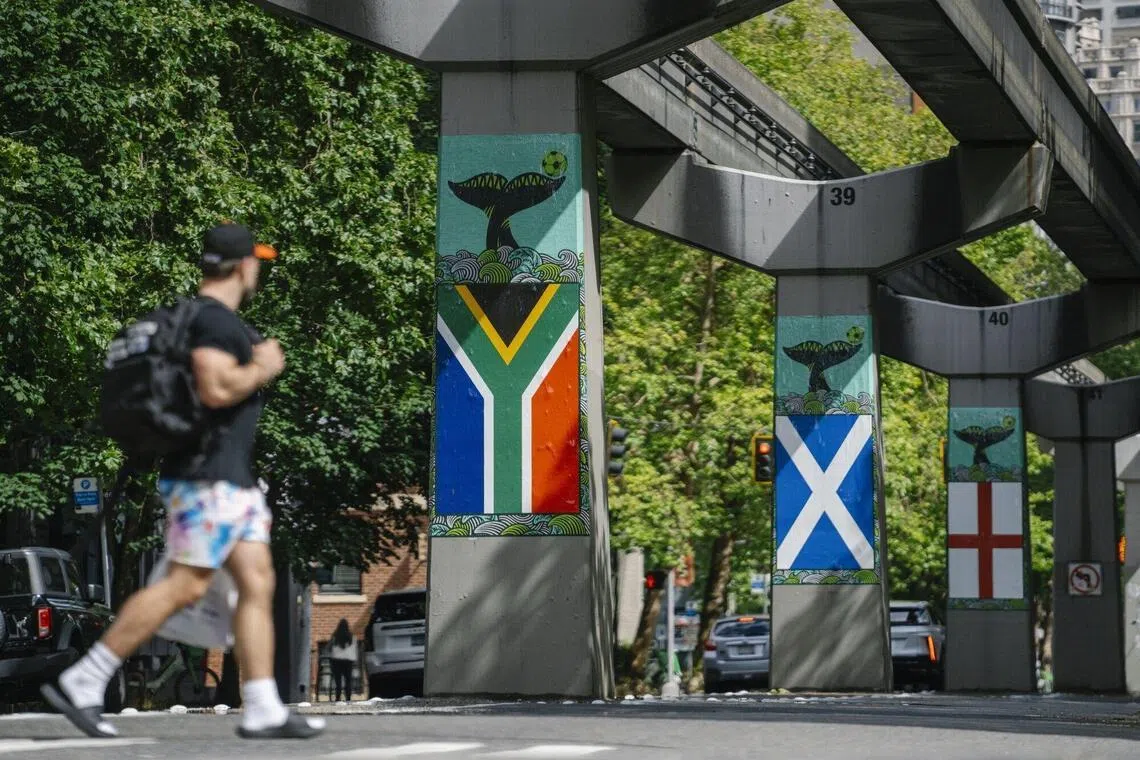
Seattle is also facing disappointing numbers, with bookings below those of last year across flights, short-term rentals and hotels, according to industry data.
Fifa has also cancelled up to 70 per cent of room blocks for staff and delegates in several host cities, including Boston, Dallas, Kansas City, Los Angeles, Philadelphia and Seattle, according to the American Hotel & Lodging Association (AHLA). While local hotel associations said room releases were typical with events of this scale, they said that the number of rooms released by Fifa was surprising.
The bigger picture
Overall, international visitation this year has been weaker than expected, said Aran Ryan, director of industry studies with Tourism Economics, a global travel data company. The number of total overseas visitors this year through May is nearly 5 per cent lower than it was during the same period last year, according to the National Travel and Tourism Office. Last year, the US was the only major nation to register a decline in international tourism.
The AHLA warned in May that international travellers were underperforming relative to domestic visitors and that visa barriers and geopolitical concerns were “significantly suppressing” international demand.
Hospitality leaders are still hoping for a last-minute surge. Hotels are optimistic that travellers are still finalising plans for later-stage matches, said Rosanna Maietta, CEO of AHLA. Other industry experts said that travellers are booking later and for shorter stays than predicted. NYTIMES
Decoding Asia newsletter: your guide to navigating Asia in a new global order. Sign up here to get Decoding Asia newsletter. Delivered to your inbox. Free.
Share with us your feedback on BT's products and services
TRENDING NOW

Once staunchly pro-China, Malaysian Chinese businesses are now distancing themselves from Beijing

Looking beyond looming CEO succession, should UOB potentially pursue a transformative merger?

Could stablecoins be the future of money?

Grab CEO’s wife Chloe Tong on life with Anthony Tan and finding her purpose

