Enjoyable melodrama of a tumultuous time
IN 1947 New Delhi, Lord Mountbatten, the last Viceroy of India, arrives with his wife and daughter to oversee the transition of Britain's Indian Empire to independence after 300 years under colonial rule.
"Freedom is coming!" exults a local lad.
Yes, but with an independent India came the division of the subcontinent to create the Muslim state of Pakistan. An estimated 14 million people were consequently displaced and more than a million died in one of the world's largest refugee crises.
The historical drama Viceroy's House by British-Punjabi filmmaker Gurinder Chadha, featuring Downton Abbey's Hugh Bonneville and Gillian Anderson as Lord and Lady Mountbatten, unfolds the events of these end days inside the Viceroy's House. Through the eponymous grand residence the Partition and all its religious conflicts are refracted.
Upstairs converge the dignitaries: Jawaharlal Nehru (Tanveer Ghani), the first Prime Minister of India; Muhammad Ali Jinnah (Denzil Smith), the founder of Pakistan and Mahatma Gandhi (Neeraj Kabi). Below are the servants' quarters, and it is these staff of 500 Hindus, Muslims and Sikhs that the geopolitical wrangling impacts emotionally. They become, like the country, a people forever divided as the convulsion and bloodshed brought on by the schism spill into the house's gilded corridors.
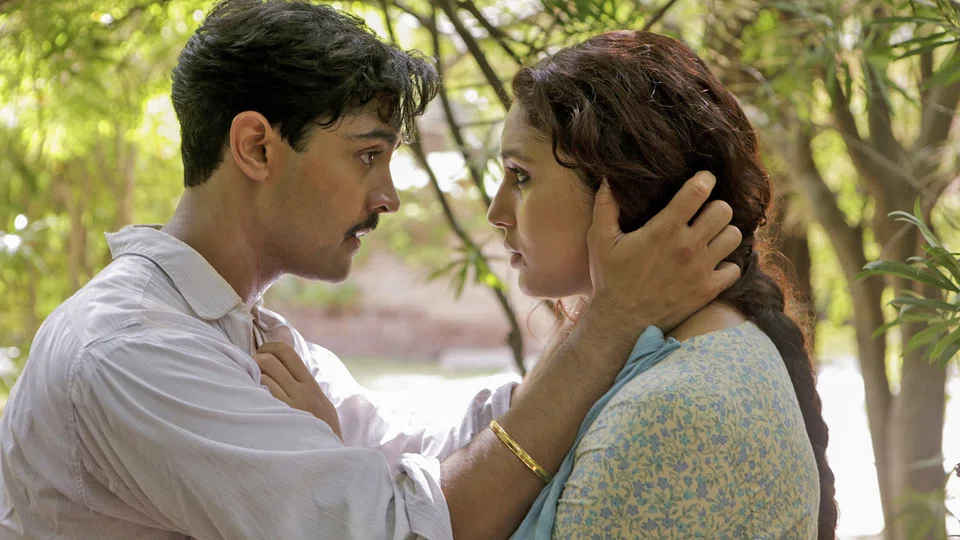
Jeet (Manish Dayal) is Lord Mountbatten's Hindu valet, forced to separate from his Muslim clerk sweetheart Aalia (Huma Qureshi) in the central fictional love story.
The star-crossed romance is played with touching ardour. The Upstairs Downstairs dynamics are lively. Chadha, directing from a screenplay co-written by her husband Paul Mayeda Berges, her collaborator since her 2002 breakout Bend It Like Beckham, observes the elaborate hierarchies and arcane customs, the power-jockeying, subterfuge, and bureaucracy nowhere more absurd than in the divvying up of the house's silverware and library collection between India and Pakistan: "We're taking Wuthering Heights and all of Austen!"
Winston Churchill is presented as the behind-the-scenes villain, with Michael Gambon in the role of his manipulative enabler Lord Hastings Ismay. The Partition, the film reveals, is their scheme to protect British interests post-World War II.
Simon Callow is the bewildered lawyer, Cyril Radcliffe, tasked meanwhile with mapping the border, unaware it has been pre-determined by sneaky Churchill.
Even Lord Mountbatten is a hapless pawn in the so-called "Mountbatten Plan". He is a decent civil servant, out of his depth, in Bonneville's sympathetic performance of patrician bonhomie.
Anderson is better still as his headstrong, enlightened wife.
No single movie can fully capture the tragedy. Chadha's certainly doesn't. It is nevertheless an enjoyable melodrama that interweaves the teeming storylines of a subversive political satire and a Bollywood soap opera with humour, handsome period sets, a top-form cast and a lovely final touch: an archival photo of Chadha's grandparents, who were survivors of the Partition violence.
Rating: B
Share with us your feedback on BT's products and services