

The era of giant galleries is here
With rising wealth in Singapore, foreign players are entering the art market and opening extra-large spaces. But some say the gamble has yet to pay off

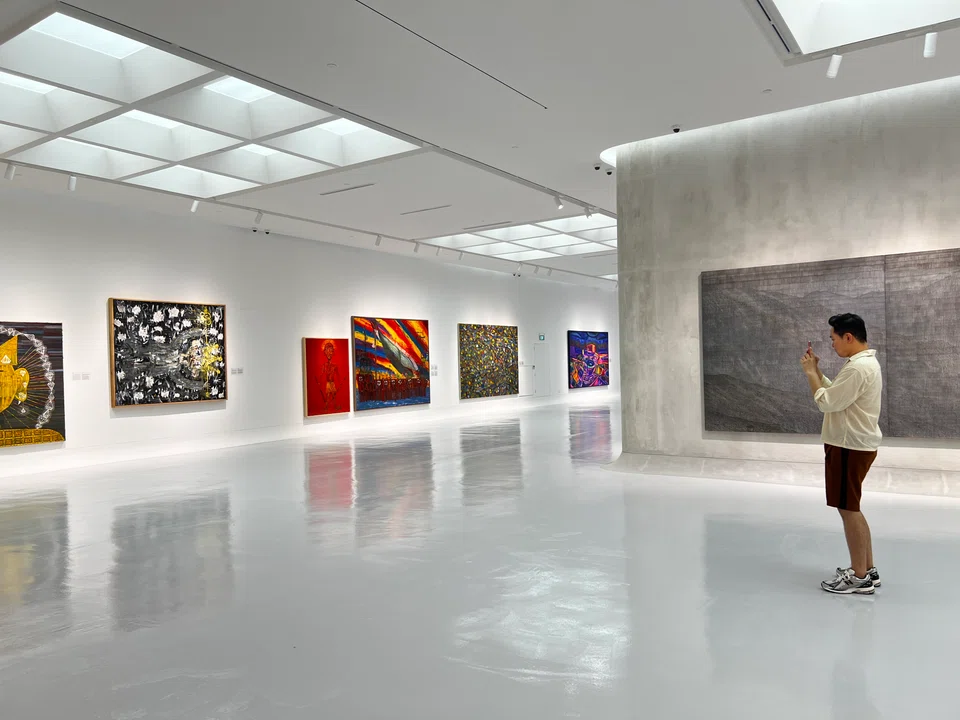
BIG is beautiful, as far as new art galleries in Singapore are concerned. Within less than a year, two of the largest gallery spaces in South-east Asia have debuted at Tanjong Pagar Distripark.
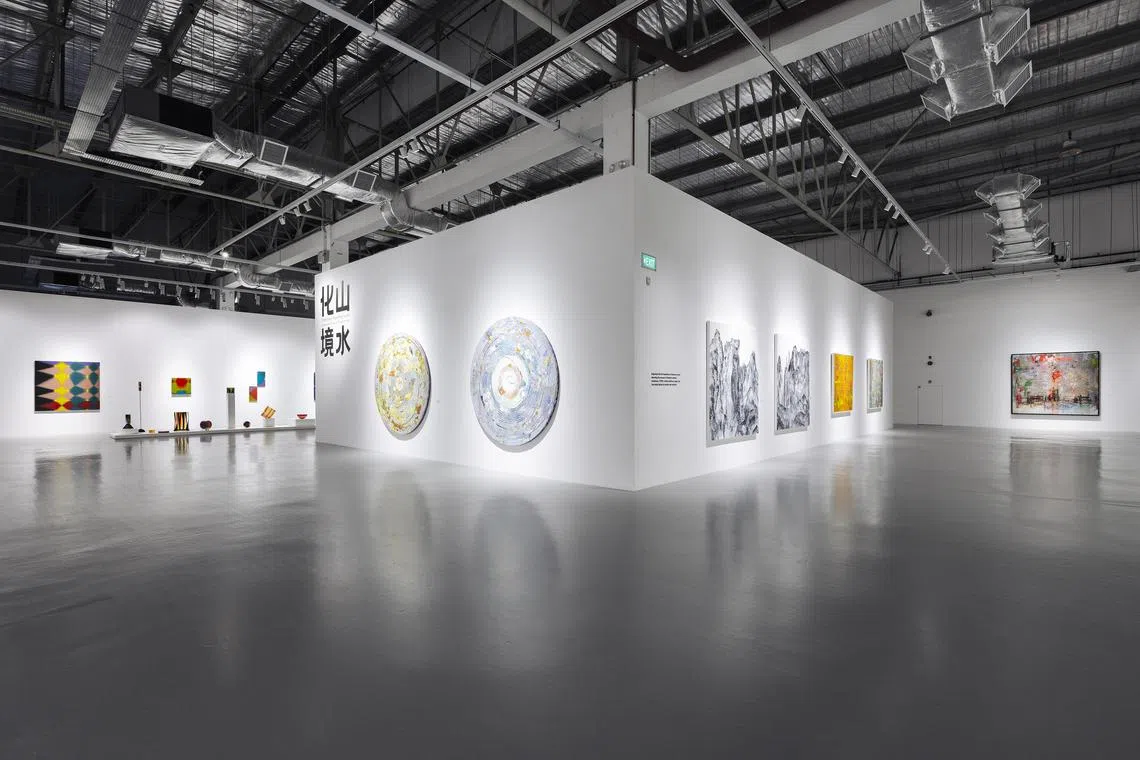
Whale Art Museum, covering 30,000 square feet (sq ft), features massive halls that display large-scale paintings and sculptures. Nearby, Whitestone Gallery occupies about 20,000 sq ft and boasts vast spaces with significant architectural elements designed by renowned architect Kengo Kuma.
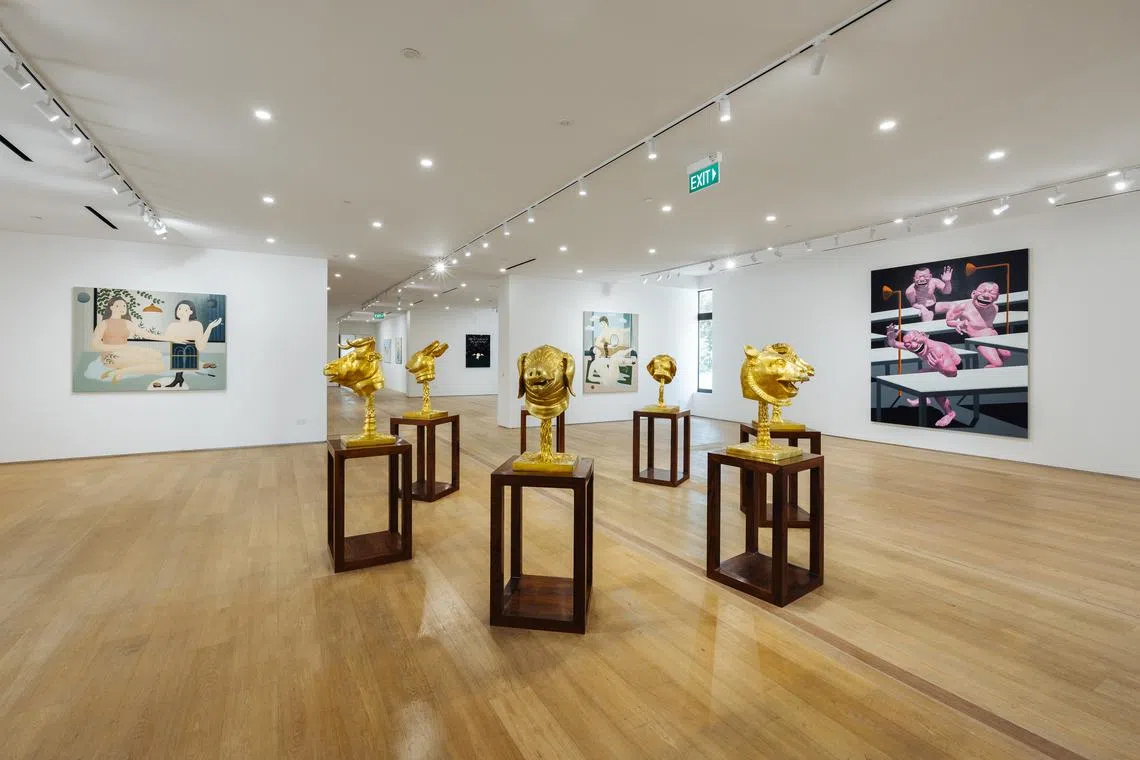
Last month, Tang Contemporary Art unveiled a 7,500 sq ft space on Orchard Road. Though smaller than the other two, it is still larger than most commercial galleries in Singapore, which typically range from about 1,000 to 3,000 sq ft.
On top of all these, other art venues have also debuted around the island: The new Highlight Art Gallery has taken up two storeys of a restored Peranakan shophouse on Club Street, while Eureka Griffin Fine Arts Club has settled into a two-storey Good Class Bungalow on Cluny Hill. The Private Museum (TPM) – though not new – has relocated to the grand colonial mansion Osborne House on Emily Hill.
Observers say Singapore’s rising number of ultra-high-net-worth individuals is what’s driving the burgeoning trend in big galleries. The number of family offices here has risen sharply from around 50 in 2018 to about 1,400 in 2023. The number of millionaires (in US dollar terms) has also risen substantially, to over 333,204 in 2023.
With the exception of TPM, most of these art spaces are new to Singapore. They are offshoots of foreign galleries that have found success in countries such as China, Japan and Thailand. Notably, many are Chinese-owned, spurred by the influx of wealthy mainland Chinese since the pandemic. Prestige Art Gallery on Stamford Road, Woosee Gallery on Orchard Road and Woaw Gallery on Ann Siang Hill are other newly-opened Chinese-owned galleries.
‘Very unprofitable’
However, having operated here for a year or two, some are saying that the Singapore market is more challenging than they had expected. Singapore’s ability to attract the ultra-wealthy to live here is one thing – but coaxing them to, for example, invest locally is another matter. The Monetary Authority of Singapore has had to refine its incentives to encourage family offices to invest in Singapore’s equity markets.
Similarly, persuading the newly-arrived ultra-wealthy to buy art from galleries here has been very tricky. Koei Shiraishi, CEO of Whitestone Gallery, says with an ironic laugh that his Singapore operation is “very un-profitable ... But as a Japanese, I’m willing to be patient and build bridges over some time”.
Whitestone Gallery was established in 1967 in Tokyo by Shiraishi’s father, Yukio. Today, it has outposts in China, Taiwan and South Korea as well, and represents top artists such as Yayoi Kusama, Kazuo Shiraga, Lee Ufan, Julian Opie, Kaws and Dale Chihuly.
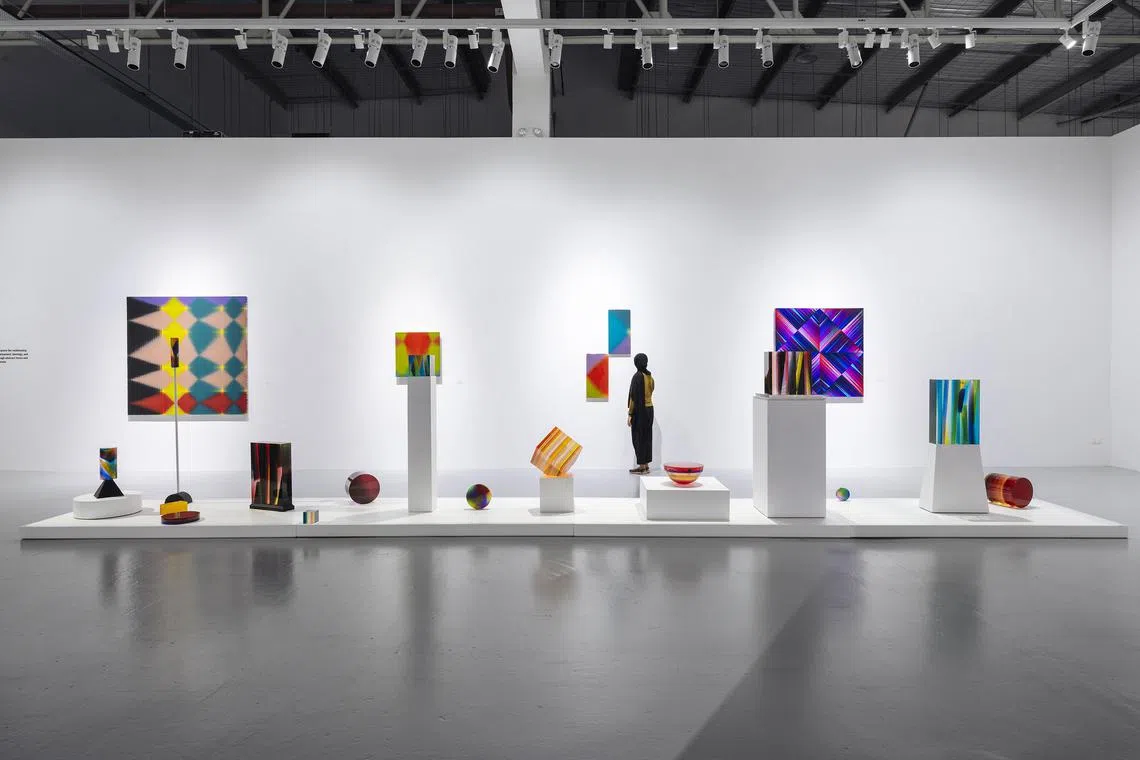
The Singapore outpost is awe-inspiring. It has 7,675 sq ft of commercial gallery space dedicated to showing hot living artists, 10,812 sq ft for its integrated New Art Museum that curates exhibitions of important artists and art movements, and a 2,324 sq ft reception area featuring a massive Kengo Kuma forest-like installation.
Shiraishi says: “We want to play the role of building bridges between South-east Asian artists and the rest of the world. We believe that art fever has already moved from the West to Asia, and we want to look for that Picasso of South-east Asia whose works will be coveted by collectors around the world.
“Of course, while we’re here, we also want to educate the public about art, and our New Art Museum (a ticketed section of Whitestone Gallery) tries to do that through exhibitions of important artists and historical movements. But educating people is very expensive, and we bear much of the costs ourselves. We hope that the Singapore government can support art buying here by possibly removing the Goods & Services Tax for art.”
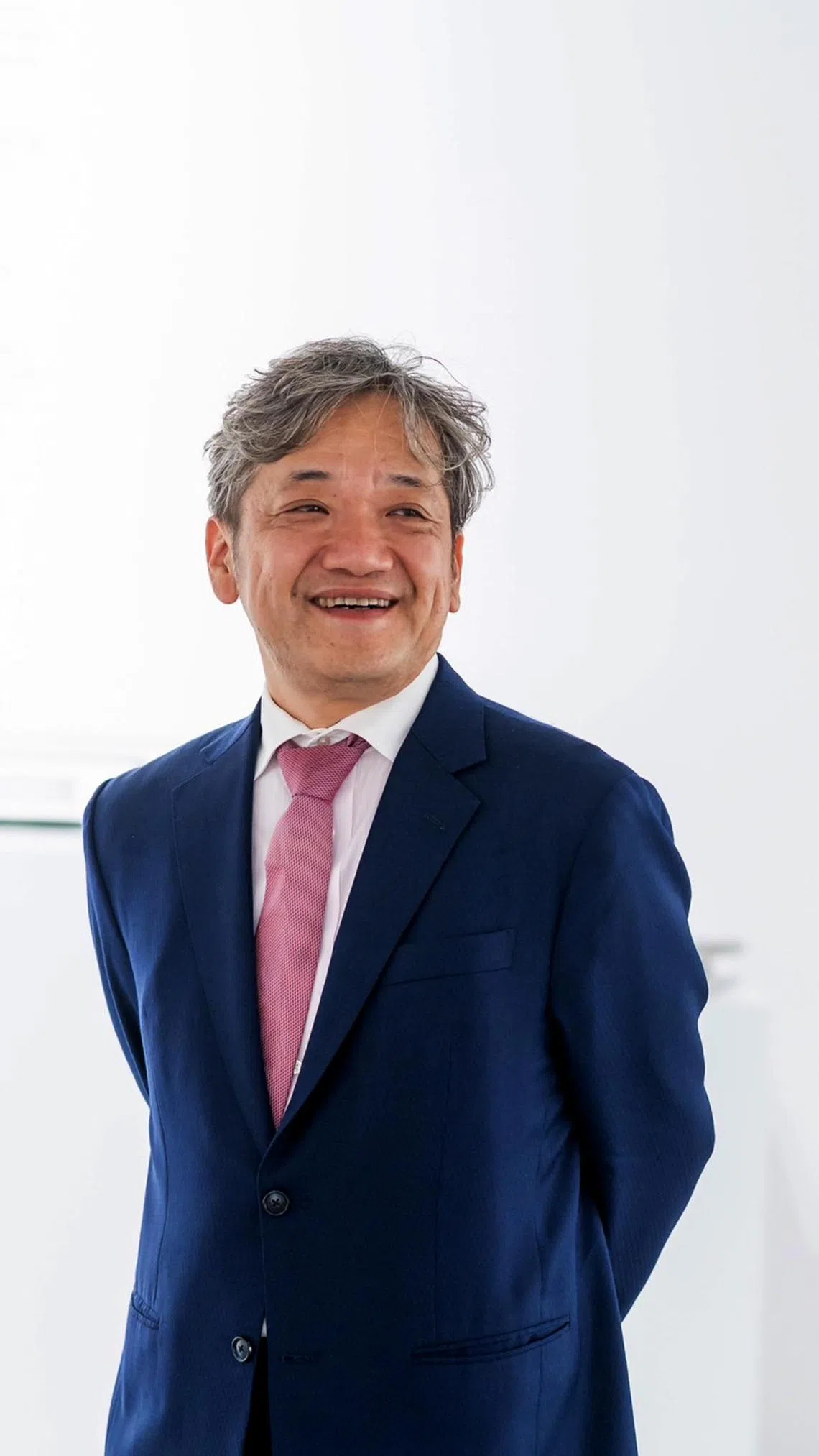
While Singapore has firmly established itself as a financial hub, it still has some ways to go before it can become an arts hub such as Paris, New York and London, he says. “If Singapore removes the tax on art (as both Hong Kong and South Korea have done), it can easily attract the biggest galleries in the world, which in turn will attract tourists, students and creative professionals… Culture is a good thing for the people. It encourages creativity among many, which then becomes a big asset for the country.”
Whitestone’s downstairs neighbour, Whale Art Museum, launched its monumental gallery – possibly the biggest in South-east Asia – in early 2024, to a mostly-mainland Chinese clientele.
At the moment, it opens by appointment only. South China Morning Post (SCMP) reported that its founder Li Fan is an art lover and property developer from Beijing who moved to Singapore to pursue an MBA in a Singapore university. Efforts to contact Li were unsuccessful.
Buyers here more ‘reliable’
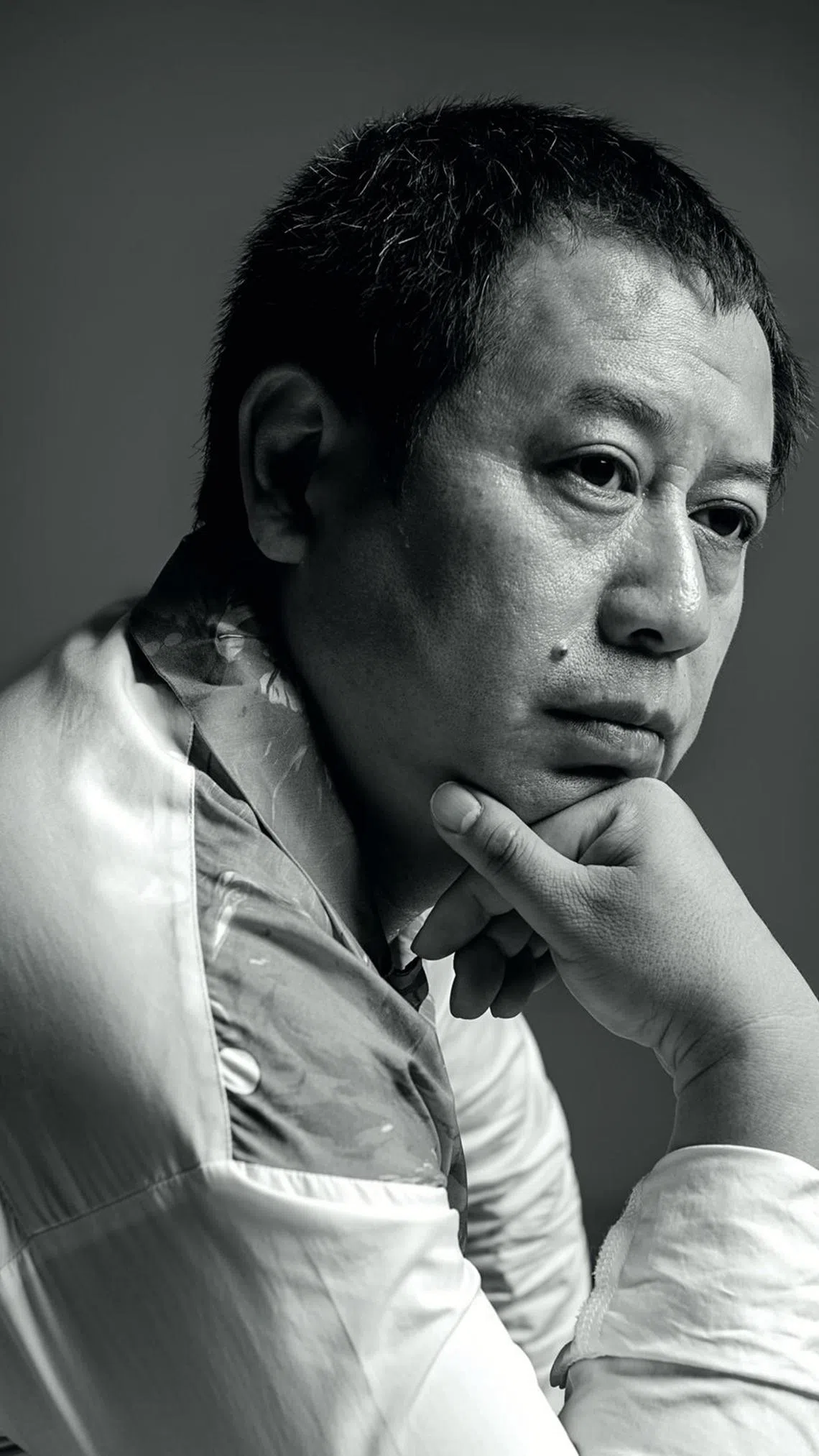
As for the newly-opened Tang Contemporary Art Singapore, its CEO Zheng Lin says Singapore is “critical, because it’s situated between the two buzziest art scenes in the region, namely Indonesia and the Philippines. We see Singapore as the final piece of the puzzle – before we push into Europe and the US”. (Indonesia and the Philippines have the largest and most lucrative art scenes in South-east Asia, followed by Vietnam, Singapore and Thailand.)
Zheng says he has heard from other gallerists about the challenges of the Singapore market, but he wants to give it a try: “We’ve been participating in the art fairs of Singapore for a decade. At least in the art fair context, we’ve done well. Although the market in Singapore itself is very small, it’s a hub for South-east Asian buyers who, in our experience, are better-behaved than other collectors, in that they’re more trustworthy and pay on time.”
Established in 1997, Tang Contemporary Art has seven other spaces in Beijing, Hong Kong, Bangkok and Seoul. It plans to open its first Western outpost in London this year, and then one in New York. The gallery represents Chinese artists such as Ai Weiwei and Yue Minjun, Korean marquee names such as Paik Nam-june and Chun Kwang-young, and South-east Asian stars such as Jigger Cruz and Heri Dono.
Asked why he chose to open such a big space in the shopping mall Delfi Orchard, he says: “We’ve been looking for a big centrally-located space in Singapore for two years. We’ve always wanted something that has at least 4,000 sq ft of floor space and a ceiling that’s at least 4 m high. (The ceiling height for the gallery in Delfi Orchard falls short at about 3 m.)
“We want to attract really good South-east artists who feel that they can let their imagination run in a large space. We don’t want to hamper their creativity in any way. If they want to create large-scale works for the space, they can.”
Remove GST for art?
Like Shiraishi, Zheng hopes that the Singapore government considers a GST exemption on art. As noted by Nominated Member of Parliament Usha Chandradas, Singapore already exempts GST in areas such as financial services, residential mortgages, investment-grade precious metals and digital payment tokens – so why not art?
Hong Kong does not impose a sales tax on artworks, a policy move which propelled it to the top of Asia’s art market in just a few years. South Korea offers similar financial benefits that include no import tax, value-added tax or transfer taxes on artworks priced below 60 million Korean won (approximately S$58,300); these tax changes made during the pandemic quadrupled South Korea’s art auction turnover in two years.
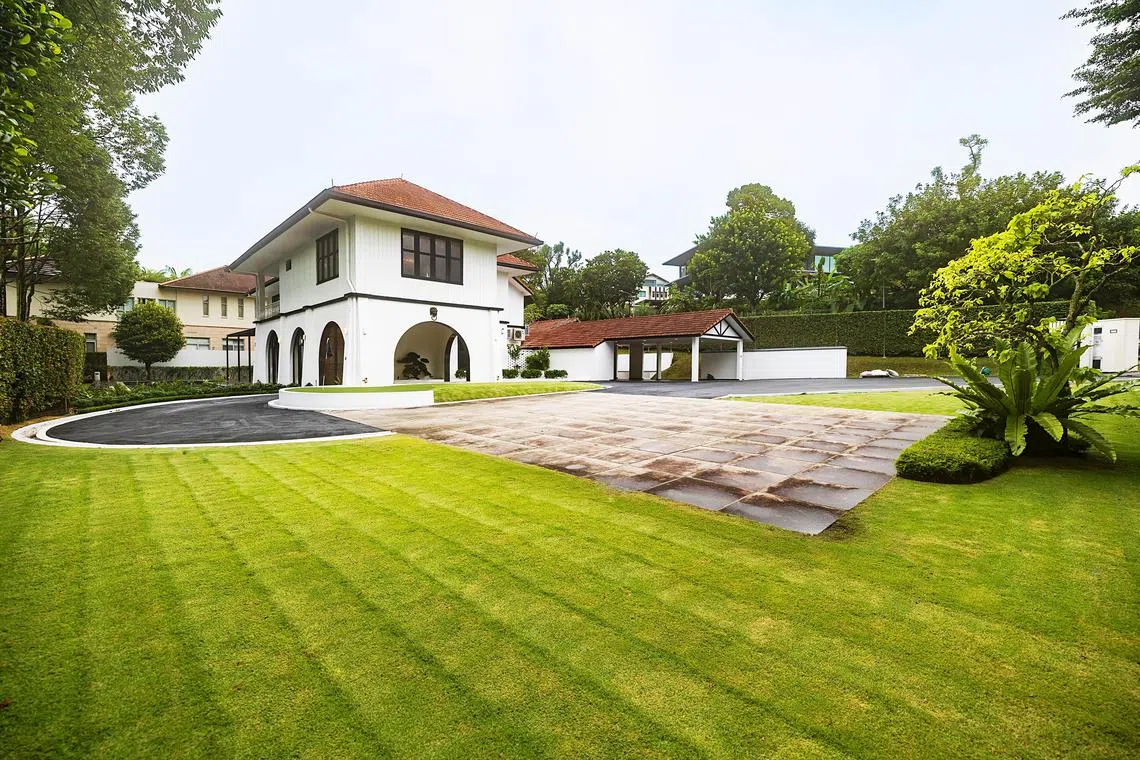
Other observers say that, beyond the GST issue, Singaporean collectors are also generally conservative. “In Hong Kong, people talk about art all the time,” said Kevin Poon, founder of Woaw Gallery. “The auction and gallery scenes are thriving. But I find the audience in Singapore to be quite cautious and conservative. They’re curious about art, but most of them have not taken the plunge yet. They shy away from big-ticket items. So we’re still trying to figure out how to be relevant in this market and how to get people excited and build a community.”
Willa Dong, founder of Highlight Art Gallery, told SCMP: “We haven’t seen the level of foot traffic or media exposure we expected, even though we are located close to the central business district… (and the rent) costs five times more here compared to Shanghai.”
For now, some gallerists are keeping their fingers crossed. Whitestone’s Shiraishi says: “A hundred years from now, Singapore may be the place where great artists, designers and architects grew up in, where a creative can actually earn more money than a businessman… Currently, Singapore is a very expensive city, where only profitable businesses can survive. I hope Singapore can think about building a more competitive environment for culture and art.”
Decoding Asia newsletter: your guide to navigating Asia in a new global order. Sign up here to get Decoding Asia newsletter. Delivered to your inbox. Free.
Copyright SPH Media. All rights reserved.
TRENDING NOW
Malaysian king buys stake in Singapore-listed mining firm expanding into rare earths

Grab CEO’s wife Chloe Tong on life with Anthony Tan and finding her purpose

Once staunchly pro-China, Malaysian Chinese businesses are now distancing themselves from Beijing
Longer wait times expected as S’pore healthcare institutions report system disruptions

