

Estates of dead celebrities making millions
Portland
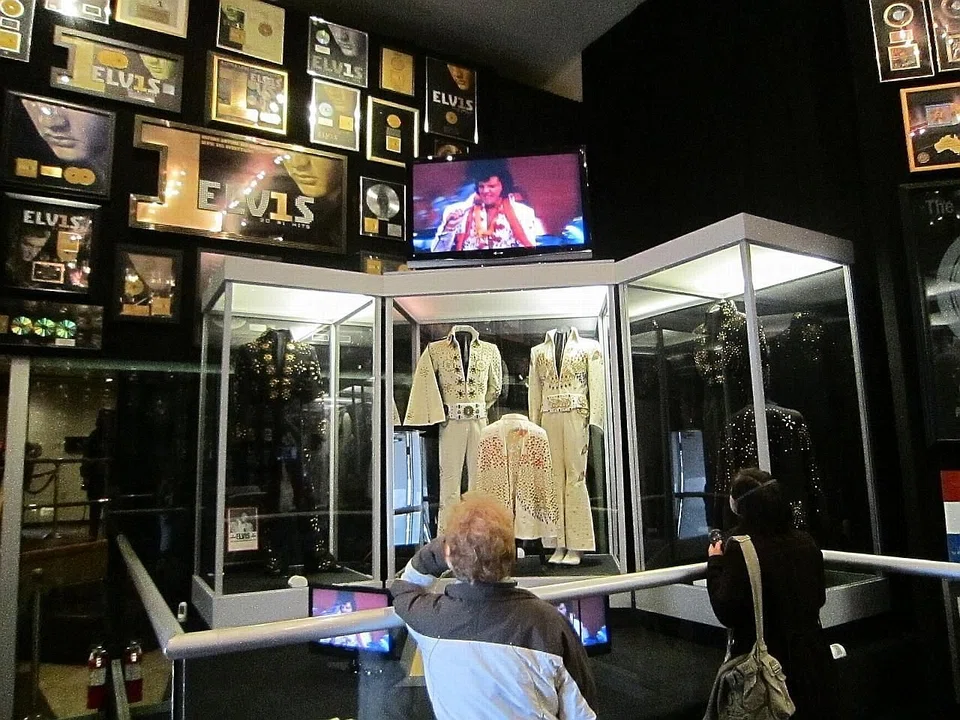
ELVIS Presley boasts 12.4 million "likes" on Facebook and 187,000 followers on Twitter and recently released a duet with Barbra Streisand. Never mind that he died in 1977.
And that's just the beginning for the King of Rock 'n' Roll and other long-dead celebrities, Bloomberg Pursuits magazine will report in its Holiday 2014 issue. Reviving a corpse from a cryogenic deep freeze is still the stuff of science fiction - and even Madonna is unlikely to be entombed like Lenin when she dies - but every other promotional possibility is on the table. Jamie Salter, the branding guru who owns a majority of Elvis's estate, is planning a "live" show in Las Vegas with Elvis appearing as a hologram, much like the one of Michael Jackson that appeared at a show in Sin City earlier this year. Pin-up queen Bettie Page, managed by dead-celeb superagent Mark Roesler, is slated for a holographic burlesque herself.
Today, deceased icons from pop culture's heyday are enjoying unprecedented success, out-earning even their former flesh-and-blood selves, says Mr Salter, one of the new breed of brand managers using technology to wring big bucks from superstars otherwise resting in peace (or so we hope).
These late luminaries are profitable in part because they first captivated fans in a pre-Internet age of truly mass media, dominating the popular imagination in ways few contemporaries can match, Mr Salter says.
Even better, they aren't able to create the sort of mischief that bedeviled their handlers back in the day, potentially damaging their brand in the bargain. They can no longer lapse into drug-induced comas in hotel rooms (Elvis), assault girlfriends with vodka bottles (Jimi Hendrix) or set themselves on fire while freebasing (Richard Pryor).
Model Kate Moss, by contrast, can still embarrass sponsor Burberry Group plc by appearing to snort cocaine on the cover of a British tabloid.
Bets on the dead have lately paid off big. Mr Salter bought the Elvis estate, including Graceland and the rights to the singer's image and music, from Core Media Group Inc in November 2013. Mr Salter's New York-based Authentic Brands Group LLC expects profits to rise by 25 per cent this year thanks to Elvis-themed bathrobes, calendars, cookie jars, cuff links, luggage, Christmas-tree toppers and, oh yeah, music.
"We bought Elvis at the right time," Mr Salter says. "None of the kids listen to his music, but look at how they're dressing, and their flipped-up haircuts." (For a page ripped straight from Elvis's pompadour playbook, just Google Justin Bieber's latest coif.)
Resurrection specialists such as Mr Salter are making money on even-dustier icons. Visa Inc used the voice of Amelia Earhart in an ad during this year's Winter Olympics celebrating women's ski jumping. The once-sleepy Earhart estate, managed by Mr Roesler at Indianapolis-based CMG Worldwide Inc, has since gotten offers to lend the trailblazing pilot's name to a retail store and a restaurant chain.
The bizarre business works because the truly famous tend to remain famous, even in death, says Nathanael Fast, a professor at the University of Southern California's Marshall School of Business who has done research on the psychology of fame. People like to talk about things they have in common, Prof Fast says, and celebrities are among the more-pronounced topographical features of our cultural common ground.
Indeed, dead musicians today regularly outsell even living ones. And no one crushes mere mortals like Michael Jackson. When he died of a lethal cocktail of the anaesthetic propofol and the anti-anxiety drug lorazepam on June 25, 2009, the King of Pop was more than half a billion dollars in debt, according to a March filing in Los Angeles Superior Court - much of it incurred from the upkeep of his 1,093-hectare Neverland Ranch, legal bills from defending child-molestation charges and legendary spending sprees on Rolls-Royces and almost anything else with a luxury label. If Jackson were an investment, he would have been a junk bond.
The singer's savviest financial move was to name as his executors Los Angeles lawyer John Branca and music producer and family friend John McClain. In their hands, the Jackson estate made US$250 million by extending the singer's contract with Sony Corp, and more than US$260 million from This Is It, a film cobbled together from footage of Jackson rehearsing for a series of concerts cancelled in the wake of his death.
The estate shared a further US$371 million in ticket sales with Cirque du Soleil on a big-top-inspired act called - what else? - The Immortal World Tour. (A second Jackson-themed Cirque du Soleil show called One permanently occupies an 1,800-seat theatre at Las Vegas's Mandalay Bay.)
Mr Branca and Mr McClain earn a 10 per cent commission on much of the cash that flows into the estate, which so far totals US$600 million, according to court documents. And 2014 could be the singer's biggest year yet. After all, like Elvis, he's still minting new music, releasing seven albums and DVDs since his death, including this year's chart-topping Xscape.
One of the consultants to the Jackson estate, Jeff Jampol, says that's the single biggest challenge for managers of the dead: monetising their memory without devaluing their good name. The estate of actor Steve McQueen, controlled by his son, Chad, and granddaughter Molly, is exceedingly cautious about entering into product-endorsement deals, says Lisa Soboslai, vice-president of Bill Gates's Corbis Entertainment licensing company, which represents McQueen. His heirs insist almost exclusively on pitching products McQueen actually owned, including Barbour jackets, TAG Heuer watches and Triumph motorcycles.
"They don't want to do anything that's not believable," Ms Soboslai says.
Unlike some in the business, Mr Jampol isn't trying to sell old music to old fans of old artists. He's trying to find new fans for old artists - and he isn't sticking to just music. He's promoting his artists as icons, betting the things that made Rick James, Janis Joplin and Jim Morrison big in their day will connect with a new generation.
"Every four years, there's a brand-new crop of kids who are blank canvases," Mr Jampol says. "If I can have my artist, with his or her magic, in the pop culture conversation where those 12-year-olds are, I win." BLOOMBERG
Share with us your feedback on BT's products and services
TRENDING NOW

He built the Vingroup empire. Now South-east Asia’s richest man is handing some key roles to his sons

32 companies, 6 individuals bag accolades at Singapore Corporate Awards 2026

Can a first-time homebuyer couple earning S$18,000 a month afford a new EC unit?

Floods compound Philippine growth woes from public-works scandal

