To evolve, a florist firm turns to performance art
Cult botanical design studio This Humid House mounts a large floral installation commenting on colonial histories

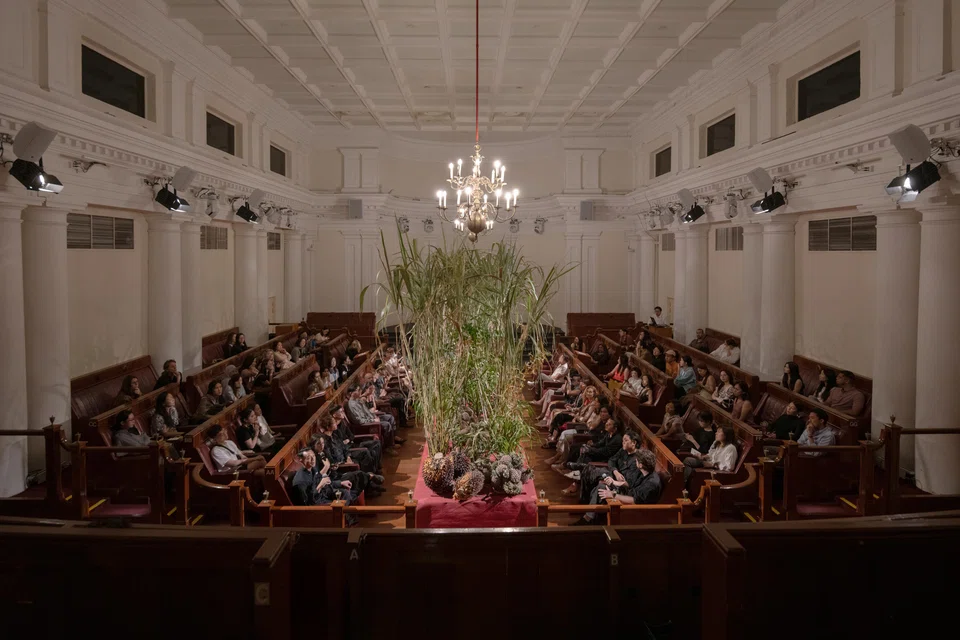
IN JAPAN, it is common for ikebana (floral arrangement) masters to stage live demonstrations for a public audience, so as to foster a wider appreciation for the delicate art of flower arrangement.
In Singapore, such events are rare.
So when the esteemed botanical studio This Humid House (THH) announced its plans to transform plants and flowers into a large sculptural installation before a live audience, anticipation rose and the S$90 tickets were swiftly snapped up.
The venue was part of the attraction: The event was to be held at the historic Chamber of the Arts House, where members of Singapore parliament once convened to shape the nation’s policies. Adding to the intrigue was THH’s collaboration with renowned London-based florist Wagner Kreusch, whose distinctive floral creations have garnered a dedicated following of over 57,000 on Instagram.
On Wednesday (Mar 6) night, Kreusch and seven members of THH, including the studio’s charismatic founder John Lim, gathered around a long table adored with kenzans – base plates with protruding needles used to affix plant and flower stems.
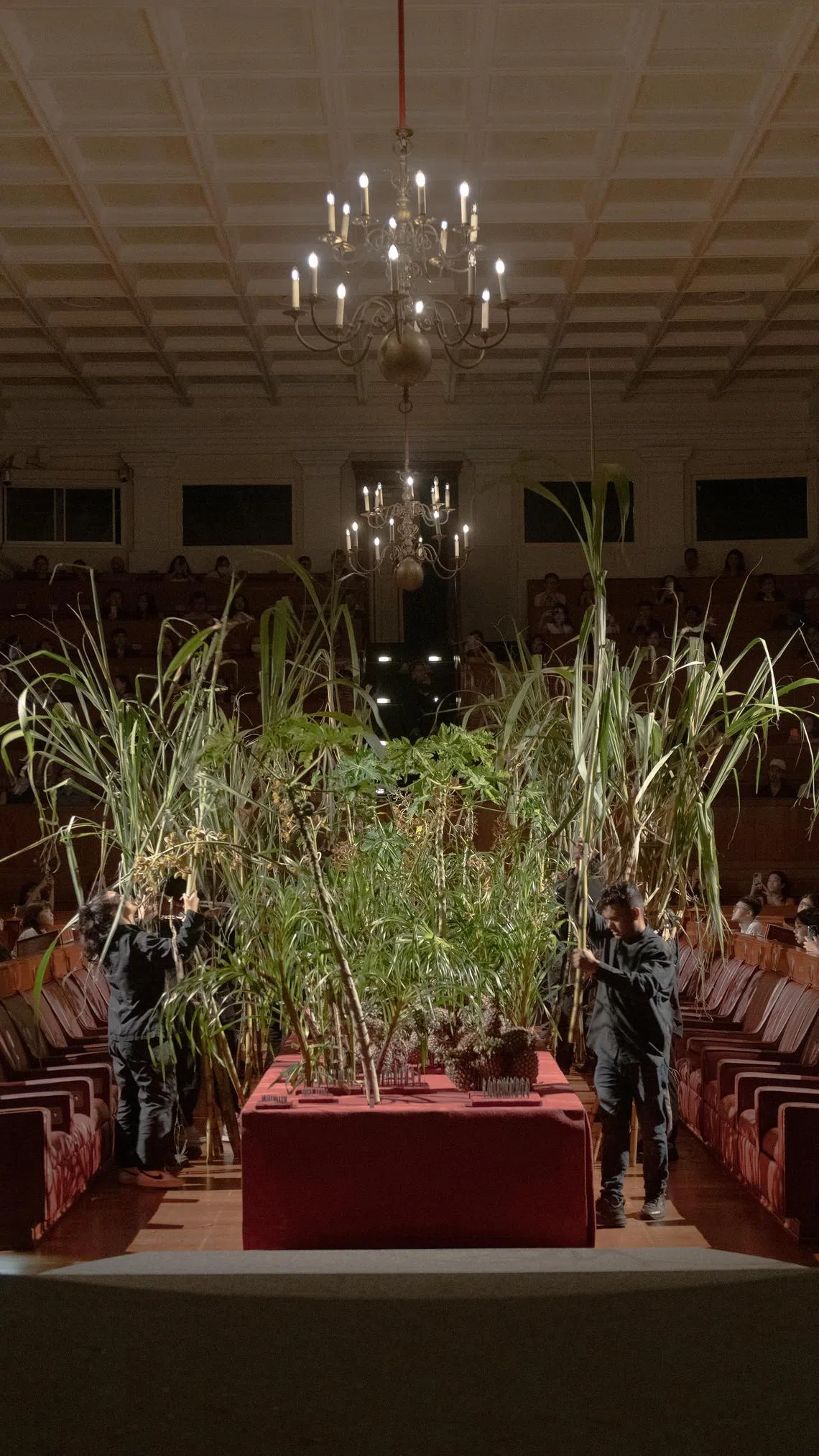
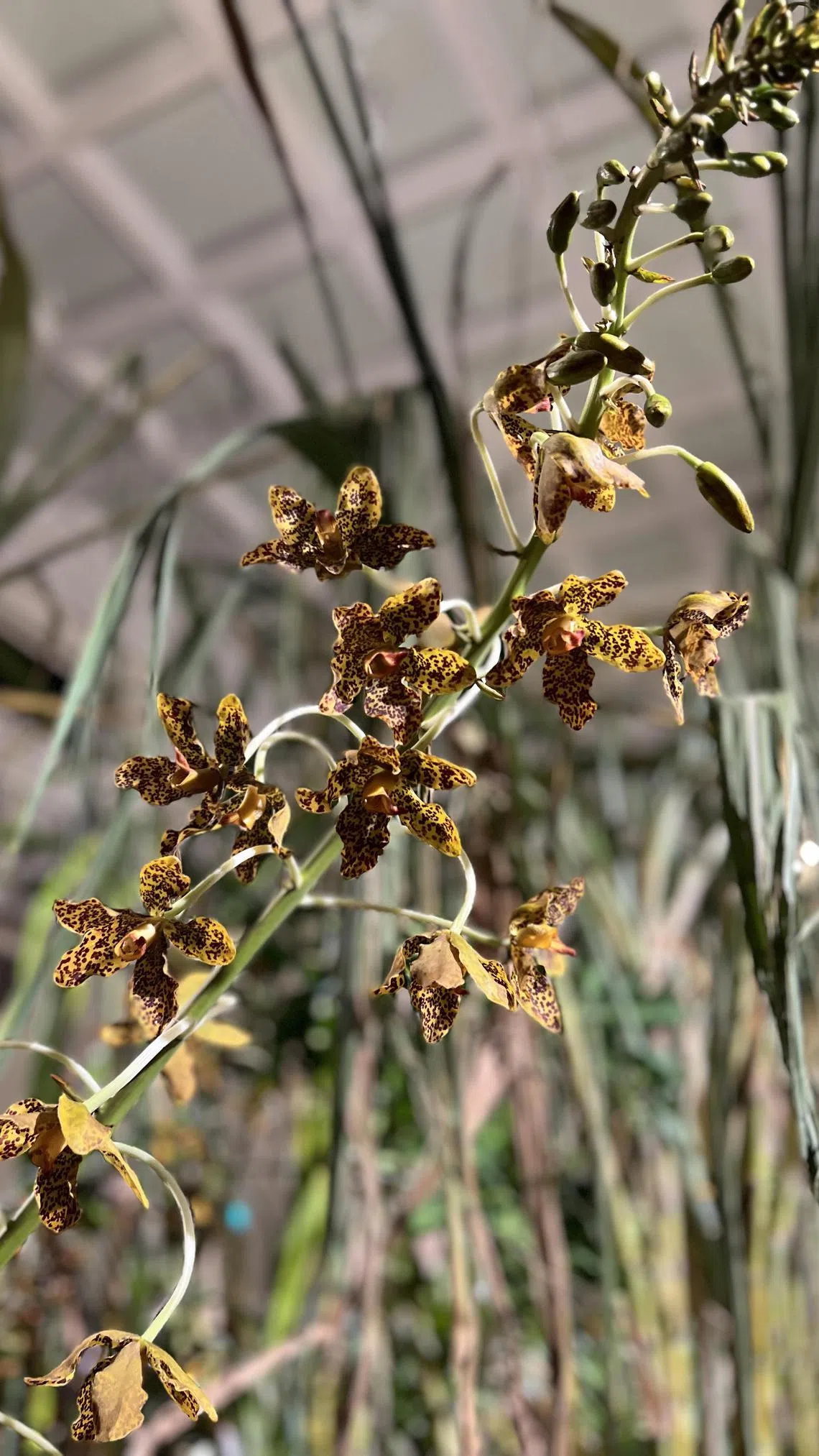
Accompanied by the live electronic music of Dominic Khoo, they assembled a towering botanical display, approximately 2 metres in height, using an array of native materials: pineapples, papaya trees, sugarcane stalks, palm oil fruits and long-stemmed Tiger orchids.

Each element carried its own historical significance – pineapples, for example, once flourished in 19th-century Malaya, establishing it as a global leader in canned pineapple production, while sugarcane and palm oil bore the scars of European colonial exploitation.
Speaking to The Business Times before the performance, Kreusch explained the deeper meaning behind the materials. “Sugarcane has a history not just in South-east Asia, but also in Brazil where I was born,” he said. “For many countries, it was the driving force behind much slavery on sugar plantations.”
Is the installation an anti-colonial statement then, since it was being mounted at the Art House, a colonial-era building? Kreusch declined to be prescriptive: “The impetus for the work comes from the meaning of the material itself. The materials guided our performance, not just on the physical level, but also on the subjective and meaningful levels.”

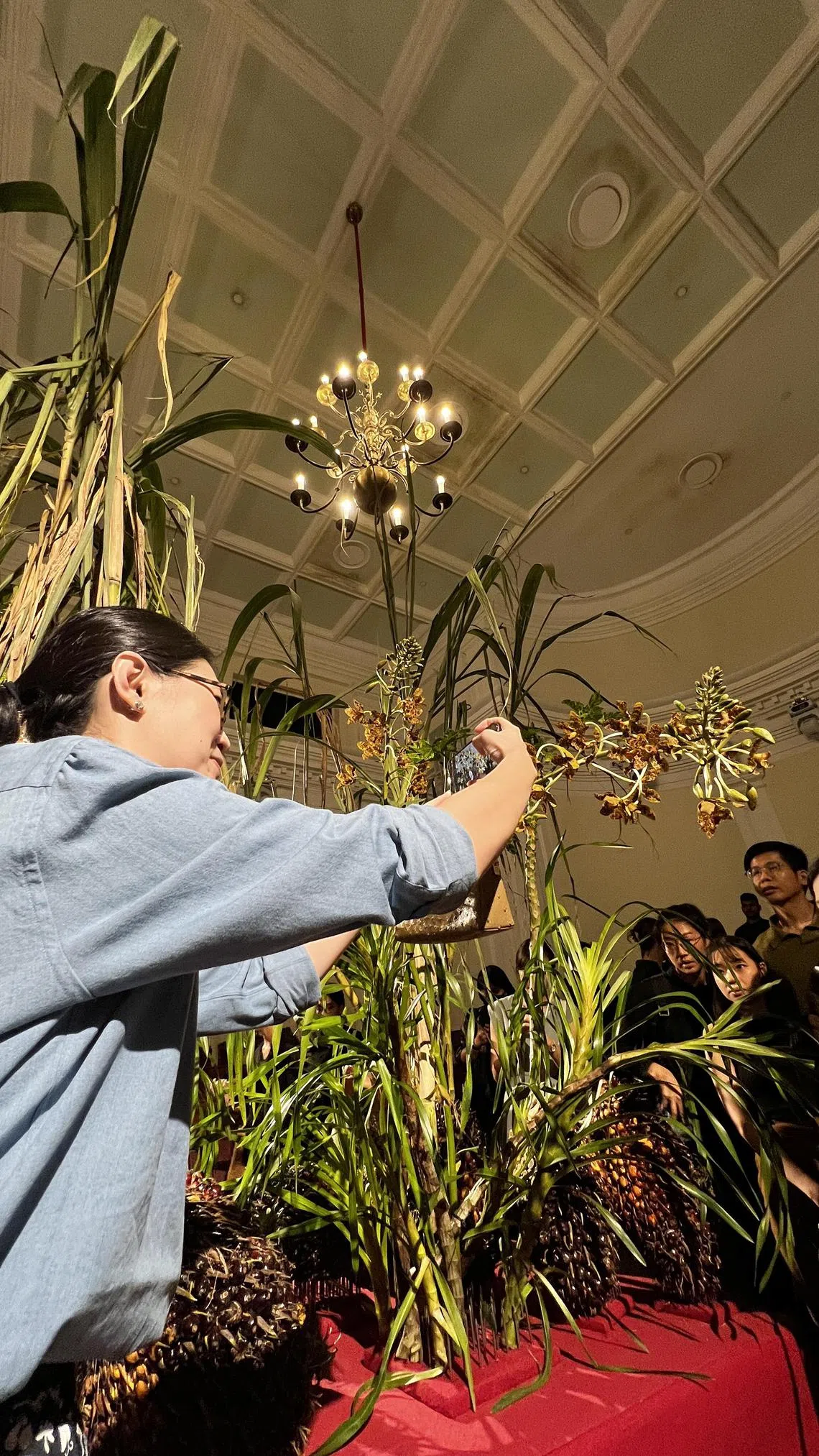
Lim echoed this sentiment, noting that the inspiration for the installation drew from “images of diplomatic gatherings, where flowers are often used to decorate and soften the space. But some of these botanical materials carry a much deeper meaning, meanings that might escape most of us – and our performance is, in a way, a provocation or an invitation to look more closely at what’s in front of us.
“Every material that we’re using for the show is charged with meaning. Every one of them is kind of a commodity crop, with a significant history.”
By the end of the performance, the work stood as a lush testament to the intertwining narratives of nature and history, barely disguising the haunting echoes of colonial exploitation.
TTH and Kreusch’s creations are typically sculptural and elegantly asymmetrical, lending an air of avant-garde simplicity and sophistication. However, this installation departed from their usual style, displaying a more linear and structured design.
It is unclear if this was intentional or not, but the design felt simultaneously verdant and oppressive upon close inspection. The men themselves admit that, while every single aspect of the show had been planned in advance, they also left “a lot of opportunity for variability and responsiveness to the moment”.
Lim said: “The desire of the studio is to raise awareness around the possibilities of plants and flowers, of promoting education about botanical materials that offer multiple perspectives and understanding… This is the direction that our studio is moving towards.”
For some time now, THH has been the go-to florist for some of the chicest corporate events and weddings in Singapore and the region. During the pandemic, the studio even expanded into Europe with an outpost in Paris. This performance installation marks a new milestone in the journey of Singapore’s most innovative floral design firm.
Decoding Asia newsletter: your guide to navigating Asia in a new global order. Sign up here to get Decoding Asia newsletter. Delivered to your inbox. Free.
Copyright SPH Media. All rights reserved.