Extension of Enabling Village further supports employability of persons with disabilities
They can get more job opportunities in sectors such as music, art and design
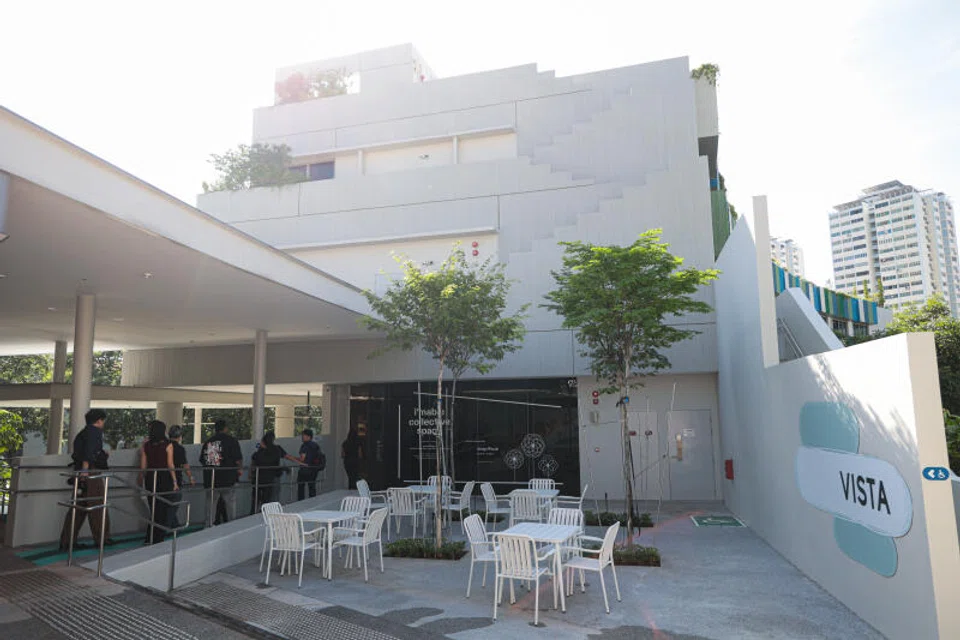
[SINGAPORE] SG Enable launched Vista, a new four-storey extension of Enabling Village, on Friday (Dec 5).
A part of the block will be used by the organisation to train persons with disabilities (PWDs) in areas such as music, art and design. This will further support PWDs to find jobs in sectors beyond traditional ones such as retail as well as food and beverage (F&B).
SG Enable will develop innovative training and employment models in the design and art sectors, offering PWDs pathways to gig work, commissions and long-term roles.
For example, i’mable Collective connects PWDs with opportunities in the creative sector. It ties up with businesses and community partners for corporate gifting commissions, public markets and projects that employ PWDs to create products.
The launch of Vista also marks the 10th anniversary of the opening of inclusive community space Enabling Village.
Prime Minister and Minister for Finance Lawrence Wong, who was guest of honour at the launch, said: “With Vista, we will build on the strong foundations laid over the past decade, enhance service offerings, and create even more opportunities for PWDs.”
SG Enable aims to continue diversifying employment opportunities for PWDs, added Edward Chew, senior director, Employment and Lifelong Learning Group at SG Enable.
This comes on the back of the Ministry of Social and Family Development’s 2024 Disability Trends Report, which stated that in 2022/2023, the average employment rate among PWDs aged 15 to 64 was 32.7 per cent.
Speaking about the new tenant mix at Enabling Village, Zoe Zora, a recruiter at social business Inclus, said: “PWDs can be assured that they can pursue their interests and get into a field that they are interested in, rather than having to go through the regular routes like F&B and logistics.”
The new i’mable Collective space at Vista is an integrated experiential showcase that combines retail, gallery, studio and cafe experiences.
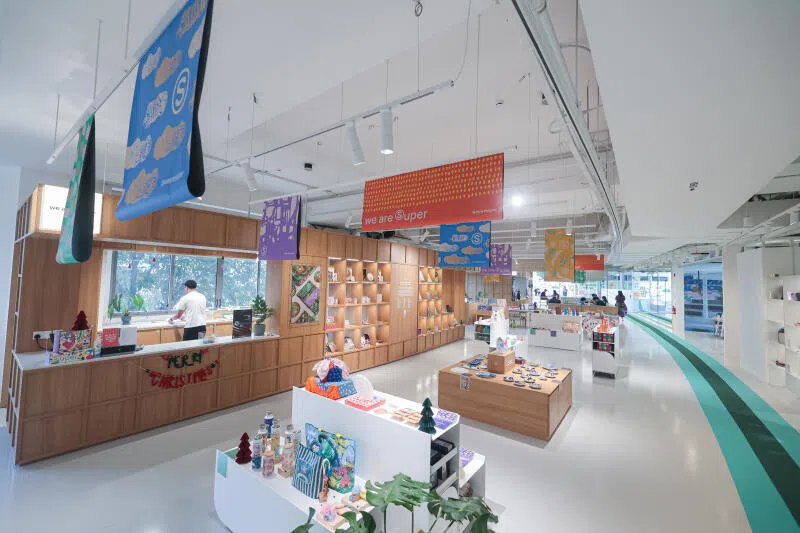
Since 2020, i’mable Collective has engaged more than 1,400 PWDs, generated more than S$1.3 million in sales from merchandise, and supported 160 corporate partners with gifts.
Meanwhile, inclusive music school MS Academy – Enabling Village’s new tenant partner at Canopy block – offers vocational training for PWDs to develop industry-relevant skills in the creative arts. They can also learn technical skills such as repairing instruments – an area that typically does not engage PWDs.
A decade of skills-training
Enabling Village was launched in 2015 to exemplify how PWDs can live, learn, work and play in an inclusive society. Now spanning 33,400 square metres, it serves as a test bed for new models of inclusion.
The village is home to tenants who work with PWDs and community partners to foster inclusion. One is anchor tenant Autism Resource Centre (ARC).
Chew said: “The enclave employment support model at the Hive block by ARC allows employers to hire a group of employees on the autism spectrum to perform scoped tasks in a structured environment, supported by on-site job coaches.
“The train-and-place model provides structured training within Enabling Village’s inclusive environment, followed by supported transitions into open employment.”
At its Employability & Employment Centre (E2C), ARC customises training plans for each individual, and training typically takes three to six months – depending on the job. They are trained in hard and soft skills, as well as in productivity.
Jacelyn Lim, executive director of ARC, said: “We will assess what their strengths are, what their potential to learn and pick up skills and instructions is, and what their learning gaps are.”
Several organisations have workspaces at ARC’s space in Enabling Village, such as the National Library Board, which hires more than 25 persons with autism who do digitisation work.
Lim noted that E2C has seen about 600 job placements with about 70 employers.
ARC also runs The Art Faculty, a social enterprise retailing art and merchandise produced by artists with autism. There are currently around 60 artists on its royalties scheme.
Lim added: “The reason why we set up the facility was because we knew that not everyone on the autism spectrum is able to work. But if they have a talent in art, we are providing an alternative source of income for them.”
Decoding Asia newsletter: your guide to navigating Asia in a new global order. Sign up here to get Decoding Asia newsletter. Delivered to your inbox. Free.
Copyright SPH Media. All rights reserved.