F1’s new engines are sport’s biggest gamble in 12 years. Here’s what changed
So much work has gone into producing the beating heart of the cars; this again puts their performance in the spotlight after years of relative parity
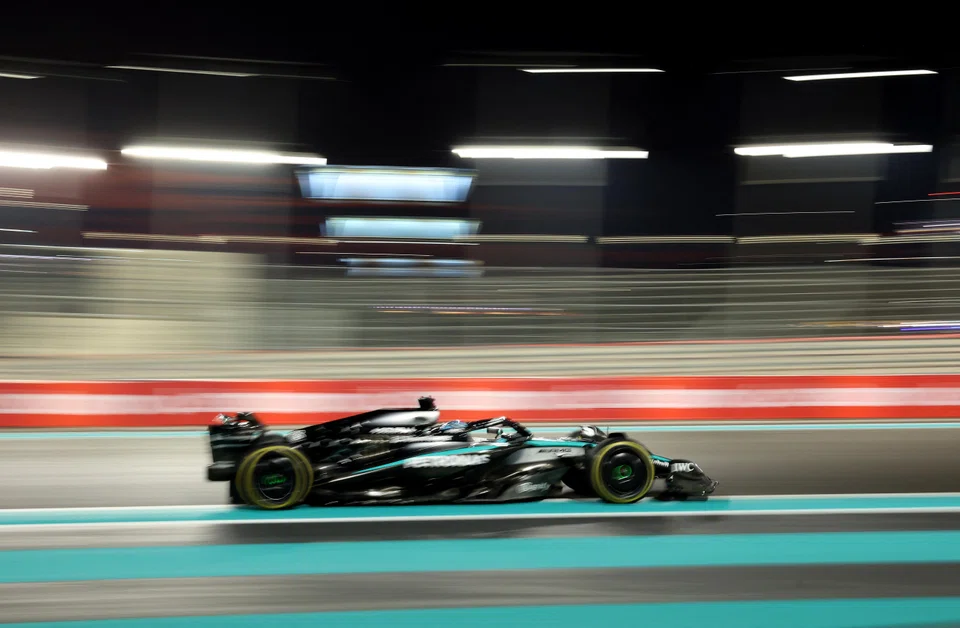
[NEW YORK] Formula 1’s (F1) revolution for 2026 is the biggest in a generation.
Not only are the chassis designs and car aerodynamic shapes changing, but for the first time since 2014, the engines – the beating heart of each car – have also been overhauled.
It is rare for there to be such major changes to both the car aero designs and the engines at the same time. F1 went through big aero rule changes in 2017 and 2022, but the engines were untouched – until now.
The engines are still hybrid units, combining combustion with electrical power, but there have been considerable changes in how they function. Electrical power has increased, and fully sustainable fuels have been introduced.
While engine performance across manufacturers has largely been balanced in recent years, the 2026 changes could deliver significant, potentially decisive gains. In 2014, when F1 first introduced hybrid engines, Mercedes emerged with by far the best, setting it on course for eight consecutive world championship wins through 2021.
That is why F1’s engine manufacturers – Mercedes, Ferrari, Red Bull/Ford, Honda and Audi – have spent years preparing for this change. Getting it wrong may take years to overcome.
What has changed?
The 2026 engines are not too dissimilar from their predecessors in their core makeup.
They are still 1.6-litre V6 hybrids, including the internal combustion engine and a battery. But there has been a significant increase in the amount of electrical power available through the hybrid system. This has also been simplified and will become a substantial area of focus for drivers and teams this year.
The previous engines used two energy sources to recharge the battery: the MGU-K (a kinetic energy recovery system) and the MGU-H (a heat energy recovery system). Together, these provided about 20 per cent of the car’s power, with a maximum electrical output of 120 kilowatts.

For 2026, the MGU-H has been discontinued, as it was costly and not relevant for most road cars, while the MGU-K has become much more powerful.
The electrical output has almost tripled to 350 kilowatts, and the power split will now be nearly 50-50 between the internal combustion engine and the hybrid system.
Drivers’ approach
Moving to a near 50-50 split between internal combustion and battery power in 2026 will significantly affect how everyone races. There will be one key area: efficiency.
Drivers will have extra tools available to them to make use of the additional electrical energy. Overtake Mode will provide extra power from the battery when a car is within one second of another car ahead of it. There is also Boost Mode, which drivers can use at any time around a lap to engage maximum battery power. This will be used to either attack or defend.
But the increased power and reliance on the hybrid system mean drivers will now need to work harder than before to harvest energy and recharge the battery. They can do this by lifting off the throttle and braking, and much of the regeneration will be automated by the engine’s control unit.
But there may be new tactics that could help drivers, such as running at maximum revolutions through a corner or even dropping to first gear, a rarity in F1, in a bid to harvest more energy by maximising engine braking when slowing the car. It also means the quickest way around a lap will not be to use maximum power at all times; that would drain the battery. Drivers will need to be tactical.
New fuel
After taking the first step in 2022 to introduce a 10 per cent renewable ethanol blend, F1 has now increased to 100 per cent sustainable fuel. That is a step toward the sport’s goal to reach net-zero carbon by 2030.
But it has also posed challenges to engine manufacturers and fuel suppliers.
Hywel Thomas, managing director of Mercedes High Performance Powertrains, worked with team supplier Petronas to develop the new fuel. While this may not make much of a difference for fans, Thomas called it a “truly breathtaking” product.
“What the regulations did was say: ‘We don’t know how you’re going to do this, guys, this doesn’t exist in the world. Good luck, but it’s going to be 100 per cent sustainable. Off you go!’” Thomas said.
Ben Hodgkinson, technical director of Red Bull Ford Powertrains, noted that the reason the new sustainable fuels are “a bit tricky” is that the various chemical elements have different evaporation points. This means they must ignite at a higher temperature than in the previous engines.
“The old fossil fuels used to evaporate at a bit lower temperature in a very clean, very narrow window, which meant you got vaporisation very cleanly,” Hodgkinson told reporters. “With sustainable fuels, you get some elements that are evaporating later than others, and it can be a bit of a challenge with combustion.”
Engine rules
When F1 last overhauled engine regulations in 2014, a split in approaches led to significant performance differences. This was the bedrock of Mercedes’ streak of championships, as its MGU-H was initially much better than the system used by its rivals.
A similar split through the field is unlikely in 2026. Not only is this the first overhaul of the hybrid rules since F1 introduced a cost cap, but the regulations have also been written to limit how much designs can vary.
“There are far more constraints within the combustion engine regulations, max valve sizes and positions,” Thomas noted. “We’ve got standard fuel injectors. There’s quite a lot that’s gone into trying to reduce the envelope to change.”
Although such limitations may frustrate engineers, this should prevent a big spread in performance. It should also avoid forcing manufacturers to play catch-up by spending heavily, even more difficult under a cost cap, just to regain ground.
“It is a lot more restricted,” Williams team principal James Vowles said. “Do I think there will be visible differences between power units? Probably at the beginning, yes. But with the right mechanisms in place to allow others to catch up, so you have a field that’s coming together.”
What it means for F1
The 2026 season is a big reset, but when it comes to defining this new era, the engines will be critical.
So much work has gone into producing the new engines; this again puts their performance in the spotlight after years of relative parity.
But the fact that drivers will need to change their approaches as well and become smarter in their use and recovery of battery energy make this a shift that will be felt all the more sharply in the cockpit.
It’s an art the drivers must master, but something that should quickly become second nature. The early feedback from testing in Barcelona last week has been largely positive.
“There was a lot of anticipation for these new power units, and generally, the amount of power that they give is pretty impressive,” George Russell of Mercedes told F1TV after the first day of testing. “I think for all the cars I was watching today, with all the different power units, it was probably the quickest I’ve seen an F1 car pass here in Barcelona. That was pretty exciting to see.” NYTIMES
Decoding Asia newsletter: your guide to navigating Asia in a new global order. Sign up here to get Decoding Asia newsletter. Delivered to your inbox. Free.
Share with us your feedback on BT's products and services