US fans are so obsessed with KPop Demon Hunters, they are learning Korean
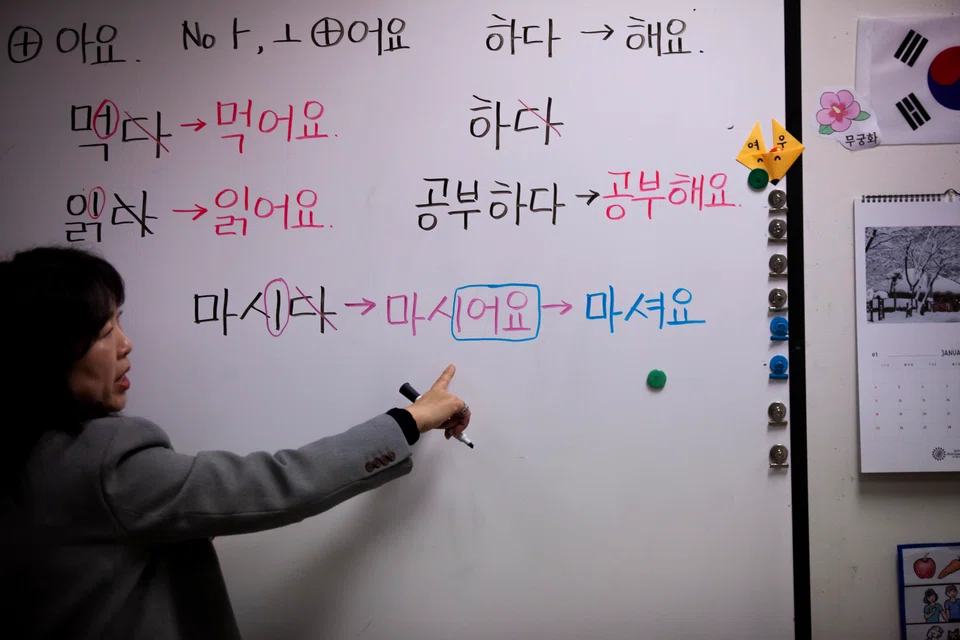
TO PROPERLY sing along to Golden, the inescapable hit song from the movie KPop Demon Hunters, it helps to know Korean, which is sprinkled into the lyrics.
The internet, apparently, agrees. The song is the subject of many YouTube and TikTok videos breaking down the pronunciation of its Korean words and lyrics. Combined, the clips have millions of views.
The US obsession with South Korean pop culture has now reached the point where more and more Americans, with little personal connection to the country, are learning the Korean language or alphabet, or hangul.
Demand is so high that universities from California to Arkansas are expanding their courses in Korean language and culture. Duolingo, a language learning app, saw a 22 per cent growth in Korean learners in the United States over a one-year period last year. Language institutes are recruiting teachers to accommodate what they say is a surge in demand.
“We are limited only by our own capacity,” said Tammy Kim, the executive director of the Korean American Center, a nonprofit language institute in Irvine, California.
Known in Korean as hallyu, the Korean cultural wave crashed into America in 2012 when rapper Psy’s galloping hit Gangnam Style became the first YouTube video to surpass one billion views.
In the years since, South Korea has become a hit factory. BTS, a boy band juggernaut, has sold out football stadiums and appeared on Saturday Night Live. Blackpink, a K-pop girl group, headlined at Coachella. Parasite became the first non-English movie to win best picture at the Oscars.
The first season of Squid Game became the most watched show in the history of Netflix. And KPop Demon Hunters, which was nominated in January for two Oscars, is now Netflix’s most popular film ever, with more than 325.1 million views.
That animated movie is mainly in English, but many of the other shows and films were offered in Korean with subtitles. And the K-pop songs are mostly in a mix of Korean and English.
“Korean language is cool now,” said Joowon Suh, director of the Korean language programme at Columbia University. “That’s been very noticeable.” NYTIMES
Decoding Asia newsletter: your guide to navigating Asia in a new global order. Sign up here to get Decoding Asia newsletter. Delivered to your inbox. Free.
Share with us your feedback on BT's products and services