Drawn To Murals
Street art goes legit as more artists get paid to paint on walls. Tay Suan Chiang meets four of them.

Tay Suan Chiang


The Retro Illustrator Yip Yew Chong yipyc.com
During the week, finance director Yip Yew Chong has his mind on numbers. But on weekends, he has his hands full with paint brushes.
But Mr Yip, 48, is not your artist who dabbles with paint on a canvas. His pieces are bigger. Much bigger.
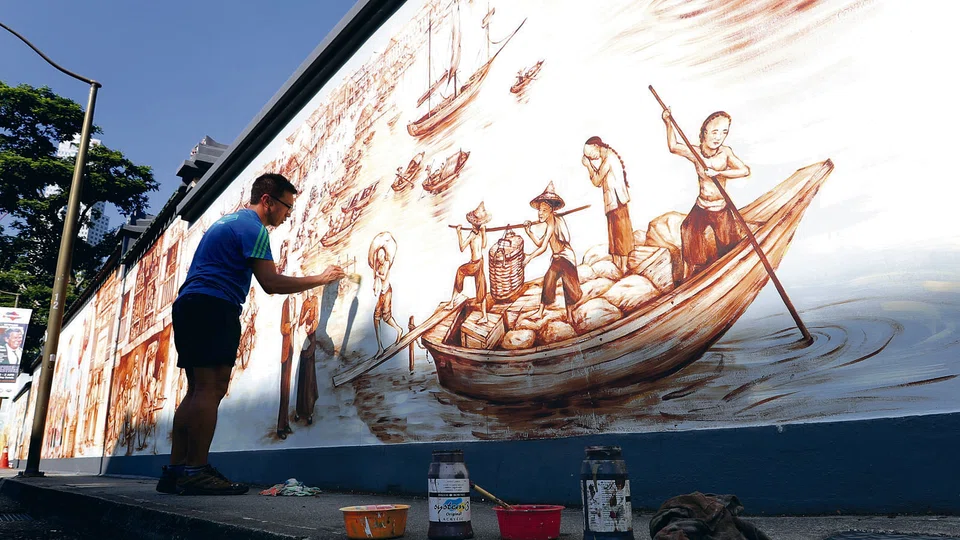
For the past few weekends, he has been busy painting a 40-m-long mural on the back wall of Thian Hock Keng Temple in Amoy Street. It was a project commissioned by the temple for this year's Hokkien Festival.
The mural depicts scenes of old Singapore, namely coolies loading and unloading goods at the Singapore River, bullock carts transporting water and life in kampongs.
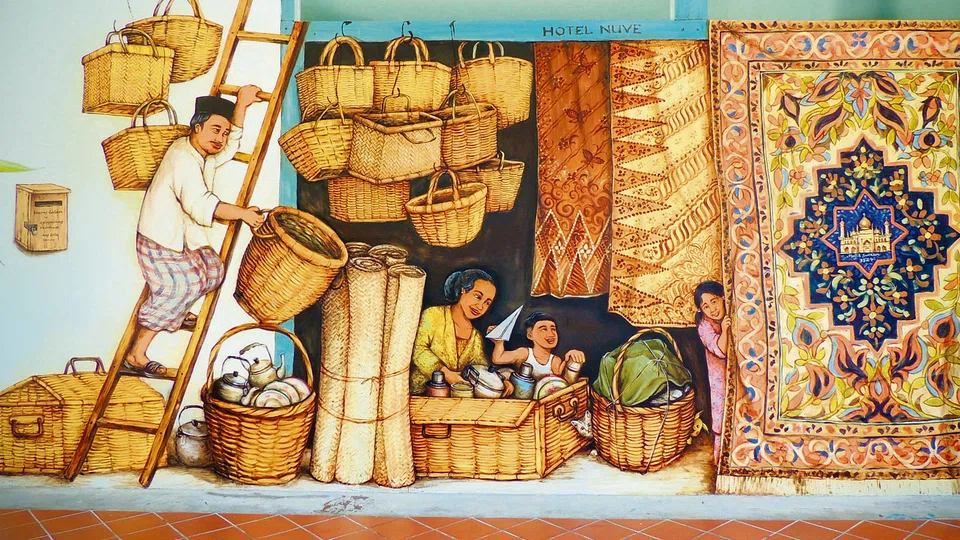
His murals can also be found at Everton Park, Changi Village, Tiong Bahru and Waterloo Street. They all share a common theme of nostalgia.
His first mural was at Everton Park in 2015, on the wall of a terrace house. It depicts an amah washing clothes by hand in a metal tub, with a flock of chickens nearby. "Painting historical Singapore befits the locations," he says.
Mr Yip, who enjoyed art from his schooldays, says he was inspired after seeing murals in Kampong Glam painted by Ernest Zacharevic, a Lithuanian artist whose street art in George Town, Penang, has become a tourist attraction.
To get inspiration for his murals, he recalls childhood memories and trawls the Internet for pictures of old Singapore. He taught himself to paint murals. "It was mostly trial and error when I first started. I'd paint, take a step back to see how the picture looks, and paint again."
But having done over 20 murals, his brush strokes are now bolder and the colours more vibrant. He sketches the mural in chalk, before using emulsion paint for the base colour, and acrylic paint for the details.
On weekends, he paints from 8am till dark, stopping only for lunch and toilet breaks. "Painting is my way of de-stressing, I don't feel tired."
The best weather conditions for painting are on a cloudy, breezy day. But while rain can dampen his progress, he says the sun is his worst enemy. Not because he is afraid of getting too tanned, (he slaps on sunblock), but because, "the sun causes the murals to fade". He has since returned to Everton Park to touch up his work.
He accepts commissions from public institutions and is happy to work with companies and get their staff involved as well. He also accepts private commissions, but will do only outdoor murals, so that more people can view them.
His dream location to paint is in Chinatown, where he used to live when he was a child. Unfortunately, there are too many stakeholders involved, and he has had difficulty getting permission.
But while he specialises in painting scenes of old Singapore, he hopes one day to be able to do one with a futuristic theme. "It will be fun to see what I can come up with," he says.
He gets a kick out of watching passers-by interacting with his murals, and the warm response he has received. Often, there would be a small group watching him, and some also chat with him. Often they are surprised to learn that he works alone.
"There is much satisfaction seeing how I turn a blank wall into one that becomes a talking point for the public," he says.
The Group Illustrators Tell Your Children tycstudios.com
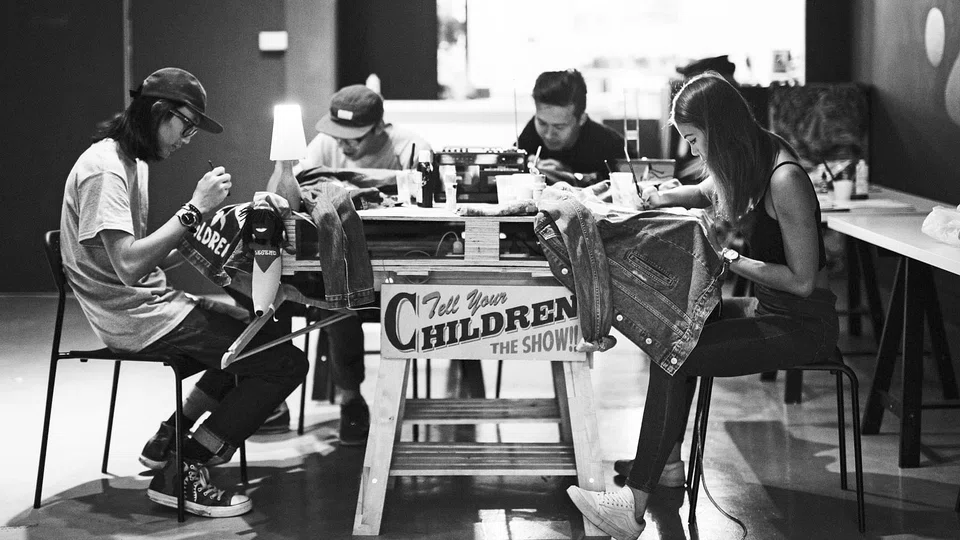
Tell Your Children (TYC) is not the title of a parenting book, but what a group of four illustrators decided to call themselves.
They are Deon Phua, Russell Ong, Kevin Too and Lydia Yang, who all majored in illustration at the Temasek Polytechnic School of Design. All four are in their 20s.
Mr Phua says the name, TYC, was inspired by an old cult movie, Reefer's Madness. "The name stood out as it resonated with our desire to leave a legacy for the next generation, as well as being catchy enough to stick in people's heads once they hear it."
He describes TYC's style of illustration, as mostly quirky with colourful characters paired with hand-written lettering. "It took a while for the four of us to experiment and grow with all our different styles and this style felt the most natural for us.
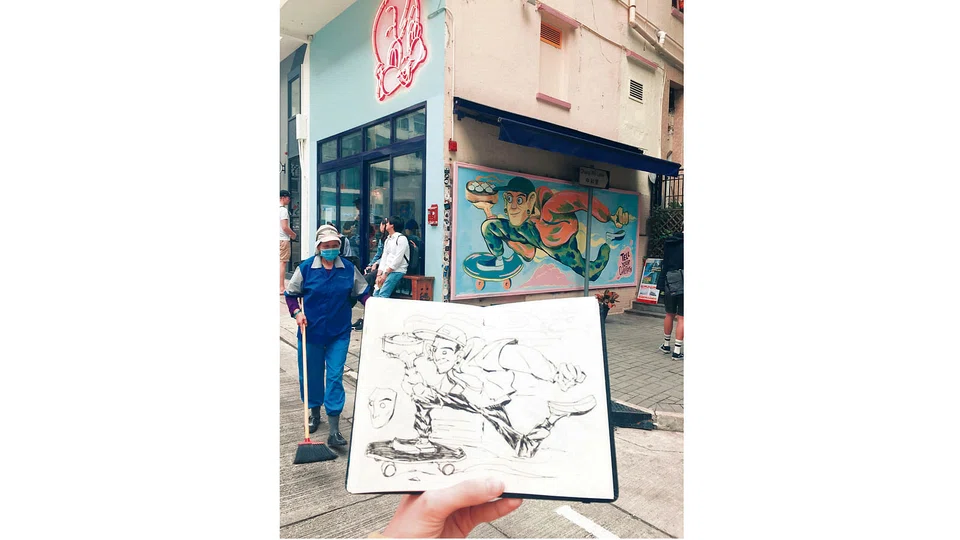
Most of their works can be seen in cafes, offices, and retail outlets. They have also taken their magic overseas, including one for men's fashion store, The Madbury Club, in New York, and for Little Bao, a modern Chinese diner in Hong Kong. In Singapore, one of their murals can be seen at Waterway Point mall in Punggol.
Prices vary from S$4,000 to S$15,000 depending on the style of the artwork, amount of detailing, size of the wall, number of colours and the time. A mural can take from a day to a week to complete.
The team are currently working on an indoor mural for a friend who is opening his home to celebrate various local talents from different industries such as the visual arts, F&B and music, so their mural has to reflect that.
"We work closely with our clients to design an artwork that accurately represents them, such as their company values and work culture," says Mr Phua. A few sketches would be presented and a final one selected. TYC uses water-based outdoor paint for their murals.
"Poor weather conditions, tired arms, a tight deadline and logistical limits are just some challenges of the job," says Mr Phua. "Sometimes, it is also the back-end work of finalising the artwork with the client that might be challenging."
Besides murals, TYC also designs visuals and artwork graphics for different brands and agencies, one of which was Uniqlo. They designed the hoardings for the Orchard Central flagship store, as well as two limited-edition tote bags.
And the satisfaction they get out of the job? "Seeing it finally completed after so much effort has been put into finishing it, as well as seeing a happy client at the end of the day," says Mr Phua.
The Quirky Illustrator Stephanie Raphaela Ho muffinsaurs.com
How do you jazz up a plain wall? You could paint it a vibrant colour, or use wallpaper, or hang up a few pictures... or you could give Stephanie Raphaela Ho a call.
The former graphic designer is now a full-time illustrator who creates murals, mostly for private residential clients. She has also done some murals in commercial spaces such as eateries and at a vet's clinic. Ms Ho, 28, also does illustrations for commercial clients, such as on food packaging.
"Murals are a way to make walls come alive," says Ms Ho, who started painting them in 2015.
Her style of illustration is "cute, quirky and strange in a certain way," she says, citing examples of animal murals, and occasionally zodiac signs of family members, or food.
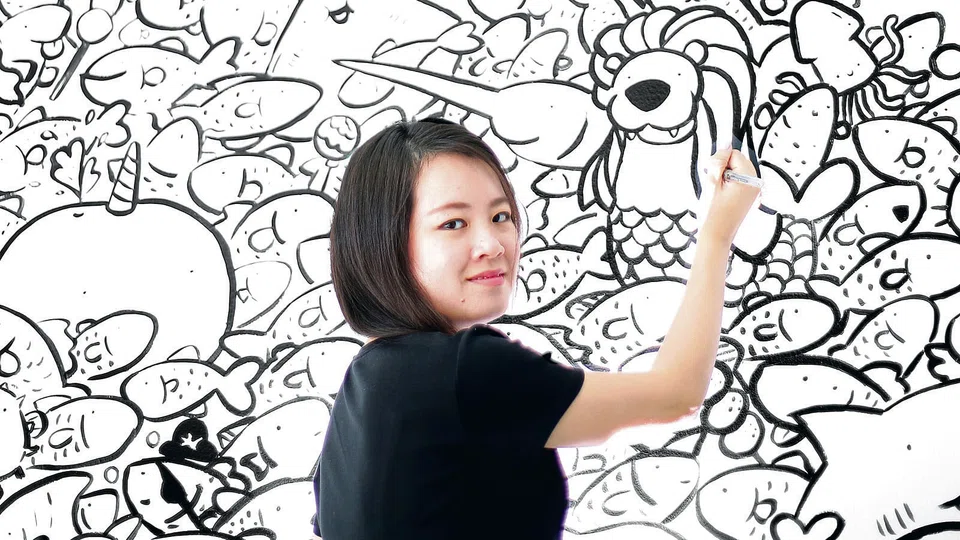
Her largest mural to date, is one for Pandan Garden Fishball Noodle café, featuring a mountain of fish and other sea creatures, on a wall that is 3.6m wide.
With new clients, she starts by finding out about the size of the wall and the illustration desired. She declines to reveal her rates, but says she charges according to the size of the wall, the complexity of the work and number of colours used.
After a contract is signed and a deposit paid, she renders a digital sketch of the mural and superimposes it on a photo of the wall. This gives the client a picture of what to expect. Once the client agrees, the work begins.
She uses odourless paint and mostly works freehand without a sketch. But for more complicated jobs, she draws an outline with a pencil before painting over it.
Most times, it takes her a day to finish a mural, stopping only for lunch or loo breaks.
It sounds quick and easy, but Ms Ho says: "It's really exhausting and can get sweaty, especially when there is no air-conditioning and the sun is shining right at you."
She often returns home at the end of the day with an ache that starts from her right hand and spreads all the way down to her lower back. Her legs ache, too, from all the standing, squatting and climbing up and down a ladder. She gives herself a three-day break in between each project to recover.
But she is not about to give up what she loves doing. "I love the sense of achievement and the feeling of an aching body after each mural. I am kidding about the aching body part," she quips.
"It gives me satisfaction when my clients appreciate what I do and trust me to paint on their walls. I paint on canvas, too, but that is on a smaller scale and less prominent."
As for her dream mural? "To paint animals for Singapore Zoo or a two-storey-high mural of weird creatures on a shophouse wall."
The Newbie Illustrator Karin Ong ongkohy.wix.com/karinong
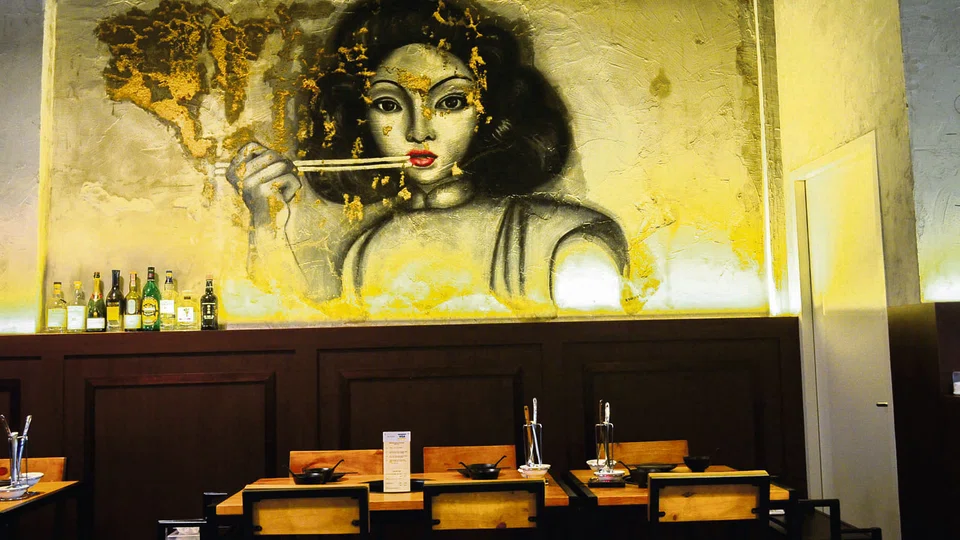
At LongQing steamboat restaurant in Hong Kong Street, a painting of a cheongsam-clad woman holding a pair of chopsticks and that of a cherubic baby look down at hungry diners.
The murals on the otherwise plain cement walls are by Karin Ong, 22, a second year Fine Arts student from Lasalle College of the Arts.
James Chiew, owner of LongQing, wanted a mural, instead of wallpaper or solid coloured walls, for "texture, look and feel".
Ms Ong says that as LongQing is a Chinese restaurant, she decided to paint an image of a Chinese woman, while the picture of the baby is an image of Mr Chiew's son.
Elsewhere in the restaurant, she painted a dragon flying across a mountain range with junks sailing below. At the wall, near the cashier, she painted peony flowers.
"As time goes by, the cement from the wall will start to peel off, giving the murals an 'old' look," she says.
This is her first time painting a mural, which she worked on during her year-end school holidays. She would go to the restaurant for a few hours twice a week to complete the piece. She is more familiar with realism drawings and paintings, and enjoys creating sculptures and installations.
For the LongQing murals, she first sketched the illustrations on paper and later projected the sketches on the wall before painting. Most of the painting is done using black and white emulsion paint, with some red acrylic for the peonies.
She says the tough part is climbing up and down a ladder and working with her arms at full stretch. "Painting on a cement wall is not an easy job because the cement would absorb the paint, which means I have to apply many layers to get the final result that I want."
Still, she is keen to take on more commissions for murals. "It will be a great opportunity to be able to paint someone's living room walls," she says.
Copyright SPH Media. All rights reserved.