

Japanese dining scene heats up in Singapore
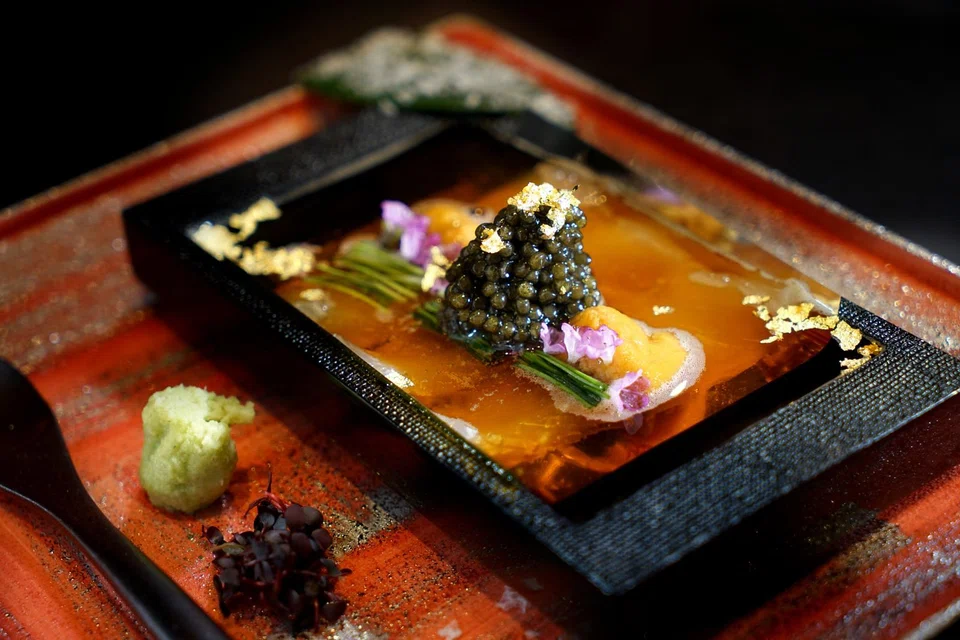
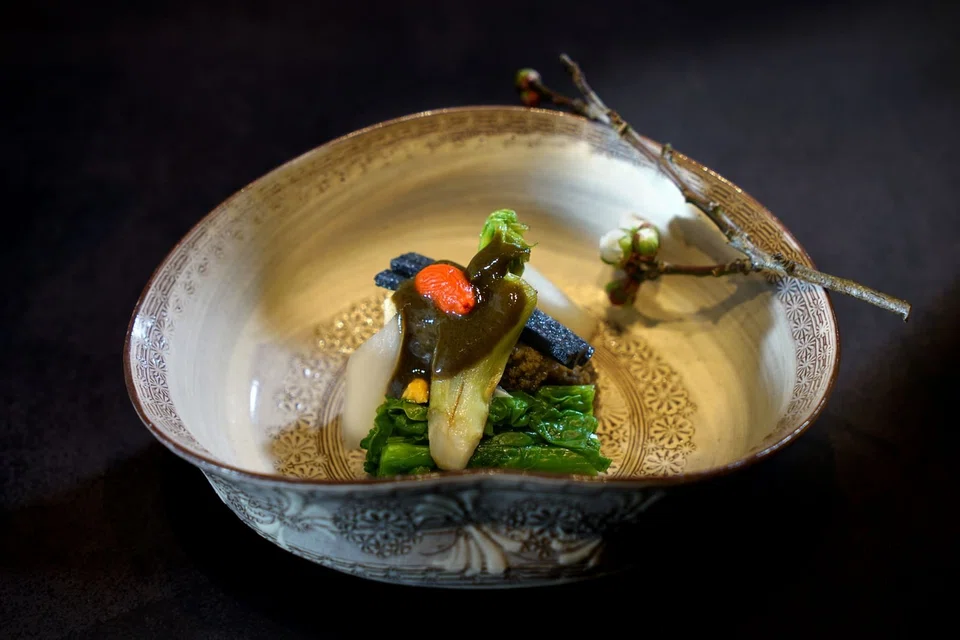
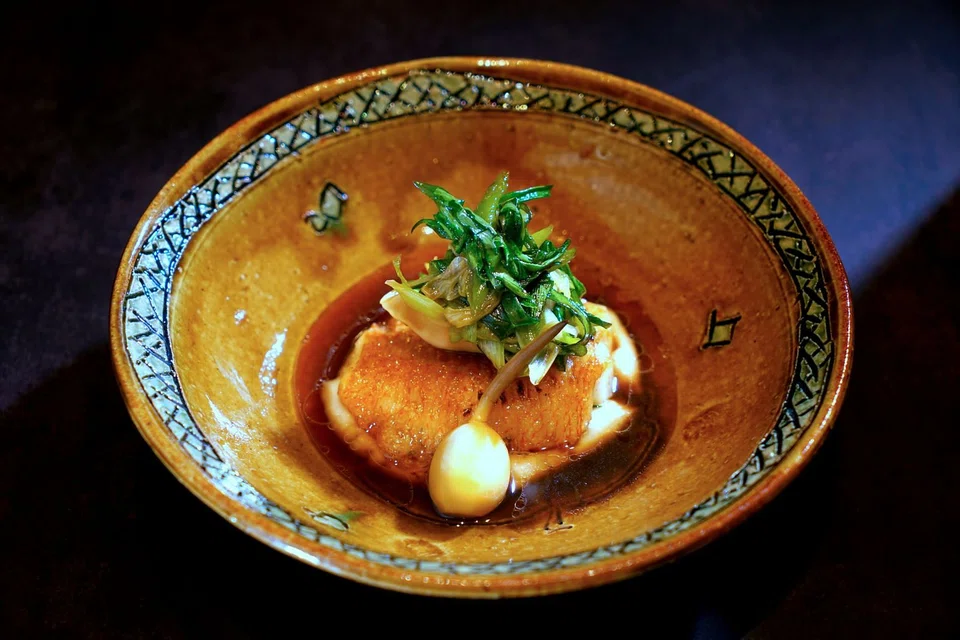
THE obsession with Japanese cuisine continues unabated in Singapore, as any hope of a travel lane opening to the most-wanted destination fades with every new Covid variant. The high-end market is where all the action is, as diners play fastest-fingers-first or exhaust personal connections to get a seat in any sushi or kappo eatery.
It's a demand that Japanese chefs and food and beverage (F&B) investors are enthusiastically tapping into, as many of the former are wooed away from their workplaces to strike out on their own, with generous financial backing. We're seeing new players in town too, brought in to bring fresh perspectives to the local scene. From this month, there are at least 5 new restaurants to explore, from destination Japanese dining to sushi, tempura and yakiniku. Let the fight for reservations begin.
IMAMURA
Opens Feb 8
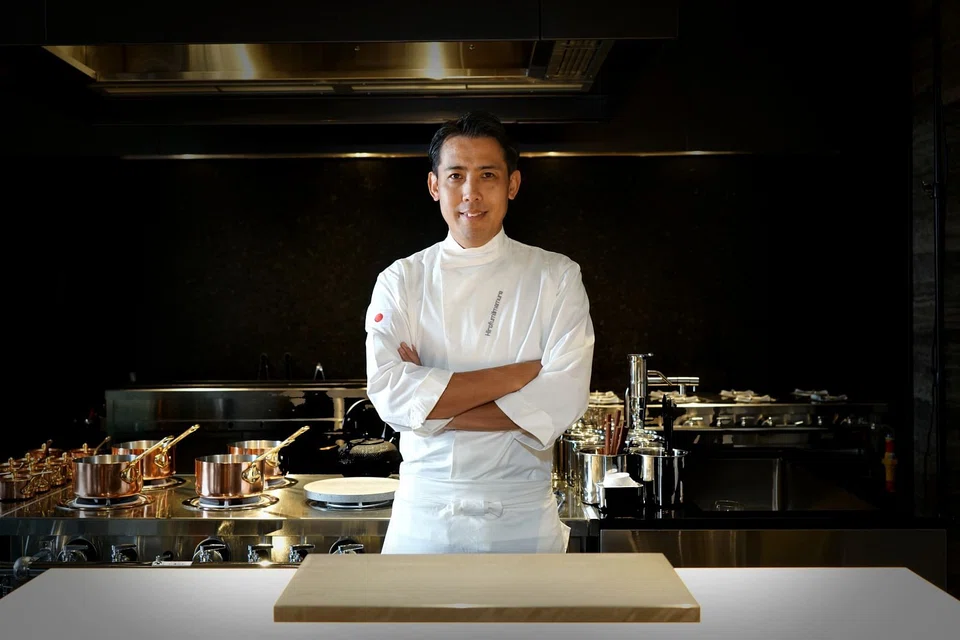
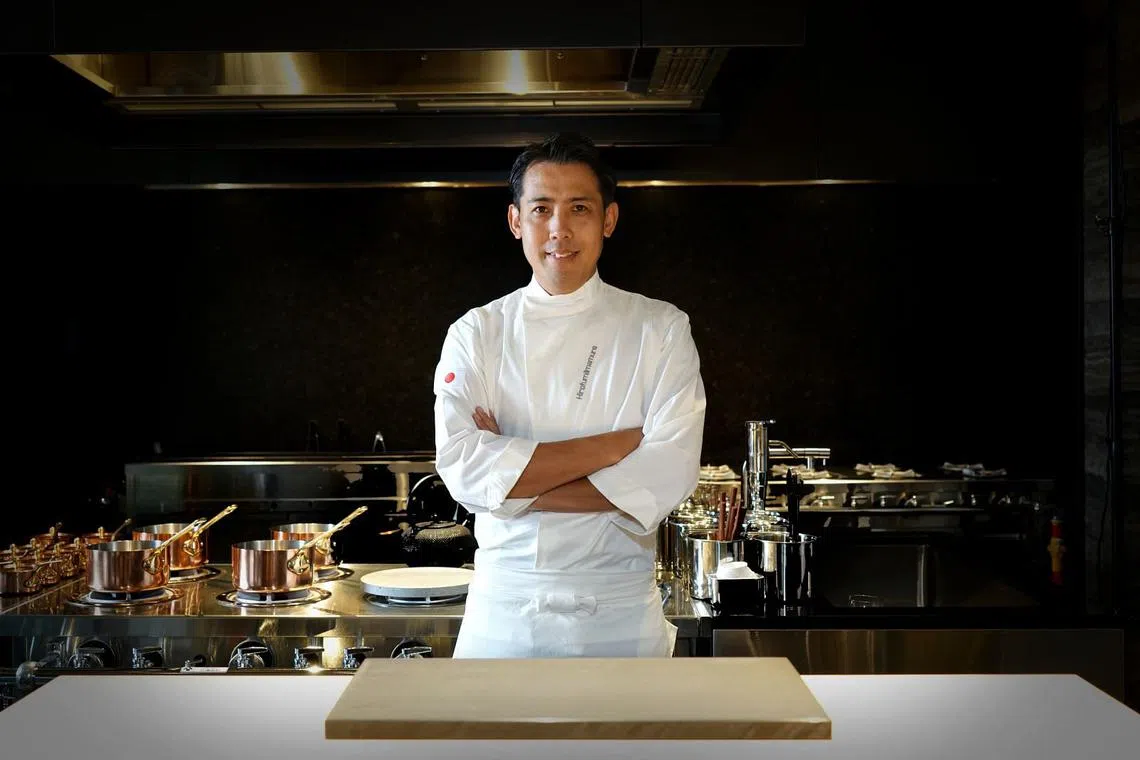
If there's a reason to take you away from the more conveniently located trendy kappo eateries in town all the way to Sentosa, Hirofumi Imamura is making sure it's a good one.
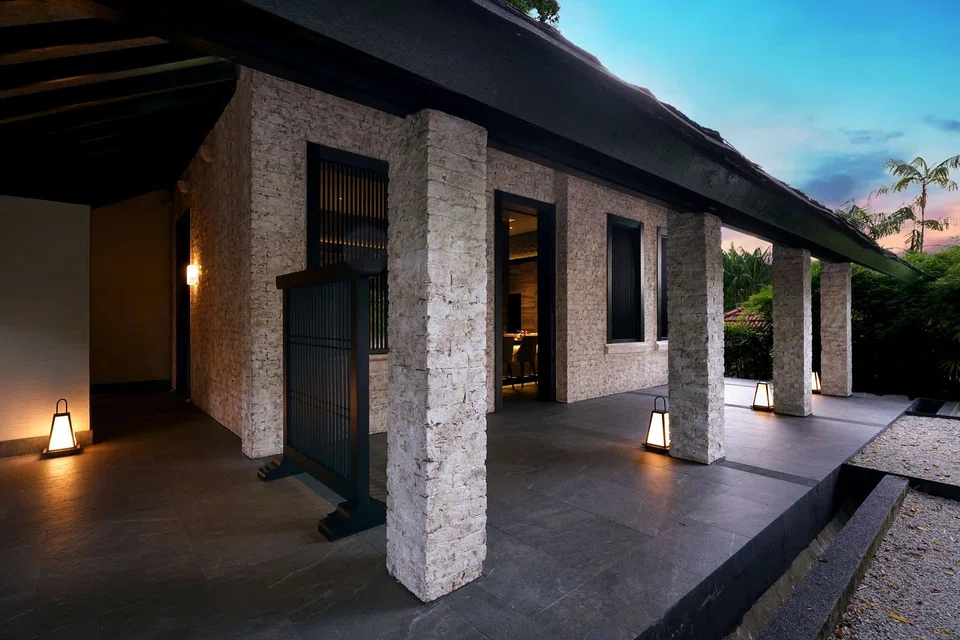
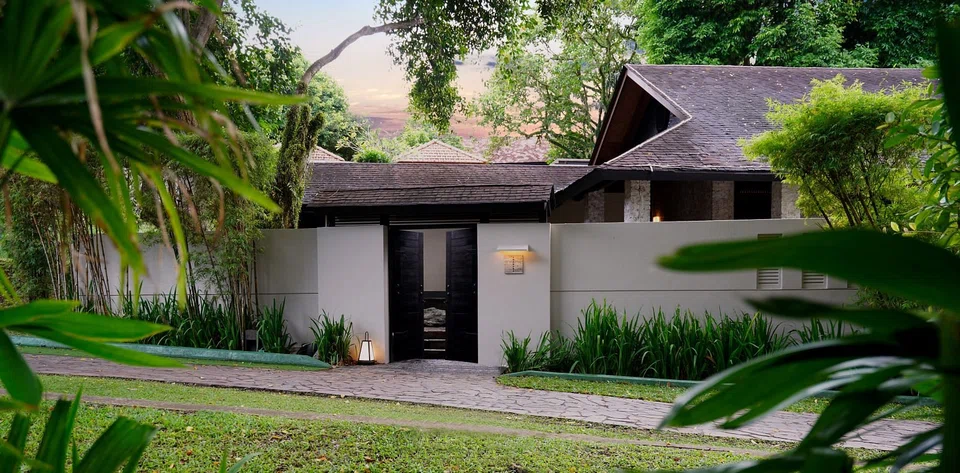
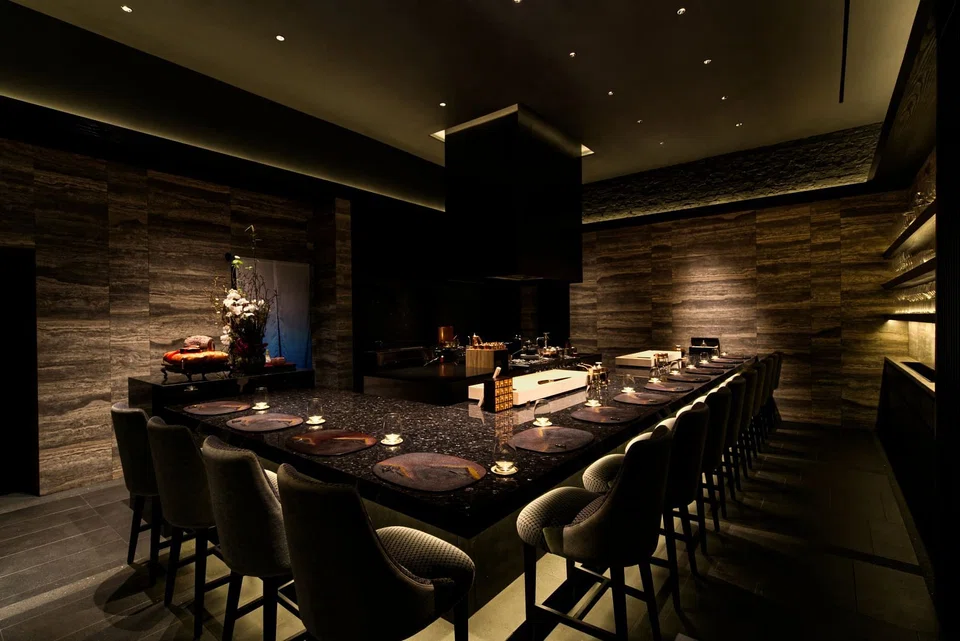
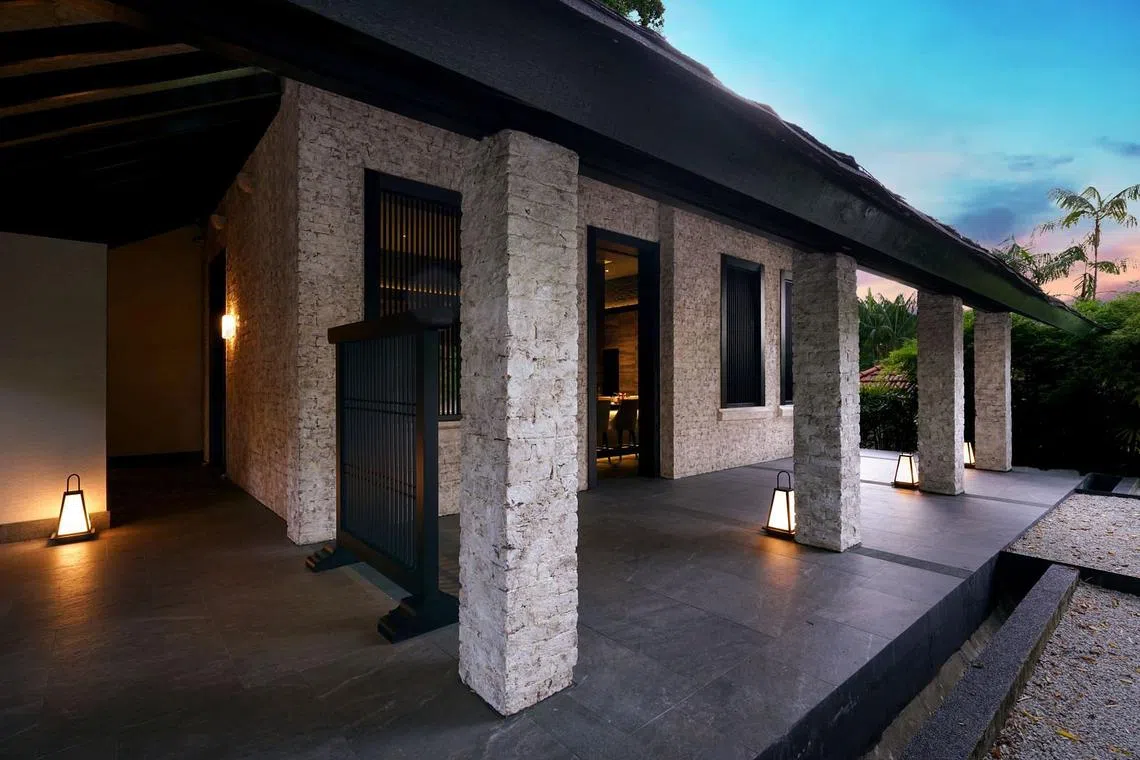
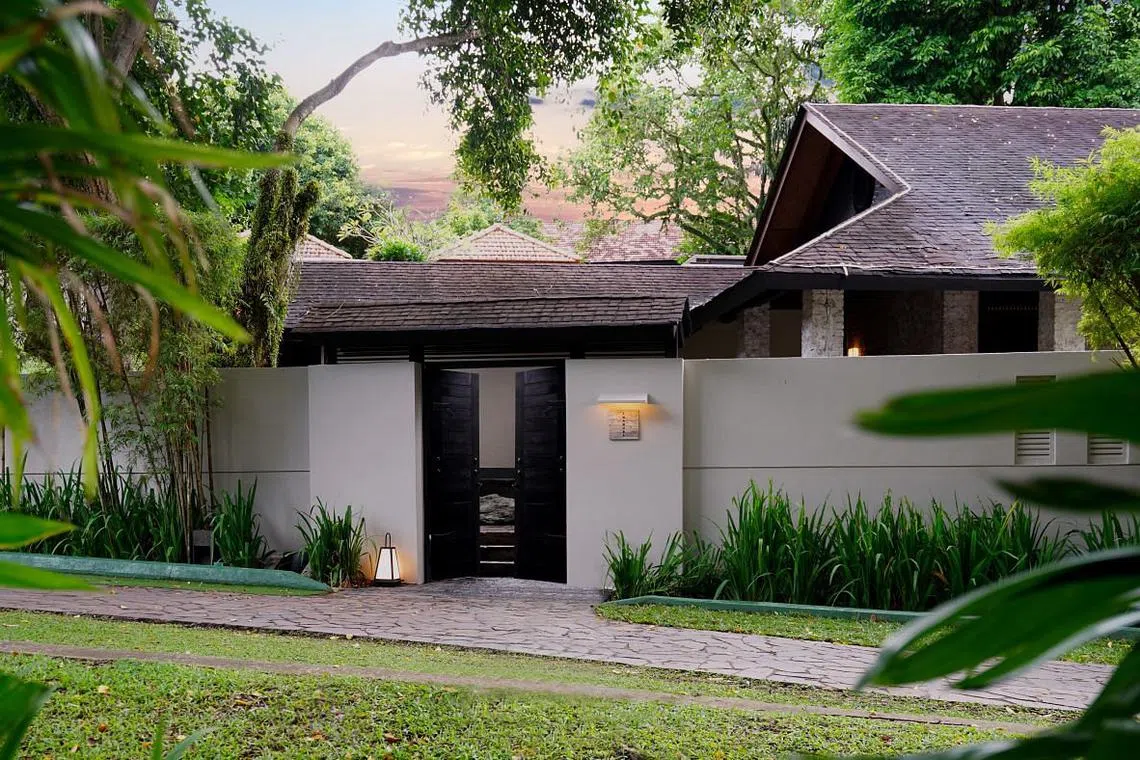
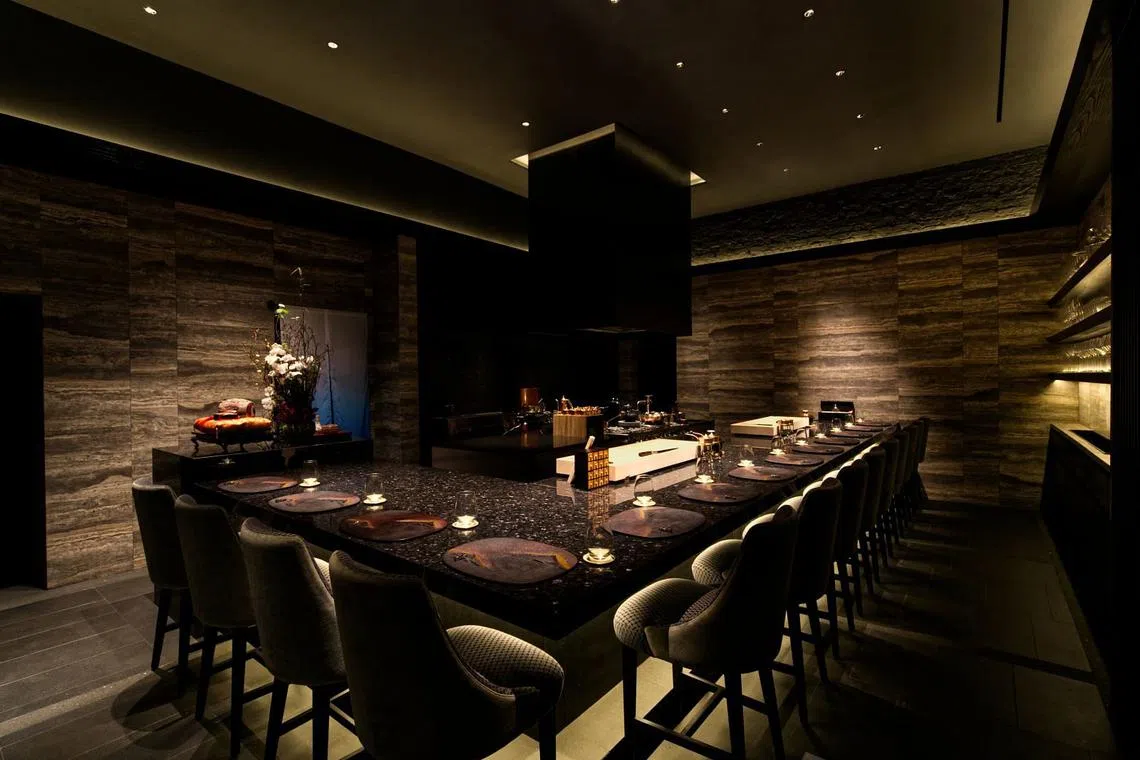
He may already have you at "destination dining" - in this case an old, abandoned chapel sitting on the grounds of the Amara Sanctuary Resort, which has been scrubbed, renovated and turned into a Zen-inspired Japanese house. Before every service, the heat of the grounds is dissipated with a spray of water in a traditional practice. As you amble into the serene courtyard of this fair-faced brick bungalow, you're transported to the Kyoto-esque dining room that's awash with black granite, textured walls and steeped in Japanese symbolism.
Sitting empty since 2016 when it was last known as Si Bon, a high-priced kushiage restaurant, the compact 1,600 sq ft structure has been transformed to house a 13-seat counter around a spacious open kitchen, and a private room. Hidden from view is an outdoor garden where Imamura has been growing his own vegetables for use in the restaurant - including the successful cultivation of ginger and shiso leaf - so successful that the garden has become the latest target of the island's peacocks, which have taken a fancy to the fragrant Japanese leaf.
"Before, they never touched anything, but then they had a taste of the shiso and liked it so much, they kept coming back," says a bemused Imamura. "So now we have to put a net over the garden. We also have a glass house to protect the plants."
The garden-farm is still a work in progress as "I don't know Singapore's weather yet and what kind of land we have, so we're just trying different things to see what grows well."
The plan is to grow enough greens for the restaurant's use as part of his semi-sustainable policy to lower its carbon footprint and wastage as much as he can. This extends to the chopsticks, which are made of salvaged cypress wood chips or bamboo, and are displayed in a case for you to choose from different lengths, pentagon or hexagon-sided implements.
The attention to detail is on a level not quite seen in Japanese restaurants on the "mainland", and the ambition is clear on the part of Imamura, who says there is no Michelin star awarded to a traditional kappo restaurant (he considers Waku Ghin to be more contemporary in style).
His influence leans towards Kyoto kaiseki, which explains the meticulous preparation where everything is made from scratch ("I don't know how to open a package.") He has a collection of 60 types of salt covering every single prefecture in Japan to match the produce he uses. "If I use fish from Hokkaido, I use Hokkaido salt. If it's from Okinawa, then I use the salt from the sea there, because it's part of the environment the fish lived in." He also has 10 kinds of soya sauce, 8 kinds of sugar and he's adding more to the list.
Diners will be hard put to notice all this, but the proof of the pudding will be in the dining experience created by Imamura, who has come to Singapore by way of New York, Las Vegas, Macau, Hong Kong (where he earned a Michelin star) and, most recently, Manila, where his eponymous restaurant has been closed and replicated in the exact same detail in Sentosa.
The Fukuoka native found his calling at an early age, and learned his craft for 6 years before opportunity came calling from New York. He enjoyed success by the time he was 24, working as an executive chef in a restaurant that was tops in the Zagat guide, pre-Michelin.
"I was a snob, thinking that I was the best, until an ex co-worker from Japan who was older than me came to eat, and he said: 'Your food is (expletive). There's no taste, nothing, you just use very expensive ingredients, but for what? Anybody can do this'."
It was a wake-up call for Imamura, who promptly quit and returned to Japan to relearn his craft, after which Las Vegas came knocking at his door. Now, some 20 years later, armed with a stronger command of English than many of his compatriots and better able to articulate his objectives, he has crafted an experience based on what he calls The Philosophy of Five.
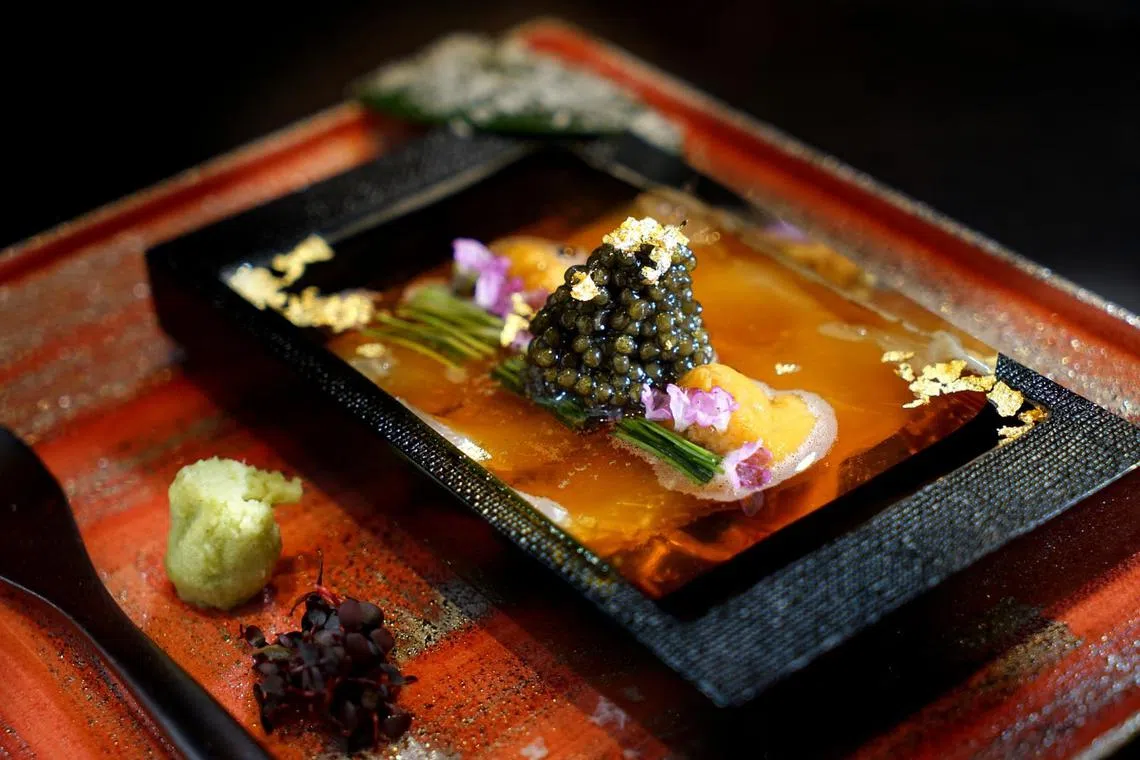
Flavour, colour, preparation, technique and presentation are built into the set-up, which includes an open kitchen where everything from mise en place to stocks and slow-cooking are done in the same place.
Like what he learned from his older colleague 20 years ago, he focuses on quality but not necessarily price. "I've worked with the same suppliers for the past 12 to 15 years," he says. "We do Facetime every day and I choose what I want. Like my uni supplier, who knows I just want the best, but it doesn't mean it's the most expensive.
"Also, consistency is very important and there's a lot of technology available that can be used to achieve what I want. For example, the Japanese fish suppliers have a machine to measure the fat levels of fish. No one cares how fat a fish is, but I need it so the dish tastes the same every time. This is why I also use a salt meter so I can make adjustments depending on the kind of salt I use."
Such precision makes it hard for him to compromise, which is why it took a long time for Atsushi Murai, the Singapore-based managing director of Japanese hospitality group GHS, to convince him to relocate from Manila to Singapore. GHS owns and manages hotels such as the ANA Crowne Plaza in Chitose and Osaka, as well as properties in Hakone and Bali under other hotel brand names. The restaurant Imamura is part of its move into the F&B business.
With dinner prices pegged at S$480++, it is par for the course for any high-end sushi or kappo in town, where menus over S$500++ are more the norm than the exception. They could have easily picked a location in town, but Imamura says they chose Sentosa because "it's difficult for people to travel, so when they come here, we want to make them feel like they are 'overseas' and just forget about real life while they are here".
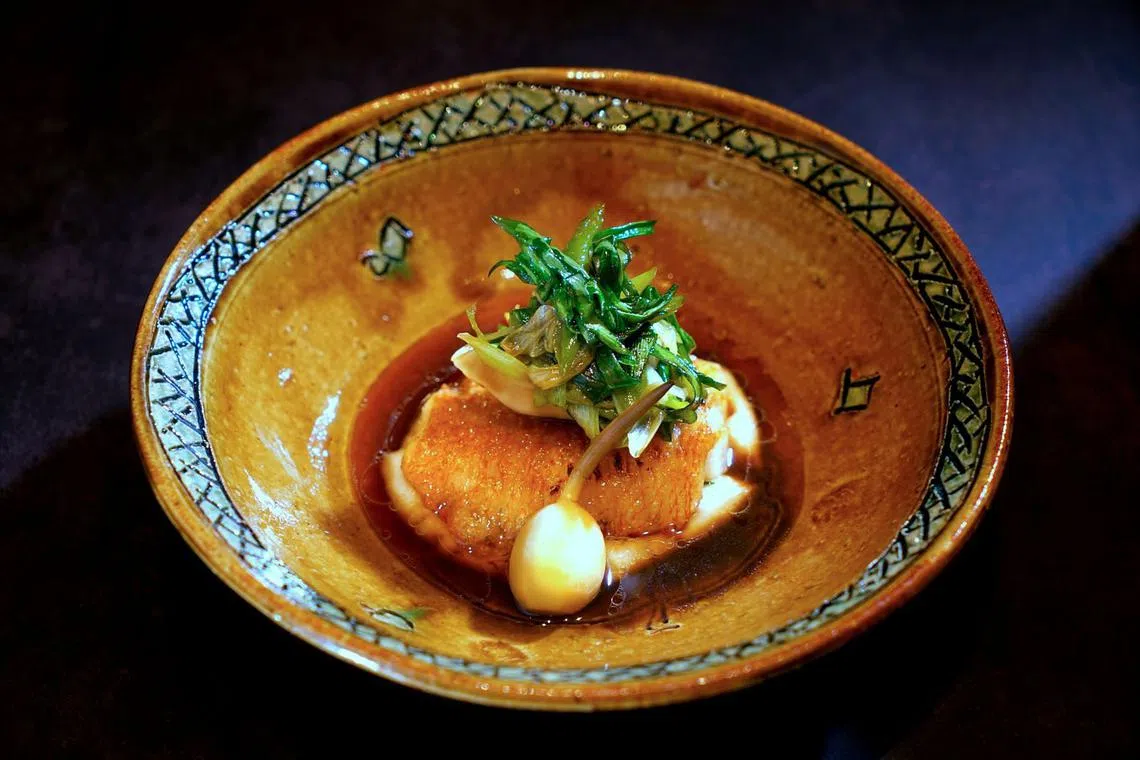
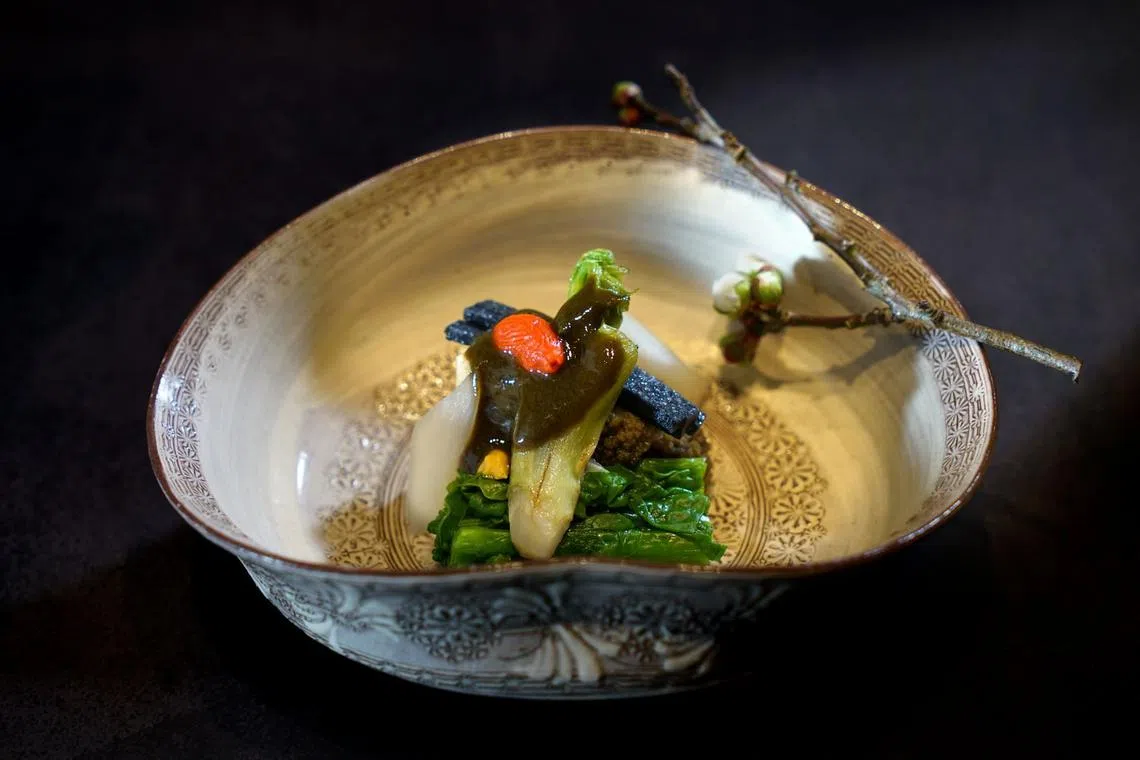
At a preview tasting, Imamura showed that he walks the talk with an understated menu that belies the elaborate preparation that goes behind each dish. Diners can expect homemade shiso wine with the fresh fragrance of the leaves and some fancy "tricks" such as a prawn steam-cooked in a claypot and thin wagyu slices cooked over a stone slab heated to precisely 62 degrees Celsius and "slow-cooked" to medium-rare to preserve its moisture.
Vegetables play an important role in the menu, with some 60 vegetables being used, many with their own certificates for traceability. Each dish is preceded with a display of the fresh produce used, and a selection of salt from the appropriate prefecture. Even a simple onion is given the star treatment, slow-cooking in a salt-baked crust that is gently cracked open to reveal the piping hot allium.
Imamura is new to Singapore and brings no preconceptions about the local market with him. With his emphasis on creating an experience beyond the norm, his Sentosa outpost will draw "mainlanders" to what may be the most anticipated Japanese restaurant opening this year.
14 Gunner Lane, Amara Sanctuary Resort Sentosa, Singapore 099566. Tel: 8028 2608. imamurasg.com
TAIGA DINING
Opens Feb 8
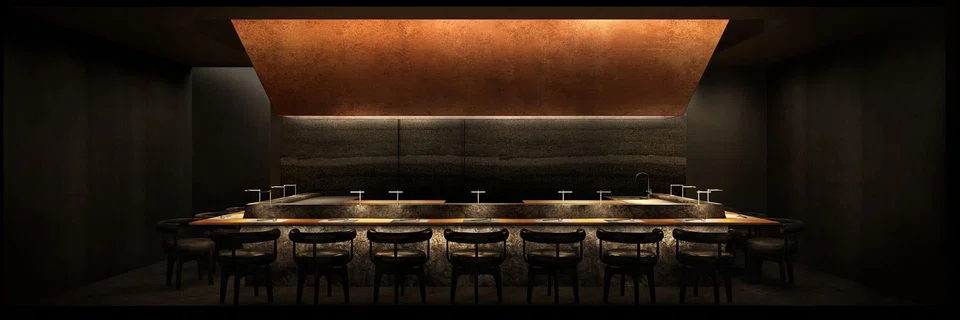
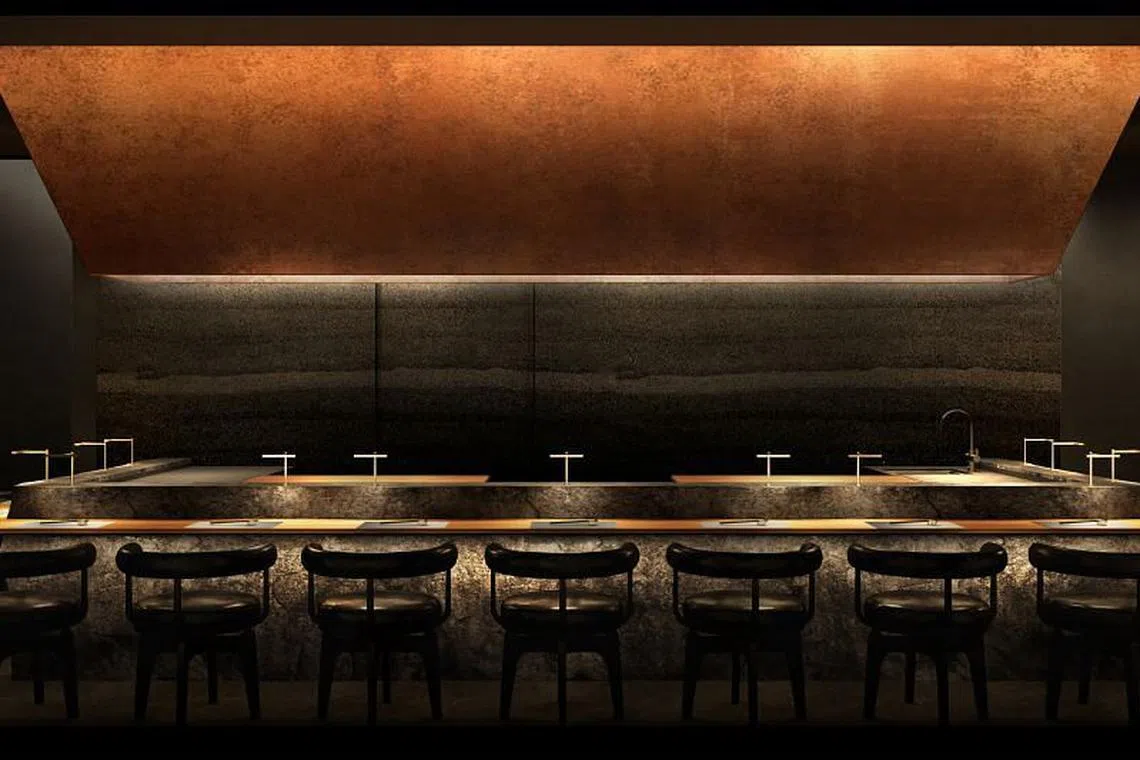
IF you're used to sushi restaurants with the ubiquitous blonde wood interiors, faux or real hinoki counters and kimono-clad staff, Taiga Dining takes the stereotype and mixes it up a bit.
First, you'll see an all-white textured wall at the entrance of the restaurant on the ground floor of Regent Singapore, emulating the rocky landscape of Kochi prefecture. Step inside and a warren-like foyer awaits, leading you into a dark, club-like space with a long hinoki counter as the only indication of its dining genre.
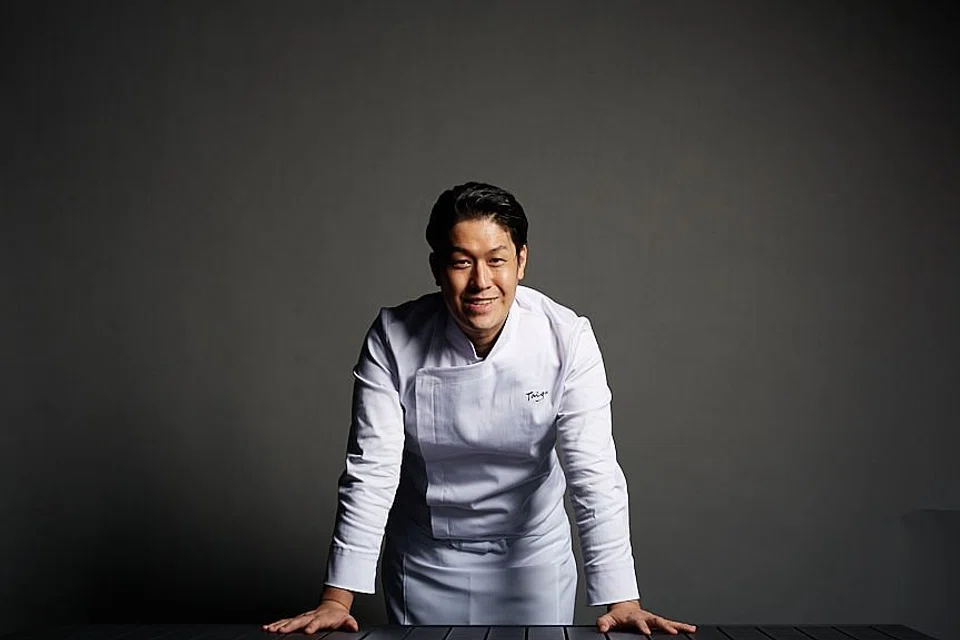
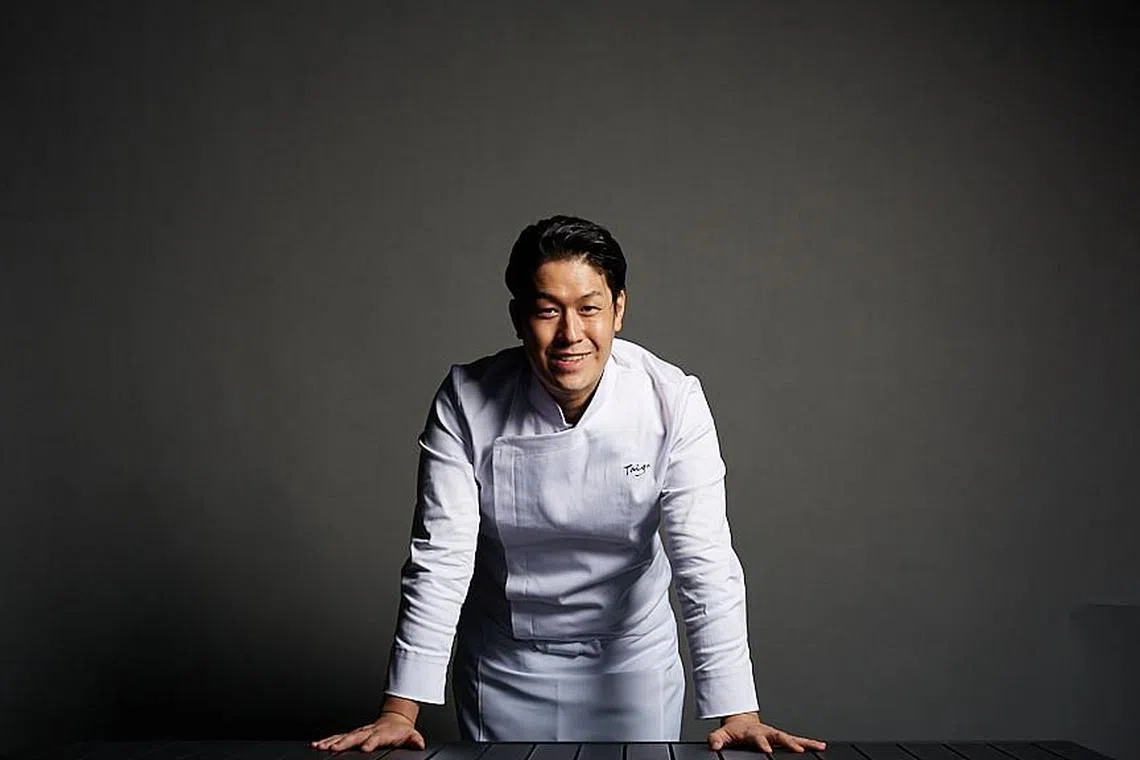
The 11-seater sushi restaurant is helmed by Taiga Kanekuni, a native of Kochi, hence the design theme, which takes its cue from the prefecture's famous mountain and river vistas.
Designed by Singapore architecture company Park + Associates, the sushiya is one of a 2-part concept that includes a sake lounge that will open later, featuring premium booze and a small dining menu of grilled bites.
Following in the footsteps of Japanese chefs striking out on their own, Taiga paid his dues at restaurants such as Sushi Ayumu and Sushi Kou. He's now putting his own stamp on the menu, incorporating Kochi's indigenous produce such as pomelo and katsuo (skipjack tuna) as well as from other prefectures according to the seasons.
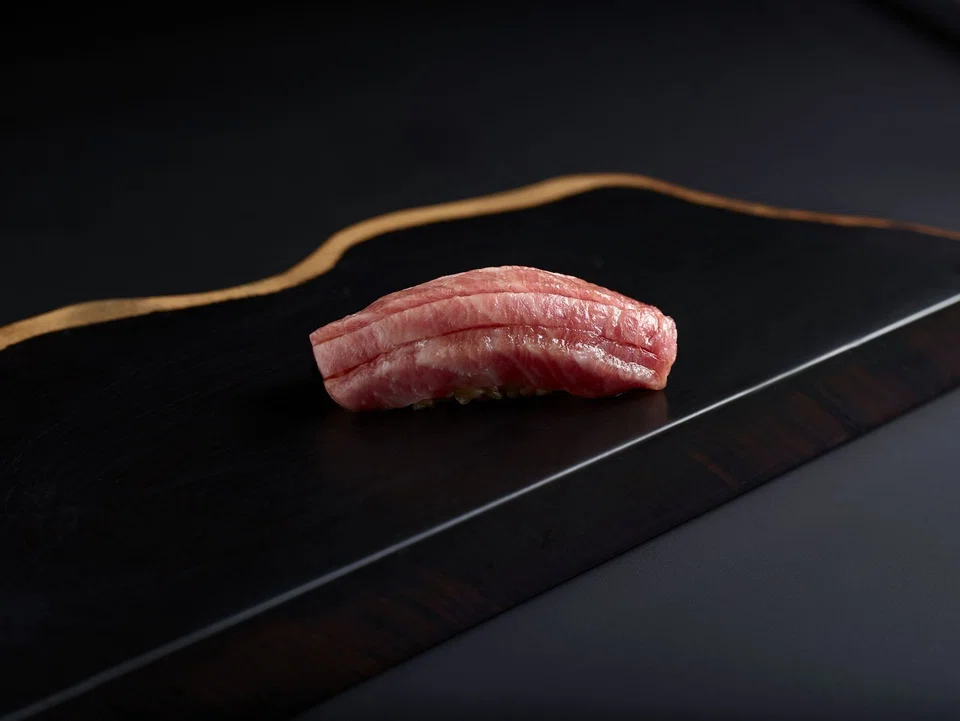
The menus start at S$280++ for lunch and S$380++ for dinner. While the sushi is fundamentally Edomae, Taiga is also influenced by his experience with Singapore diners and his own penchant for European, especially Italian cuisine. That's why one of his signature dishes features fatty tuna marinated in soy sauce that is wrapped in an arugula leaf, topped with shallots from Ibaraki tossed in mustard.
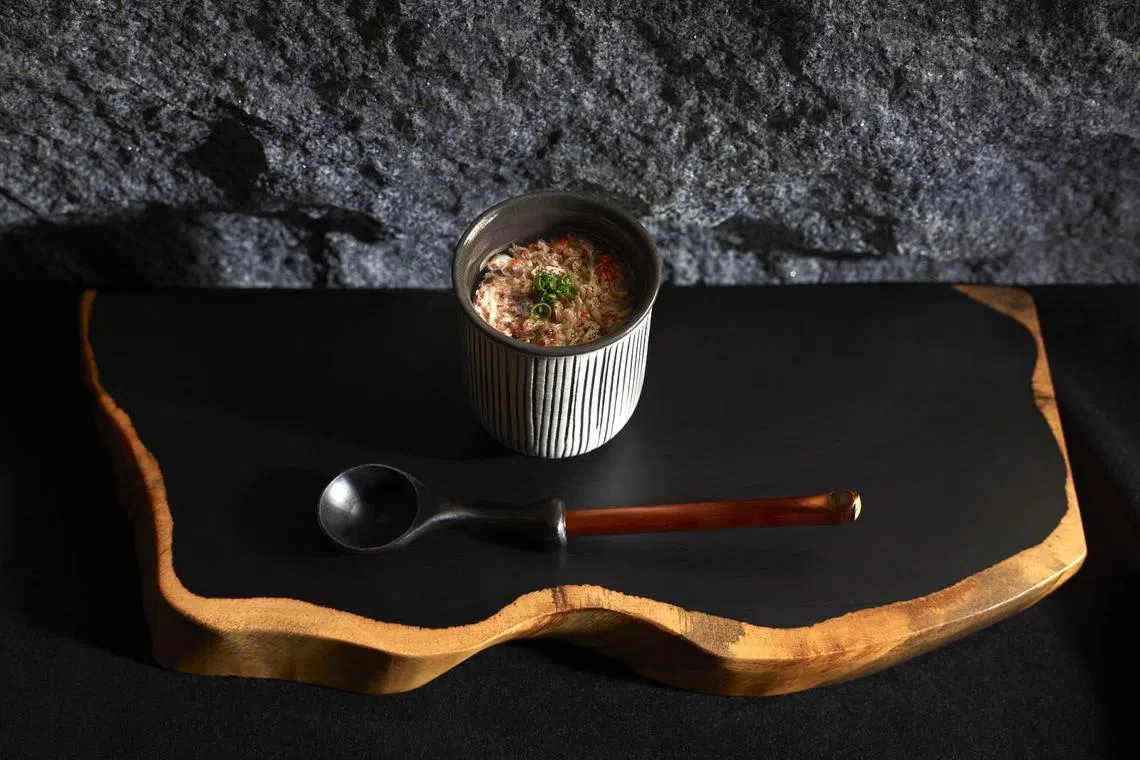
"My cooking reflects my personal style," says Taiga. "I like Italian food a lot and the pepperiness and slight bitterness of the arugula goes quite well with the fatty tuna."
Singapore diners' penchant to post their food on Instagram also helped to shape his sushi style, where thick slices of raw fish almost completely hide the small nuggets of rice underneath. "This way, the fish looks better, especially in photos." With rugged stone slabs for a backdrop and professional lighting provided by individual Barisol lamps, each sushi is a perfect shot.
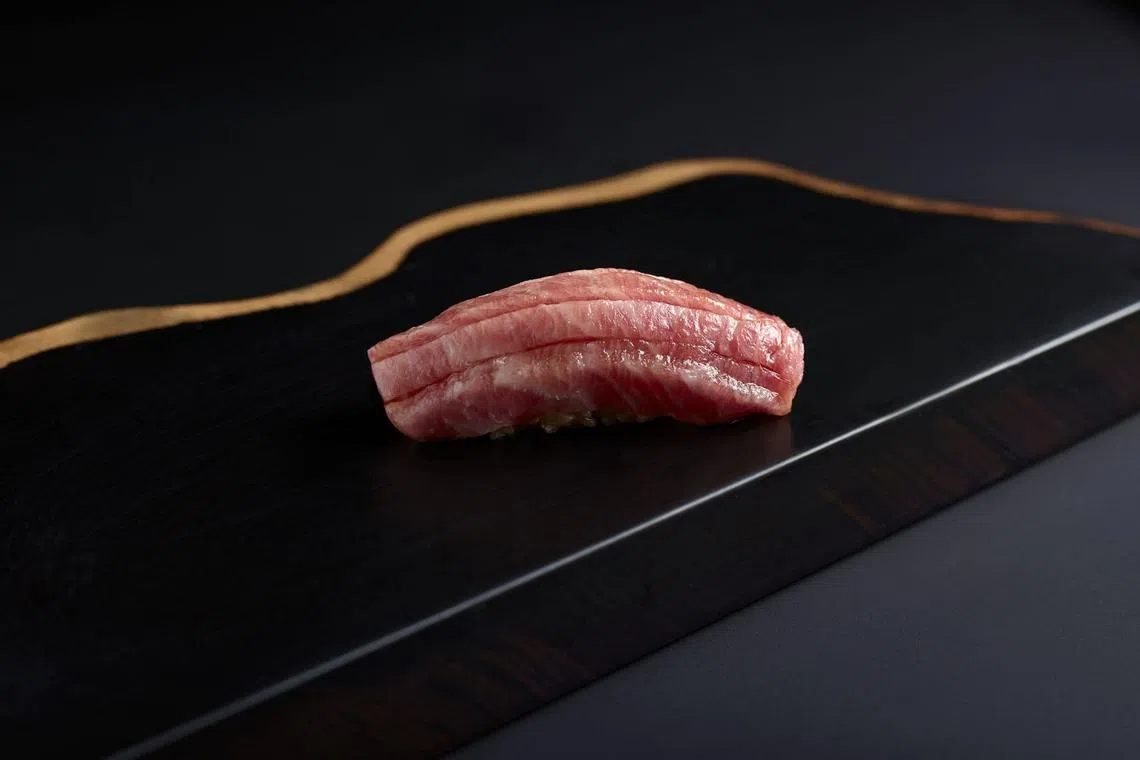
Another speciality is the trio of uni hand roll, where three different types of seasonal uni are packed on top of sushi rice and arranged on artisanal nori.
Taiga also has access to hard-to-get ingredients including grape shrimp, with their distinctive purple tinge.
Add a special range of Kochi sake, and a meal at Taiga lends a fresh modern perspective to sushi as you know it.
1 Cuscaden Road, #01-03/04 Regent Singapore. Tel: 8031 4306.
YAKINIQUEST
Now open
SO you want to open a restaurant but have zero experience in food and beverage (F&B). What's the best crash course you can take to prepare yourself for the challenge? How about a 15-year journey across Japan eating at 2,000 yakiniku restaurants? And for an even-bigger challenge, why not open the restaurant in a country you've never been to before?
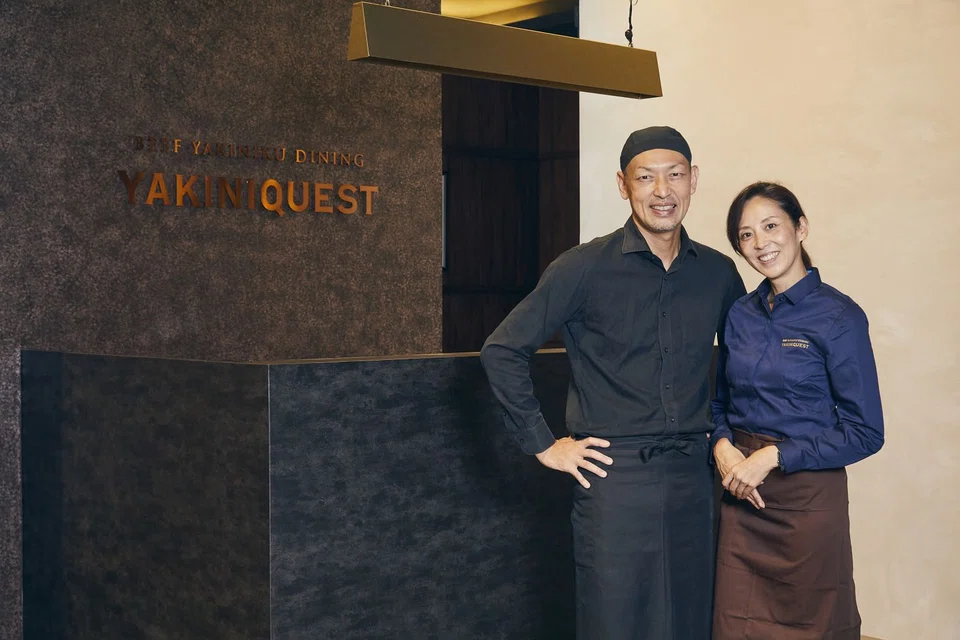
That sums up the journey of Suguru Ishida and his wife Tomoko - two former advertising professionals who started their yakiniku 'quest' in 1998 which subsequently spawned a blog, Yakiniquest, in 2004 and then their first restaurant, which they opened in Singapore's Boat Quay in 2014.
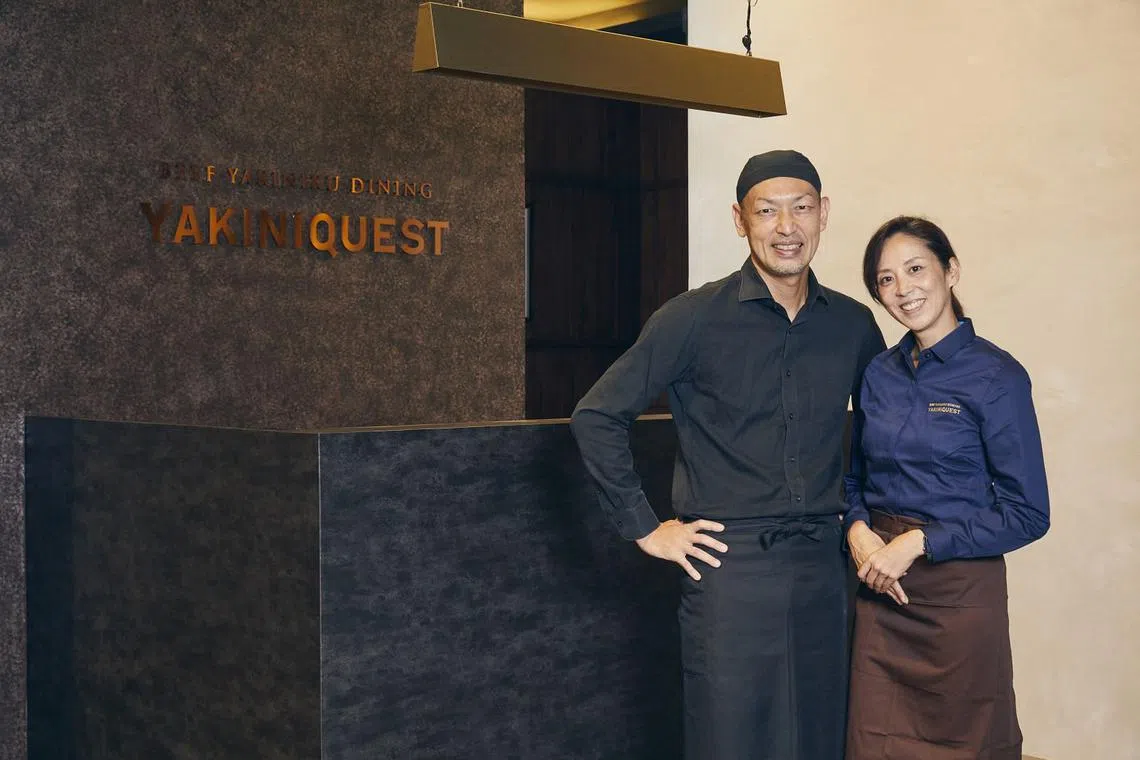
While not a new restaurant per se, their brand-new location in Mandarin Gallery marks their move to bigger and better surroundings in Orchard Road, sealing their position from newbie restaurateurs to seasoned operators ready to raise their game.
The couple has certainly come a long way since Ishida's quest to bring authentic yakiniku outside of Japan and choosing Singapore as his starting point, even though neither he nor his wife was familiar with the city.
"We had a friend who was an F&B director in Singapore, so he helped us to set up our restaurant," says Tomoko.
They had no choice of location when they ended up in Boat Quay, but the new location is one that they had been eyeing for the past 3 years before it finally became available.
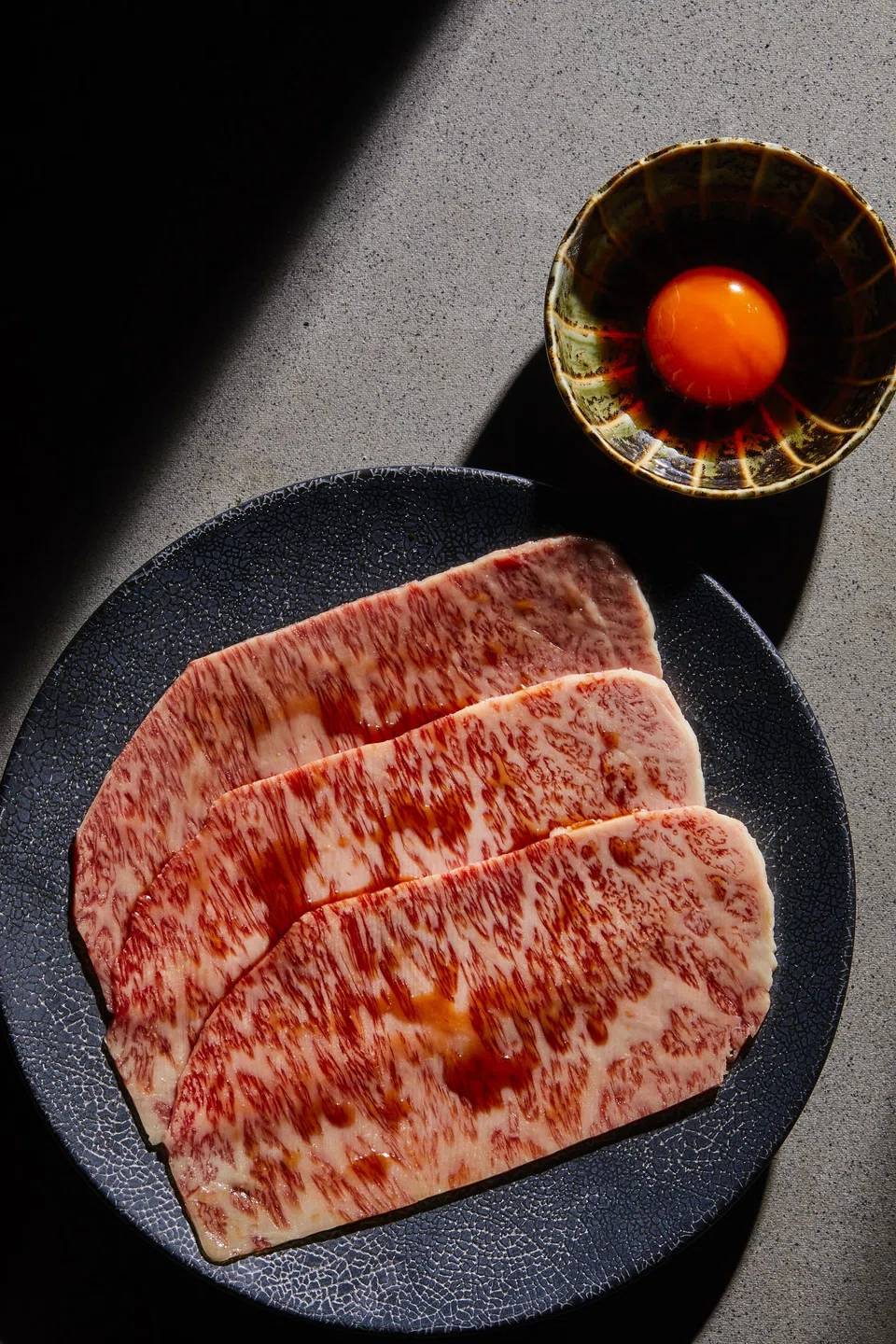
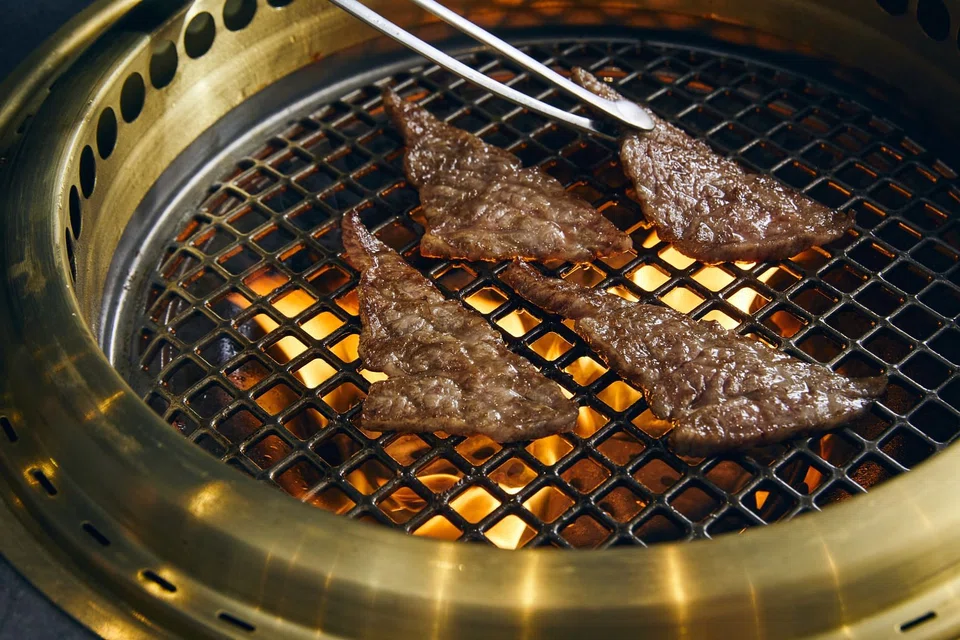
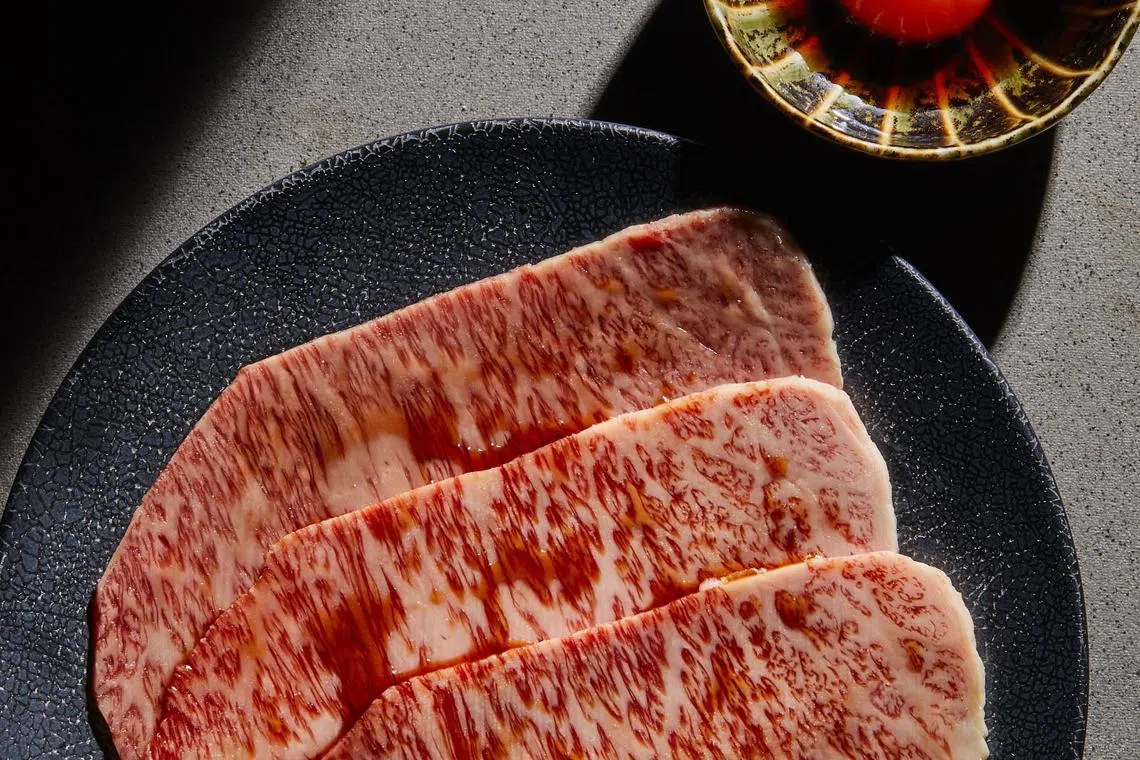
Ishida is a self-taught yakiniku expert who has even written 2 books (one translated into Chinese and used as a manual in Taiwan) about the techniques of grilling, which is not as simple as tossing your beef on a grill. That's why you're not encouraged to grill your own meat on the eco-friendly ceramic charcoal gas stoves installed at every table. Ishida and his wife personally work the grills along with their staff, and know exactly when to flip, roll and move slices of A4 Miyazaki gyu to achieve the optimum doneness for each cut of meat.
"Our meat may not look so fancy compared to luxurious restaurants that serve uni and truffle," says Ishida. "But we try to understand the character of each cut and bring the best out of them."
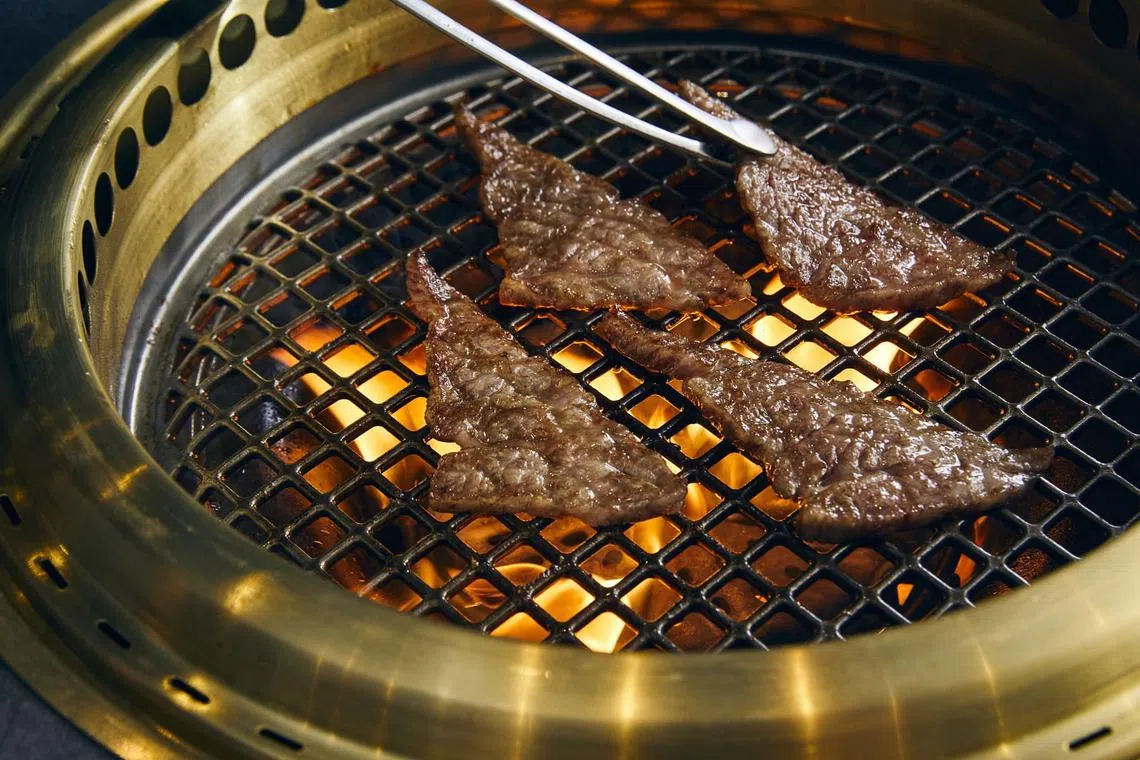
For one thing, he feels secondary cuts are underrated, for example shinshin, which is sliced from the hindquarter and quickly grilled for a tender, bouncy texture. "Not many restaurants use this but it's very tasty."
Part of the disinterest in offcuts stems from Australian and US beef, "which can be tough so they're used for hamburgers or stews", Ishida adds. "But with wagyu, every part can be tender and delicious if you cook them properly."
Yakiniquest focuses on omakase only, "because to enjoy the difference of each cut, the sequence matters". Priced from S$88++ for lunch and S$138++ for dinner, you'll enjoy 6 to 8 different cuts that can include ox tongue (only Australian as Japanese offal is extremely hard to get if at all), rib finger, zabuton and oyster blade in addition to prized ribeye or sirloin.
The long-term plan is to open more yakiniku restaurants and the couple seems to have the formula right. It has become their life passion, so much so that there are no prizes for guessing which restaurant they'll head to when they return to Japan. As their name suggests, the quest continues.
#04-08 Mandarin Gallery, 333A Orchard Road, Singapore 238897. Tel: 6223 4129. yakiniquest.sg.
TENTSURU
Soft opened
WITH the proliferation of sushi restaurants and the demand for all things raw and premium, tempura restaurants in Singapore barely make a dent in the Japanese dining scene, which makes the new Tentsuru a welcome attempt to address the imbalance.
Soft open since December but still under the radar, Tentsuru sits on the second floor of The St Regis Singapore, adding to the already existing Michelin-starred sushiya Shinji in the hotel. So far, other high-end tempura eateries in town include stalwart Tenshin at the Regent Singapore, Mizuki in Takashimaya, Ippoh at COMO Dempsey and Ginza Tenharu at the Marriott in Tang Plaza.
Executive chef Takahiro Shima is a newcomer to the local scene. The Kyoto native started out at the age of 19 in Osaka and trained in both kaiseki cuisine and tempura, followed by stints in Tokyo and then Nagoya at the 400-year-old Ryotei Kawabun, a local culinary institution.
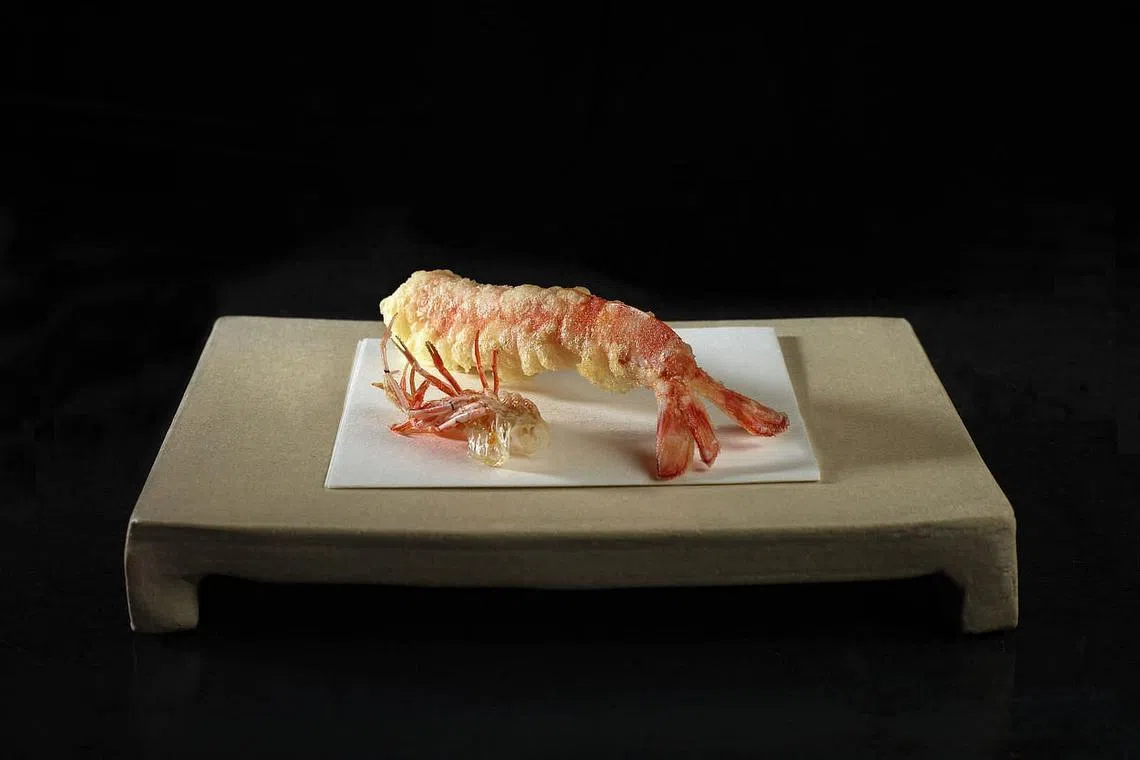
Tentsuru is run independently of the hotel and features a 15-seat main counter, where Shima prepares omakase menus priced from S$120++ for lunch and S$280++ for dinner, including appetisers, tendon and dessert. There will also be a private counter seating with a capacity of 7 guests, set to open in mid-February.
Shima brings his kaiseki training to good use, with his attention to the presentation and detail, especially with the appetisers and dessert. But it's his tempura preparation that is the most anticipated.
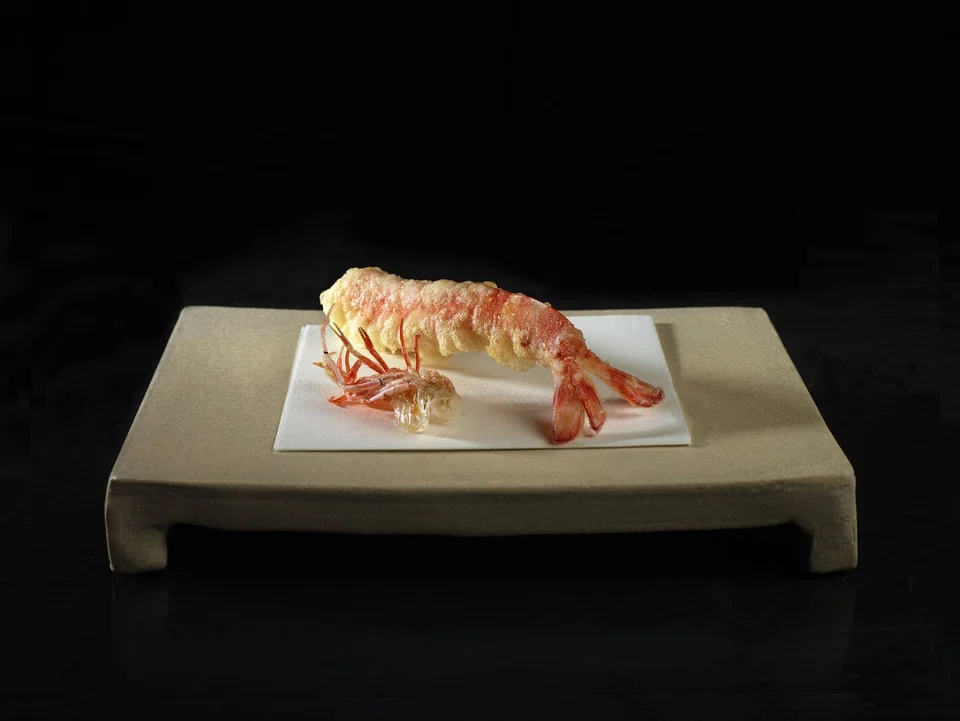
"Tempura may seem like a simple dish but there is more than meets the eye," he says. "The key to creating the perfect level of crispiness is to use light batter to bring out the natural flavours of the fresh ingredients, adjust the temperature of the oil to the right level, and manage the frying time for each ingredient."
Besides cold water for his batter, the chef also freezes his flour for 2 days at minus 60 deg C, which he says adds even more crispness to the tempura.
He also uses sunflower instead of sesame oil, which is lighter in flavour and common in Osaka and Kyoto tempura restaurants.
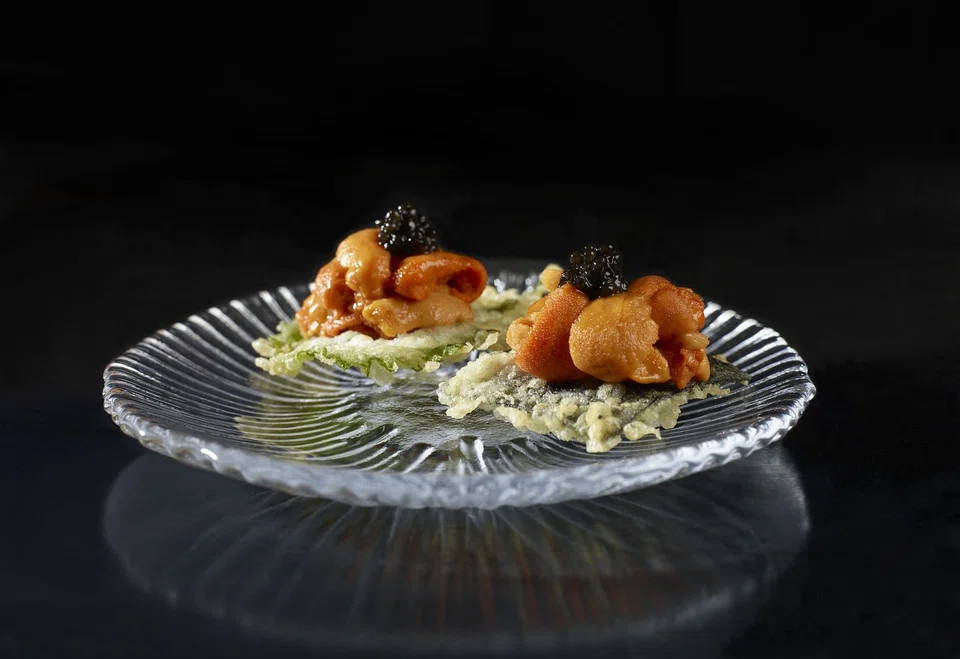
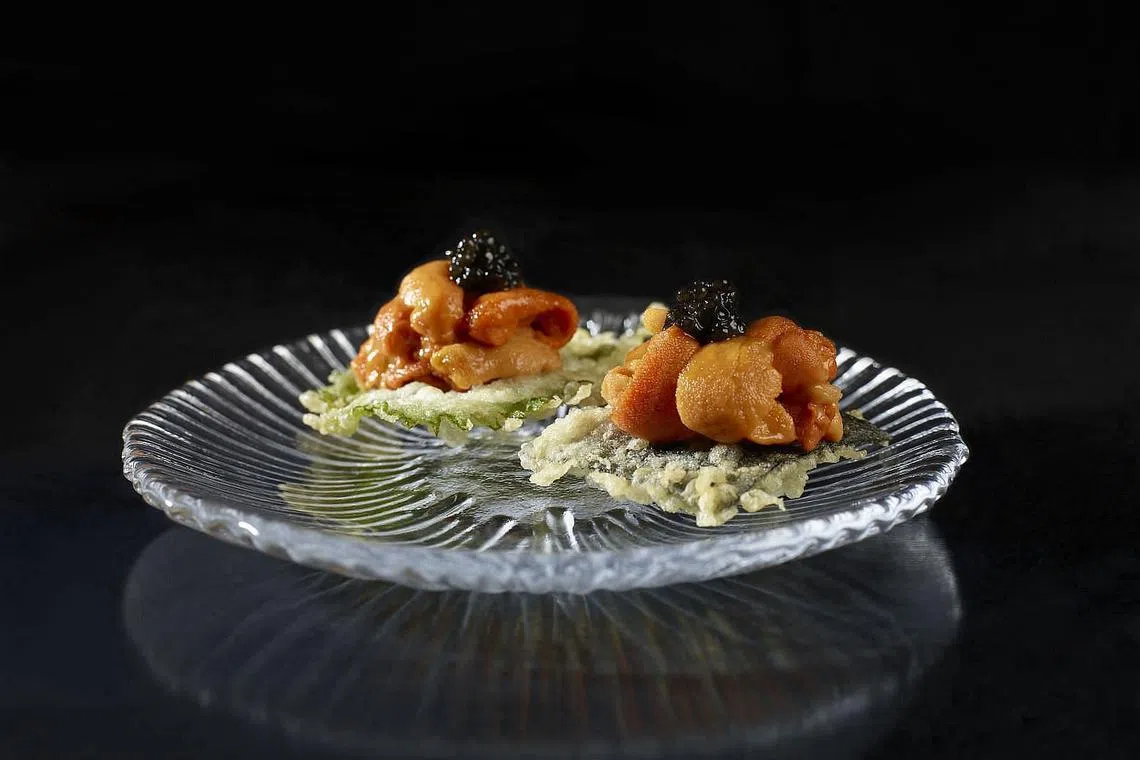
Signature items include uni tempura, where crispy seaweed and shiso leaf tempura is topped with sea urchin sourced directly from Toyosu market.
There's also A5 wagyu tempura and seasonal specialities such as firefly squid, whitebait and spring bamboo shoots.
Sake lovers will also find some top-end options including Niizawa Reikyo Absolute "0" Junmai Daiginjo, with a record-breaking 0 per cent polishing ratio; La Isojiman, Niizawa Junmai Daiginjo and Katsuyama Ice Age.
With a combination of his kaiseki experience, expect a tempura meal served with an added level of artistry.
Level 2, The St Regis Singapore, 28 Tanglin Road, Singapore 247911. For bookings, call 8113-3612/3.
SHIN YASUKE
Soft-opening in March
WHILE most sushi restaurants in Singapore spend more time trying to raise prices, along comes a sushiya that wants to revive the pure experience, in which diners just dig into a steady flow of sushi served in modern, casual surroundings.
That's the idea behind Shin Yasuke, the latest concept by Tomoo Kimura, chef-owner of the one Michelin-starred Sushi Kimura.
Instead of the highly-refined omakase dining offered at his upscale restaurant in Palais Renaissance, Shin Yasuke is a tiny 14-seater crammed into just 570 sq ft of space on the retail level of residential condo Loft @ Nathan.
The name Yasuke is another name for Edomae sushi, which is the main focus of the new restaurant.
"Our focus is on traditional sushi, for diners who want to enjoy the experience, and in a fast-paced style," says Kimura.
While Kimura himself may pop in now and again, Shin Yasuke will be manned by chefs trained at Sushi Kimura, who will take turns to serve up to 10 guests (due to safe-distancing restrictions).
Expect set menus priced from S$120 to S$250 - still a relative steal considering that most lunch sets at a moderate priced sushiya still clock in at S$200 and up.
The fish is sourced from Kimura's own suppliers, so the quality will still be there, even if the emphasis is not on the super premium cuts that Sushi Kimura serves.
Kimura is inspired by Sushi Nakazawa in New York, which isn't manned by one prominently named chef but by a crew, doling out sushi as fast as their customers can eat it.
"Although at Sushi Kimura the focus is on high-end dining, I have always wanted to offer a down-to-earth sushi-only experience," he says.
That means, don't expect appetisers, sashimi or other touches, although Kimura is still fine-tuning the concept.
The space is still under renovation, but he hopes to soft-open towards the end of February or in early March.
Shin Yasuke is his latest venture after Sushi Kimura and Gyu Bar, a wagyu-centric eatery on Stevens Road which specialises in beef from various prefectures prepared in a range of cooking styles.
For sushi lovers looking for a new way to enjoy their favourite food, Shin Yasuke looks set to be a place that they can keep returning to without burning a major hole in their wallets.
428 River Valley Road, #01-03 Loft @ Nathan. Singapore 248327. Check its Instagram handle @shin.yasuke.sg for updates.
READ MORE: Tokyo dining - the return of Little Japan in Singapore
Decoding Asia newsletter: your guide to navigating Asia in a new global order. Sign up here to get Decoding Asia newsletter. Delivered to your inbox. Free.
Copyright SPH Media. All rights reserved.
TRENDING NOW
Government to bring forward raising of retirement age, give employers more financial support to create flexi-load jobs

If Europe goes to war, the fallout will be felt in East Asia

Indonesia stocks suffer worst plunge in nearly 30 years as MSCI proposes standalone status

Vietnam’s northern provinces, not Hanoi or Ho Chi Minh City, are powering near 10% GDP growth

