Nomad's land
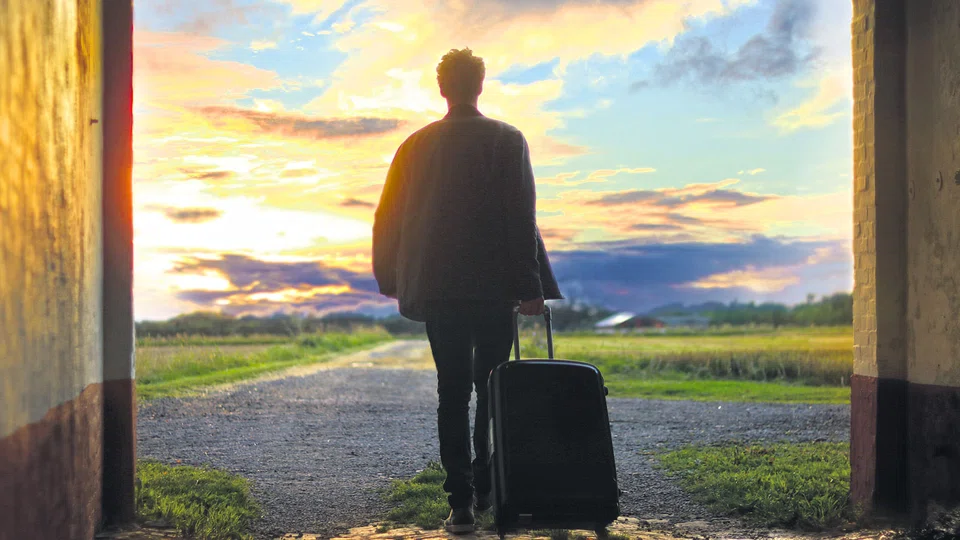
Forget the daily commute to the office. In future, you could be working for any company in the world from anywhere in the world. Being a digital nomad - that's a remote working person - could be the way to go.
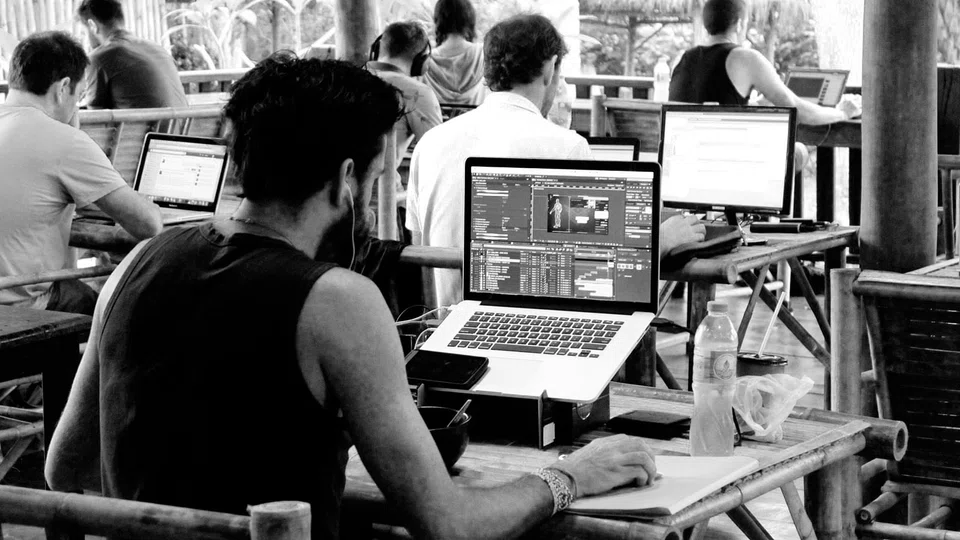
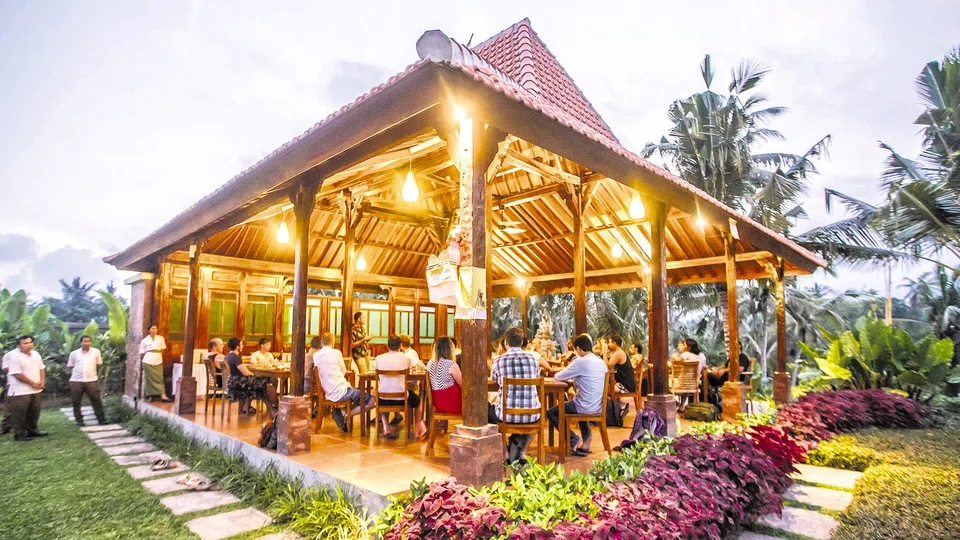
HERE'S a typical work day for Hazel Teng, digital marketer for a Singapore start-up: yoga, breakfast and a six-minute bicycle ride from her apartment to KoHub's co-working space in Ko Lanta, Thailand.
After work, she's at the pool or beach watching the sunset, then it's back to KoHub for more work or to hang out with her gang of fellow digital nomads from all around the world.
It's the perfect working environment for Ms Teng, 23, a business graduate from the National University of Singapore who works for Startup-O, which helps Asian start-ups get fast-track funding.
"I have always liked travelling, and I went to Sweden, Korea and China while I was in university. When the opportunity arose to work remotely, I grabbed it," she recalls.
She learned about the digital nomad lifestyle online, and came across KoHub. On a graduation trip to Krabi, she checked out KoHub and liked what she saw. "I came back and stayed for three weeks."
Three weeks became three months, thanks to the camaraderie of the KoHub community, the after-work activities (like watching Muay Thai fighting), and the proximity to nature. There's no turning back for her now. Next week, she's heading up to Chiang Mai, the "capital" of digital nomads in Thailand, to either work at Punspace - one of the major co-working spaces - or a hipster cafe.
Rise of the digital nomad
At Ko Lanta, Ms Teng is the only Singaporean in an international group of digital nomads - defined as a remote or location-independent workforce, most of whom come from North America or Europe.
Pieter Levels, founder of Nomadlist - a crowdsourced index of the best locations for digital nomads to live and work from - estimates that 1 billion people will be converted to digital nomads by 2035. Forbes also estimated 40 per cent of the US workforce will be freelancers, remote workers, and independent contractors by 2020. In Singapore, about 8 per cent of the workforce are primary freelancers, while about 51 per cent of employers use temporary staff. Nineteen percent are expecting to increase their use of temporary staff this year, according to Hays 2017 Asia Salary Guide.
The digital nomad originated in where else but Silicon Valley close to 20 years ago, but has since spread to other industries. In 1997, Hitachi executive Tsugio Makimoto co-authored a book with David Manners, called "Digital Nomad", predicting that one's occupation doesn't have to be linked to an office location because of high-speed wireless networks and low-cost mobile devices. Ten years later, Tim Ferriss took the concept further with his best-selling book "The 4-Hour Workweek: Escape 9-5, Live Anywhere, and Join the New Rich".
With more start-ups and fewer fixed office locations, co-working spaces entered the picture. In Singapore, it had a tentative start some five years ago and today, there are at least 30 of them, including JustCo, which launched its first co-working office in Singapore in 2015 (it started with serviced offices in 2011), with plans to go regional soon and offer global membership programmes.
Asia the hot spot
With its sandy beaches, cheaper living costs and easy visa access, Asia is becoming a top nomad destination for Western digital nomads, says Vitto Christaldi, head coordinator of Coworking Alliance of Asia Pacific (CAAP).
The number of digital nomads from Asia itself is still small, but growing, says KoHub founder James Abbott. (He doesn't see many at KoHub, although one practical reason for this could be that Asians in general don't like the warm tropical climate.)
A diver and a programmer himself, the 39-year-old left the UK more than a decade ago and has travelled the world since. He discovere Ko Lanta in 2009 ("It's not too touristy and has good food"), and started KoHub three years ago as a co-working space.
Since then he's been immersed in this dynamic movement that's "changing the world and the way we work," says Mr Abbott.
Currently, he sees a ratio of 70 per cent males and 30 per cent females at KoHub which gets about 100 people daily during its high season. Most of them range in age from 24 to 34, though there are older ones as well to prove that age is no barrier to working remotely.
"We seem to get the tech people, while in Chiang Mai, the folks seem to be more into start-ups. In Bali, they get a good mix of the creative types besides the usual techies," he says.
Global shift in work
Christopher Thompson, director at Hubud in Bali, a key co-learning and co-working space there, feels that the more egalitarian work environment practised in Silicon Valley has entrenched co-working and describes the current movement as "Co-working 2.0".
Outfits like Hubud are not just shared spaces for work and mingling, says Mr Thompson, who was based in Singapore as vice-president and general manager of Electronic Arts Asia from 2005 to 2010, and was a board member of the Media Development Authority for six years.
Named by Forbes and The Lonely Planet as one of the top co-working places in the world, Hubud was started as a co-learning space by the founders of the famed Green School in Bali, which has a strong social focus.
Hubud also created the Co-working Alliance of Asia Pacific, and ran the first Coworking Unconference Asia (CUAsia) three years ago, which saw 130 attendees. The following year, about 30 per cent of the attendees came from real estate companies, investment banking, government, educational institutions, workplace futurists and human resource groups.
This year in Chiang Mai, it saw 270 attendees from 35 countries - 40 per cent of whom were from non co-working sectors. Next year's conference will be held in Penang and spotlight the Malaysian co-working and start-up ecosystem.
"There's significant momentum and growth around co-working now. The industry is in a positive space and will continue to grow with the right value structure," he believes.
Co-working to co-living
The stereotype of the digital nomad as a 20-something millennial start-up worker is no more. A growing eco-system means more diverse spaces, dedicated to women or parents, or catering to specific careers like educators.
There are apps to help you: find co-working spaces on the fly; rank the quality of WiFi speed and friendliness in cafes; rent out your home office space; swap houses; list remote jobs; and give you the comparative cost of living in different countries. There are even digital nomad dating apps and ones which help you find a roommate. Digital nomad conferences are held all over the world or virtually, "retreats" are held on sailboats and cruise ships, and now, there's even "flexible housing" which offer hard-to-turn-down designer locations.
Roam is the latest luxury co-living space offering minimum one-week stays for members who want to move between Bali, London, Tokyo, Miami, and San Francisco. The designer digs are fully serviced, have co-working spaces and shared kitchens, and include curated activities to help one plug into the local community - with starting rates of US$500 a week up to US$1,800 a month.
Founder Bruno Haid says that Roam appeals to people who want a home and a place to work, with access to the local community.
"Truly remote work became socially acceptable at the same time hospitality was undergoing profound changes about three years ago," says the small tech company founder who grew up in Austria and worked in the hospitality industry.
The net income of operating a co-living space can be slightly higher than a small hotel that's facing a lot of competition from large brands and Airbnb, he points out. For long-stayers, Roam is certainly giving Airbnb a run for their money.
Ubud was the first choice because it was one of the earliest Asian hubs, he says, adding that the plan is to have a Roam location in every continent.
Players like him envision a future where the conventional office becomes obsolete and people work from any location.
"In the end, what is important is a space that allows people to get their work done, start a new career, launch a new idea, be part of a great community, give back to the local community and continue on a path of lifelong learning," stresses Mr Thompson.
Is this digital nomadic lifestyle really our future? Watch this co-working space.
Mike Rogers: Got Wi-Fi, Got Friend
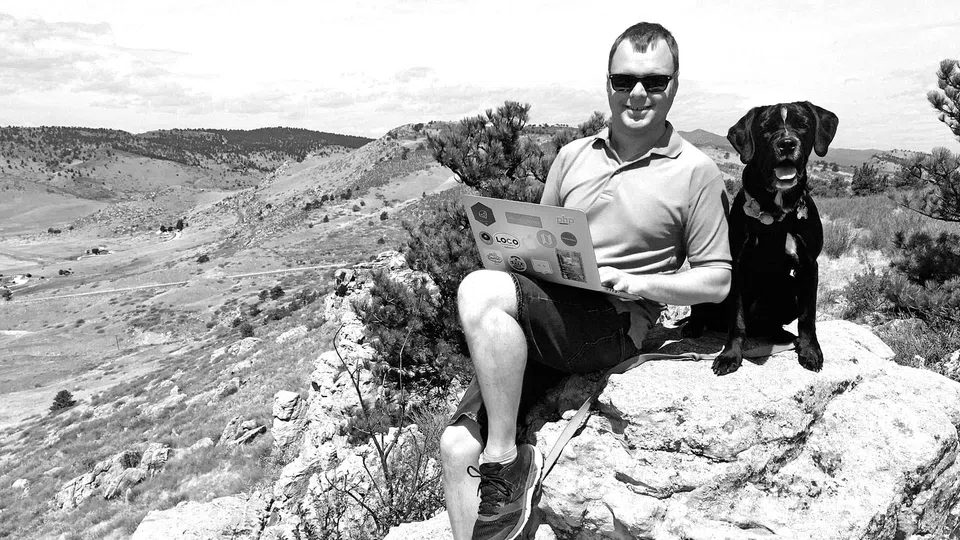
Name a country with a decent WiFi connection, and Mike Rogers can name a friend who lives there. Germany, Hungary, Czech Republic, Australia, Canada, USA, and of course, Singapore, he rattles off.
That's what happens when you're travelling all the time and attending community events and meet-ups in every country you hit, he says. You get a very distributed network of friends that you only cross paths with every now and then.
"It makes reconnecting with someone all the more special and important, and this is the part that takes a toll when you've had
a bad day and just want to grab a drink with old friends," says the 26-year-old who was born in New Zealand and grew up in the UK.
Mr Rogers has been a digital nomad for about two years, after reading a blog about remote working and was inspired to quit his job at a software agency. Though he had left without a concrete plan, he later managed to find work as a software engineer through an online freelancer database called Ruby on Rails Developer.
Now, Mr Rogers works remotely for a start-up in the US, and lives in a different country every month or so. Often, he finds himself booking his next plane ticket only a couple of weeks in advance.
It's a lifestyle he has come to enjoy so his long-term plan is to generate enough side projects of his own in the hope of one day having enough passive income to sustain him and his travels entirely.
He says: "I lead a much better life now; I didn't realise how little I was taking care of myself - both mentally and physically - back in my office job. Now it's work four days a week and holiday the other three. I'm heading to Iqaluit next week, and it's right next to the Arctic, so that's going to be "cool"!"
Nina Breznik: Always on the go
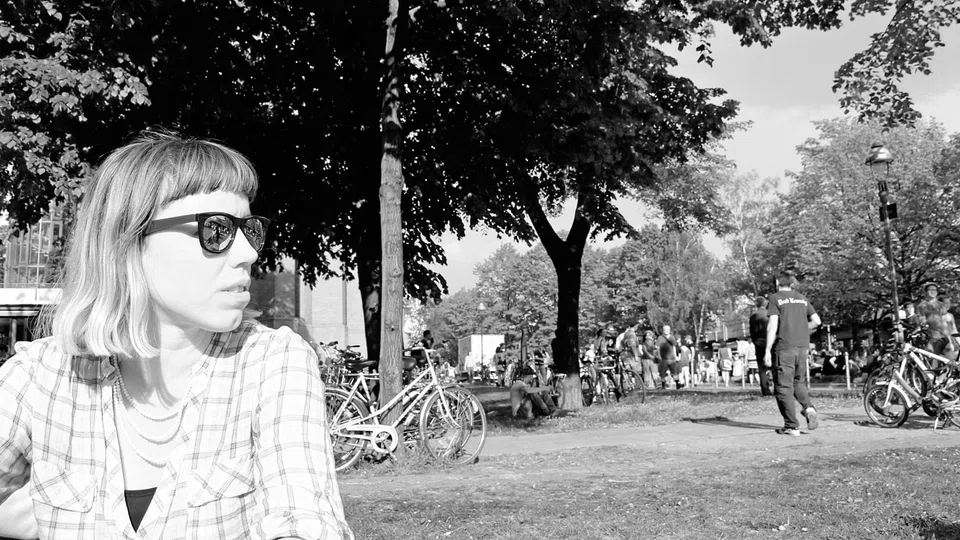
What do your travel plans look like for the rest of 2017? For Nina Breznik, she will be in Berlin in June and July, Slovenia in August, then Greece or Barcelona, before making her way through Asia - namely Taiwan, Thailand, Bali, Vietnam, and Cambodia.
Being on the go is the norm now for the 35-year-old, who travels with her boyfriend and usually stays in one place for about two months at a go.
"We have to move all the time, because of visas. This forces us to live very minimally, pack lightly and constantly be on the go," says Ms Breznik, who was born in Yugoslavia - which split in the early 90s - and grew up in what later became Slovenia.
Her career started off like most do - she studied political science and linguistics, and applied for a Masters in marketing communications. But she changed her mind when she realised she had no interest in the corporate world, and picked an alternative path.
"I started working remotely in 2009, when I moved to Berlin, but continued working for my start-up in Slovenia... I wanted to be on my own so I co-founded a couple of small projects and companies, and learned about entrepreneurship," recalls Ms Breznik.
Now, she runs an online coding school - Wizard Amigos, and tries to organise free workshops in every city she's in. The hope is to equip others with programming skills so they can take on a similar nomadic lifestyle if they wish.
"When you're self-employed, you cannot hide like you can in a big organisation. It's very clear if you are good at your job or not, and this will determine whether you get projects. My best decision was to learn programming, therefore I want to help others learn it too for free," she says.
Share with us your feedback on BT's products and services