The handmade tale
In an age where anything can be made with machines, a growing group of creatives have found new business opportunities by using their fingers.

DESMOND TANG Founder, Hikari & Shores instagram.com/hikarishores
As the Covid-19 pandemic began to take its toll on the bridal industry, wedding photographer Desmond Tang found himself getting fewer and fewer jobs.
"A lot of jobs were put on hold, so I needed a creative outlet, one that didn't require me to be behind the camera," says Tang. After several attempts to find alternative work, he finally found an activity that he was passionate about and didn't mind spending hours on.
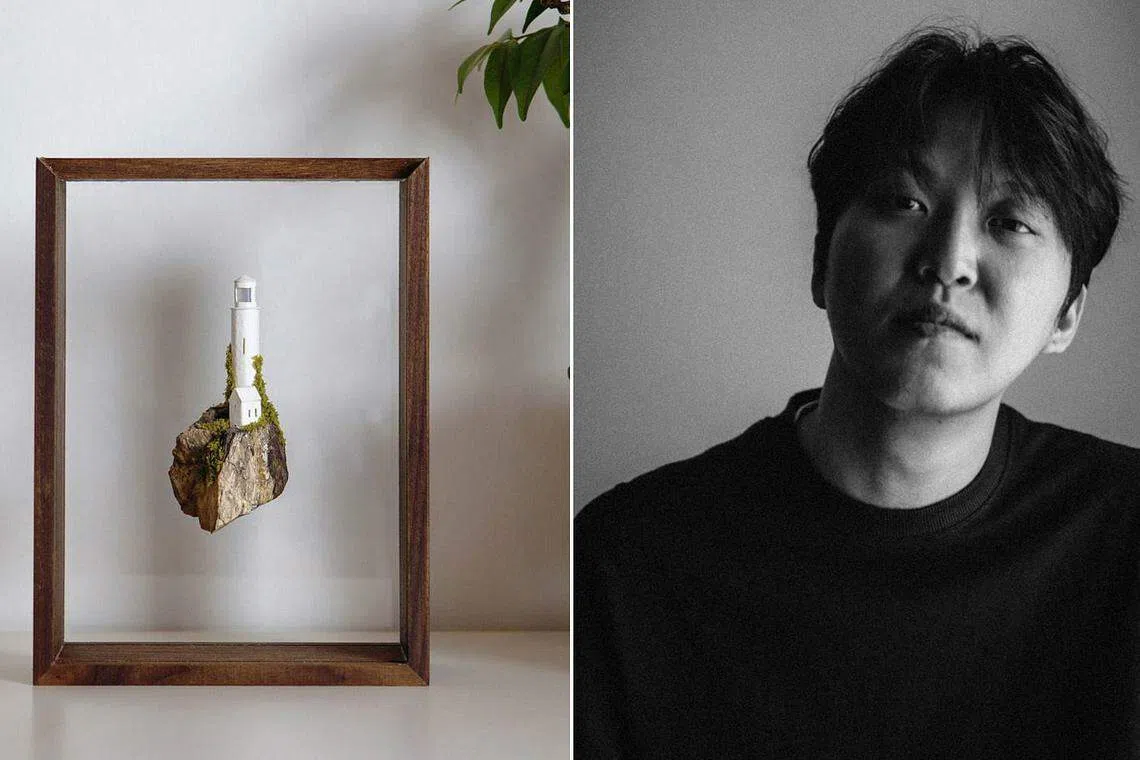
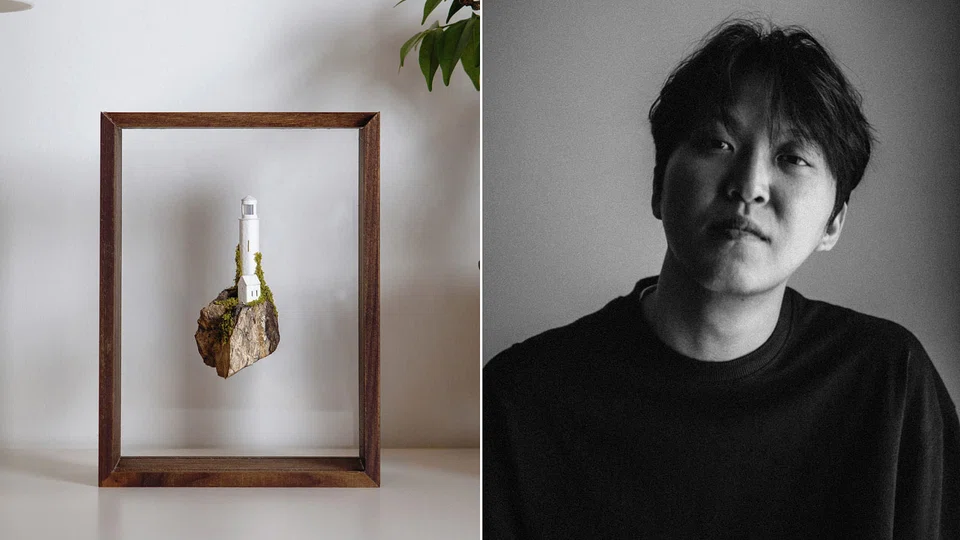
Tang started Hikari & Shores, which he calls, "an experimental place for me to explore various types of handmade art". He makes miniature buildings, such as houses and lighthouses which are stuck on small pieces of rock or wood. Encased in glass with a wooden frame, they have a whimsical feel and make for suitable tabletop decor.
"Hikari" - pronounced as "hekali" or "light" in Japanese - and "Shores" was chosen because of Tang's love for the ocean and surfing.
He says that his previous job as a photographer had always been about gathering stories, emotions and daily routines, then piecing them together to form an image. "I guess this sort of aesthetic had been brought over from making an image to making art from nature," he says.
For Tang, who is currently taking a break from photography, the first step to creating his art pieces is to find suitable rocks. "This is my favourite step in the whole process," he shares. There are no specific places where he finds them. "I try to keep a lookout to see what nature has to offer," says Tang, who is based in Johor Baru and heads out to the hills and beach to find materials.
He uses different types of paper to create the buildings and dry twigs for the trees. "It almost feels meditative trying to piece everything together," he notes. Each piece takes at least 20 hours to make. "The biggest challenge is that some houses have to be very small to fit onto the rock, but those are the most satisfying to complete," he adds.
His works are mostly sold to buyers in South-east Asia. He believes his artworks have an appeal because not only are they good conversation-starters but his customers, like himself, also feel at peace with nature when they look at them.
Spatial designer Simon Chiang, who purchased a Hikari & Shores piece, says: "It is very therapeutic to stare at the mini lighthouse."
CONNOR SU Co-founder, Slow Green slowgreen.store
Connor Su doesn't hesitate to admit that it was a difficult choice to give up his corporate job to dive full-time into his weekend hobby.
"But I know it is the right thing to do, because I really like doing this," says Su, who previously worked in consulting and finance. "I like building my own products and my brand that I can work on for many years to come."
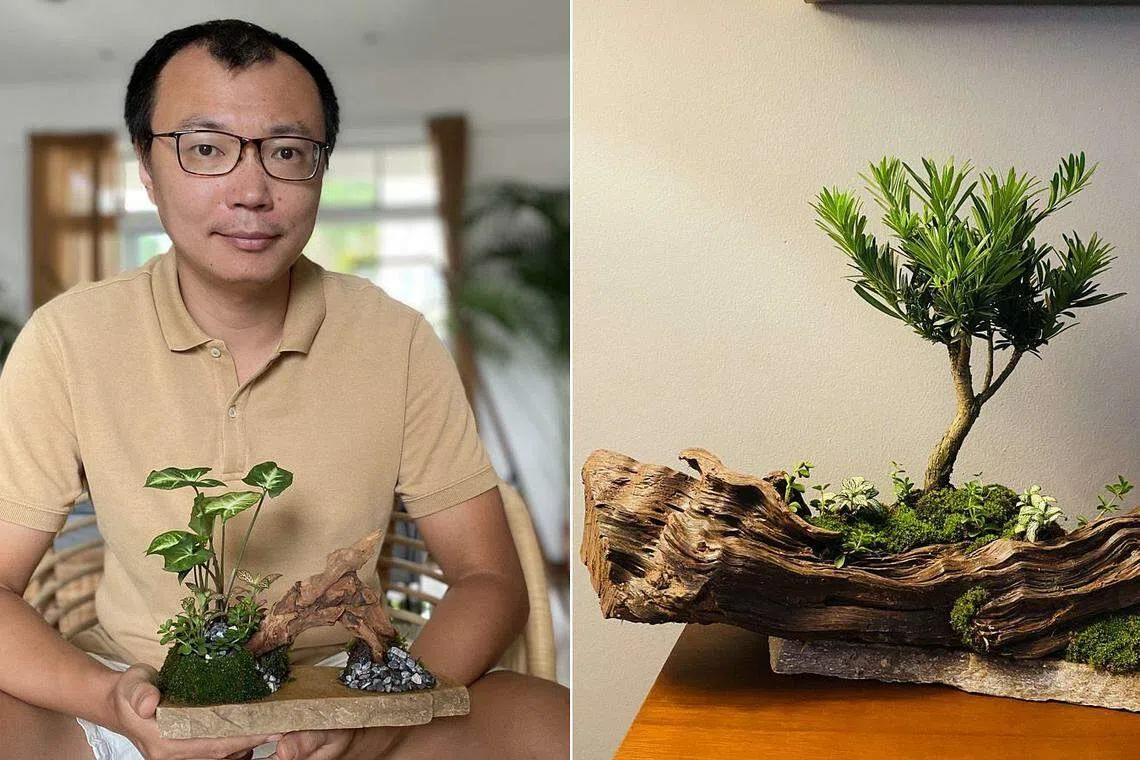
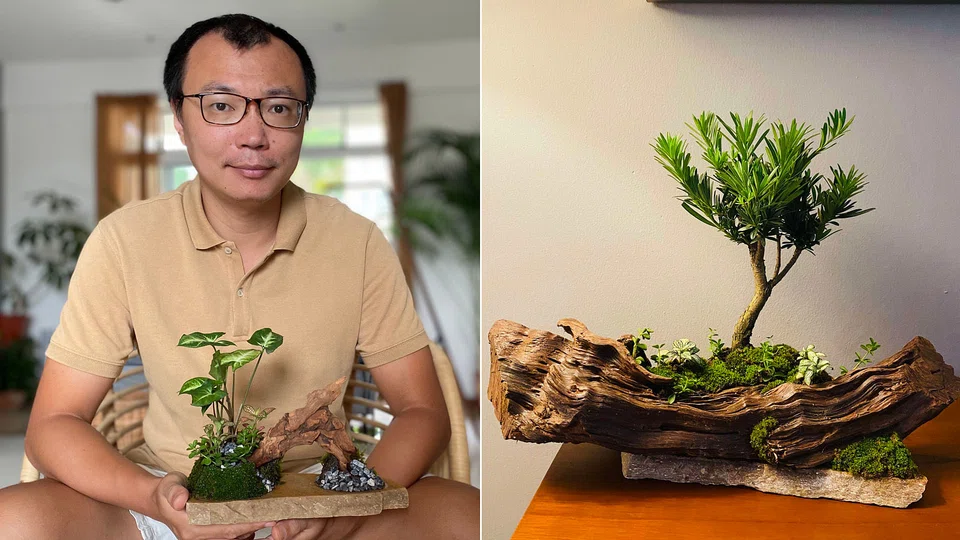
His product? Slow Green, a collection of artisanal landscapes for tabletops.
"We get a lot of energy from working on them. And we feel this is a pursuit we can do for a long time, like when we get to 60, we probably can still sit down, put wood and stone together and get a kick out of doing it," says Su, whose wife Sabrina helps on the weekends.
They were initially making pieces for themselves, but soon realised others liked them too, and they started getting requests for them. Each piece is intricately designed, typically takes 2 weeks to complete and uses over 20 materials, from stones, soil, wood, plants and moss.
Su says Slow Green prides itself on its high standard of craftsmanship, and how each material, be it wood or plants "weave and grow with each other like in nature. That is how we want to recreate the scenery", he explains.
Their tabletop landscapes were inspired by their hiking trips, and they also learnt from other craftsmen in bonsai, aquascape and paludarium arts. In addition, there was a lot of trial and error too. Neither has an art background but "both of us have a lot of artistic drive pent up inside."
Some of their pieces, particularly those that use real dried moss and require no watering, have found homes overseas. For other pieces that have live plants, the couple even offer a maintenance care service for them.
Despite having to do everything himself, from planning, making to even delivery, Su still finds the passion to go on. "Our clients tell us that our products make unique and meaningful gifts. We are really privileged to have the opportunity to serve a purpose in our customer's life," he adds.
MABEL LOW Founder, Papersynthesis papersynthesis.com
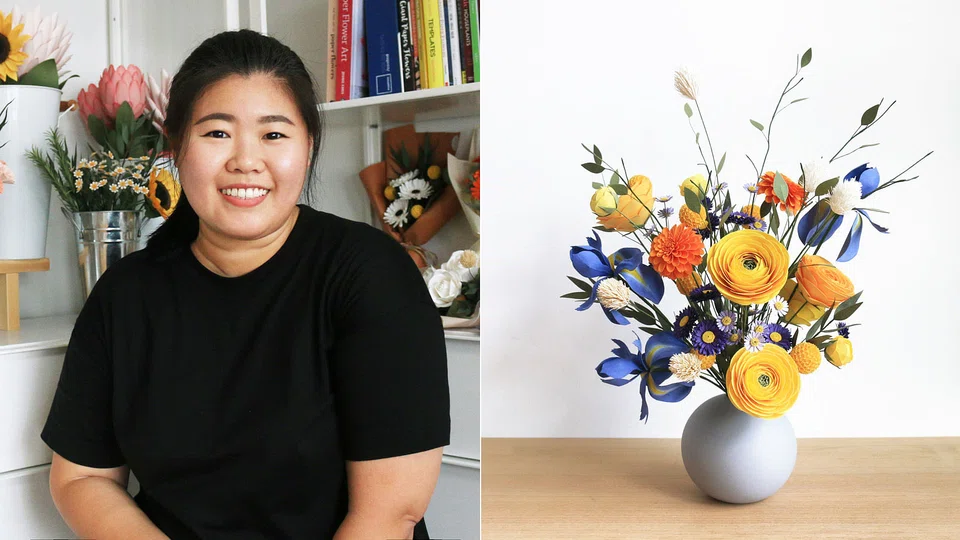
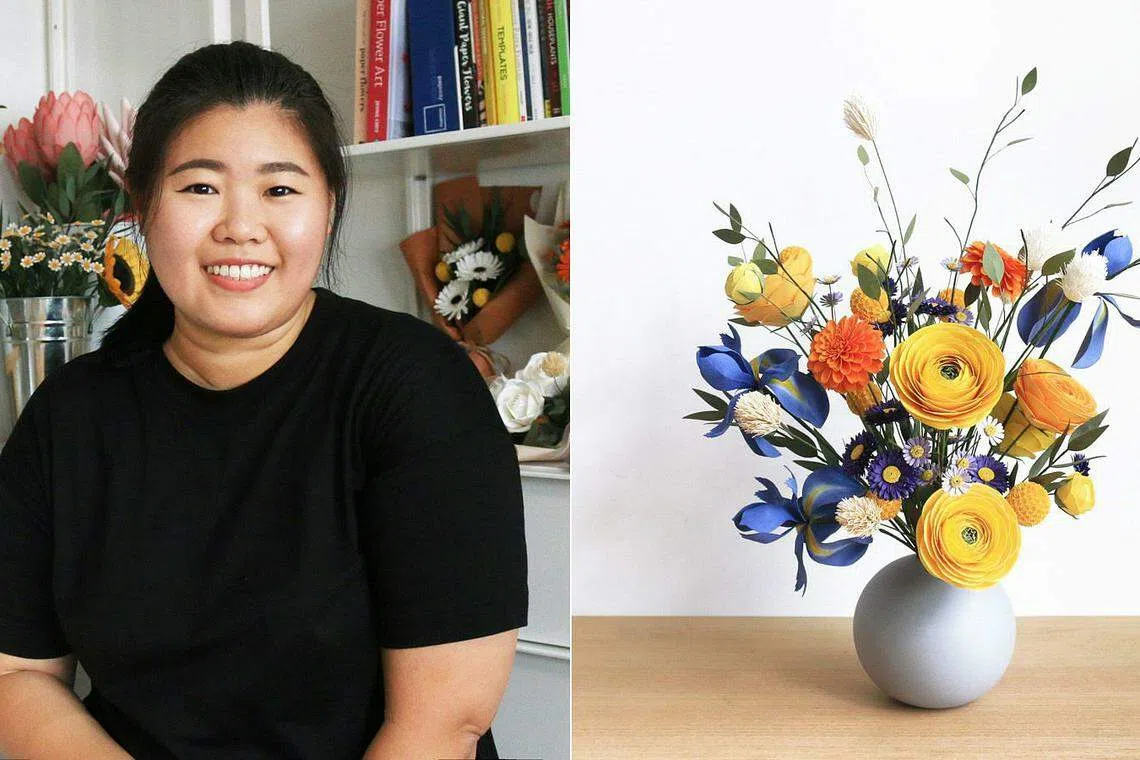
Do you love plants but struggle to keep them alive? Mabel Low might have the perfect solution. Low is the founder of Papersynthesis, a paper floral studio.
She started experimenting with making paper plants in 2018 after realising that she didn't have green fingers. For two years, she sold her paper plants on a casual basis. But in 2020, she decided to take a leap of faith, quitting her job to focus on paper crafting full time. She started Papersynthesis doing bespoke commissions, selling paper flowers, creating DIY kits and running workshops.
The former designer/general manager at a local design store says her design education background and work experience have come in handy. "Being equipped with skill sets like marketing, prototyping, computer illustration, manufacturing, and service design, allows me to run the business alone and assume different roles in a company when needed."
Low has always been fascinated with paper, as it is versatile and easily available. "From a flat piece of paper, I can create a 3D form by simply making a fold or a bend. The possibilities of what can be created are endless," she says. Some of her bespoke commissions include a replica of a wedding bouquet, and an arrangement for the launch of an international perfume brand.
Low chooses to specialise in flowers and foliage because she loves nature. Some flowers are hard to design, but there are also those that are hard to make. She sometimes adds a touch of paint to make some plants more lifelike.
Low's plants have travelled outside of Singapore. In fact, most of her customers are in Europe and North America.
Her DIY plant kits are also popular. "Learning how to make paper plants can be therapeutic and it is also something that anyone can make for family and friends," she says.
JEFFREY KONG Founder, Artisan Bricks artisanbricks.com
Jeffrey Kong introduces himself as an artist, but he's not the kind that works with paints and brushes. His choice of medium is instead Lego bricks.
He says he found his calling by accident.
"I first started creating with bricks to cope with the death of a family member. This brought me comfort, so I thought why not use this to spread joy to people," says Kong, founder of Artisan Bricks.
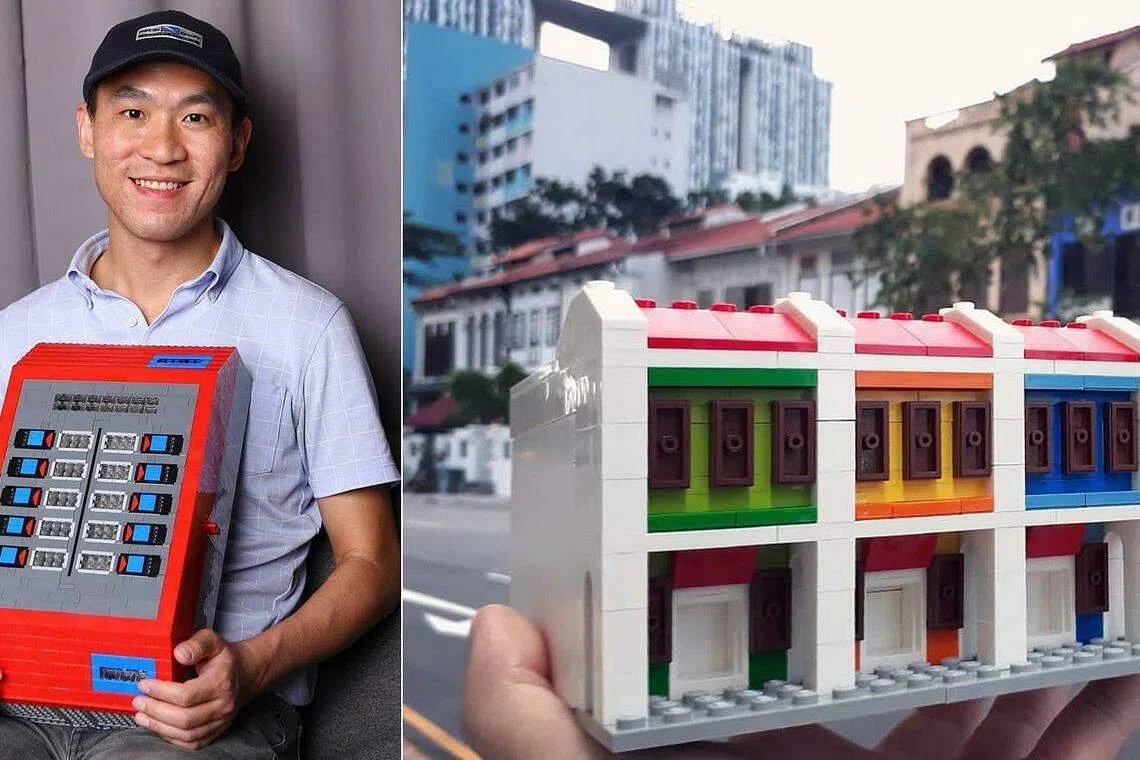
He explains: "The humble building brick is a powerful medium for creating art, because you do not need special training or equipment to put bricks together. So this medium makes art accessible to everyone. This also means everyone can tell their own story with bricks."
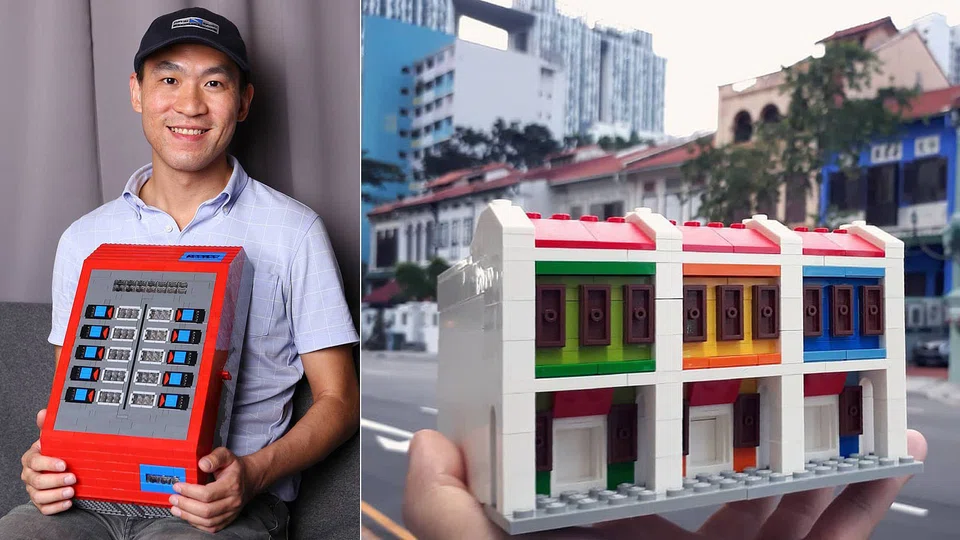
Kong uses Lego bricks not only to make sculptures of various sizes, but even builds murals using them. He also creates building kits and organises building workshops.
His works have not only attracted the attention of the general public, but have also led to commissions.
His recent ones include a building kit for UOB, a model of the clubhouse for Home-TeamNS Khatib and models for the Church of Saints Peter and Paul.
The pieces are assembled with original Lego bricks, and Kong's other trusty tools include a brick separator so that he can remove the parts easily, and chopsticks to quickly pick out specific pieces from a pile.
There's no limit to Kong's creations - he's built shophouse models, buses and even recycling bins out of Lego bricks.
While he has had no formal training in art of design, he credits his previous job as a magazine editor for his artistic touch.
"I like my creations to be clean and simple, like a magazine layout. I have to decide which details work best to tell the story, so there is plenty of editing involved. It is all about telling a story, no matter what medium we work with," says Kong.
His favourite piece is one that bears a resemblance to Balloon Dog by American artist Jeff Koons.
"The brick balloon dog represents what I strive to achieve as a brick artist - to push the limits of his medium and to make people smile," adds Kong.
ELIZA BELOZERTSEVA Founder, Wild Creations instagram.com/wild_creations_asia
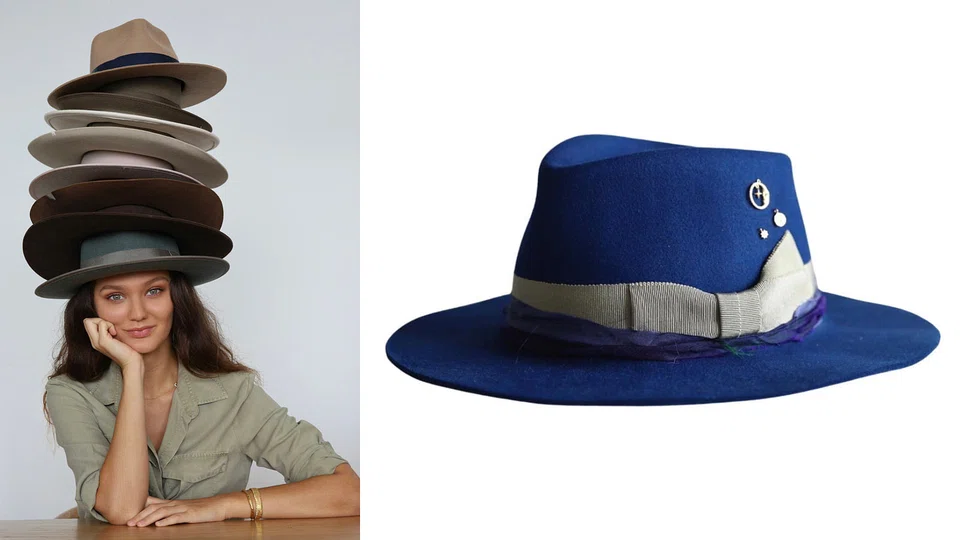
The next time you are out on a sunny afternoon, leave the brolly at home and stay cool and stylish with a hat by Russian-born milliner Eliza Belozertseva.
"My hats not only elevate an outfit but they let you express your personality," says Belozertseva.
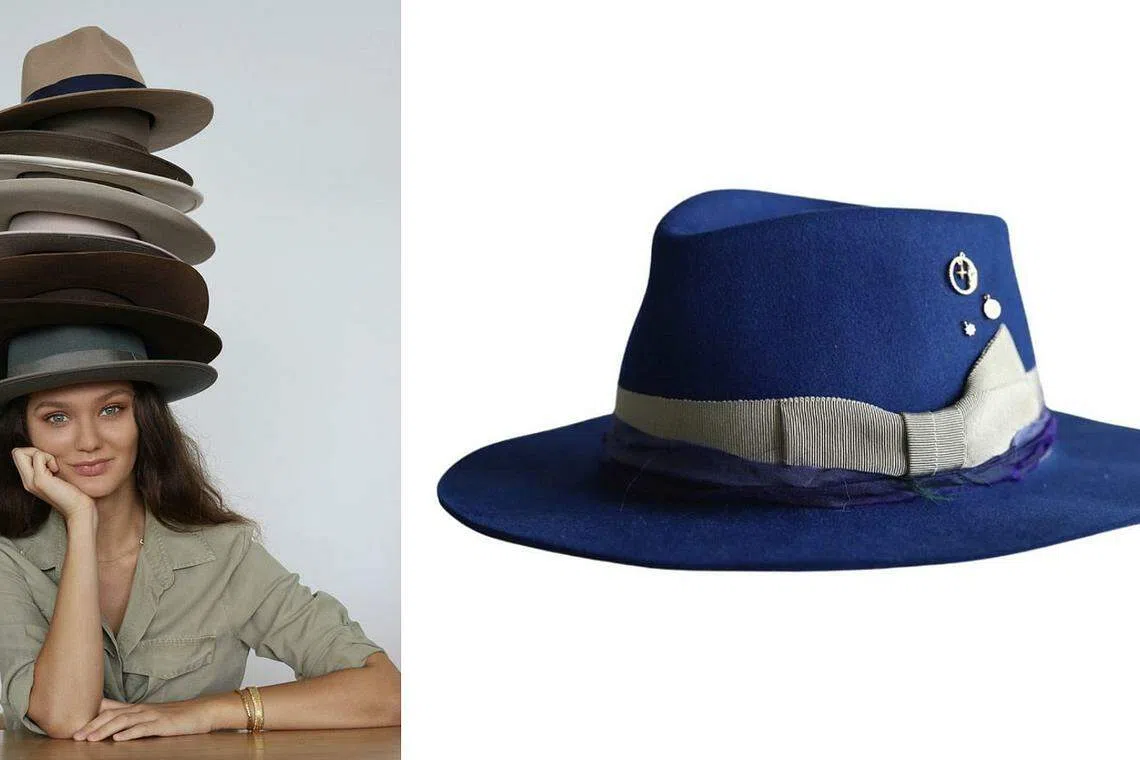
While on a trip to Australia, the former model noticed lots of people wearing stylish felt and straw hats whether it was at the beach or in restaurants.
"I was drawn by the way that a well-designed and made hat can enhance a person's attire. After working in the fashion industry in Singapore, Korea, China, and Hong Kong for many years. I realised quickly there is an opportunity to create my own artisanal hat brand."
While she had learnt sewing from her grandmother, Belozertseva picked up hat-making skills from an Australian milliner who taught her old artisanal techniques.
During last year's circuit-breaker period, she spent her time practising and making hats for her fiance and friends.
"Through lots of trial and error, I am now ready to sell my hats, and I've also received lots of requests for them," she shares.
The hats are currently sold through her Instagram account Wild Creations.
Belozertseva draws on her modelling days when designing the hats, mixing and matching colours. "In addition, I listen very closely to my customers and identify colour preference and styles," she says.
Her clients are mostly females looking for a hat to wear to the beach, and she's also had a few male customers asking for bespoke edgy-style hats. She's recently received some bespoke hat orders from Hong Kong.
While finding customers hasn't been a problem, it has been a challenge sourcing for tools, particularly wooden blocks of different sizes and shapes. These are used to shape the hats.
As everything is done by hand, a hat takes at least 8 hours of work. "It might not look like it, but to make a hat from scratch there are 20 different steps. For example, steaming, shaving, sculpturing, stretching, sewing and many more. When I see a happy customer walking around Singapore wearing a hat I made, it is extremely rewarding."
READ MORE:
Decoding Asia newsletter: your guide to navigating Asia in a new global order. Sign up here to get Decoding Asia newsletter. Delivered to your inbox. Free.
Copyright SPH Media. All rights reserved.