The fight over Myanmar's marble hills
Locals want their mountains back; they accuse outsiders of plundering their resources and threatening their livelihood
Madaya, Myanmar
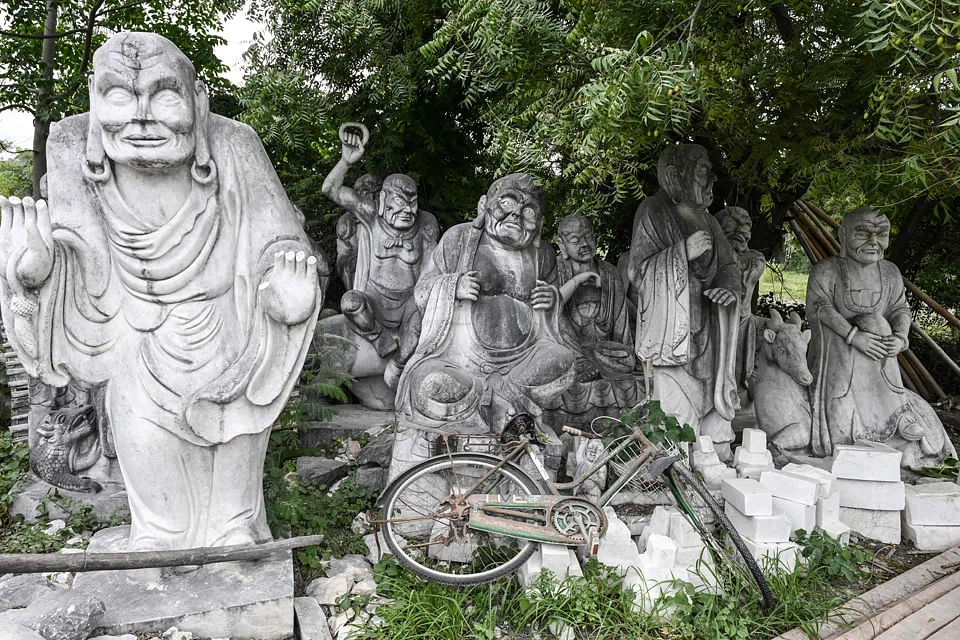
FACES covered in white dust and chisels in hand, marble sculptors in Myanmar say the hills that have given them a livelihood for generations are disappearing, as large companies reap the rewards of the prized white rock.
The deafening sound of cutting and grinding machines, punctuated by the tapping of hammers and chisels, echoes around the hills next to Sagyin village, north of Mandalay.
The mounds, lined with jagged edges from where huge chunks have been hewn, are the country's prime source of white marble - cherished as far back as the reign of King Mindon Min in the 19th century.
Ko Lay, his wife and their four children have carved a niche for themselves as the go-to sculptors for animals, making around US$360 for each elephant, lion or tiger figure.
As he fashions the haunch of a three-metre-tall feline that will one day guard the entrance to a Buddhist pagoda, he explains how important the hills are to everyone living in their shadow.
"The entire village relies on them, but we are worried they will disappear soon," said the 48-year-old, his whole body whitened with dust.
Like others here, he points the finger at shadowy Chinese and military-linked companies, who were granted decades-long licences over swathes of land under the previous government.
Locals have always regarded the marble-rich slopes as their own and accuse the outsiders of plundering their resources with explosives and excavating machinery.
"We want our mountains back," says Ko Lay.
Around 80 per cent of the village of some 2,000 households work in the marble business, but people fear they are being pushed out.
"(The big companies will) destroy the hills until they are gone", bemoans 55-year-old Soe Win. "We want at least to share the hillsides, but locals are hardly given any leases."
Some plots allocated to the villagers
In recent months, a few dozen plots have been allocated to the villagers, says Eunt Soe Yin from the Ministry of Natural Resources and Environmental Conservation.
"They can mine and sculpt, providing they have a licence. They can do whatever they like," he says.
But craftsman Nyunt Wai has not heard about the leases and is sceptical that locals will see dividends any time soon.
He learned to work with marble from his parents and grandparents from the age of 14, and has built up a clientele as far away as Vietnam, Indonesia and Australia.
Now aged 61, the spritely and bespectacled artisan puts the whiteness of his teeth down to marble dust.
Taking a break from delicately etching long eyelashes on the face of a marble Buddhist monk, he explains how companies push up the price of raw materials, blocking out locals.
"The village's blood streams through these hills, but I am worried for future generations." AFP
Decoding Asia newsletter: your guide to navigating Asia in a new global order. Sign up here to get Decoding Asia newsletter. Delivered to your inbox. Free.
Share with us your feedback on BT's products and services