

To fight waste, think out of the (plastic) box
For the longest time, plastic was the magic material. But now there's no one solution that's able to replace natural plastics all at once

Annabeth Leow
Singapore
THERE need not be conflict between making the consumer experience simpler and greener, said one food and beverage (F&B) professional on a drive for sustainable packaging.
Businesses are already investing in new-age packaging materials, but Singaporeans must commit to the journey, according to Matthew Kovac.
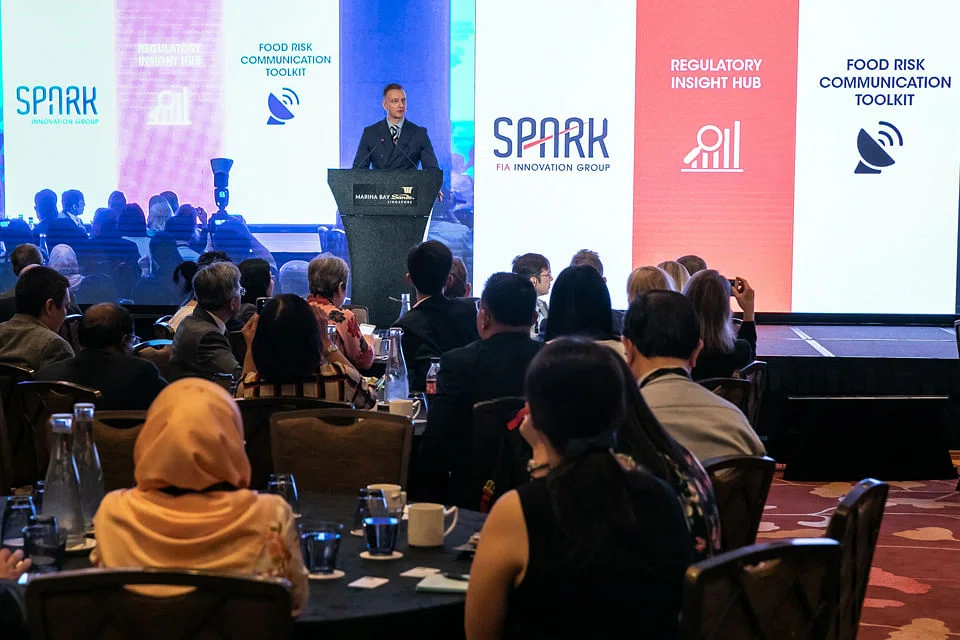
He is executive director of industry body Food Industry Asia (FIA), which held its second Food for the Future Summit at Marina Bay Sands last week. Convenience and sustainability were two of the event's three themes.
"You might assume that, just because we want to make things more convenient, there will be more waste," Mr Kovac noted, when asked by The Business Times. "Not necessarily."
He pointed to "a lot of pushback from consumers" in traditional retail spaces such as supermarkets, where he said shoppers have been clamouring for less product packaging.
"They're actually demanding that, so it's not necessarily just the assumption that consumers are the ones who are going to be wasteful. They're actually asking the industry, retailers and suppliers and manufacturers, to reduce their packaging footprint."
With the rise of convenience-on-demand platforms such as food or grocery delivery apps, "we have to have a look at more innovative business models and how they work", he said.
Mr Kovac cited Nestlé's stake, announced in January, in reusable packaging scheme Loop. It will see North American orders of Häagen-Dazs ice cream delivered in double-walled steel containers, not plastic tubs.
But those are lessons that have been learnt overseas, and Mr Kovac bemoaned the lower adoption of recycling here - National Environment Agency figures put the domestic recycling rate at 22 per cent last year.
"More infrastructure needs to be built, but, at the same time, just because you build the infrastructure doesn't necessarily mean that the recycling rate goes up," he told BT.
Mr Kovac fingered single-use plastics, films and sachets as notorious culprits behind waste in the Republic.
"Consumers have to step up and take responsibility as well," he said.
"The onus can't be just on the Government or the corporate sector to lead the way. Consumers have to change their habits too - of course, bearing in mind that we still have to make it convenient for consumers."
Mr Kovac added that "it's not as simple as saying, let's come up with some new packaging", as industry must also consider fresh implications of technologies such as biodegradable or compostable packaging.
New materials cannot offer one-size-fits-all alternatives
"It is food - so does it have an impact on food safety? Does it reduce the shelf life, and therefore encourage more food waste? There are those kinds of issues," he elaborated.
Kakuko Nagatani-Yoshida, regional co-ordinator for chemicals, waste and air quality at the United Nations Environment Programme's Asia-Pacific office, also warned at a panel at the FIA symposium: "We are still concerned that biodegradable plastics may not be a magic answer. There are certain limitations and uncertainties, and we need to be aware of those before taking up some of these solutions."
Another panellist, Indonesian entrepreneur William Gondokusumo, noted: "For the longest time, plastic was the magic material. We were lazy. We used it for everything. But what we realised was that, now we have tried to move away from it, there's no one solution that's able to replace natural plastics all at once."
Mr Gondokusumo co-founded Evoware, a startup making seaweed-based packaging that is safe to eat and dissolves in warm water. But he noted that, given the wide array of uses for plastic, new materials cannot offer one-size-fits-all alternatives.
He added: "Plastic was a great system - it was scalable, everyone's using it, one raw material produces everything. Now we're talking about multiple raw materials producing multiple things. How all these systems come about, I think that's one of the main issues that we'll face."
Other industries like the fast-moving consumer goods (FMCG) segment, are grappling with this challenge too.
Johnson & Johnson chief executive Alex Gorsky recently told BT: "This is a multi-pronged, long-term journey of making sure that we work with our entire supply chain so that, again, we can still have a high-quality, stable product reaching the consumer - but that we have other types of packaging that's available."
Still - though tipping his hat to the progress made by the electronics industry - Mr Kovac added: "Food and beverage, just by the nature of it, produces quite a significant amount of waste already, so, to be honest, we're quite focused on that one sector."
The FIA has launched industry schemes such as sharing up-to-date news on regulations and policies, and a "circular materials lab" for research on sustainable packaging solutions.
Copyright SPH Media. All rights reserved.
TRENDING NOW
Easy to rent out, hard to sell: Are buyers losing interest in Singapore’s one-bedroom condos?

GovTech retrenches another 38 staff in second round of layoffs
Stocks to watch: Seatrium, CapitaLand Investment, Keppel DC Reit, Suntec Reit, CLCT, TSH Resources

World’s largest offshore wind platform by Seatrium consortium on track to be completed by 2028

