

The ‘final before the final’: Classy France face dogged Spain in World Cup showdown
In the other semi-final, defending champions Argentina meet England in a match steeped in history
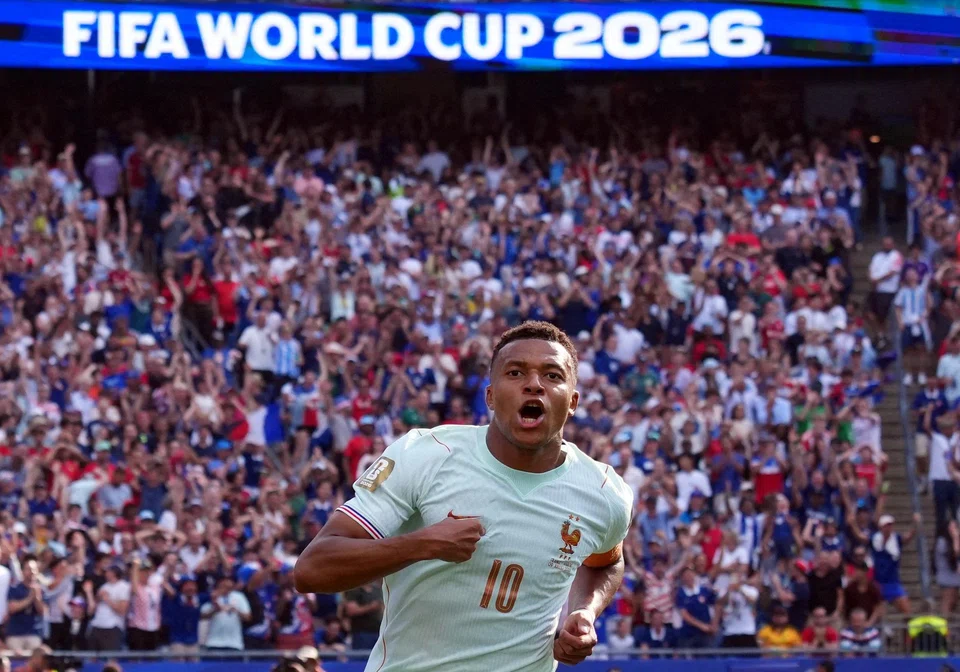
[MIAMI] After 100 matches, more than 9,000 minutes of football and 292 goals, the largest Fifa World Cup in history has been reduced from 48 nations to just four: France, Spain, England and Argentina.
The expanded tournament has produced surprises, underdog stories, swansongs on some of the sport’s greatest players, and an unhealthy dose of controversies and conspiracy theories.
Germany’s early exit, the miracles of Cape Verde and Curacao, and likely the last time we will see the likes of Cristiano Ronaldo, Luka Modric, Kevin De Bruyne and Virgil Van Dijk on football’s grandest stage, have all dominated headlines.
Japan and Morocco have also graduated from underdogs to earning their stripes as respected contenders, while Norway and Switzerland’s runs to the quarter-finals have not gone unnoticed.
This week, the semi-finals will be played. And for only the second time in recent World Cup history, the four teams are also the top four of the Fifa world rankings. That says something important – over a 39-day tournament, played across three countries, in sweltering heat at times, the virtues of squad depth, tactical superiority and flexibility and experience still matter.
France vs Spain
The first semi-final between France and Spain in Texas on Tuesday (Jul 14) afternoon (Wednesday, 3 am Singapore time) could well have been many fans’ choice for the World Cup final.
Arguably the two most complete sides in the tournament, France and Spain have collectively reached six finals in the last eight editions of the World Cup.
Should France win this match, it would be the third consecutive final for Les Bleus, signalling their dominance and consistency in the current era of global football.
It won’t be that straightforward, though. France has perhaps the greatest squad depth in the tournament, with several analysts saying that it could field four different starting line-ups.


They also have the meanest strike force among the four semi-finalists, with 16 goals across the competition, tied with Argentina. Its front two, Kylian Mbappe and Ousmane Dembele, have scored 13 of those.
In the matches against Paraguay and Morocco, France showed that they also have the physicality, resilience and grit to match their flair and grind out results when the opposition attempts to stifle their free, creative play.
In Didier Deschamps, the French have a manager who has lifted the World Cup both as a player and coach, with the competition know-how and experience to lead them all the way to the final, as he has done twice before.
Standing in their way is one of the most technically sound teams – Spain.
The Spaniards had a slow and muted start to the tournament. But those who remember their victorious 2010 World Cup campaign will know that this is often expected of Spain – they start off slow and unimpressive, only to quietly and progressively strengthen over the course of the competition and peak at the right time.
This Spanish team will attempt to dominate the game with possession and frustrate the French. Unlike their predecessors, however, they are more direct and less frustrating to watch, and can pose a reasonable attacking threat intermittently during the match.
In that context, expect this to be a tactical, cagey affair, with the midfield battle deciding the game. Spain will attempt to dictate the tempo of the game through possession. France, with their speedy forwards and able defence, will be happy to absorb pressure, and look for lapses in concentration to break and score quickly.
France have also shown that they can score goals from anywhere on the pitch, with six of their 16 goals scored outside the penalty box, and this could prove pivotal if Spain adopts a low press.
Spain will need to make their possession count. Having scored the fewest goals across the campaign among the four semi-finalists, they will be hoping that Lamine Yamal can add more to his disappointing solitary goal in the tournament.
Failing which – and if Mikel Oyarzabal can’t add to his four goals or if Mikel Merino fails to be the matchwinner from the bench for the third match in a row – the Spaniards may play out for extra-time and even a penalty shootout. With only one goal conceded throughout the tournament, Spain can certainly shut out even the prolific French.
Argentina vs England
There have been few matchups in World Cup folklore more fiery than Argentina versus England. In the five matches they have played in the competition since 1962, the English have won thrice.
But it is the two games they lost that have garnered the most attention. Who can forget the famous Hand of God goal scored by Diego Maradona in 1986, before he scored arguably the Goal of the Century in the same match to sink England 2-1, signalling revenge for his country’s loss in the Falklands War with the British?
Or 12 years later, when English talisman David Beckham was sent off for kicking Diego Simeone, but not before an 18-year-old Michael Owen announced himself to the world through a breathtaking solo goal?
Football is often intertwined with politics, and this World Cup proved no different. Much of the spotlight has followed Argentina – with accusations of favouritism, corruption and racism, among others.
It remains to be seen if these off-field narratives will have any on-field impact when this semi-final is played in Atlanta on Wednesday (Thursday, 3 am Singapore time). The Argentines proved they could shrug these negative perceptions off as they brushed aside Switzerland in their 3-1 quarter-final victory.
In that match, the Argentines also showed that they are more than a one-man team. It has been the Lionel Messi show thus far, and he has lit up this tournament with some mouthwatering goals and sizzling performances. But if the English defence can shut him out, as they did with Erling Haaland in the quarter-final, then the Argentine supporting cast have shown that they are ready to step up to the limelight too.
The English don’t appear to have that luxury yet. Among the 13 goals they have scored in this tournament, only one – by Marcus Rashford – has been scored by someone other than Harry Kane and Jude Bellingham.
Kane, a perennial gamewinner for the English for many years now, was also the saviour of the English team until the Round of 32 game against Congo. Bellingham has since taken on that responsibility in the last two matches, to add to his already praiseworthy performances in earlier matches.
In what promises to be a tense, emotionally charged match, it could be a lapse in discipline or concentration that could make a difference in this duel or, as has been proven in the past, a moment of individual brilliance. There are clearly plenty of stars on both sides of the pitch to provide that match-winning moment.
The writer is a corporate affairs consultant and former BT journalist who is attending his third World Cup
Decoding Asia newsletter: your guide to navigating Asia in a new global order. Sign up here to get Decoding Asia newsletter. Delivered to your inbox. Free.
Share with us your feedback on BT's products and services
TRENDING NOW

Government to bring forward raising of retirement age, give employers more financial support to create flexi-load jobs

Former minister Maliki Osman, Revolut chairman join Asia Gulf Holdings advisory board

Is Manila Asia’s new dining hot spot?

Simba at risk of losing operating licence over spectrum misuse

