
First all-private astronaut team aboard space station ready to fly home
 Add BT as a preferred source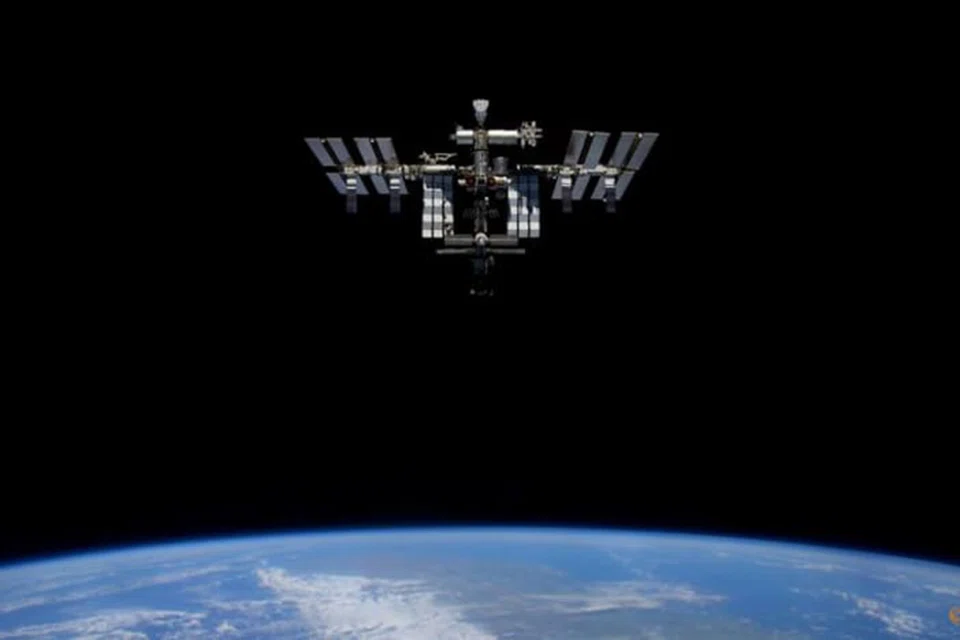
THE first all-private astronaut team ever sent to the International Space Station (ISS) was due to depart the orbiting outpost on Sunday (Apr 24) for a flight back to Earth, capping a 2-week science mission hailed as a milestone in commercial spaceflight.
The SpaceX Crew Dragon capsule carrying the 4-man team of Houston-based startup company Axiom Space was scheduled to undock from the ISS, orbiting 250 miles (420 km) above Earth, at about 9.00 pm EDT (01.00 am GMT Monday) to embark on a 16-hour return descent.
If all goes according to plan, the spacecraft will parachute into the Atlantic off the coast of Florida on Monday at about 1.00 pm EDT (17.00 pm GMT).
The flight home was postponed for several days due to unfavourable weather conditions at the splashdown zone, extending the Axiom crew's stay in orbit well beyond its original departure date early last week.
The multinational team was led by Spanish-born retired Nasa astronaut Michael Lopez-Alegria, 63, Axiom's vice-president for business development. His second-in-command was Larry Connor, 72, a technology entrepreneur and aerobatics aviator from Ohio designated as the mission pilot.
Rounding out the Ax-1 crew were investor-philanthropist and former Israeli fighter pilot Eytan Stibbe, 64, and Canadian businessman and philanthropist Mark Pathy, 52, both serving as mission specialists.
Navigate Asia in
a new global order
Get the insights delivered to your inbox.
Launched from Nasa's Kennedy Space Center on Apr 8, they spent 2 weeks aboard ISS with the 7 regular, government-paid crew of the space station: 3 American astronauts, a German astronaut and 3 Russian cosmonauts.
The Axiom quartet became the first all-commercial astronaut team ever launched to the space station, bringing with them equipment for 2 dozen science experiments, biomedical research and technology demonstrations to conduct in orbit.
Axiom Nasa and SpaceX have touted the mission as a turning point in the expansion of privately funded space-based commerce, constituting what industry insiders call the "low-Earth orbit economy", or "LEO economy" for short.
"This really begins a new era of human spaceflight, where people other than just government astronauts, who are obviously very professionally trained and prepared, can come up (into orbit) with a little bit less training but still able to function in this very unique and sometimes challenging environment," Lopez-Alegria said in brief remarks streamed live by Nasa last week from the ISS.
Ax-1 marks the sixth human spaceflight SpaceX has launched in nearly 2 years, following 4 Nasa astronaut missions to the ISS, plus the Inspiration 4 flight in September that sent an all-civilian crew into Earth orbit for the first time, though not to the space station.
SpaceX, the private rocket company founded by Tesla Inc electric carmaker CEO Elon Musk, has been contracted to fly 3 more Axiom astronaut missions to the ISS over the next 2 years. The price tag for such outings remains high.
Axiom charges customers US$50 million to US$60 million per seat, according to Mo Islam, head of research for the investment firm Republic Capital, which holds stakes in both Axiom and SpaceX.
Axiom also was selected by Nasa in 2020 to build a new commercial addition to the space station, which a US-Russian-led consortium of 15 countries has operated for more than 2 decades. Plans call for the Axiom segment to eventually replace the ISS when the rest of the space station is retired around 2030. REUTERS
Share with us your feedback on BT's products and services

