

The agony and ecstasy of home winemaking
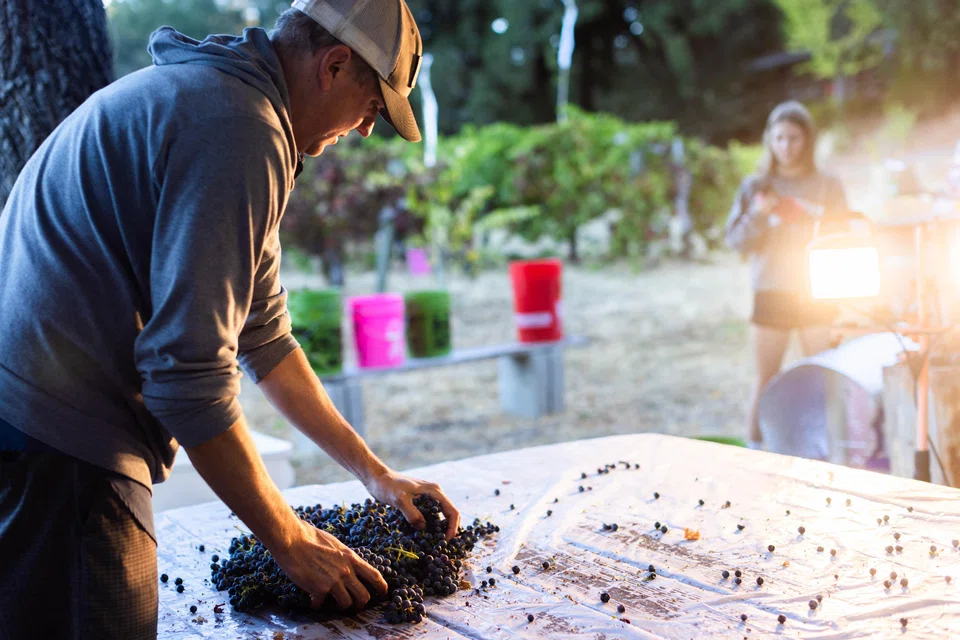
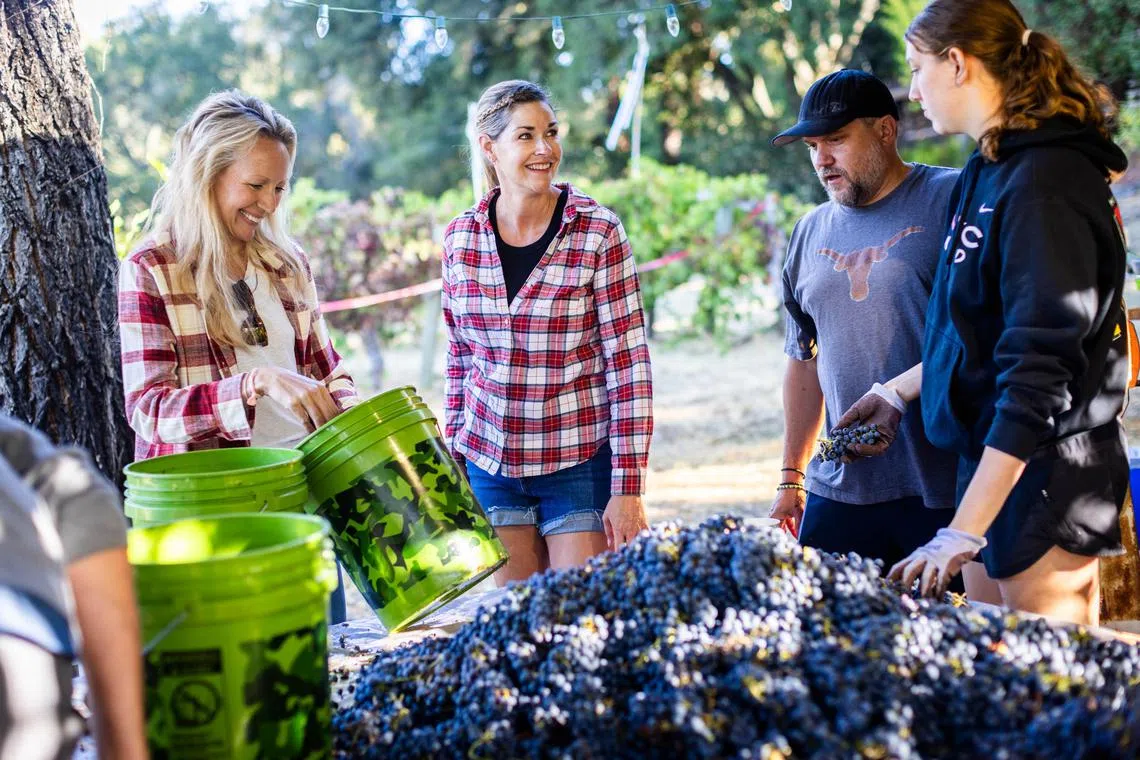
THE pickers start to arrive at 7 am at the home of Greg and Emily Ernst in Geyserville, California, to help harvest their half-acre zinfandel vineyard before the October day reaches its high of 35 degrees Celsius.
These are not professionals. They are family and friends for whom helping the Ernsts is an annual social highlight. The Ernsts, in turn, are not planning to sell their grapes. They are amateur winemakers who take great pleasure and pride in farming and fermenting grape juice into their own expression of zinfandel.
Throughout the morning, the 30 or so pickers, including seven children, fill plastic buckets with bunches of plump purple grapes. They deposit their hauls onto a table under bright lights, where Greg Ernst culls the under-ripe or marred grapes, setting them aside to be stomped on by the children.
He tosses the remaining bunches into a machine that would de-stem and crush them, yielding frothy purple juice and skins in a 110 litre plastic vat.
This is the time of year when the Ernsts and thousands of other home winemakers are filling barrels, vats, carboys or whatever containers they can rustle up with fresh grape juice, which will begin the slow transformation into wine in cellars, garages and sheds around the US.
No official numbers exist for precisely how many amateurs are making wine, says Brad Ring, publisher of WineMaker magazine, a periodical aimed at these hobbyists. But he estimates, based on sales of equipment and participation in competitions, that a half-million people are making wine in their homes in the US and Canada.
The majority, he says, are on the West Coast. Here, the winemakers – among them Ralph Maltese, a semi-retired supply-chain consultant in Santa Cruz, California – have ready access to a wide variety of wine grapes.
In 2002, Maltese joined a group of a dozen or so hobbyists to form a winemaking cooperative. Together, they divided up tasks, some specialising in tasting or lab analysis. An oceanographer served as winemaker, while Maltese was the group organiser and cellar rat, a wine-industry term for those performing menial but essential tasks such as topping off barrels.
Each year, they would arrange to buy a ton or so of grapes from vineyards up and down the California coast. Over time, they developed extensive contacts and would occasionally be offered free grapes.

“A guy who farmed for Gallo would call and say, ‘I got two acres of grapes I’m not picking, you want it?’” Maltese recalls.
In 2018, the group, which called itself Cave Gulch Winery after Maltese’s Santa Cruz neighbourhood, won a best of show at the Santa Cruz County Fair for a 2016 negrette, a red grape mostly grown in south-western France. Sadly, they disbanded last year after the winemaker died unexpectedly.
The best part of it, Maltese says, was the togetherness.
“We would share equipment with a couple of other winemaking groups in town and get together for dinner,” he says. “When we had problems, like with a pinot noir, we’d call up one of the winemakers and ask how to approach it. People were great, it was a lesson in community.”
Americans have always made a little wine at home, particularly immigrants from wine-producing countries who wanted to reproduce a bit of the old country. But the practice really took off during Prohibition, when the authorities created an exception for home winemakers, who were permitted to produce up to 200 gallons a year. Vineyards were able to stay in business catering to them. Cesare Mondavi, father of Robert Mondavi, moved his family from Minnesota to California in 1923 to start a business selling grapes, largely to home winemakers.
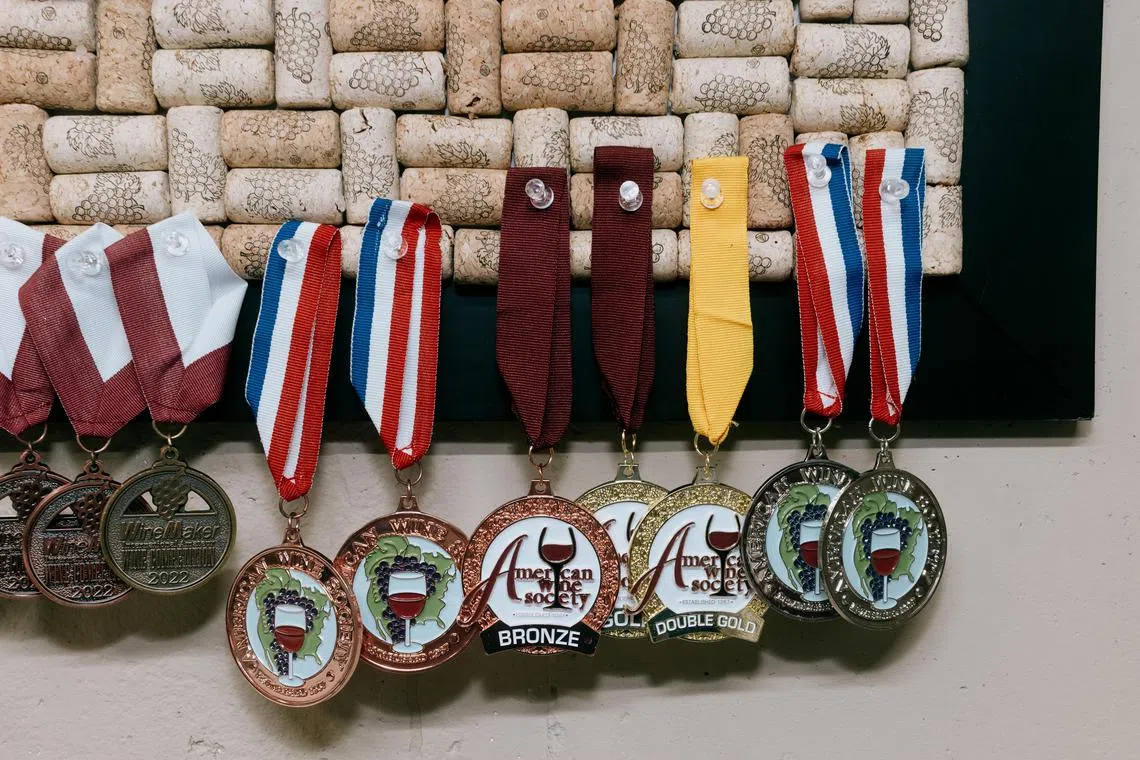
The 200-gallon household limit persists today, and winemakers are not permitted to sell their wares. Most give it away to friends and family, enter amateur winemaking competitions sponsored by WineMaker, the American Wine Society and numerous local entities, while stashing some away to see how the wines evolve.
Not everyone is lucky enough to have their own vines or live near wine country. They, like Cesare Mondavi’s customers, will order fresh grapes to be shipped, or buy frozen grapes or grape juice.
Lisa Nordmann in Fenton, Missouri, was inspired by her son Timothy’s winemaking efforts and in 2015 took up the challenge. Her first try, with cayuga, a white hybrid grape, did not turn out well as the juice oxidised in the heat of her garage. But they soon got serious.
“My husband and Timothy built a cool wine room so we could do long, slow fermentations,” she says. “It needs to be cool, especially with whites, so you can get the aromas and flavours.”
Soon, they were winning competitions, primarily with hybrid and native varieties that are grown in the Midwest, such as norton, chambourcin, traminette and vignoles. But she also buys syrah or cabernet sauvignon juice from California or Chile. She’s served as president and secretary of the Missouri Winemaking Society, and she travels to conventions of winemakers.
“You learn a whole lot talking to others,” she says.
Making wine is not a cheap hobby. Nordmann says she’s spent thousands of dollars on equipment, including a bladder press, a crusher-de-stemmer, various vats, barrels and carboys, pumps, bottle fillers and ingredients, including yeast.
That doesn’t include the grapes or juice. Nordmann can pay roughly US$72 for 72 pounds of fresh Missouri hybrids, which would yield just under 19 litres of wine. For California grapes, Musto Wine Grapes in Hartford, Connecticut, charges US$98 for 72 pounds of cabernet sauvignon from Lodi, California.
Some 22 litres of Lodi cabernet juice – which also makes under 19 litres of wine – runs for US$60. Shipping would be extra, and would depend on many factors to arrive at a price. Of course, many serious amateurs aim for closer to the 200-gallon limit, so costs multiply.
Home winemakers are a diverse group, but many have a scientific or scholarly bent. Gordon Gribble in Norwich, Vermont, taught chemistry at Dartmouth College for more than 55 years, and has been making wine for almost as long.
The most memorable wine he’s made, he says, was a 1995 petite syrah. He came upon the grapes serendipitously at a winery in New York, which had crushed and stored them a year before. He brought them home and made the wine. He liked it so much he entered it in an American Wine Society competition in 1998, and “the judges went wild”.
Lou Camilotto, a retired geography teacher in West Lafayette, Indiana, has made all sorts of wines, but particularly enjoys making blueberry wines. He gives away most of it.
“The fun is making it, deciding what to create and when it’s ready,” he says. He was inspired by watching his grandfather, an Italian immigrant, make it at home. Like many avid amateurs, he belongs to a club, the Tippy Tasters of Tippecanoe County, which offers social and networking opportunities and entry to winemaking conventions and seminars.
Mark Diehl, who started making wine with his wife, Sandi, at home in Kennesaw, Georgia, says conventions often include a seminar entitled, “So You Think You Want to Go Pro”, for those fantasising about the wine business. The usual message: “Don’t.”
The Diehls, both retired physicians, didn’t listen. When their friends, who owned Stonewall Creek Vineyards in Tiger, Georgia, near the South Carolina border, decided they wanted to retire, the Diehls bought it. They now produce 1,200 cases or so a year of wines made of both hybrids and French grapes such as petit verdot and cabernet franc, with Mark Diehl making the wine. He has also had to learn about growing grapes and dealing with government bureaucracy.
“It’s been a learning process,” he says, “with an unending amount of paperwork!”
For those who’d like to make wine, but want guidance, options are available, including Make Wine With Us in Wallington, New Jersey, where customers can select their level of participation.
Some want to do everything, from de-stemming the grapes to bottling, says John Gizzi Jr, the proprietor. Others simply want bottles with their own personal label, which they can use as promotional products for their businesses. Make Wine will operate the equipment, store the wine and offer classes, recipes and any other help people might need.
“We have a couple hundred groups that come in, from an individual or couple to 30 or 40 people, families, friends, co-workers,” Gizzi says.
Back in Geyserville, the Ernst harvest is winding down by 10.30 am, and the beer, homemade India pale ale by Greg Ernst’s brother Eric, is flowing.
Many taste past vintages of E&E zinfandel, for Ernst and Ernst. The 2018 is elegant, fresh and delicious with a note of licorice. The vats of juice are safe, settling in the shed. Later that night, yeast is added, and the fermentation begins. The wines will be bottled in roughly 14 months.
As the guests reflect on the beauty of this pastoral pastime, Greg Ernst is off to the side, hosing down and storing away the sorting table and machinery, a reminder that wine is not always glamorous.
Decoding Asia newsletter: your guide to navigating Asia in a new global order. Sign up here to get Decoding Asia newsletter. Delivered to your inbox. Free.
Share with us your feedback on BT's products and services
TRENDING NOW

Two Singapore-listed palm oil firms named in Greenpeace report on Indonesian plantation fires

Singapore Airlines flight returns to San Francisco after ‘unruly’ passenger incident

Singapore looking into which companies responsible for haze-causing fires: PM Wong
Deluge IPO 3.86 times subscribed ahead of SGX debut

