Asia’s 50 Best Restaurants awards ceremony returns to Singapore for its 10th anniversary
Chefs gear up for the party of the year even as it brings back to the spotlight the controversies surrounding it
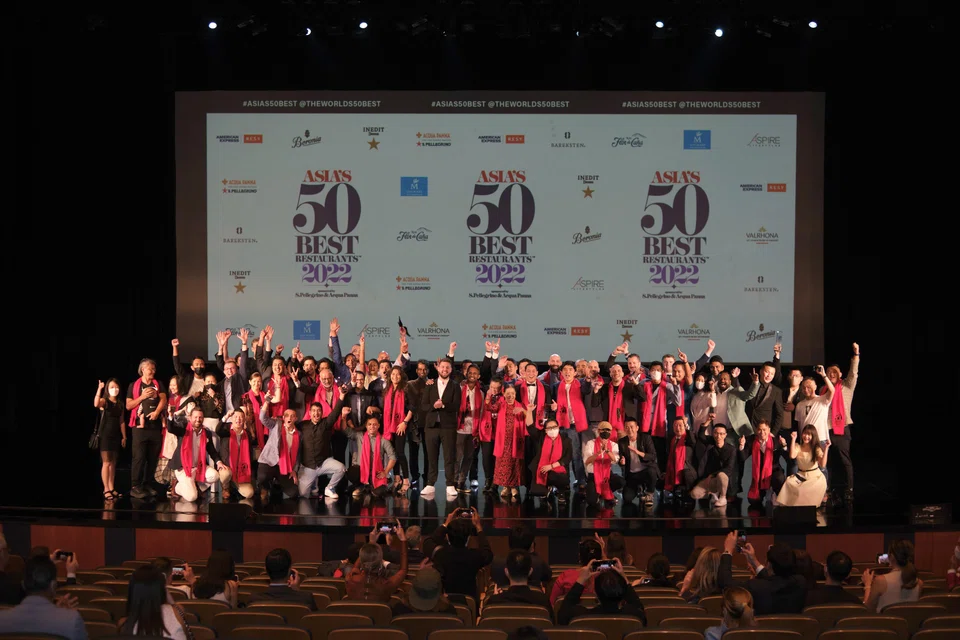

ON Mar 28, chefs from around Asia will party with a vengeance in Singapore in the biggest Asia’s 50 Best Restaurants awards ceremony since Covid-19 struck in 2019.
After almost three years of dining restrictions that resulted in restaurants around the world closing down or fighting for survival, the return of the awards is an affirmation of the resilience of the industry and an opportunity for chefs to once again mingle with their peers from other countries. It also marks the 10th anniversary of the awards where it started – when Singapore won the bid to host the inaugural event back in 2013.
Even so, the highly influential guide has not been without controversy, notably over its voting system which critics say opens itself up to manipulation by restaurants jockeying for a spot on the list. Unlike the Michelin Guide, where anonymous inspectors visit restaurants and award stars based on set criteria, Asia’s 50 Best Restaurants are determined by a panel of some 300 voters (1,080 for the World’s Best 50 list) recruited from the food and beverage (F&B) industry and include chefs, restaurateurs, food writers and well-travelled diners.
Each panellist is given 10 votes – six to restaurants in their own country, and four elsewhere. But the rules were amended to factor in travel restrictions.
“This year, voters could nominate a total of eight restaurants, including up to six from their home country, but with no obligation to vote for restaurants outside of their home country,” says William Drew, director of content, Asia’s 50 Best Restaurants.
Although voters are obliged to be anonymous, the industry is a closed “everybody knows everybody” environment. Critics say this provides plenty of leeway for restaurants to “game” the system by lobbying anyone that could be a potential voter.

There are no rules to specify that voters cannot accept free meals, and they are also not required to provide proof of receipt that they actually dined at the restaurants they voted for.
However, restaurants that engage in lobbying have no guarantee of success, says Drew. “We insist that at least 25 per cent of voters are changed every year to ensure the Academy is refreshed; in reality, the change is almost always higher than that (30 to 40 per cent), so there are plenty of new perspectives every year.”
However, it does not detract from the fact that lobbying still happens “a lot, and that is widely known”, says Aaron Jacobson, general manager of the three Michelin-starred Zen, which itself is regularly in the top 50, although it fluctuates and it is not in the top 10. “The result is that there are some restaurants that deserve to be there, and some that don’t. And some get overlooked.”
But there is no denying that being in the Best 50 list is good for business. Han Li Guang of the one Michelin-starred restaurant Labyrinth, says that business jumped by 80 per cent when it entered the list at number 40 in 2021. That compares favourably with the time it got its first Michelin star in 2017.
“Best 50 is a good marketing platform but it’s just icing on the cake and not something we depend on,” he says. “We’ve been around for nine years, and we’ve grown a strong following due to our own efforts.”
However chefs who are not on the list privately say that they do not want to take part in the “circus” of getting into the 50 Best – which largely involves entertaining food influencers or other people they perceive might be voters.
“There is too much bias,” says one chef-owner. “You know who the voters are, and the tastemakers, and you need to entertain them and maintain good relations with anyone related with the Best 50.”
Voters are chosen by each country’s academy chair. Singapore’s academy chair is Evelyn Chen, who has been in the position since 2015, and also somewhat of a polarising figure with those who praise her for her work in promoting local restaurants as well as heritage cuisine, while others believe she is the key to getting into the list.
“Chefs seem in perpetual fear of offending her,” adds the chef-owner. “Yet fingers point at her as being one of the things that is wrong with the guide - conflict of interest, cronyism. Justified or not? But generally, the consensus is that she is more influential than she should be.”
However, Drew stresses that “a single member of the voting academy cannot control or influence the composition of the list – and the academy chairs have no access to or knowledge of any other voters’ selections.”
Ultimately, the Best 50 should just be taken for what it is – “a snapshot of the opinions and experiences of more than 300 restaurant industry experts in Asia,” says Sebastien Lepinoy of the three Michelin-starred Les Amis, which has been in Asia’s Best 50 since 2013.
“If a restaurant falls from the top 50, it doesn’t mean a decline in standards, but an indication of shifting ideas and preferences. In fact, this is healthy. It keeps things fresh and gives more restaurants the opportunity to be discovered.”
Decoding Asia newsletter: your guide to navigating Asia in a new global order. Sign up here to get Decoding Asia newsletter. Delivered to your inbox. Free.
Copyright SPH Media. All rights reserved.