

Black chefs aim to restore New Orleans’ hidden history
 Add BT as a preferred source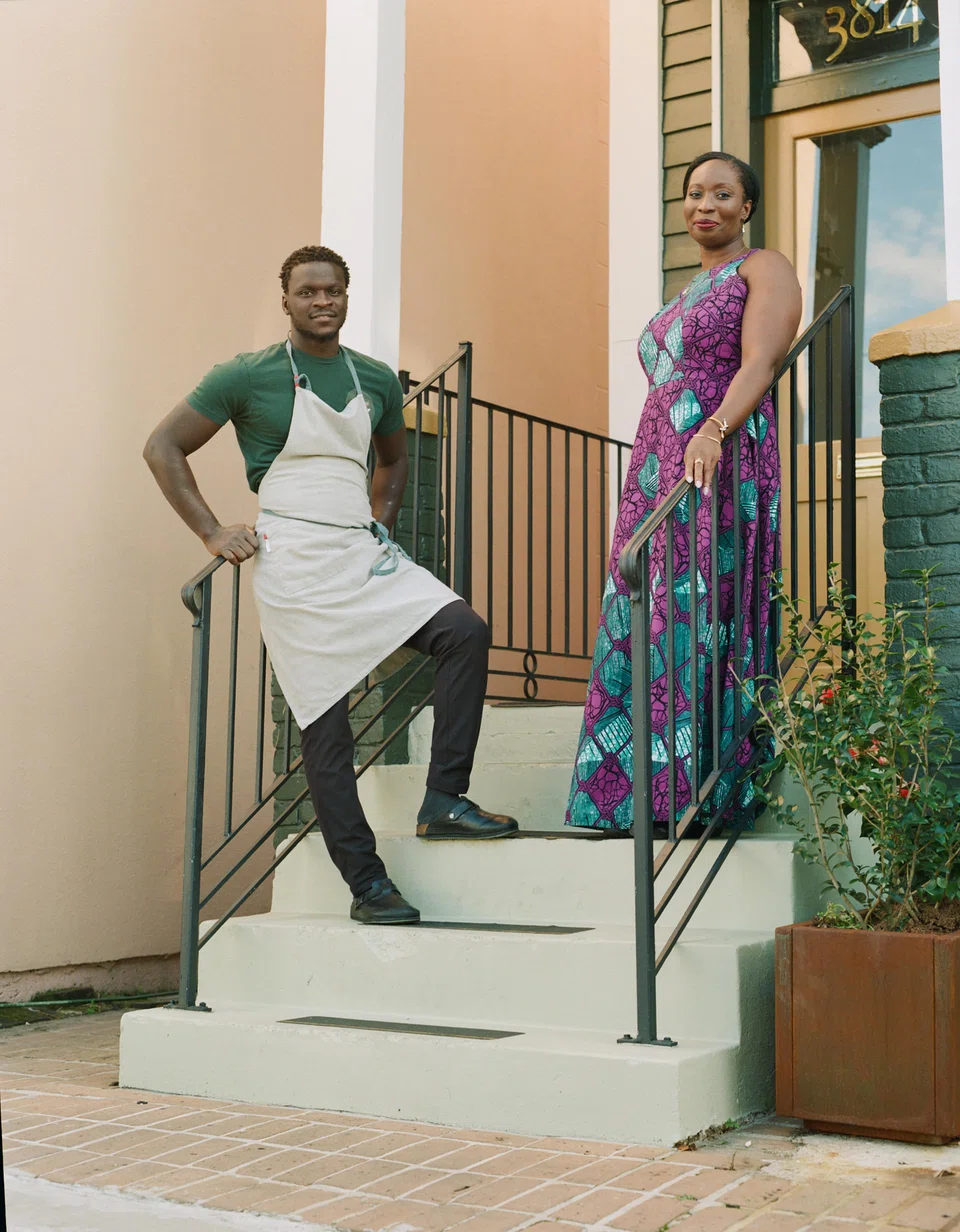
DeeperDive is a beta AI feature. Refer to full articles for the facts.
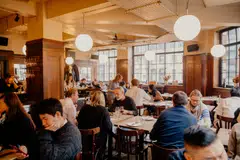
THE first dish served at Dakar Nola is called Last Meal. It’s a soup of black-eyed peas, crispy rice and Louisiana blue crab, with robust spicing that recalls New Orleans’ famous gumbos.
Chances are you’ll still be thinking about it days later. Last Meal is that delicious – and even more unsettling.
It is inspired by ndambe, a dish that Dakar Nola’s chef, Serigne Mbaye, ate while growing up in Senegal. But a version of that dish was also fed to enslaved West Africans just before they boarded ships to the United States.
Last Meal, like the peas fed to those in bondage, contains palm oil, which is high in saturated fat. Kidnapped Africans needed to be “fattened up” before being loaded onto ships, so slaveholders could “protect their investment”, Mbaye explained to about 30 guests in January. He shares this story at the start of every meal at Dakar Nola, which opened in November.
“I’ve seen people cry plenty of times when talking to me about the black-eyed pea soup,” he said during one of several interviews. “We need to let people know where the food came from. The story isn’t always going to be pleasant.”
It’s a particularly resonant story in a city whose image as a haven of merriment and great food, and as a living portal to history, has been cultivated for well over a century. New Orleans is also a majority Black city that was once the site of the largest slave market in the United States, where, by one estimate, more than 135,000 people were bought and sold.
Navigate Asia in
a new global order
Get the insights delivered to your inbox.
Startling racial inequality is not just a fact of the past in New Orleans. Today, the median income of Black households here is 36 per cent that of white households, and about half of all Black children live below the poverty line, said the Data Center, a Louisiana-focused research firm. These disparities are similarly reflected in the amount of acclaim and fortune that flows disproportionately to the city’s white chefs and restaurateurs.
Mbaye, 29, created Dakar Nola expressly to help diners understand the crucial role that enslaved labourers played in creating New Orleans’ famous cuisine, and connect that history to the city today.
He is part of a generation of Black chefs and scholars who say they want to dismantle the “whitewashed” stories on which the tourist economy of New Orleans rests – deeply abridged versions of the past that are at odds with the experiences of Black residents.

Their emphasis on the influence of Europeans, especially the French, is belied by the legacy of Black chefs in New Orleans kitchens, said Lolis Eric Elie, a New Orleans-born writer and food authority who has become a mentor to Mbaye.
“What does it do to your notions of white superiority, to know this thing that we thought was all French is not all French?” Elie said. “To know that the creators of this great culinary tradition were people of African descent?”
That legacy extends back to the era of slavery, said Zella Palmer, a food scholar and the director of the Ray Charles Program in African American Material Culture at Dillard University. She pointed out that most of the enslaved people first brought to Louisiana in the early 18th century came from West Africa, including Senegambia, and that Africans sold into slavery were commonly targeted by human traffickers for their specific skills.
“To think they didn’t have an influence on this culture is false,” Palmer said. “They had centuries of cultural memory.”
Afua Richardson, 42, put her dentistry career on hold to become Mbaye’s business partner at Dakar Nola. Raised in California by Ghanaian parents, she regarded New Orleans cuisine as inherently African from the start.
Richardson, known as Effie, remembers eating gumbo for the first time on a trip to New Orleans as a teenager. “I said, ‘This is okra stew’,” she recalled. “Then I had jambalaya and said, ‘This is jollof rice’.”
Dakar Nola is part of a wave of Black-owned African and Caribbean restaurants opening at a time of growing awareness that much of New Orleans culture can be traced to West African and Caribbean antecedents, from its music and architecture to its Carnival traditions and signature dishes such as gumbo, jambalaya and etouffee. They include Queen Trini Lisa, whose chef-owner, Lisa Nelson, is a native of Trinidad and Tobago; the Haitian restaurant Fritai, owned by chef Charly Pierre; and the Honduran restaurant Las Delicias de Honduras.
These restaurants are partaking in “a new and expanded telling” of the history of New Orleans cuisine, said Jessica B Harris, whose books have been instrumental in tracing the food’s African roots. (Mbaye will appear in the next season of High on the Hog, the Netflix series based on Harris’ book of the same name.)
“This is a widening of the lens,” Harris said.
Filling the local void of African restaurants is why Prince Lobo’s family opened Addis Nola in 2019. Last year, the Ethiopian restaurant moved to a new location in the Seventh Ward, along a stretch of Black-owned businesses that Lobo calls “a new Black Wall Street”.
“All of the history that was left out over the last hundreds of years – we’re having to fill that in now with our storytelling,” said Lobo, 25.
Since opening Compere Lapin in 2015, Nina Compton, who is from St Lucia, has won national acclaim for food that brings together New Orleans and Caribbean cuisine. Her cooking traces historical connections forged by proximity, trade and the arrival of Haitians who doubled the city’s population in the early 19th century.
Compton, 44, helped usher in a new era for Black leaders in the New Orleans food community. Since George Floyd was murdered in Minneapolis in 2020, she has noticed an uptick in customers responding to more than just her food.
“There was this wave of Black pride,” she said, “of people coming in saying, ‘I want to support you because you’re Black, and I want to see you thrive’.”
Compton, Mbaye and others follow a path paved most prominently by Leah Chase. Chase, who died in 2019, made her family’s Creole restaurant, Dooky Chase’s, into a monument of Black excellence during segregation. Throughout her career, she served as a reminder of the years in which Black chefs prepared the food in white-owned restaurants where they were prohibited from dining.
Chase filled a vacuum in a city historically resistant to shine a light on dark aspects of its past. (Unlike Montgomery and Birmingham, Alabama, and Jackson, Mississippi, New Orleans has no civil rights museum, although the National World War II Museum brought in over US$62 million in revenue in 2020.) That her family owned Dooky Chase’s allowed her to take credit for her accomplishments.
Her grandson, Edgar Chase IV, is the restaurant’s executive chef, and recently opened a new restaurant, Chapter IV. Zoe Chase, her great-granddaughter, is training to take over as the chef and face of Dooky Chase’s.
Leah Chase cooked for the Rev Martin Luther King Jr and charmed US presidents. But Milton Prudence’s experiences are more representative of Black chefs in New Orleans.
Prudence, 75, began his career at Galatoire’s, a white-owned counterpart to Dooky Chase’s. The restaurant, opened by Frenchman Jean Galatoire in 1905, is central to the city’s culinary reputation. Prudence worked there for 34 years – 14 of those as its head chef – churning out emblematic versions of signature dishes such as trout amandine, shrimp remoulade and turtle soup. He is not credited in either of the two Galatoire’s cookbooks.
Prudence recalled his job interview at Galatoire’s in 1968, when he was disturbed to find the words “white” and “coloured” still visible on the bathroom stalls. He told the owner, who agreed to have the signs removed. “That was one of the reasons I decided to work there,” he said.
Prudence said he is not bothered that he is not better known as a master of French-Creole cuisine. “I was in a situation where I had to raise five girls,” he said. “Owning my own restaurant was one of the things that I had to sacrifice.”
Mbaye came to New Orleans to work at another renowned pillar of New Orleans cuisine: Commander’s Palace, where Paul Prudhomme and Emeril Lagasse got their start. It is the restaurant most responsible for moving New Orleans fine dining past the tradition-bound cooking of Galatoire’s. But Mbaye’s path is different from that of chefs who came before him.
Born in Harlem in New York City and raised in Senegal, Mbaye first learned to cook from his Senegalese mother, Khady Kante, before graduating at the top of his class from culinary school in Vermont.
At Commander’s and its sister restaurant, Cafe Adelaide, he rose quickly through the ranks, while also proving himself an eager student outside the kitchen.
An early break came in 2017, when Howard Conyers, the local pitmaster, writer and Nasa scientist, let Mbaye cook at an event with Pierre Thiam, the Senegalese chef and cookbook author. The dinner proved that diners would show up for Senegalese cuisine.
Mbaye went on to cook at the Michelin-starred Atelier Crenn in San Francisco and L’Atelier de Joel Robouchon in New York. But a prolonged overseas tour in 2019, with stops in Europe and Africa, really focused his cooking and education.
On a visit to the island of Goree, a former slave market off the coast of Senegal, Mbaye learned about the dish that would become Last Meal.
“I connected with how my ancestors used to live, and connected it to New Orleans,” he said.
Because he and Richardson are first-time restaurateurs and not from New Orleans originally, they have been intentional about building community.
“We need to know the history of the Black people in the food spaces here and what their experience has been,” Richardson said. “This is their city.”
Martha Wiggins, the chief culinary officer at Cafe Reconcile, a non-profit restaurant that helps teenagers and young adults develop job skills, said Mbaye “has a talent for befriending people who are like-minded”. Meeting him, she said, helped her realise that “I needed to find community with other Black and brown folks in this business”.
Meals at Dakar Nola begin with ataya tea and the tableside washing of hands, as they did in the chef’s home growing up. The story about the slaves is presented not as a provocation, but as a sombre fact among many other, less grave ones – about the local shrimp draped in tamarind sauce, or how jollof rice is a precursor to jambalaya.
By framing his cooking in historical, often memoiristic, terms, Mbaye joins a cadre of Black chefs across the country – among them Mashama Bailey in Savannah, Georgia, Gregory Gourdet in Portland, Oregon, and Kwame Onwuachi in New York – rethinking popular narratives about the origins of American cuisine.
“I just want people to recognise our food the same way they do other food,” Mbaye said. “I want people to leave feeling inspired.”
Zella Palmer, the food scholar, has little doubt that many of Dakar’s diners are shedding tears of joy.
“Serigne is 29 years old, and he just opened this amazing Senegalese restaurant on Magazine Street,” she said. “The ancestors are dancing.” NYTIMES
Decoding Asia newsletter: your guide to navigating Asia in a new global order. Sign up here to get Decoding Asia newsletter. Delivered to your inbox. Free.
Share with us your feedback on BT's products and services
TRENDING NOW

Vietnam formalises new state leadership, redefining ‘four pillars’ power balance
‘Largest Singapore commercial S-Reit proxy’: analysts say buy CICT shares after Paragon acquisition

From 1MDB to ‘corporate mafia’: Is Malaysia facing a new governance test?
Why where you park your joint venture matters: Lessons from a US$689 million shareholder dispute

