

Can craft beer companies rescue malt liquor’s reputation?
 Add BT as a preferred source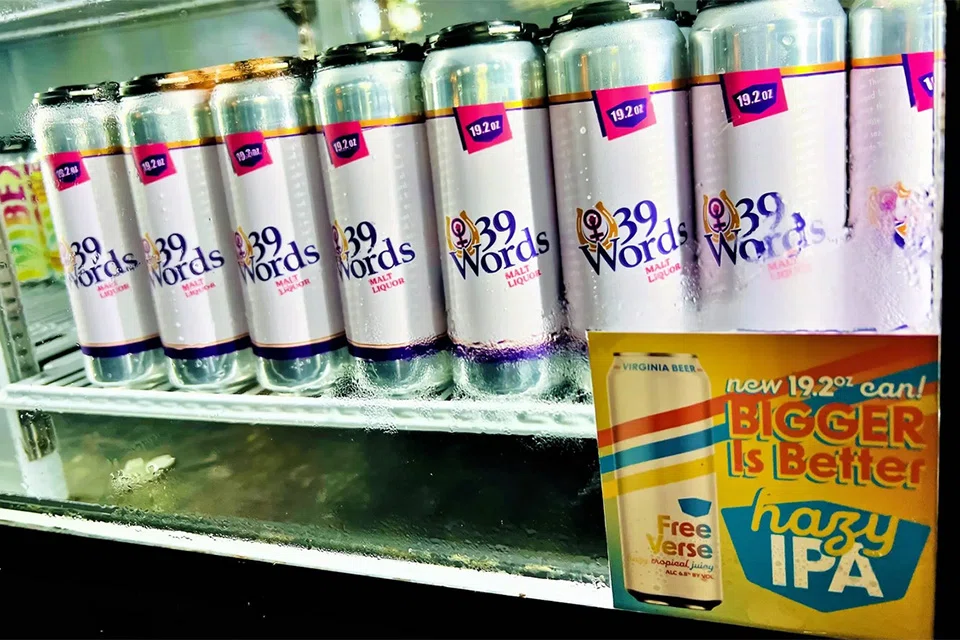
DeeperDive is a beta AI feature. Refer to full articles for the facts.
AS the brewmaster at Virginia Beer in Williamsburg, Virginia, Jonathan Newman has created about 400 different beers, from smoked porters to a sour ale that mimics lemon meringue pie. This summer, he tackled his toughest brewing challenge yet: malt liquor, a budget beer that’s normally mass-produced and known for its alcohol content, not its memorable taste.
“I couldn’t call an old brewing friend and be like, how do you make a malt liquor?” Newman said. Instead, he conducted research with rigour befitting a college undergrad, drinking several malt liquors and finding himself “shocked at how much I liked Colt 45.”
But how to make a version that would impress craft-beer fans? Malt liquor, a lager, with an alcohol level from 5.5 per cent to 8 per cent or higher, can be boozy and bland. (A standard lager has about 5 per cent alcohol by volume, or ABV.) So Newman developed a brew that was crisp and aromatic, with a 7.5 per cent ABV.
In August, when the brewery released its malt liquor, 39 Words, Newman joined a growing number of craft brewers determined to mend the style’s reputation by creating malt liquors worth contemplating, not chugging.
“Malt liquor is seen as a cheap gas-station beer,” said Newman, whose brewery charges US$16 for a four-pack of 19.2-ounce cans. “But it couldn’t be further from the truth.”
Malt liquor is a loaded subject in American brewing. Long maligned as a quick and inexpensive means of getting drunk that was marketed heavily to Black and Hispanic men, it occupies an “intersection with race, class and poverty,” said Rich Bloomfield, a founder and CEO of the Black-owned Funkytown Brewery in Chicago.
Navigate Asia in
a new global order
Get the insights delivered to your inbox.
Bloomfield drank malt liquor in college, but it “seemed like it was something that you’re supposed to grow out of,” he said, adding that Funkytown, which focuses on more crowd-pleasing beers such as pale ale and red ale, probably wouldn’t brew a malt liquor these days as it tries to build its audience.
Historically, “malt liquor was a cul-de-sac” that didn’t lead consumers to better versions, said J Nikol Jackson-Beckham, the founder and principal of Crafted for All, which promotes equity and inclusion in craft beverage industries.
Unit sales of malt liquor have fallen about 26 per cent over the past three years in the United States, according to market research firm NielsenIQ.
In 2021, Molson Coors Beverage, one of the top producers of malt liquors, retired several malt liquor brands, including Steel Reserve 211, Olde English HG 8000 and Magnum.
But if malt liquor is a “sleepy” category, it’s also ripe for innovation, said Lester Jones, the chief economist for the National Beer Wholesalers Association. “Can you make a craft malt liquor? Of course you can.”
In August, Barrel Brothers Brewing, in Windsor, California, released Admiral Malt Liquor, a 9 per cent ABV beer made with heritage grain. A month earlier, Samuel Adams and Narragansett Beer introduced Good Luck Malt Liquor, a toasty 7 per cent ABV lager brewed with local grains and amber maize from Valley Malt in Hadley, Massachusetts. Off Color Brewing in Chicago and Wayfinder Beer in Portland, Oregon, have also begun making malt liquors.
These beers appeal to people who may not like aggressively hopped or bitter IPAs, said Lee Lord, the head brewer at Narragansett. “Malt liquor thumbs its nose at taking craft beer too seriously.”
Some see the new efforts to elevate malt liquor as akin to the way businesses or consumers take unfashionable products – such as Converse sneakers, or Pabst Blue Ribbon beer – and make them hip again.
Chris Maestro is the founder of the vinyl-focused craft beer bar BierWax, which has locations in Brooklyn and Queens. As a Black man in the beer business, he said the lingering lowbrow image of malt liquor made him hesitant to serve one of the new brews. He said he would want to be sure that its production wasn’t an attempt by predominantly white-owned craft breweries to appropriate “a cultural benchmark for an era in hip-hop.”
Christopher Gandsy has a different outlook on malt liquor. The owner of DaleView Brewery, in the predominantly Black and Caribbean neighbourhood of Flatbush, Brooklyn, he first became aware of malt liquor at family gatherings. At his brewery, Gandsy pays homage to his past with James Earl, labelled a “craft malt likka,” and named for an uncle who enjoys malt liquor.
When it was released in September, DaleView served the 9 per cent ABV beer, made with New York state malt, in wineglasses. By bringing malt liquor into the craft beer world, he hopes to draw new fans into the fold. “I can give customers a different experience and change the misnomer of malt liquor,” said Gandsy, who also aged James Earl in rye whisky barrel for a Christmastime release.
Altering cultural perceptions takes time and effort, but malt liquor would not be the alcohol industry’s first flavourful rehabilitation. Craft-cocktail bars have embraced the vodka they used to shun, and American wine is no longer associated with jug and fortified wines.
Gandsy of DaleView is bullish on malt liquor. James Earl became one of the brewery’s bestsellers, and Gandsy plans to make more. “It could become our flagship beer,” he said. “You never know.” NYTIMES
Decoding Asia newsletter: your guide to navigating Asia in a new global order. Sign up here to get Decoding Asia newsletter. Delivered to your inbox. Free.
Share with us your feedback on BT's products and services
TRENDING NOW

‘Boring’ is the new black: The stars are aligning for a Singapore stock market revival

Near sell-out launches in March boost developer sales to 1,300 units after four slow months

China pips the US if Asean is forced to choose, but analysts warn against reading it like a sports result

Genting Singapore’s Lim Kok Thay receives S$7.5 million pay package for FY2025

