

Filipino food goes upscale at Hayop
Test your vinegar tolerance at the new Amoy Street eatery which stays true to tradition, but can take getting used to
NEW RESTAURANT
Hayop 104 Amoy Street Singapore 069924 Tel: 8028-9012 Open for dinner only Tuesday to Saturday, 5 pm to 9.30 pm
WE’VE learnt a new word. Hayop. We love it. It means “beast”, and apparently you can use the same word to tell someone they’re amazing, or insult them. We’ll save that for the next bad attitude server we want to shade but are afraid they will spit in our food.
But not at the new Filipino restaurant Hayop where of course, the good definition applies. It’s the eatery you never thought you needed – a crash course in a cuisine you’ve always been curious about, delivered in earnest with no pretensions, in an upscale setting that welcomes newbies, not alienates them.
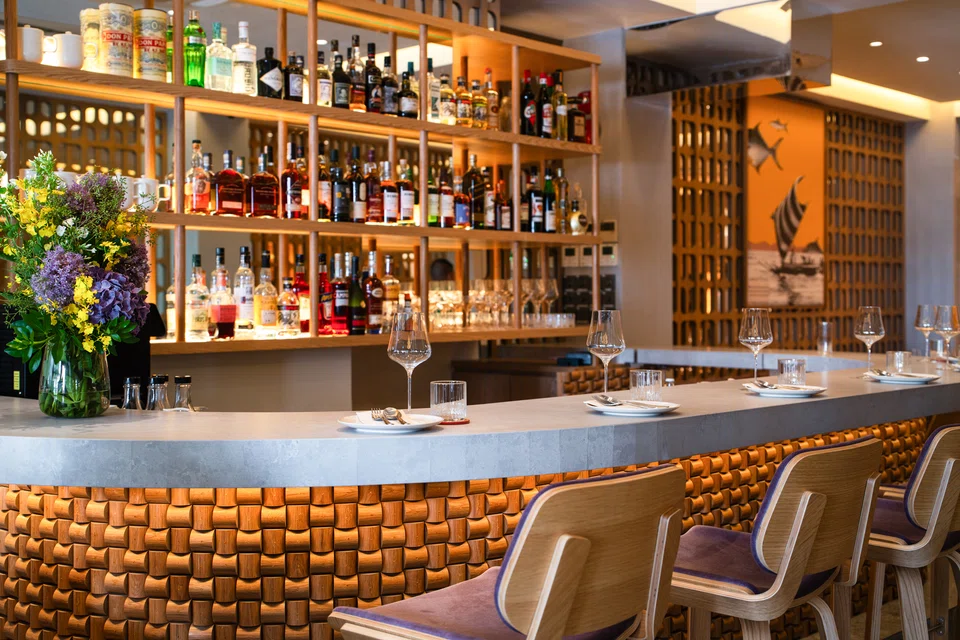
They can also spot you a mile away, especially when the Amoy Street restaurant is more than half-filled with locally-based Filipinos, eating with the same gusto as a Singaporean devouring bak chor mee after a few weeks in Europe. There’s a clubby air to it, but once you get past some slightly raised eyebrows at the crowded bar, the signature hospitality kicks in as the super-friendly if harried servers settle you down at your tiny table and feed you.
As a direct import from the Philippines, Hayop – which sounds like a cross between a hiccup and a burp – is a stickler for authenticity. Which can be a double-edged sword, as we soon find out. Thank goodness for our server Karen, who’s long relocated here with her Singaporean husband, and knows exactly how to handle taste buds unexposed to the strong vinegar and salty flavours she and her countrymen grew up with.
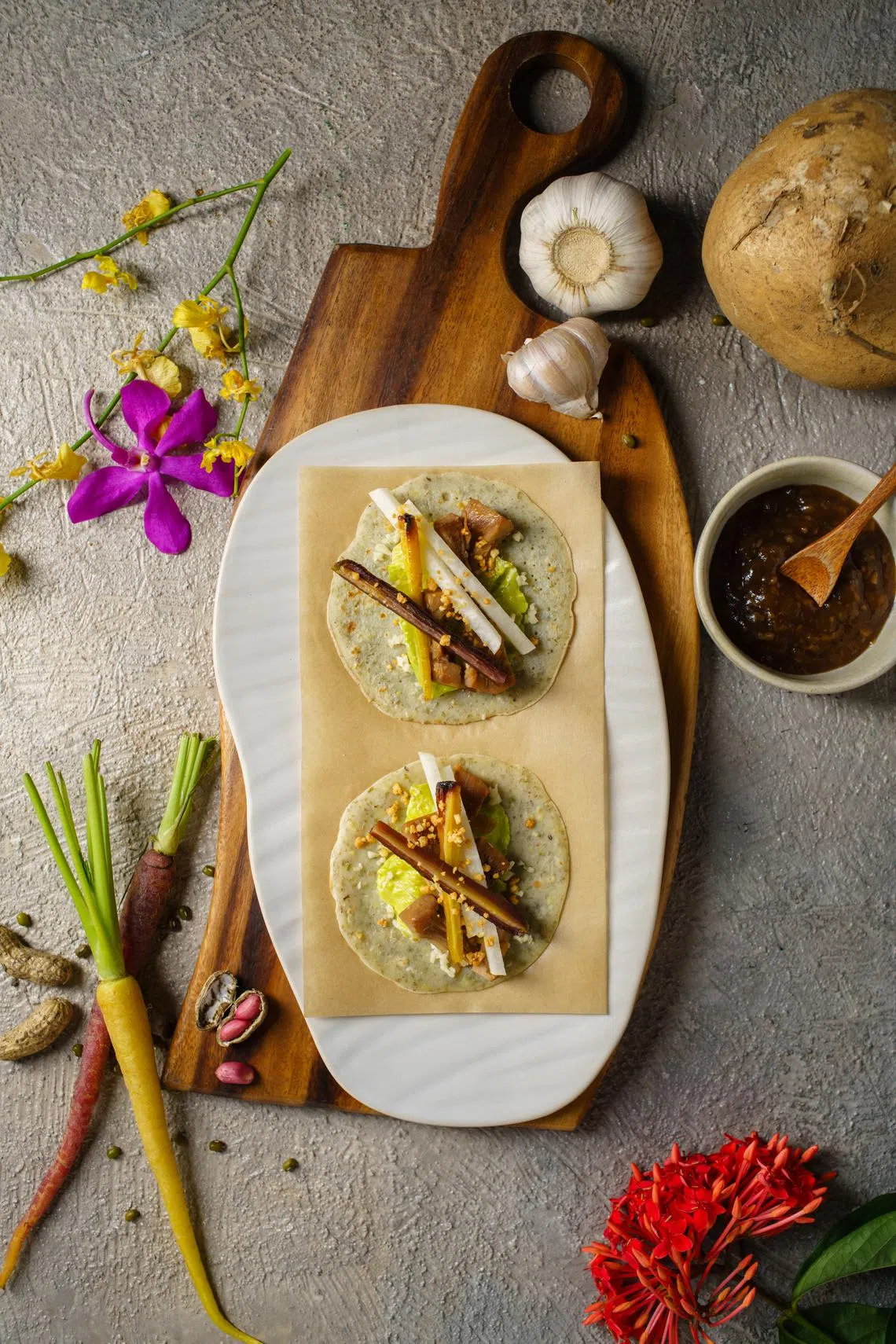
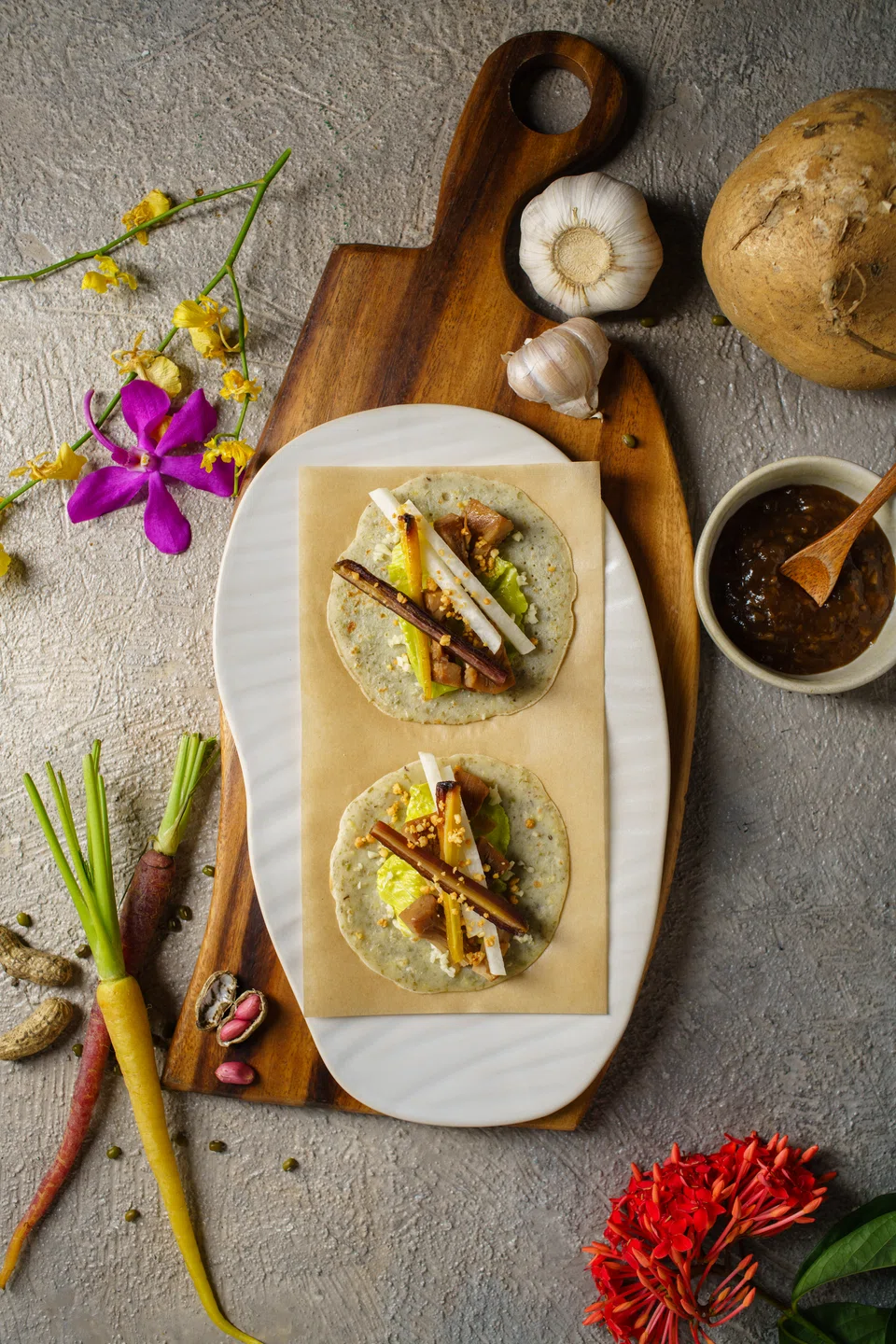
She starts us off with very safe, very palatable lumpia (S$14), the crepe-like offspring of a taco and Peking duck wrapper topped with spears of roasted baby carrots, braised jackfruit and pickled jicama. Drizzle some piping hot garlic soya sauce, fold and eat. It’s savoury and almost meaty, with just a touch of acidity to balance – we can imagine popiah parties with this.
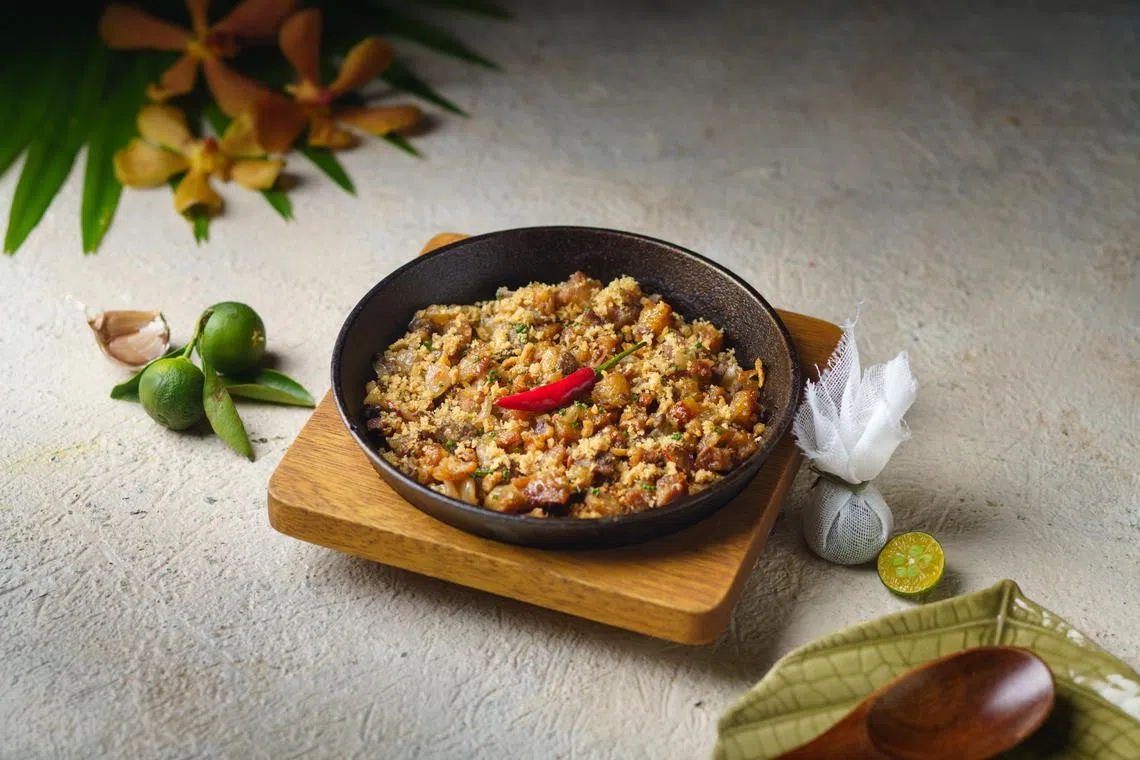
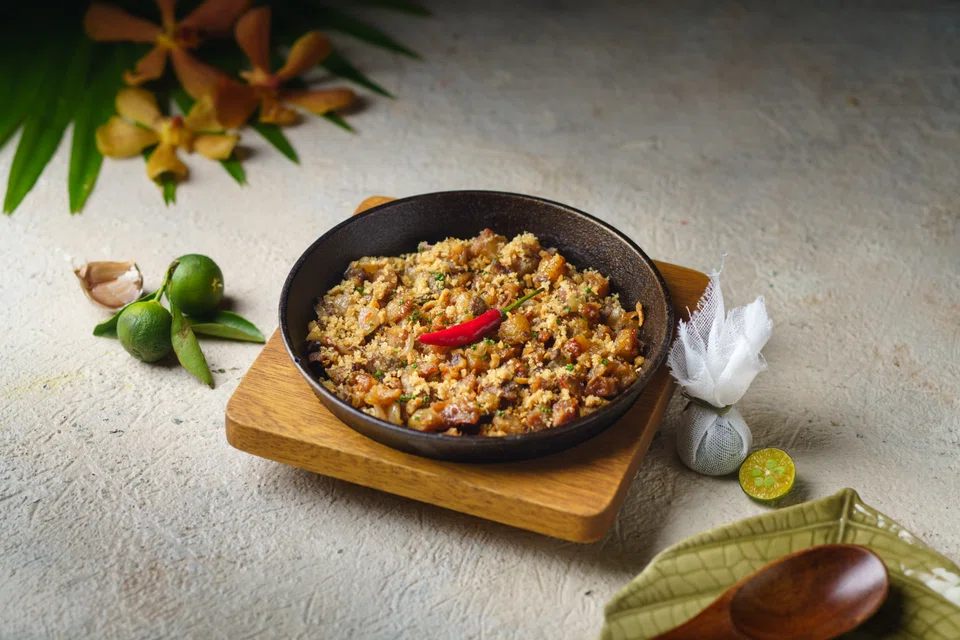
Crispy sisig (S$22) is a snack that keeps on giving with each crunchy bite of deep-fried diced pork jowl and neck tossed in a secret sauce and served sizzling on a hot plate. It is topped with a whole chilli to bite on if you want heat, or a calamansi wedge to squeeze over. Don’t be a hero and stick to the lime – it really gives the rich crackly nuggets a lift.
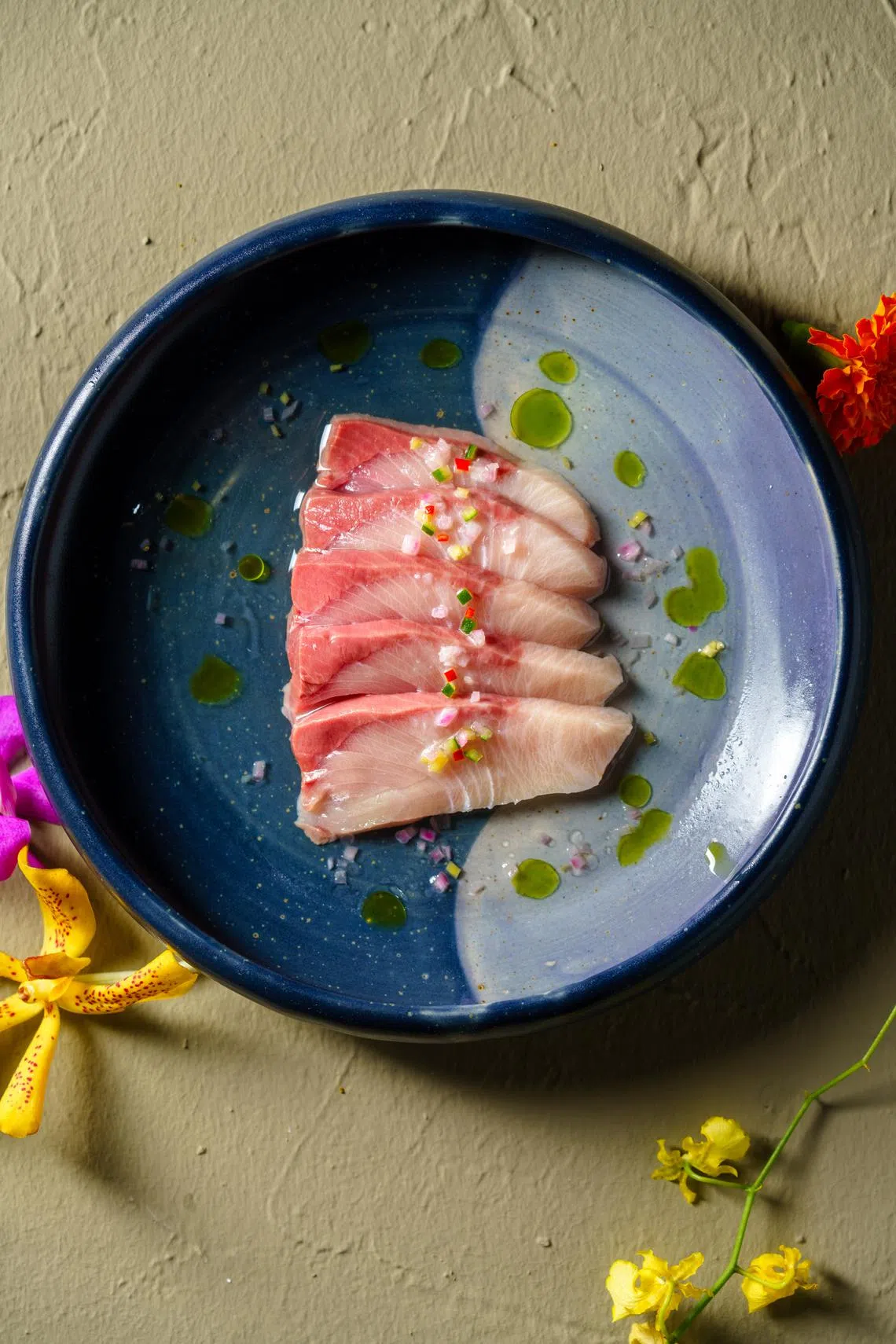
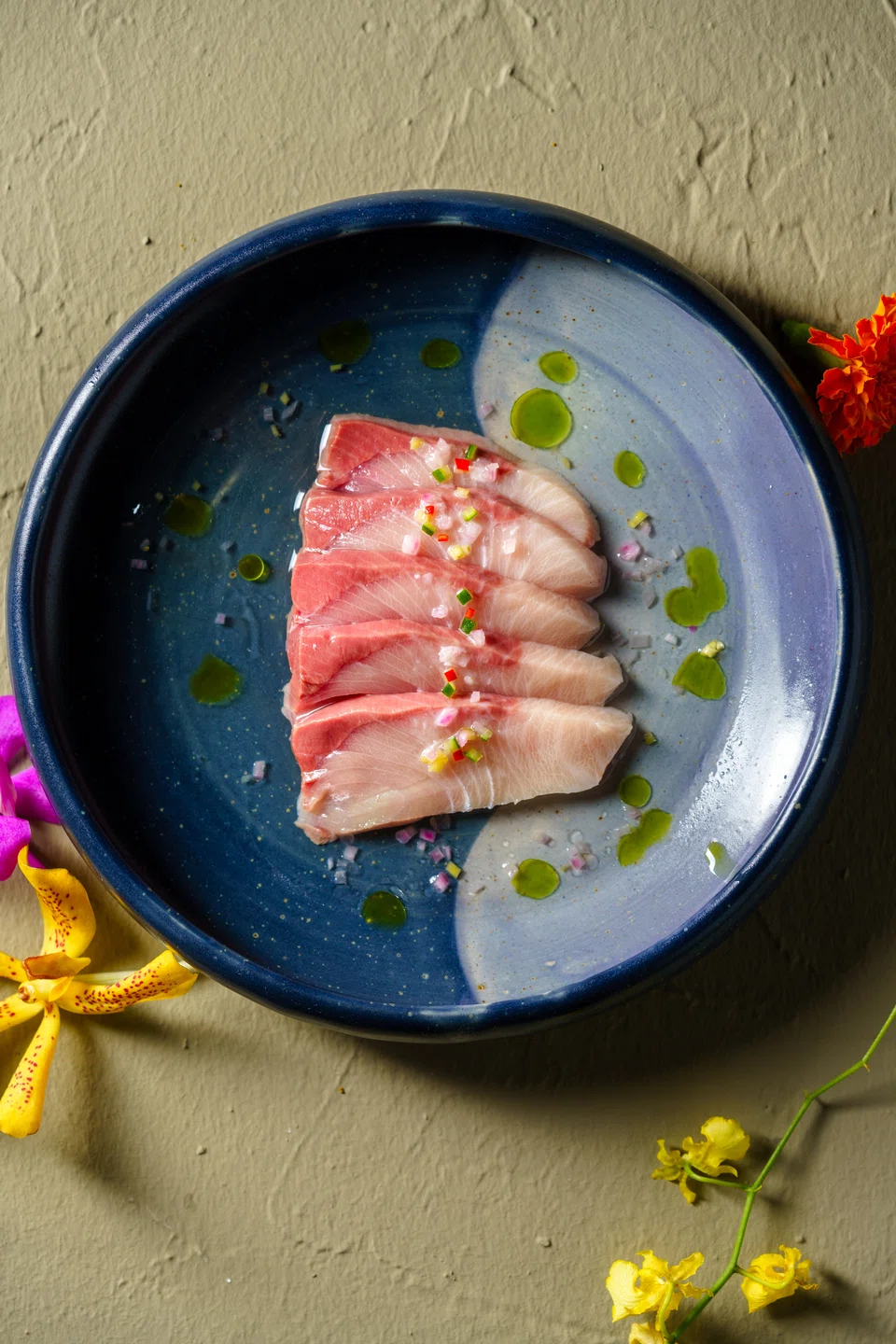
It’s kinilaw (S$28) or ceviche of hamachi – which Karen didn’t suggest but we had a FOMO moment – that throws us into the deep end without warning. Thick-sliced sashimi-grade hamachi is plump and fresh, cured in a vinegary sap that must have been squeezed from a really spiteful coconut. It has a name, sukang pinakurat, and it gives off a lovely but deceptive fragrance of coconut. It’s so acidic that the hairs on the back of our neck want to jump off like lemmings just to escape. So much so that we don’t notice the subtle nuances of chilli, garlic and herbs in this thousand-year-old classic dish.

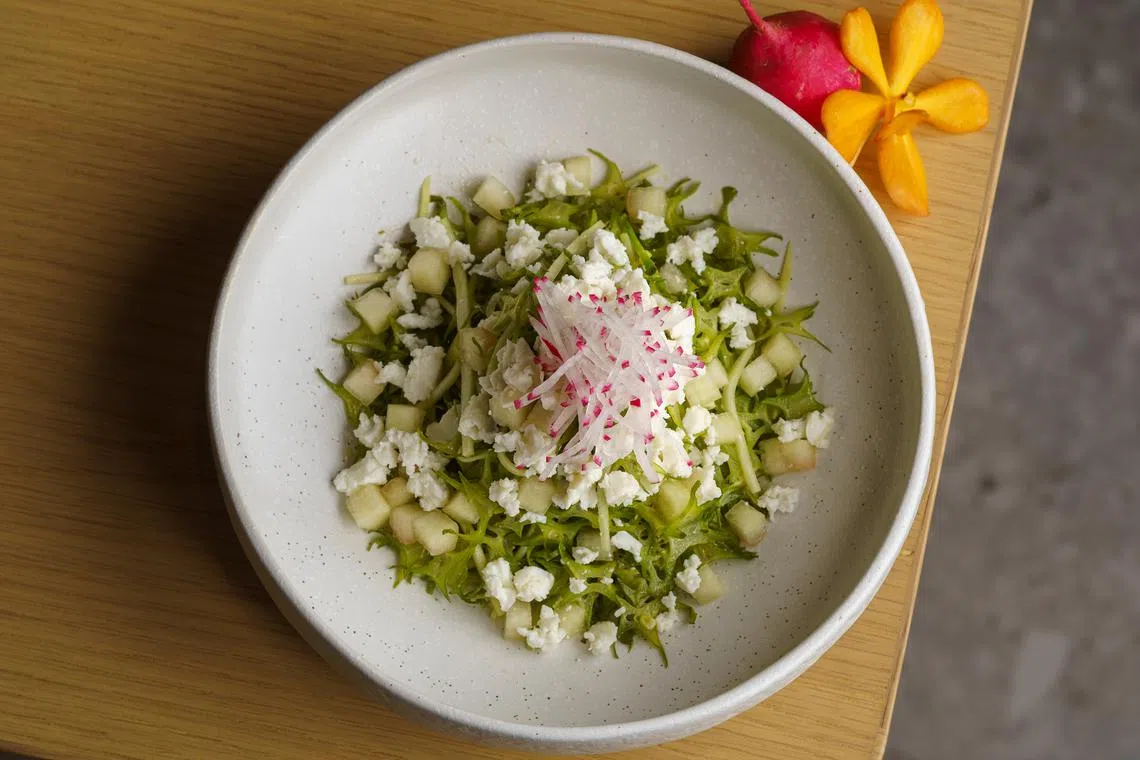
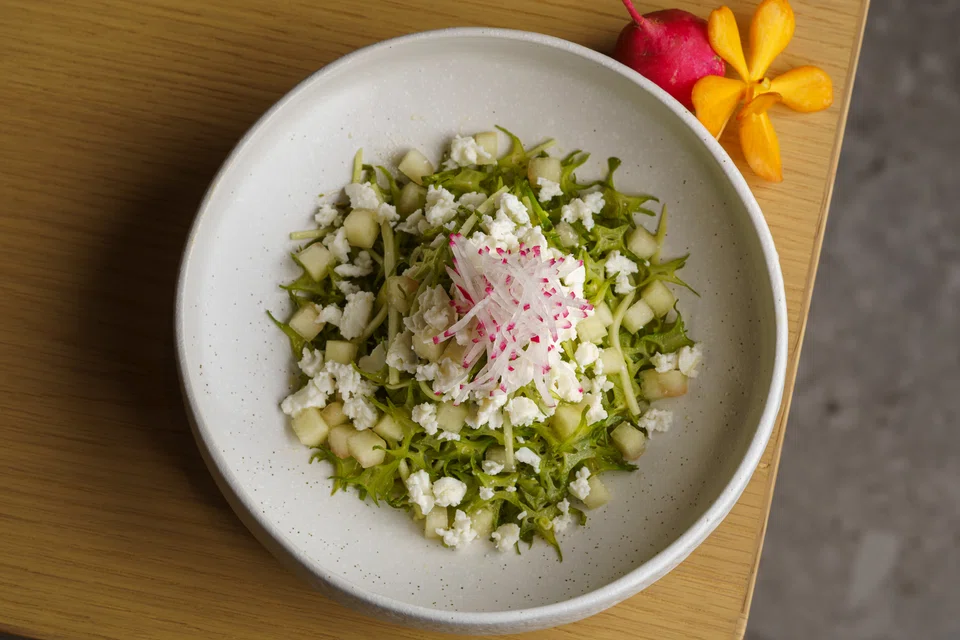
But, if your palate spans a wider range than ours, you’ll rave about it. Along with ensaladang hayop (S$14), a spunky salad of sliced wing beans, green mango, pickled watermelon rind, radish and crumbled salted egg white that’s a riot of crunch and texture, tossed in a too-bracing vinaigrette that keeps us from going all in.
Despite us wanting to beg for a tourist version, we wouldn’t want them to compromise, either, not when their purpose is to be true to their roots. All we can ask for is to perhaps take a cue from Thai restaurants, which offer a chilli barometer for different levels of spiciness. What’s the Filipino word for “nit noy”?
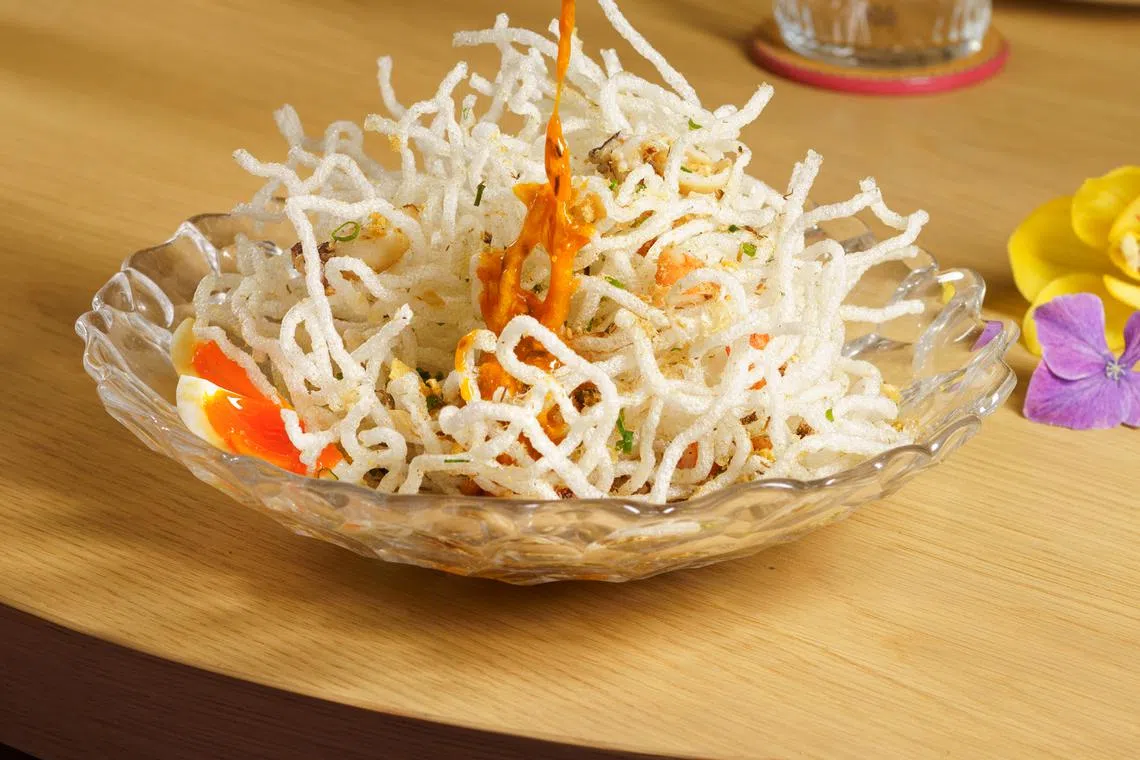
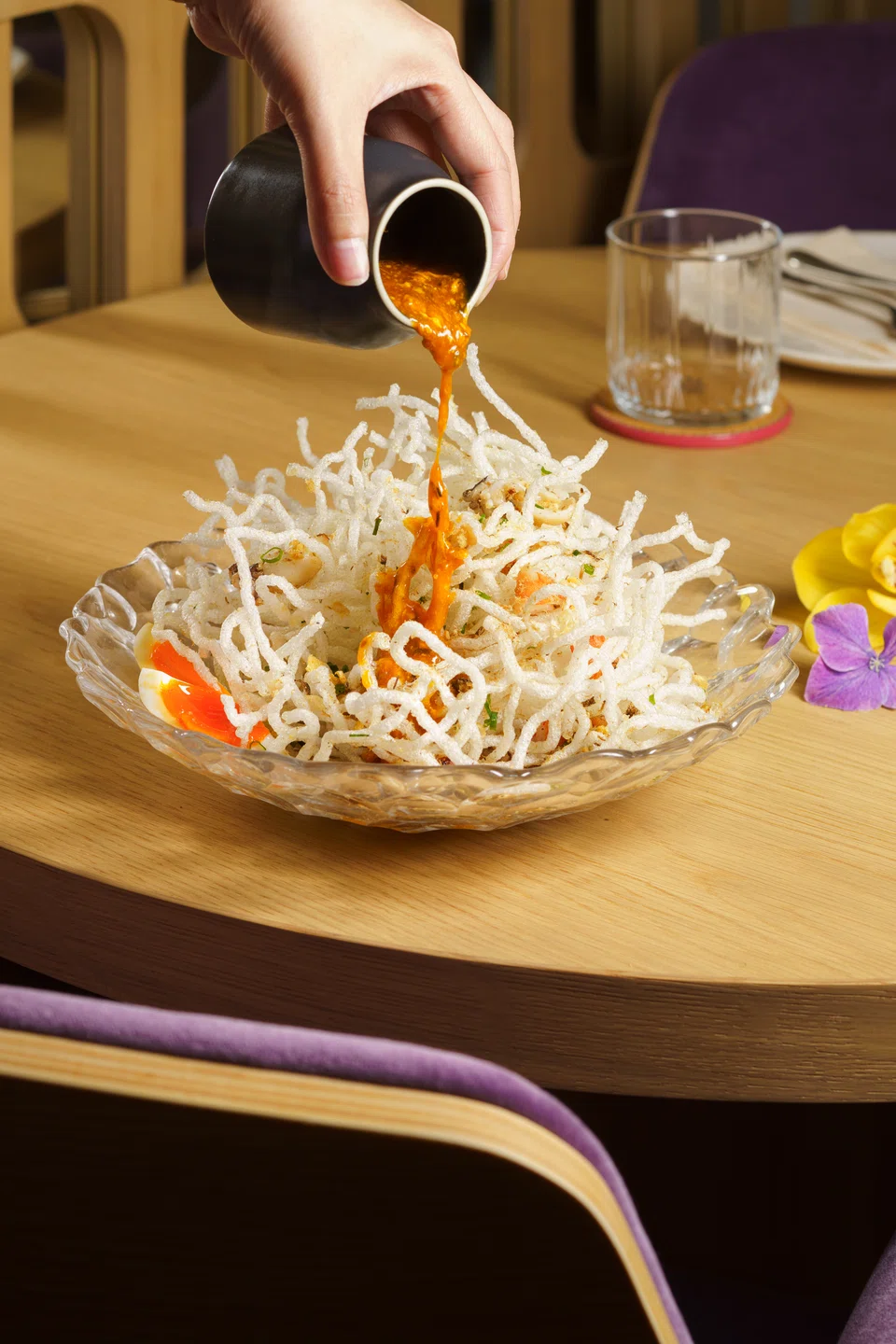
There are dishes we wouldn’t want to change one bit. Crispy palabok (S$26) is a tower of deep-fried crispy glass noodles that quickly collapses under an intense seafood bisque, proudly made of six dozen shrimp heads and enhanced with annatto seeds. The heady depth of prawn noodle-like broth with the consistency of mee rebus is the clincher, along with the other little bits of shrimp, cuttlefish, odds and ends mingling with the softened slippery noodles.
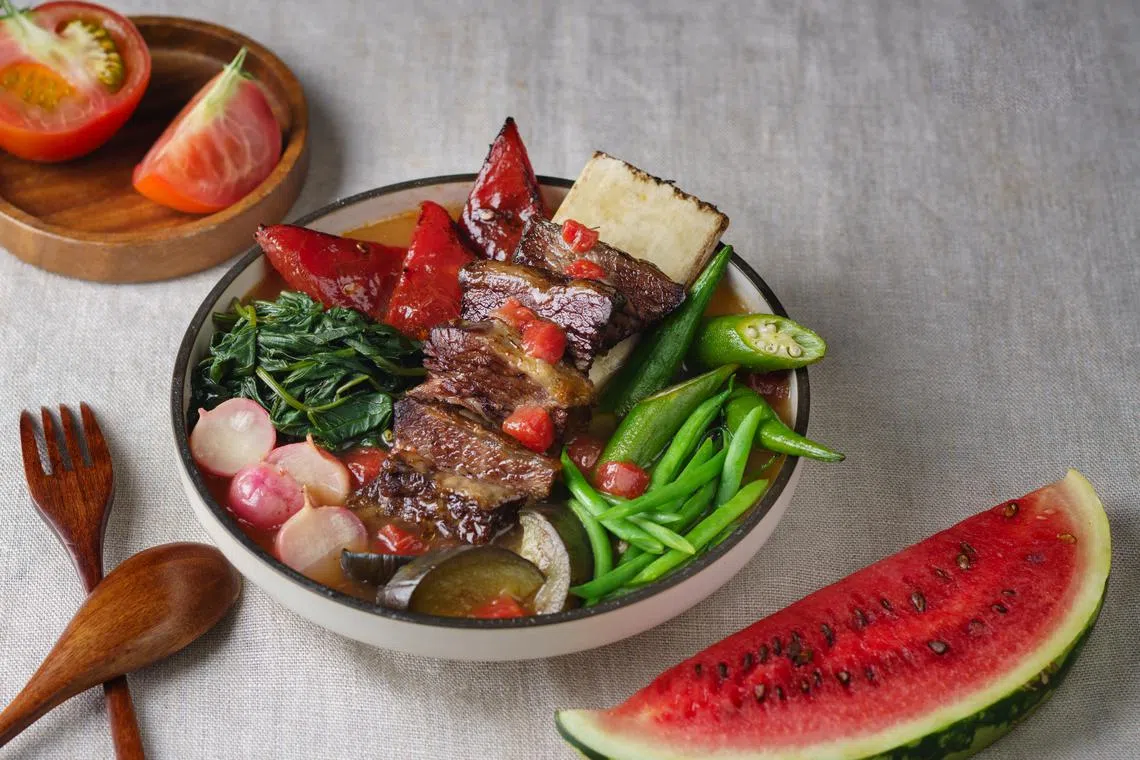
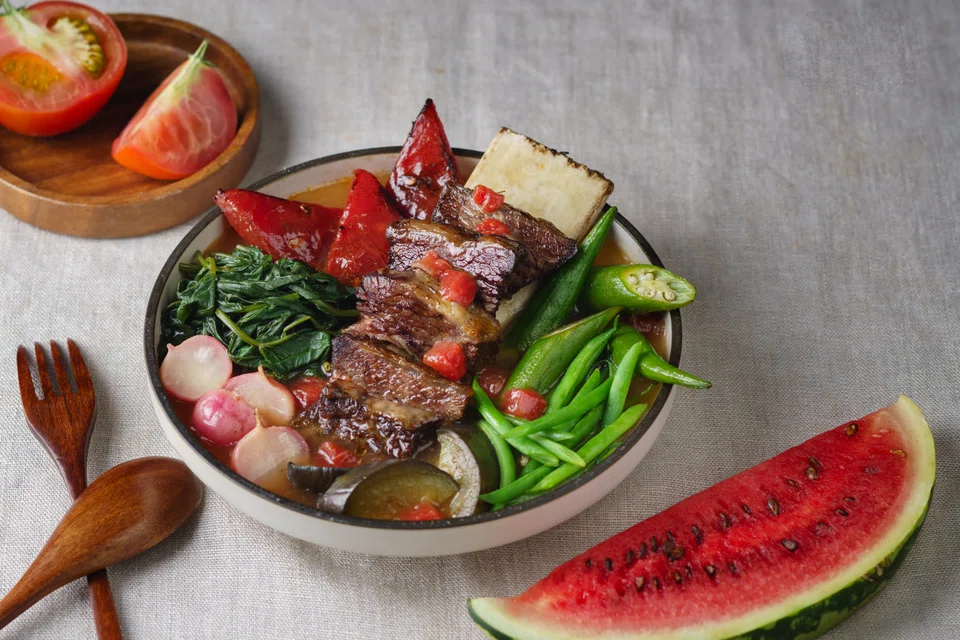
Another keeper is wagyu and watermelon sinigang (S$56) which is actually a riff on the original sour soup by one of the owner’s mothers, and bless her for that. Fork-tender wagyu short rib is sliced on the bone in a tomato-tamarind broth, with kang kong, okra and eggplant lightly simmered with it. But the star is charred watermelon – thick, juicy and sweet – the perfect foil to the mellow but still tart broth.
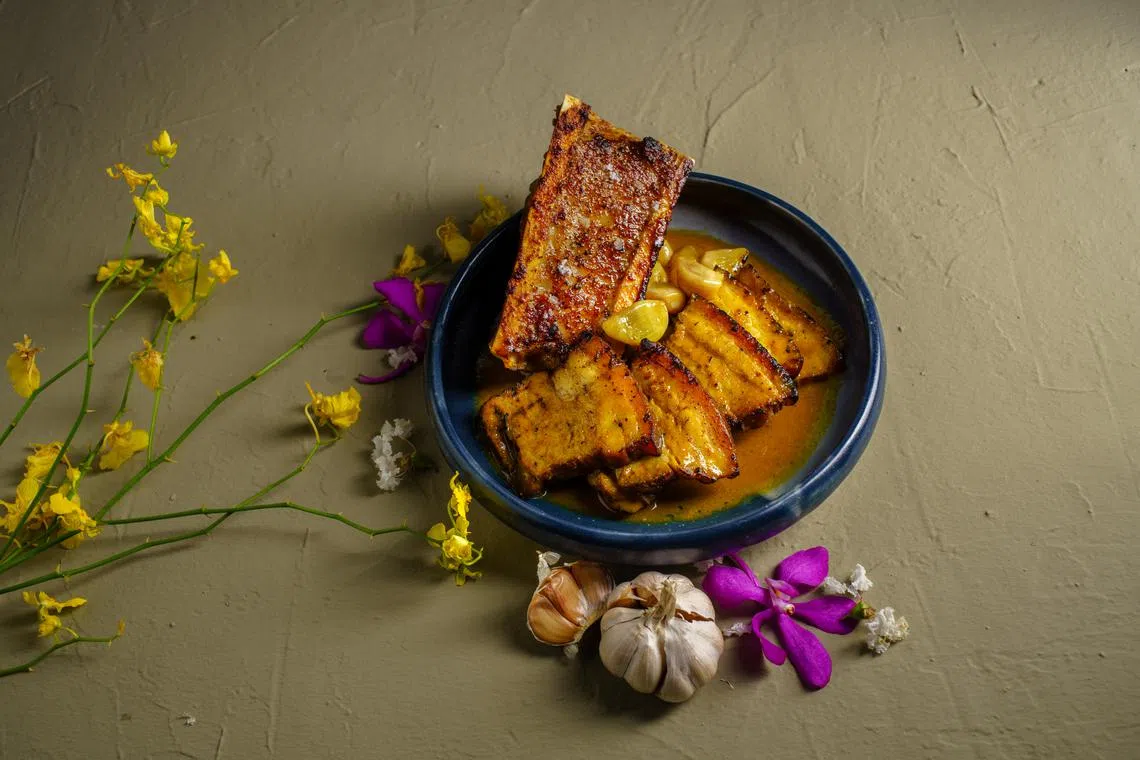
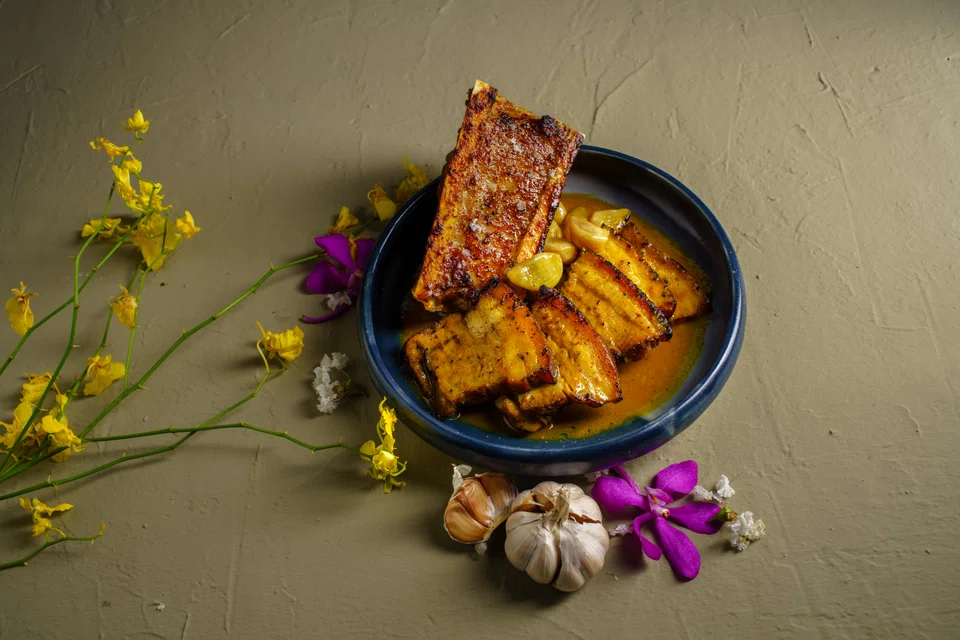
There is no antidote to the adobong dilaw (S$36) which is luxed up with Duroc pork belly, bone marrow and whole garlic cloves. It is true blue adobo with its unapologetic turmeric and coconut vinegar-infused gravy.
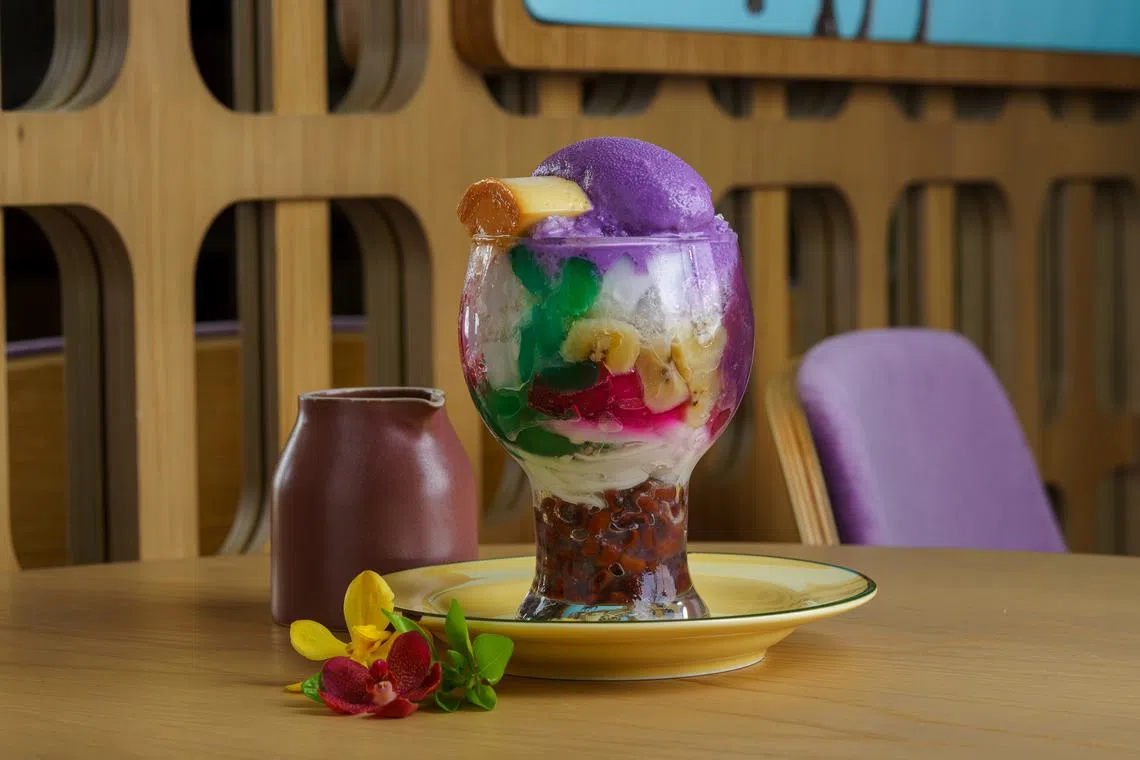
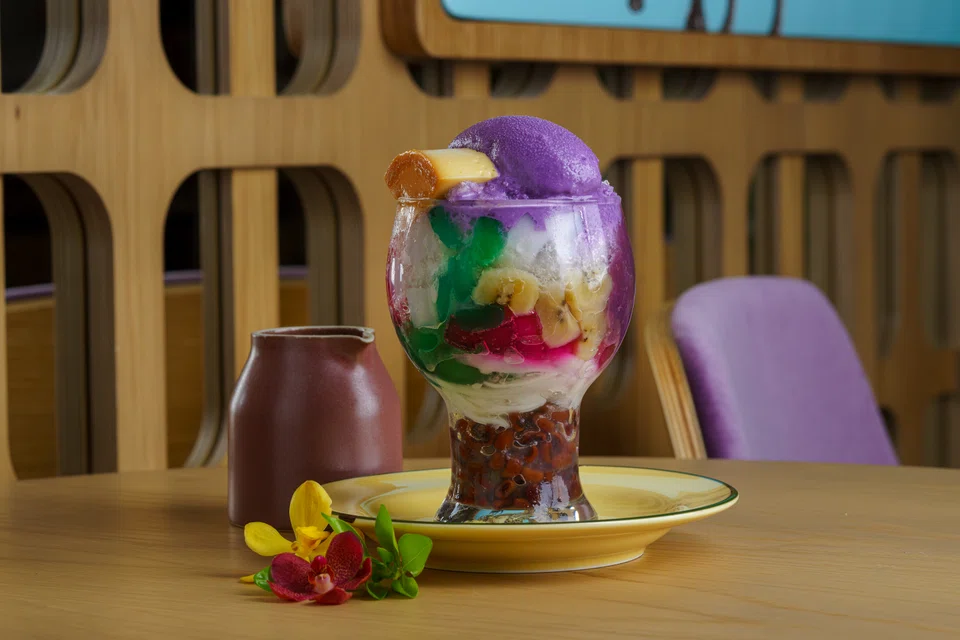
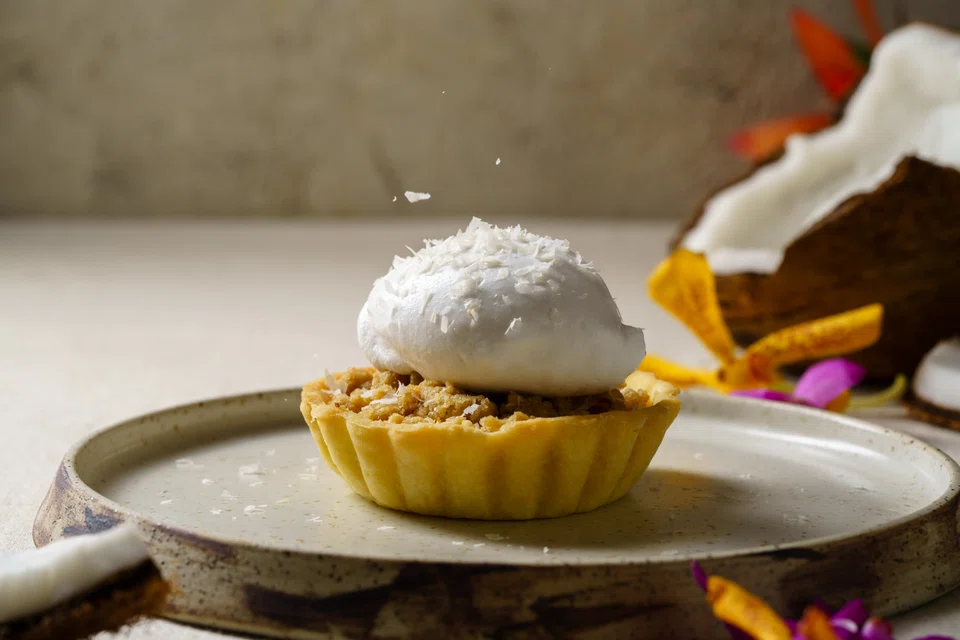
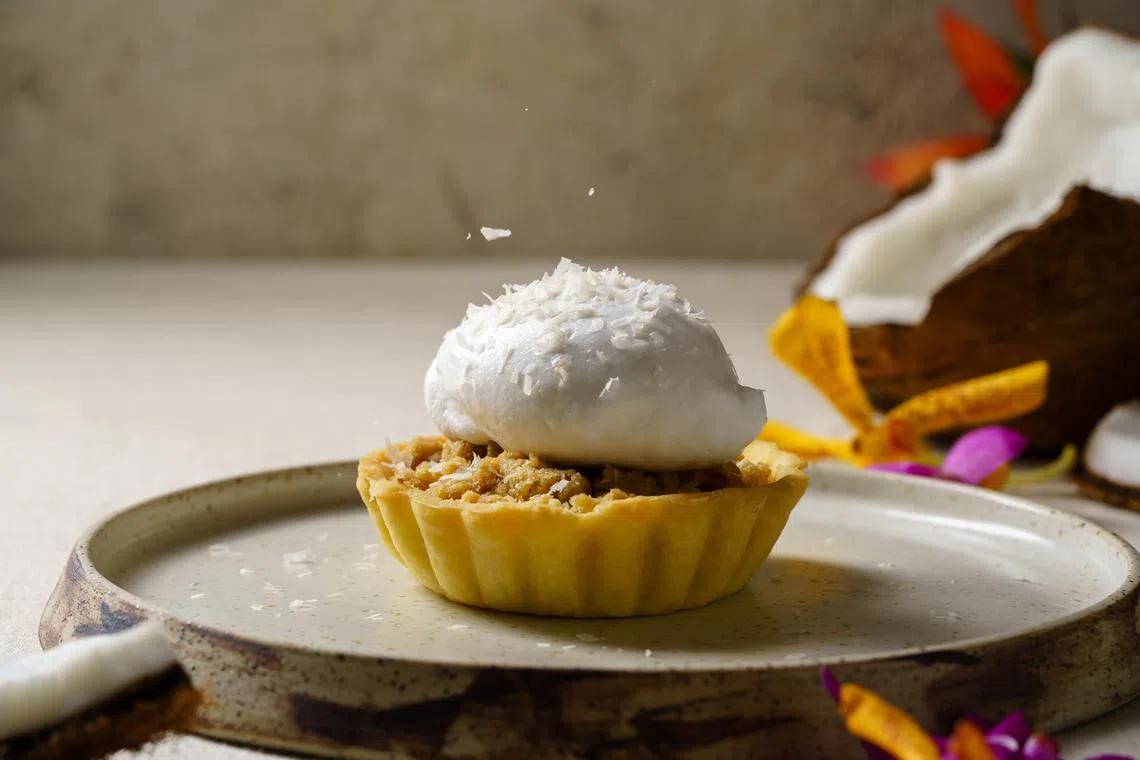
Apart from much-needed halo halo/ice kacang (S$18) which needs a good drowning with evaporated milk, buko pie (S$14) leaves a stronger mark with its crisp, cookie-like shell filled with tender coconut flesh mixed in salty coconut cream, topped with coconut ice cream and parmesan shavings that surprisingly pull everything together.
Hayop ticks all the right boxes for friendly pricing, first-mover advantage and good intentions. The flavour profile is too extreme for our tastes, but who are we to challenge centuries-old traditions? Stay authentic, and the rest will follow. And as they say – hayop.
Rating: 7
Decoding Asia newsletter: your guide to navigating Asia in a new global order. Sign up here to get Decoding Asia newsletter. Delivered to your inbox. Free.
Copyright SPH Media. All rights reserved.
TRENDING NOW

AEM tumbles 11% along with Singapore and regional chip peers following Alphabet’s record plunge

If Europe goes to war, the fallout will be felt in East Asia

Singapore Q3 retrenchments rise to 4,800; resident unemployment edges up to 3%: flash data

FTI Consulting, WongPartnership among seven members on specialist panel for haze probes

