

Innovating Italian traditions at Somma
Mirko Febbrile redefines Puglian cuisine with his genre-bending restaurant at New Bahru
New Restaurant
Somma #04-02 New Bahru 46 Kim Yam Road Singapore 239351 Tel:9756 1590 Open for dinner only Tues to Sat: 6 pm to 10:30 pm
EVER get this weird feeling when you step into someplace completely new that you’ve somehow been there before?
We get that a bit in our dreams. The one where we’re at a Noma pop-up, Rene is about to sprinkle powdered mugwort on a surprised live geoduck, then Takuya Kimura screams in subtitled Japanese: “Stop! He’s a guest on my Grande Maison Tokyo sequel!” – to which we ask innocently, “Rene or the geoduck?” Oh, never mind.
The thing is we’re at Somma, currently one of the most talked-about places where people can’t decide if it’s the most original dining concept to hit Singapore, or an elaborate collection of Noma/Inua/Frantzen/Central tropes filtered through the wild imagination of Italian chef-owner Mirko Febbrile.
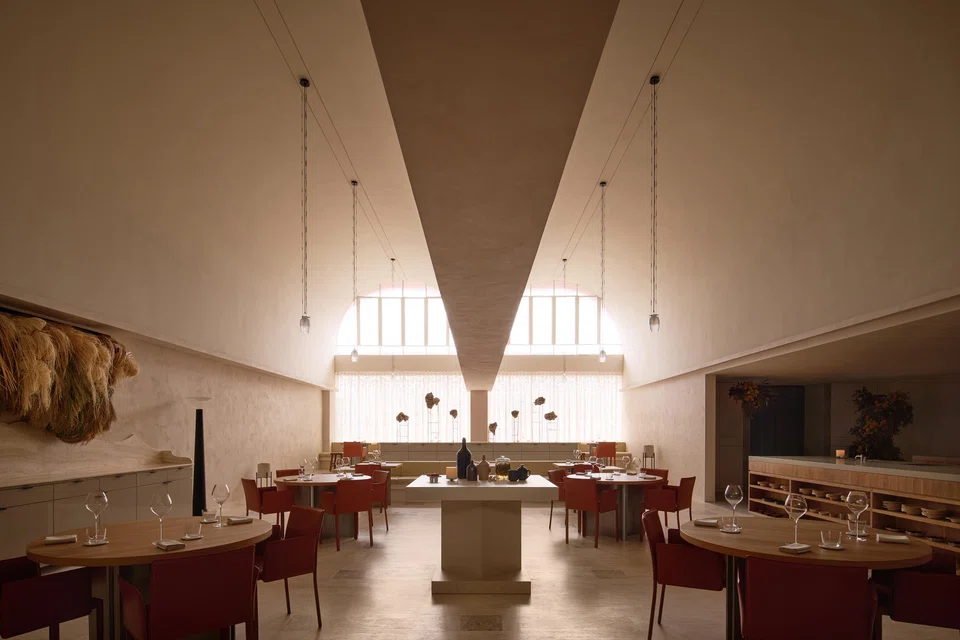
Whatever you decide, you can’t deny that he knows how to make an impression, and no expense has been spared in making one at hotspot New Bahru, where Somma has turned a former school library into a voluminous, arched-ceilinged, Scandi-inspired chapel of new-age cooking.
The fine-dining aspect is just part of this whole Somma world he’s created. There’s a pasta bar downstairs with the more-recognisable Puglian fare he’s known for. There’s an R&D lab, a cooking school, staff lounge, some really cool doodads here and there – it’s a playground any other chef in town would lust after. It’s also a dream project that has been four years in the making, and the result is a side of Febbrile that his fan base may not have seen before.
It may be disconcerting for those more familiar with his food at Braci and Fico, but to us, Febbrile’s genre-bending showmanship and single mindedness make for a refreshing jolt to the placid local fine-dining scene.
Of course, it’s not without its over-the-top, Noma-esque touches – from the dramatic entrance to the utilitarian spa therapist / prison garb worn by the staff.
Pull open the heavy wooden door and you’re greeted by the entire team – chefs included – in a loud chorus, not unlike youngsters in a patriarchal society gathered to pay respects to their elders. But no ang pows, sorry.
Once you’re in, some smiley servers offer you a couple of bites from the open kitchen first. From a table overflowing with pumpkins, you get your own wee one, filled with a crystal clear, pure broth that is clean and sweet. Then, a crisp tart made of leftover pumpkin seeds and oil, stuffed with sweet, sticky raw shrimp on a base of strong saffron cream. Nice.
Think Nordic execution with its cool vegetal and acidic accents, but with the warmth of Febbrile’s own Italian narrative, pulled from ingredients, seasons and food traditions of his native Puglia, right down to olive oil from his family’s farm.
Just don’t expect anything distinctively Italian, and go with the flow. Add an engaging crew who shine for their knowledge, personableness and a joint sense of mission, and yes, Michelin-star aspirations are written all over.
Dinner is set at S$258 for six courses, and the add-ons can be pricey – S$38 for uni, S$44 for pig’s snout and S$45 for a cheese experience. But if you have the stomach, they add to the experience. Especially the S$88 juice pairing, which fleshes out the intent and intensity of each dish much more than the wine, or nothing at all.
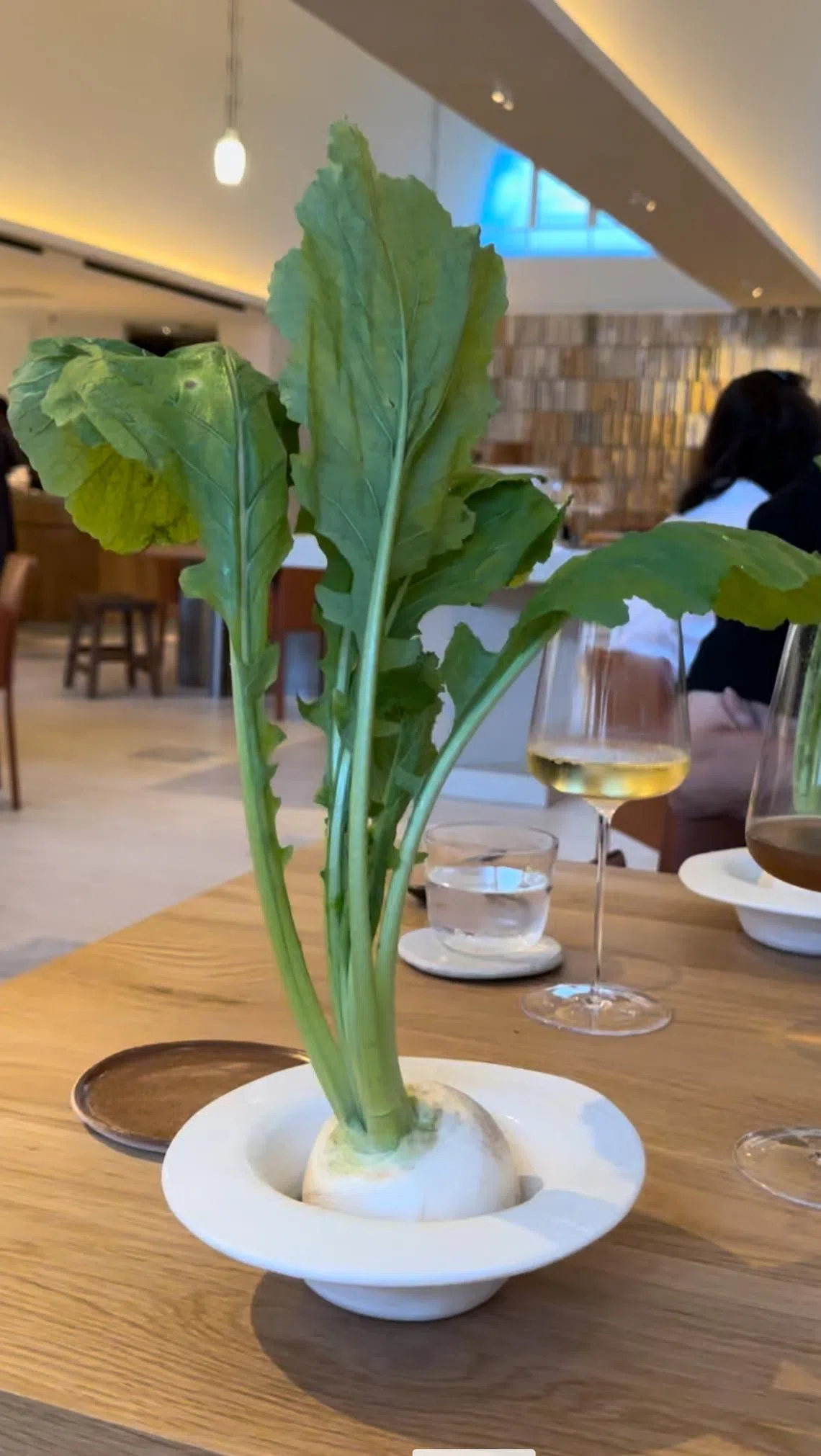
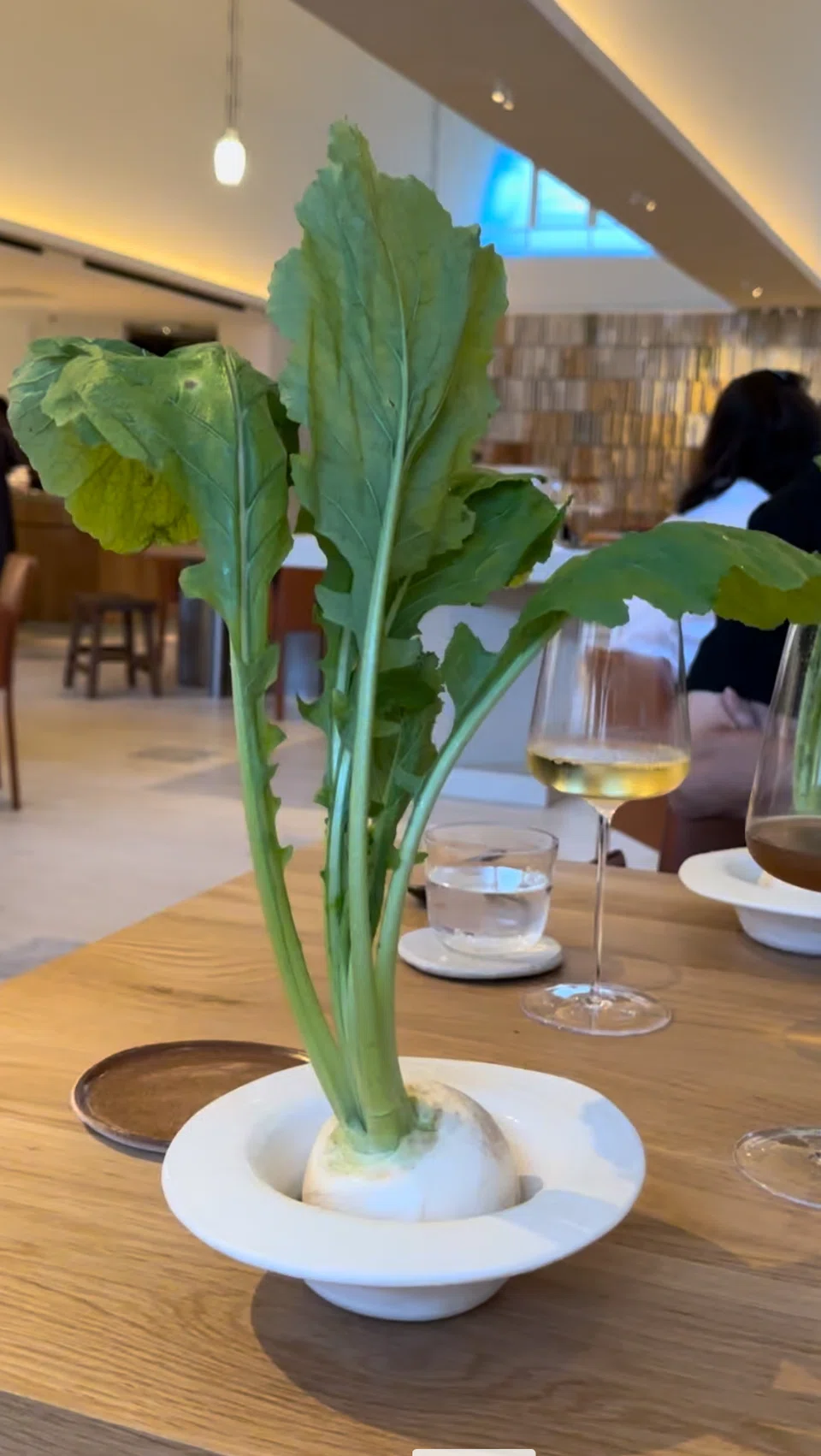
Take a cold vegetable “soup” of celery, green apples, turnip and cumin seeds – with its pretentious decoration of a real radish topped with large leafy greens. Frankly, this would only excite two passing rabbits on a special night out, but once paired with an apple and chicory juice, the flavours pop and the spice becomes more pronounced.
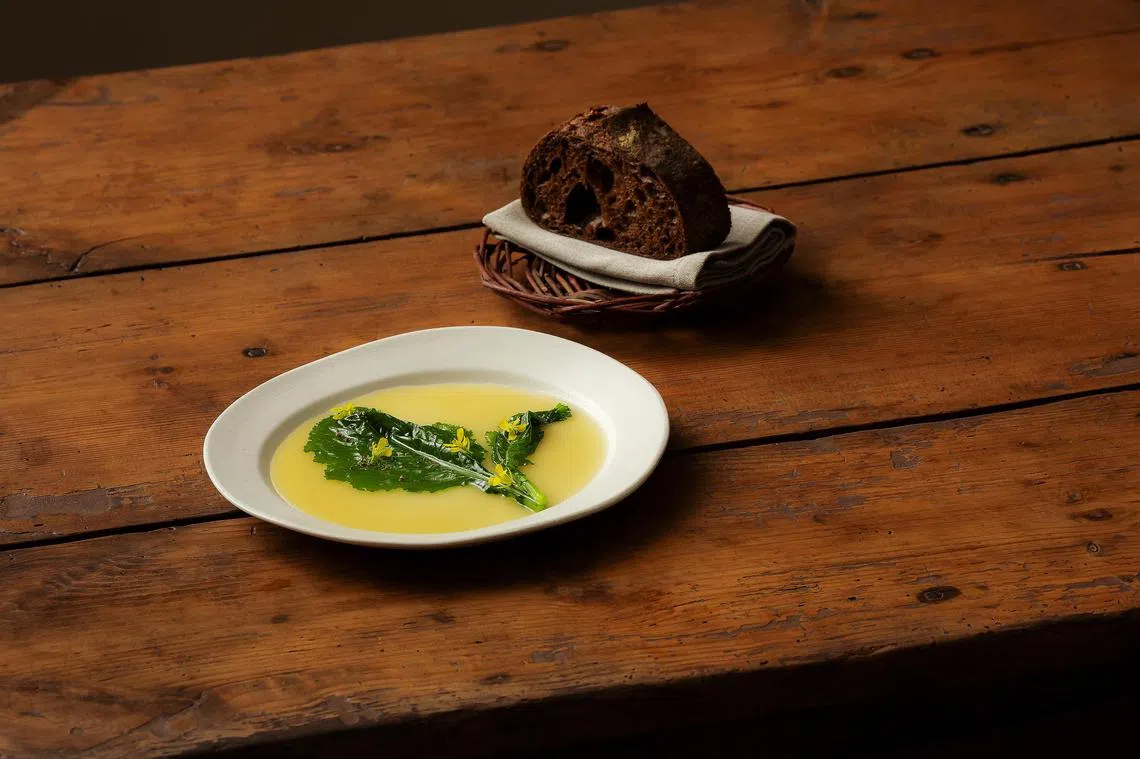
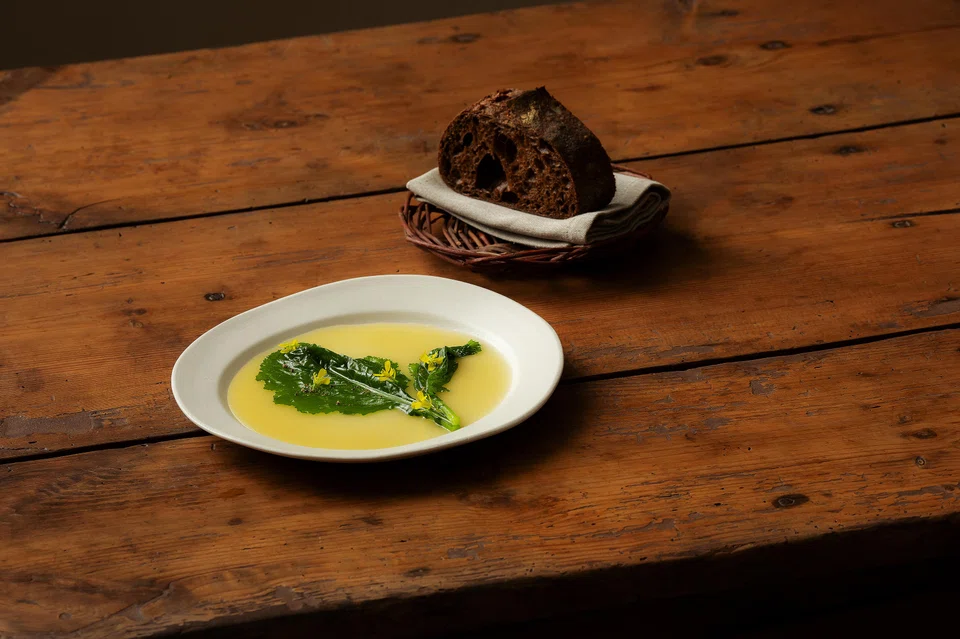
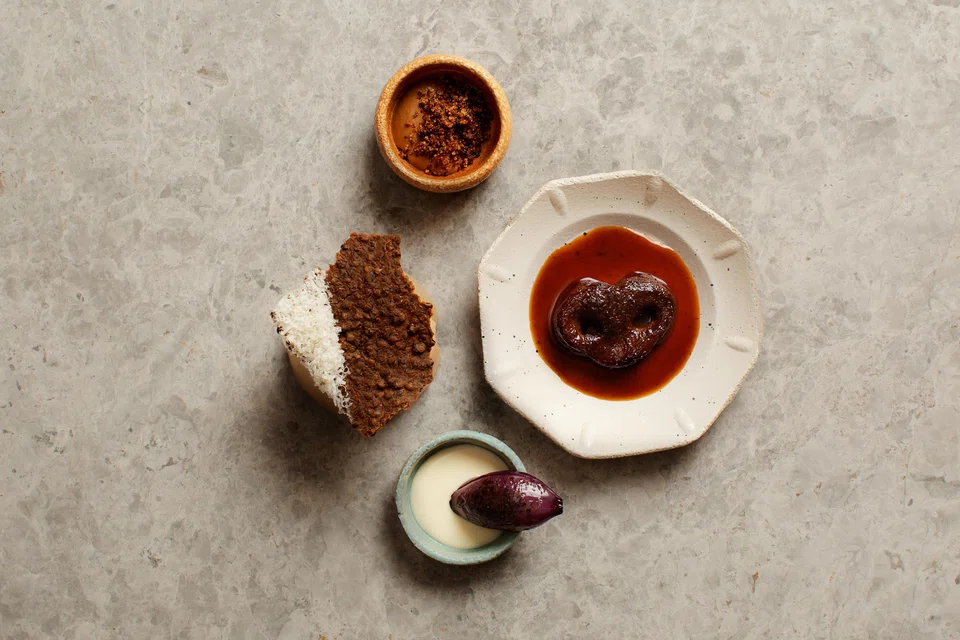
Every dish has some link to the motherland. A roasted wheat and carob sourdough with a super-crusty exterior and fluffy fragrant interior is excellent swiped through an olive oil and miso emulsion. It is a tribute to the tradition of using burnt wheat to make flour.
Meanwhile, Japanese eels are fried crisp in semolina flour and dipped into an Italian-style mole of chickpeas and coffee instead of chocolate. It’s an intriguing creamy, earthy, textured dip that’s an uncanny match for the fatty eel.
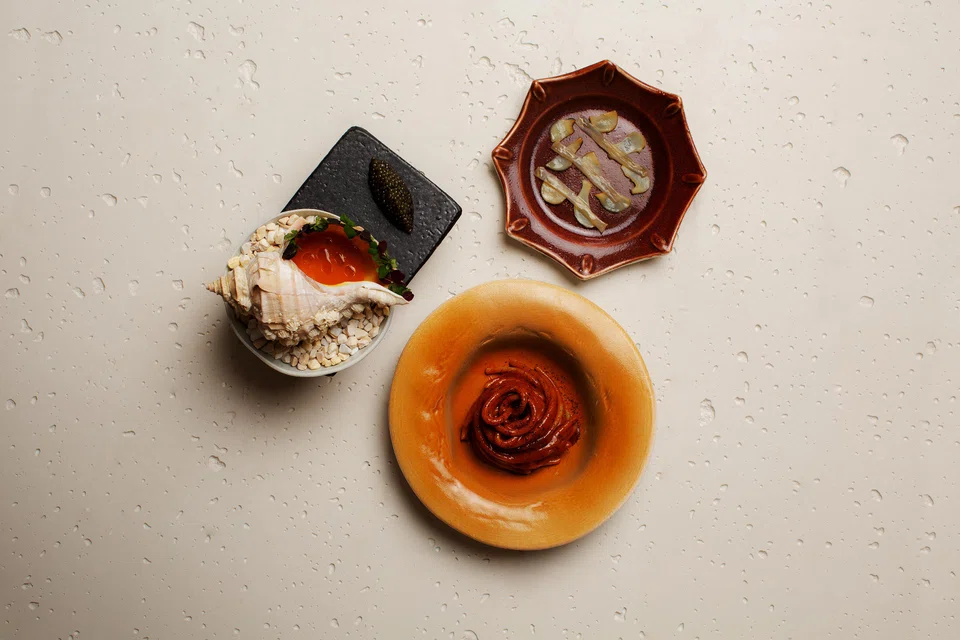
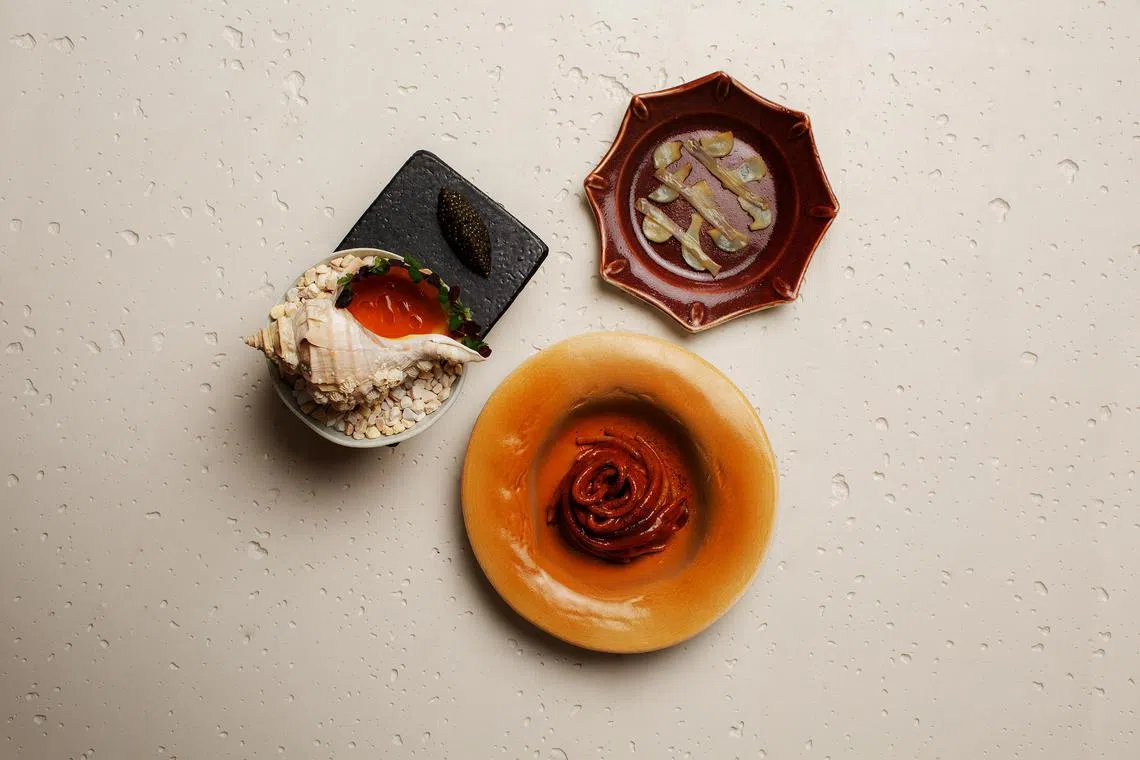
Inspired by Mediterranean sea urchin and almonds, Febbrile serves Japanese uni atop a chawanmushi-like, savoury almond milk pudding glazed with a bitter lemon sauce for a complete change of tone. And one of the best dishes is a chewy pasta of ancient wheat, in a sauce of reduced carrot juice and prawn bisque – a genius invention. The accompanying sliced whelk and carrot scoby in beurre blanc sauce is nicer than it sounds.
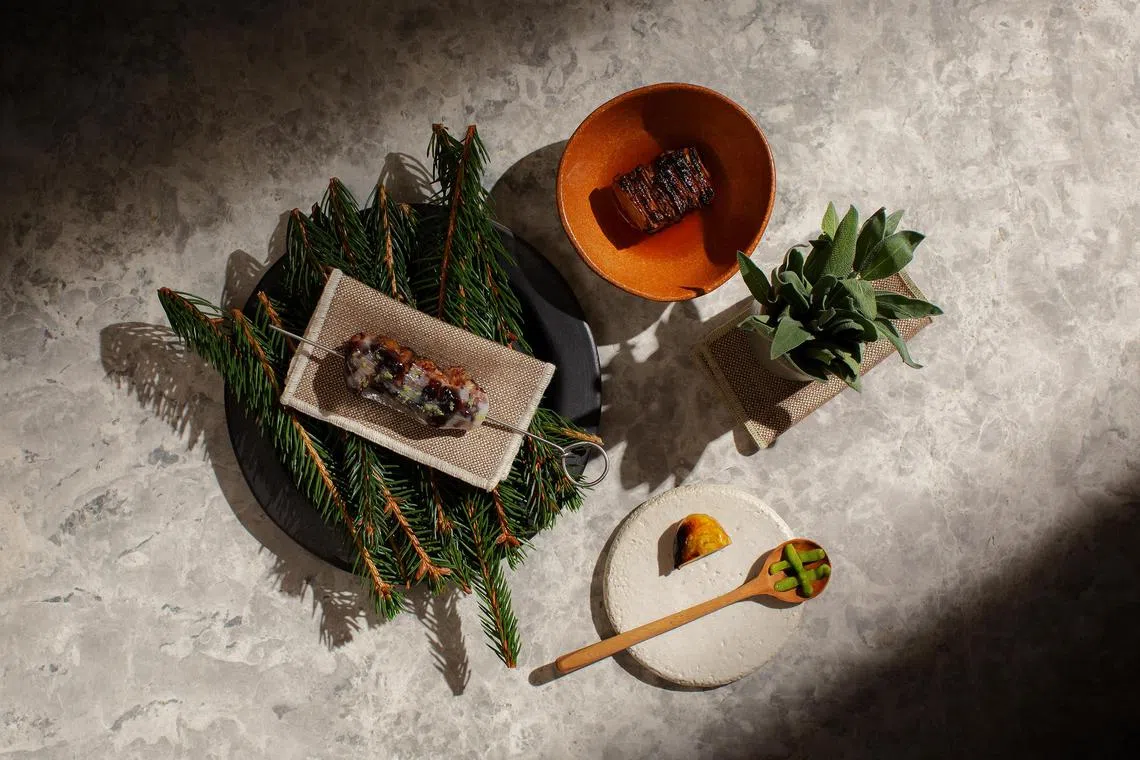
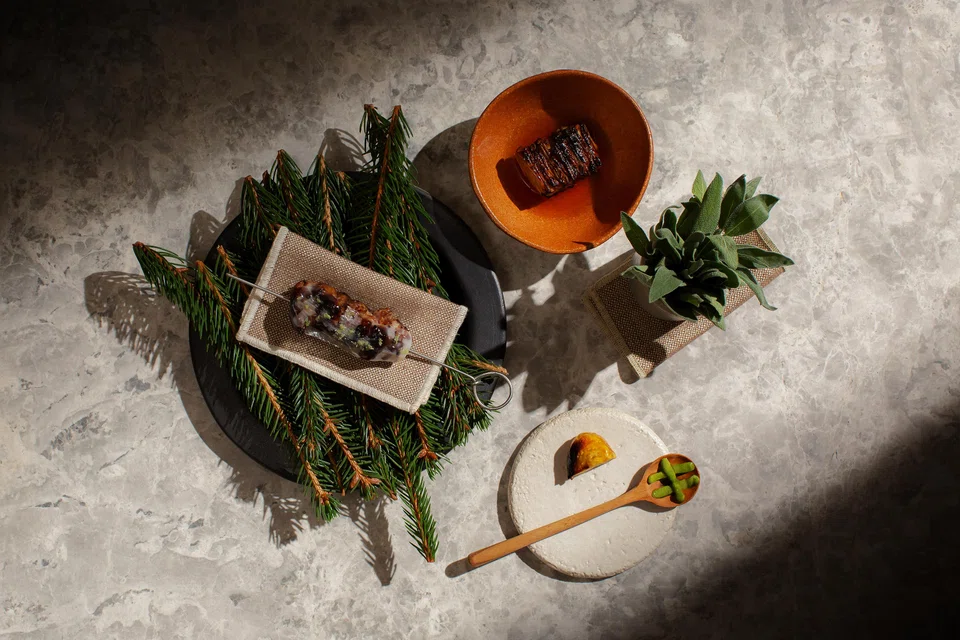
It goes on. Charcoal-broiled lamb saddle with a pesto of pine leaves and chestnuts, draped with wild boar lardo and served with a mille-feuille of oyster mushrooms in quince broth, perfected with a juice of fermented bread, barley and fig vincotto. The Chinese-style pig snout is a collagen-rich mini steak, sticky and chewy and topped with glistening demi-glace, paired with a lentil cracker and whipped Parmesan cream.
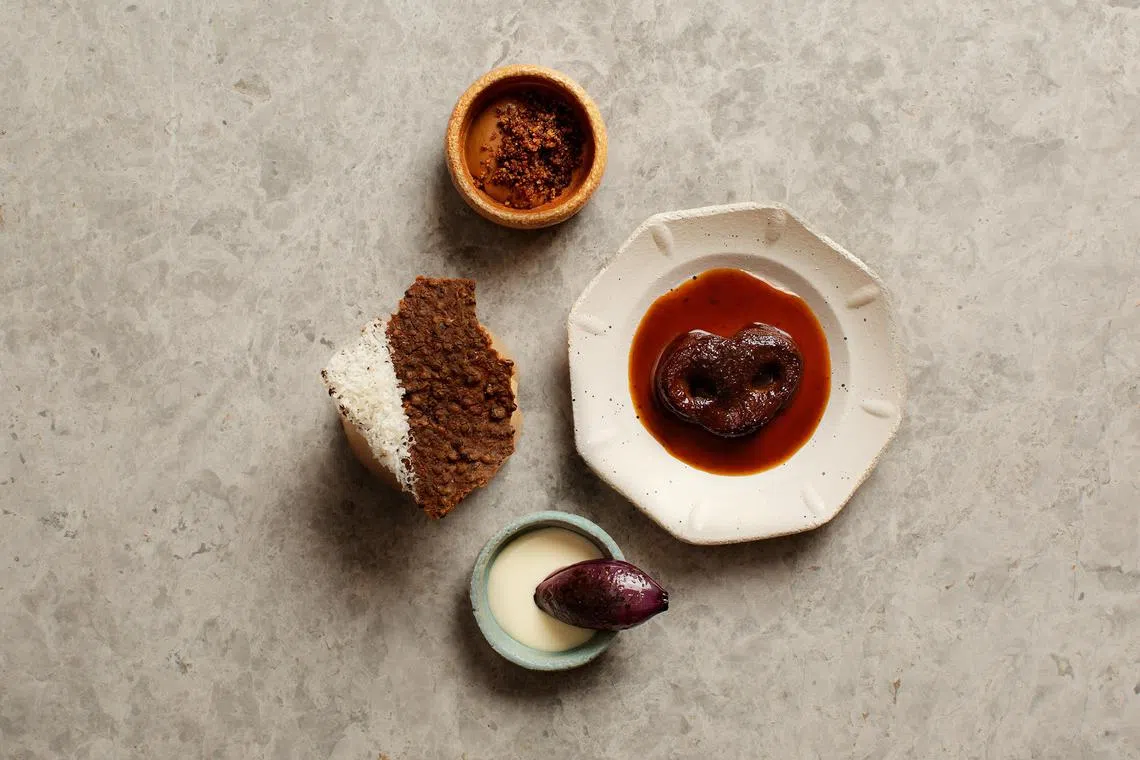
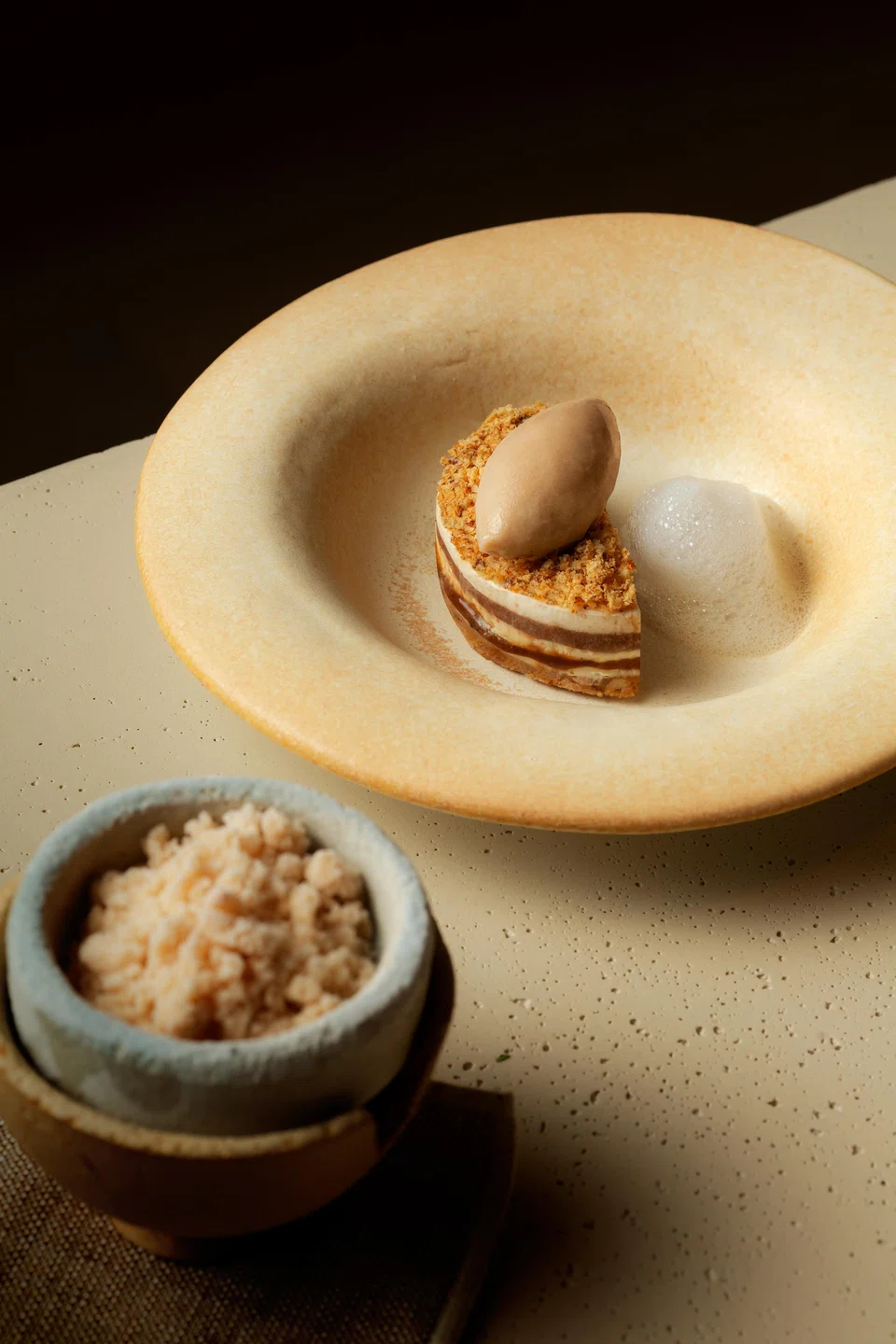
Not to mention the cheese course – a visit to the wine cellar to nibble on cheeses that have been aged in-house and infused with everything from truffle to beetroot and carrot juice. And a walnut and citrus dessert that can be traced to a Christmas ritual of eating walnuts and clementines.
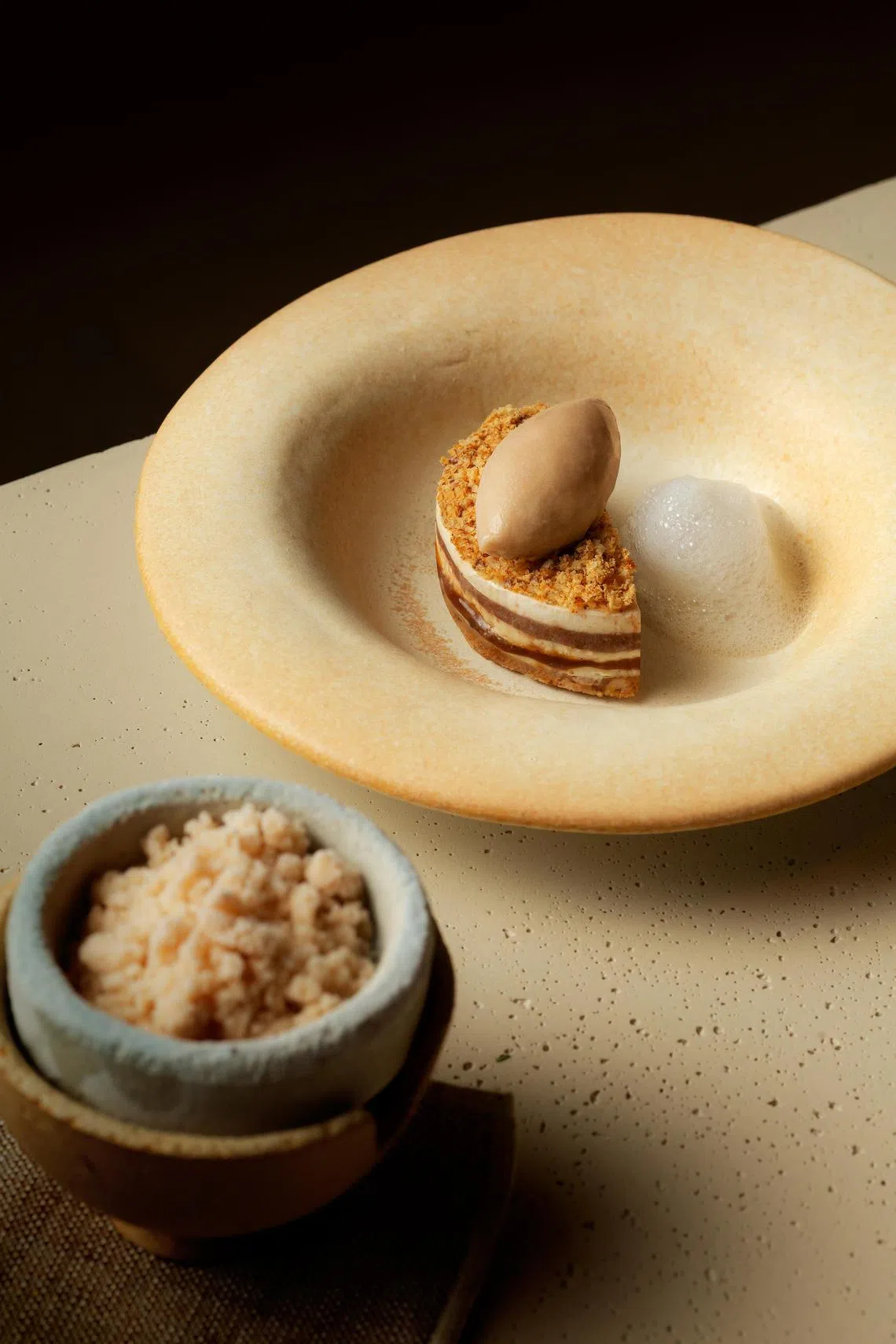
Familiar, yet not, Nordic copy, yet not, Somma is a world unto itself – and well worth exploring.
Rating: 8
Decoding Asia newsletter: your guide to navigating Asia in a new global order. Sign up here to get Decoding Asia newsletter. Delivered to your inbox. Free.
Copyright SPH Media. All rights reserved.






