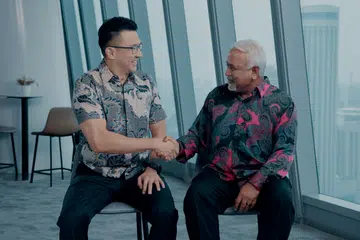
New-age private dining concepts go beyond just food
From eco-conscious meals to customised menus, two new private dining operators offer experiential dining over conventional home cooking
Seia Home Dining
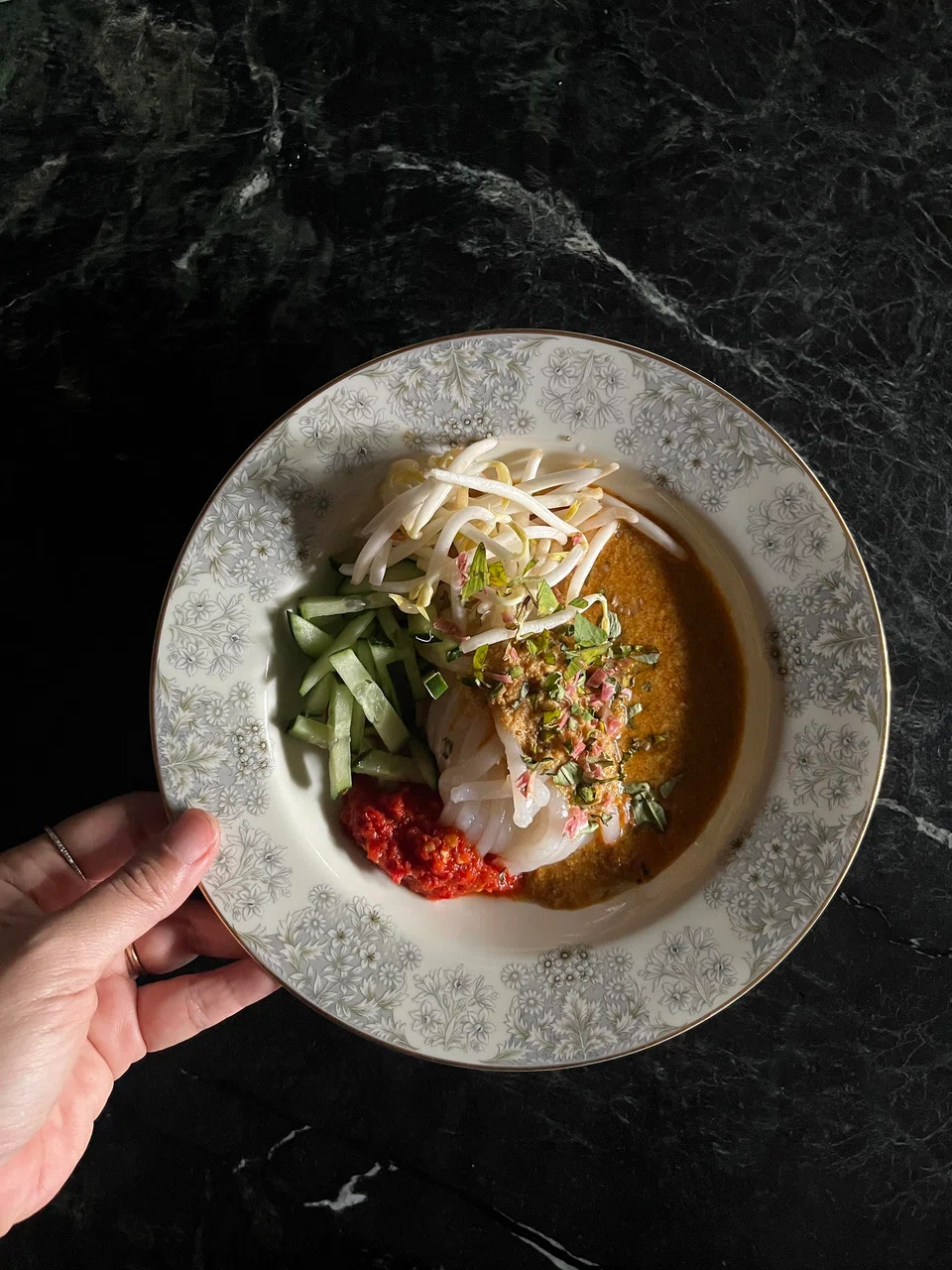
There are at least 11 ingredients in laksa Siglap, says Emylia Safian as she stirs a pot of fragrant gravy one Saturday afternoon. That doesn’t include three kinds of coconut – freshly grated, in milk form and toasted (kerisik) – and garnishes of bean sprouts and julienned cucumber, with sambal belacan to finish.
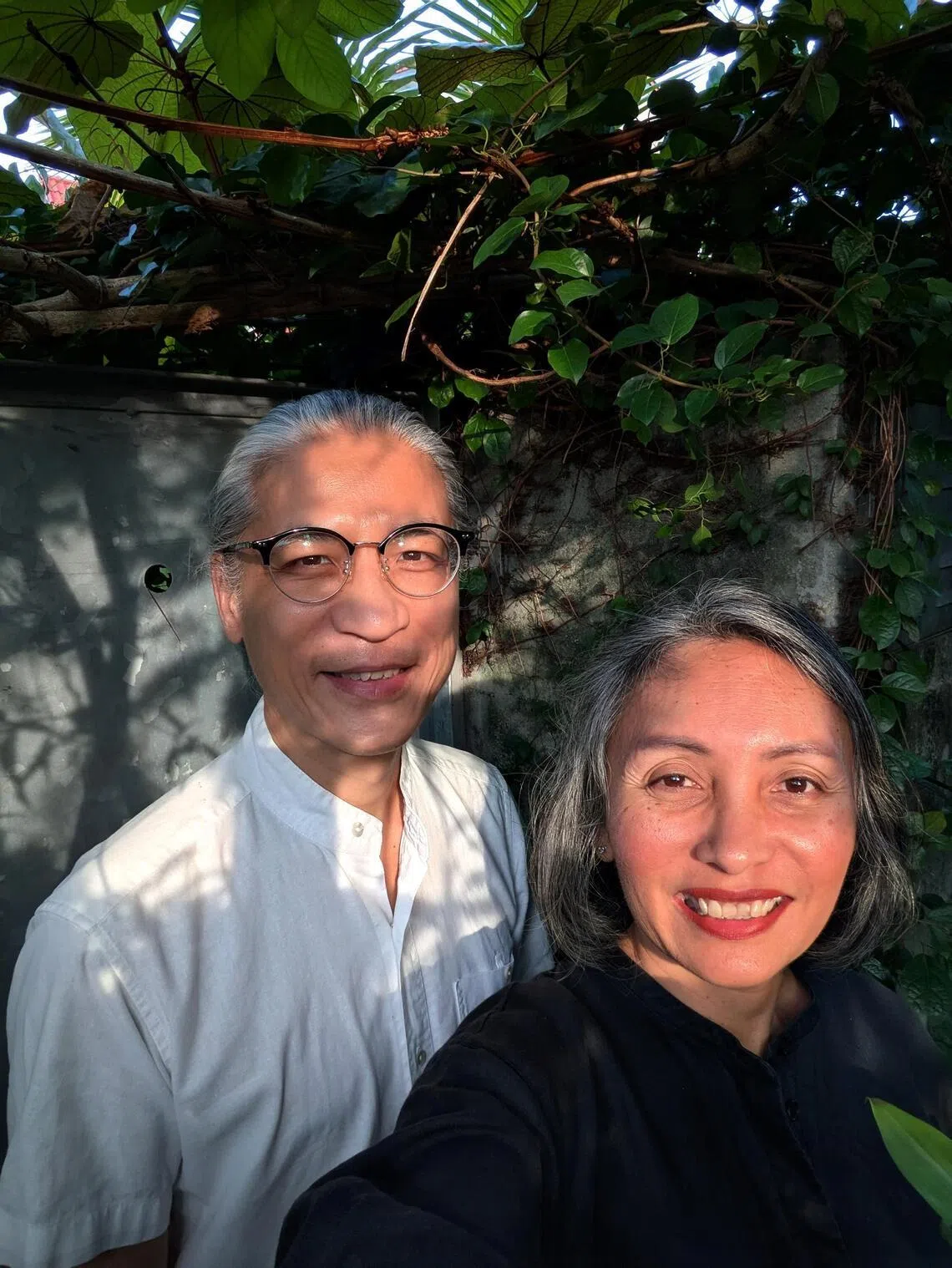
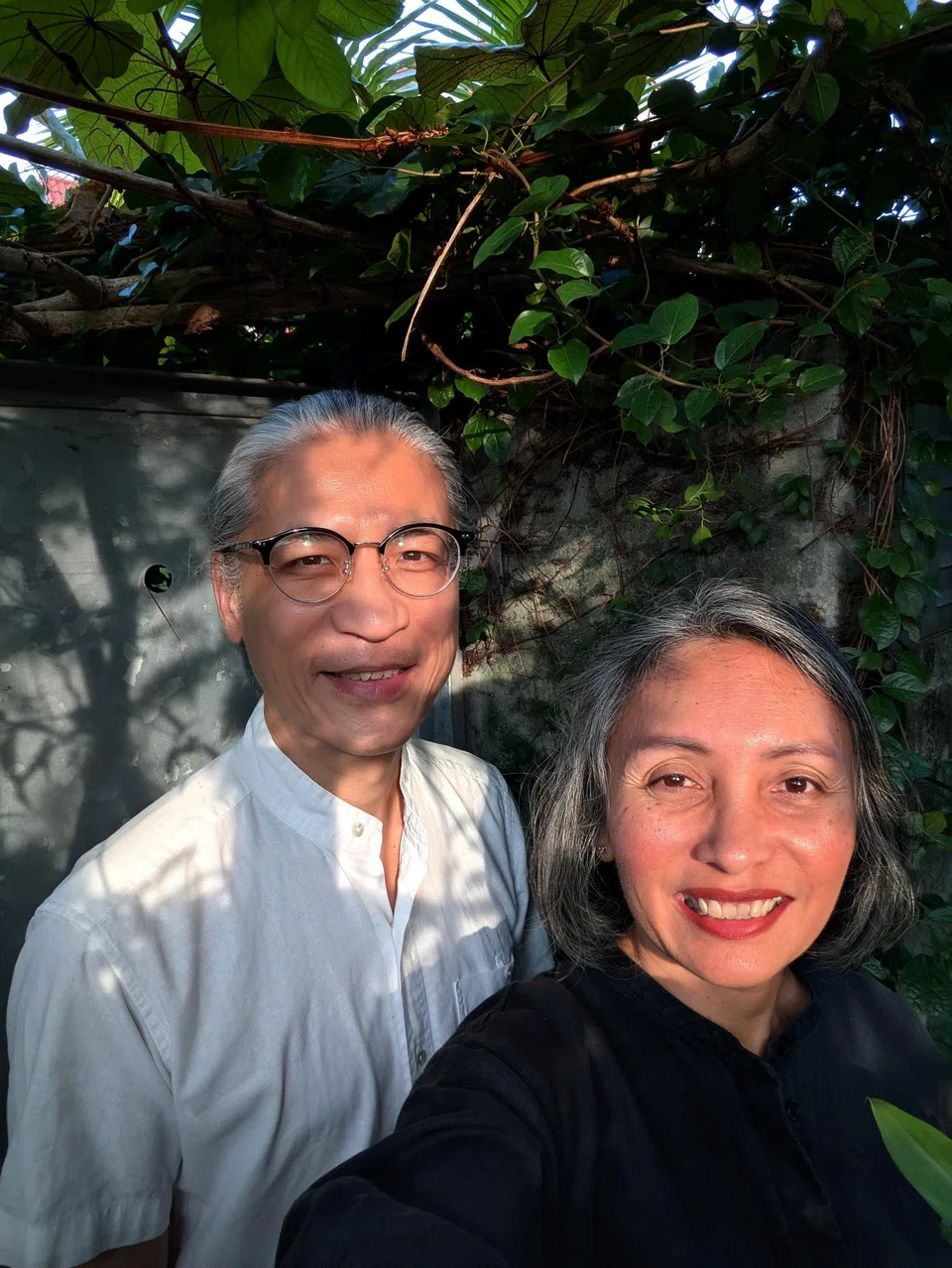
On a regular workday, Emylia is a university lecturer while her husband, Minh Le Tien, works in the finance industry. Last September, they also became home chefs of sorts when they started Seia Home Dining, in the leafy surroundings of their terrace house in a quiet Siglap neighbourhood.
Unlike conventional home dining concepts, Seia is less of a business and more of a communal experience.
“We’re not chefs. It’s like going to your aunt’s or grandparents’ house,” stresses Emylia. She adds that the idea came about when the couple noticed how their guests would always hang out in the kitchen. “We started thinking about what happens in the kitchen when people get together, and what kinds of conversations are made or questions asked.”
Seia is a classical Malay term defined as a sense of coherence or alignment – indicating harmony, Emylia explains. Her food references the Italian concept of cucina povera or “poor kitchen” – which honours the simplicity of everyday ingredients.
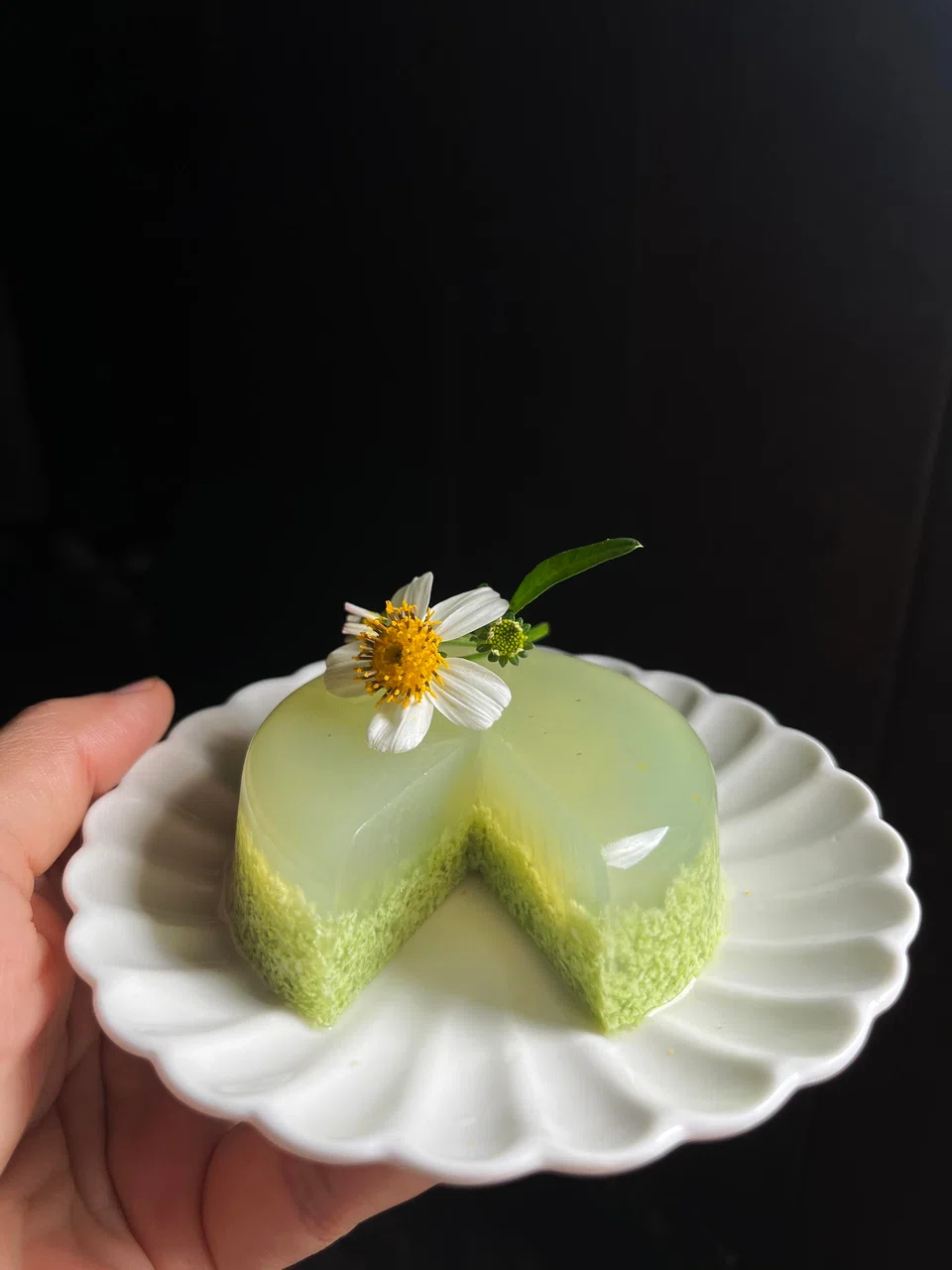
The focus on traditional rural cuisine is seen in dishes such as bubur sumsum (coconut milk and rice flour with palm sugar syrup), and pepes ikan tenggiri wrapped in banana leaves to resemble kolek (small traditional Malay fishing boats that once skimmed Kampung Siglap’s coasts).
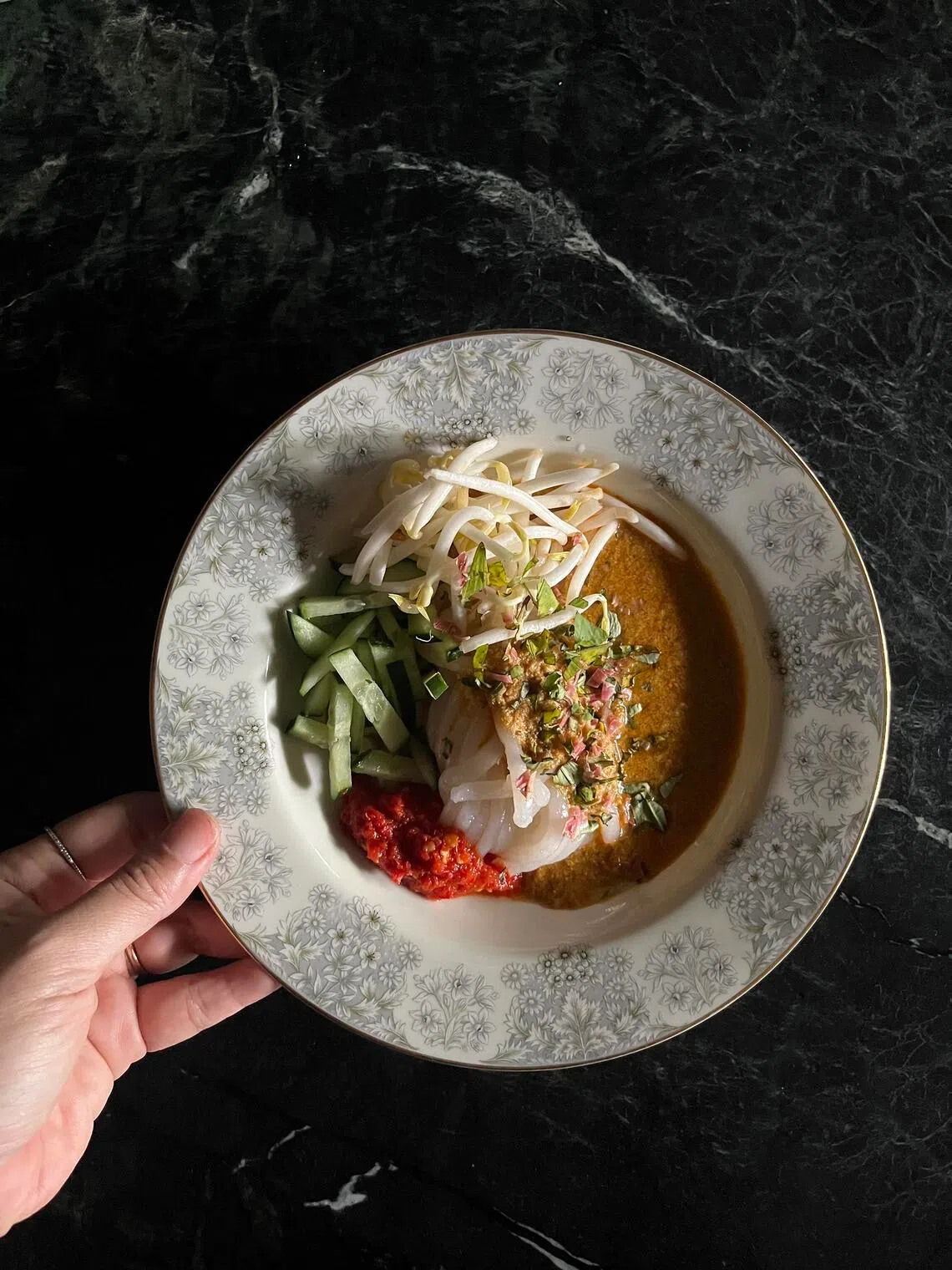
Laksa Siglap – an almost-forgotten culinary tradition – is, of course, her signature dish.
“It is rooted in a recipe carried through generations of Kampung Siglap family kitchens,” says Emylia. Her father, and before that her grandfather, grew up in Kampung Siglap. “(The dish) was popular because people lived by the coast and prepared this from fish they caught.”
The fish-based laksa has no prawns like the Peranakan version, and saltiness comes from the bones of salted ikan kurau. The noodles, made from rice and sago flour, are coated in a thick gravy and tossed with the raw garnishes.
They were thrilled when food historian and author Khir Johari dined at their home, and described their laksa Siglap as “a dish of heritage integrity bearing honest flavours true to Siglap’s roots”.
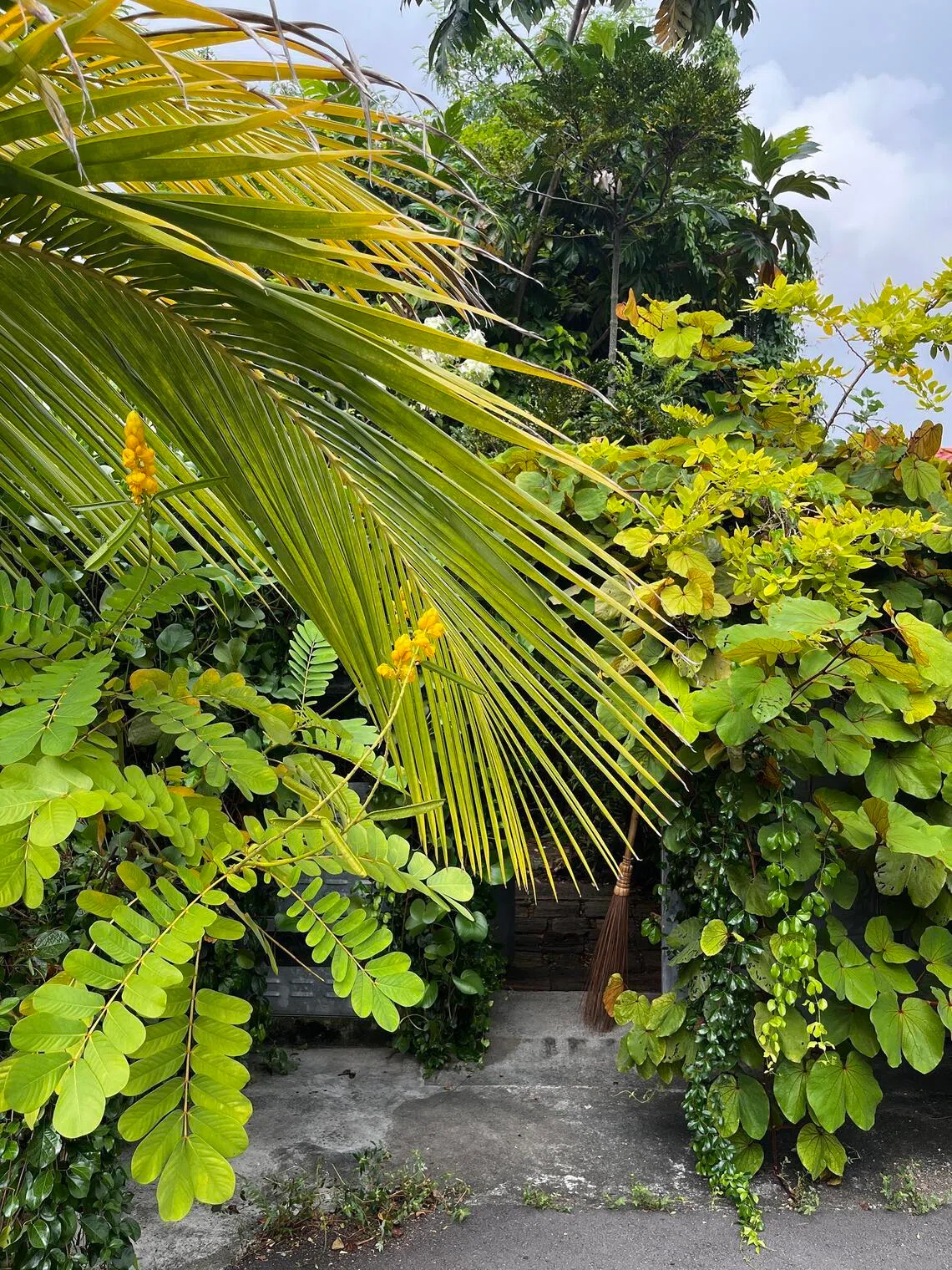
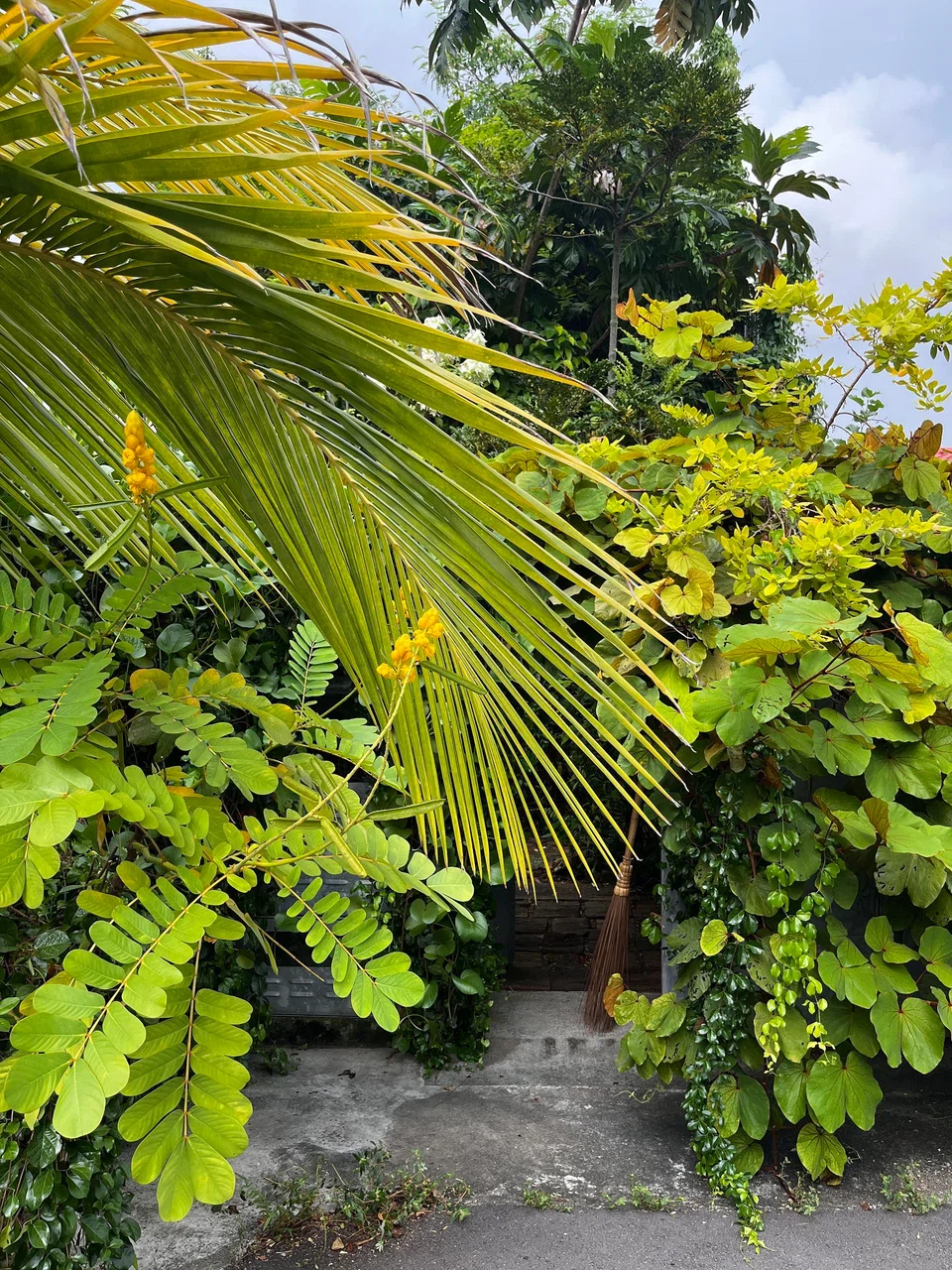
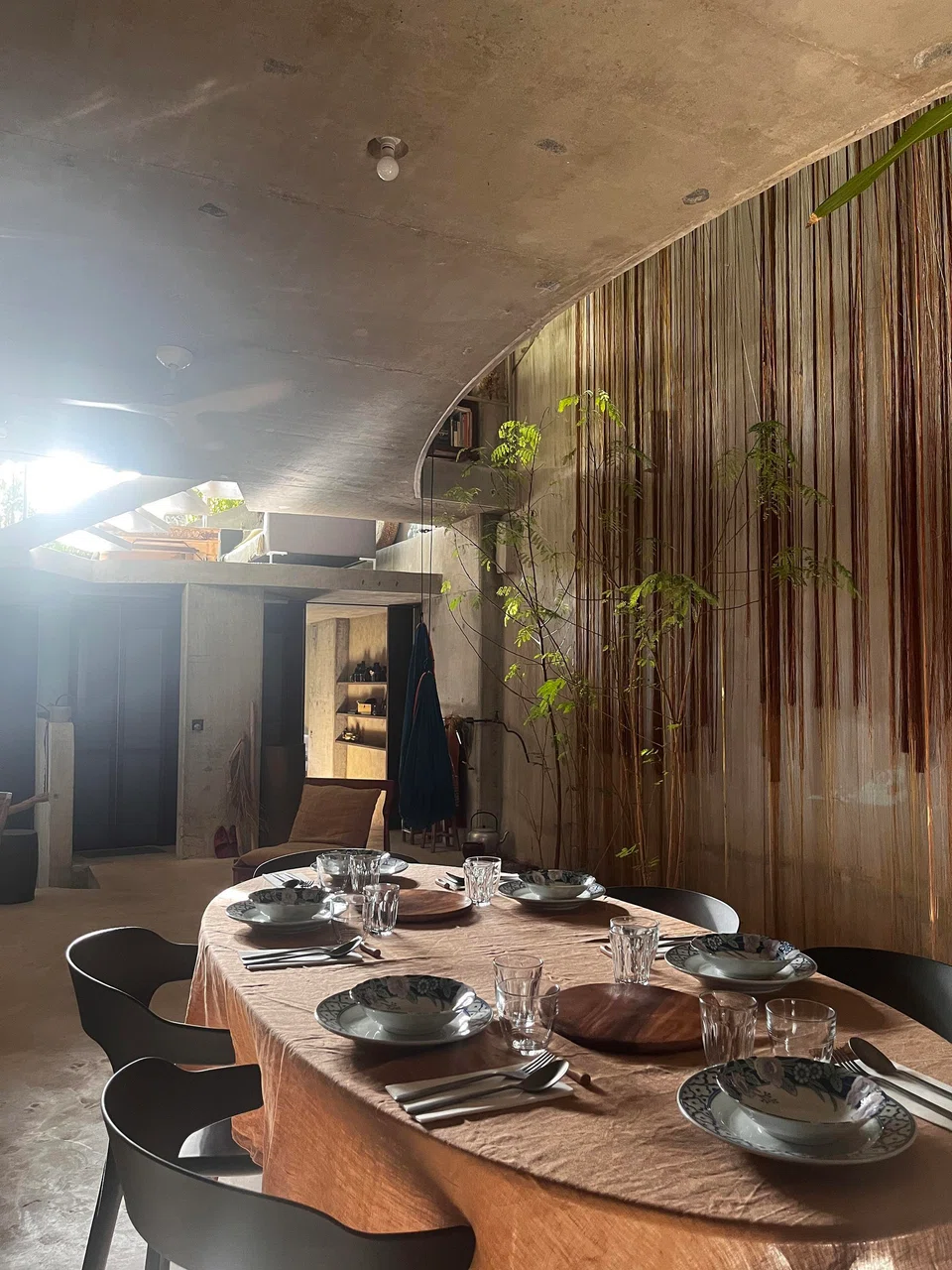
But guests come to see the house as much as to taste Emylia’s cooking. Designed by Linghao Architects and featured in magazines and on social media, it looks like a concrete shell consumed by an overgrown jungle from the outside.
The interior is deliberately bare and basic – unpainted concrete walls and floors, timber cabinetry and metal balustrades that trace a curved floor plate. Light comes in through a skylight, from which princess vines hang like a curtain along one side of the dining room below.
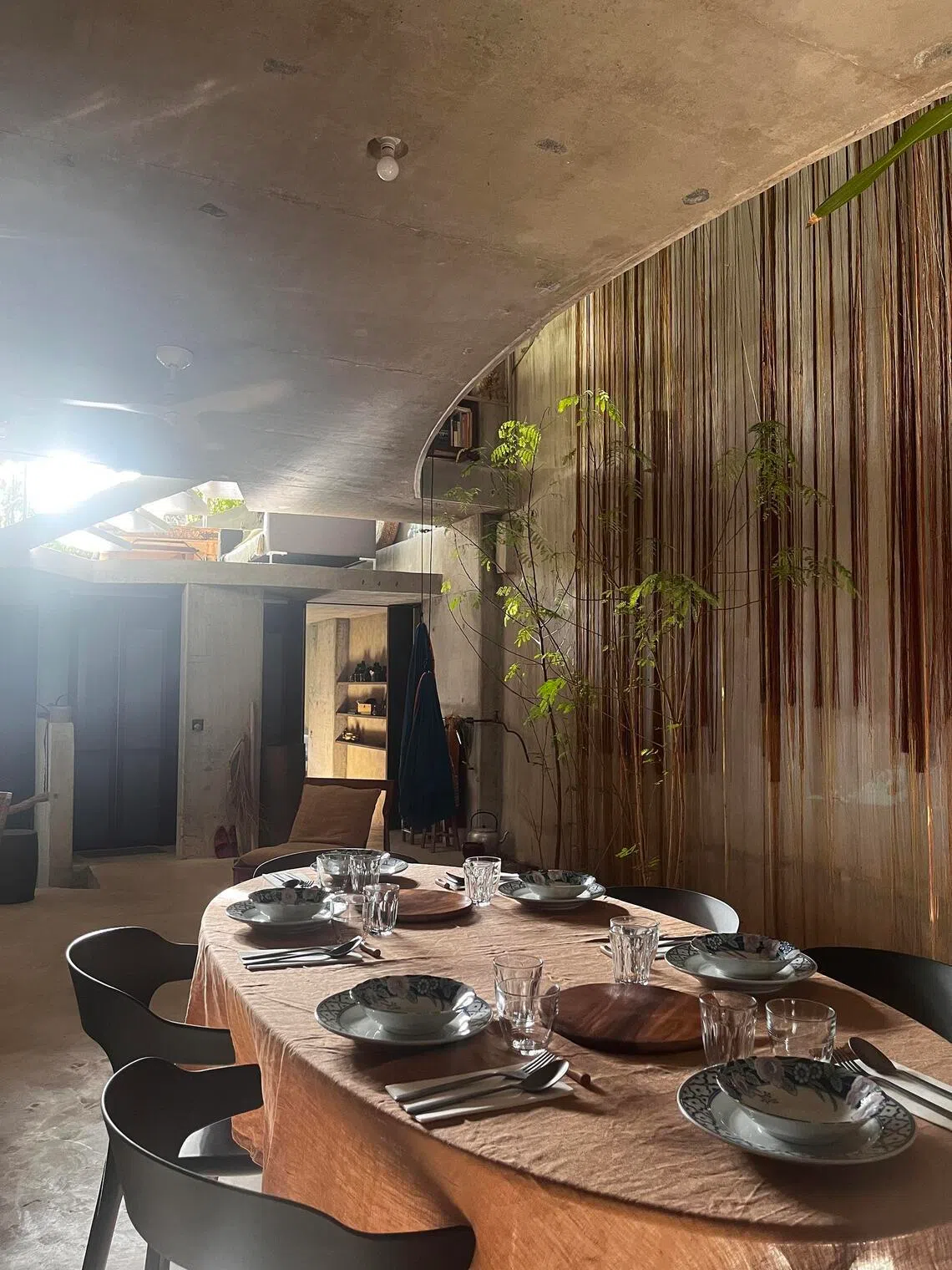
The couple wanted “a house that breathes naturally”, shares Minh. “People ask, ‘Why is it so open? How come there are no windows?’ But through our interactions, we show them it’s possible to live this way; you just need a different connection with the environment. You don’t need to control everything. Through the meal experience, they get a glimpse of how to live (this way).”
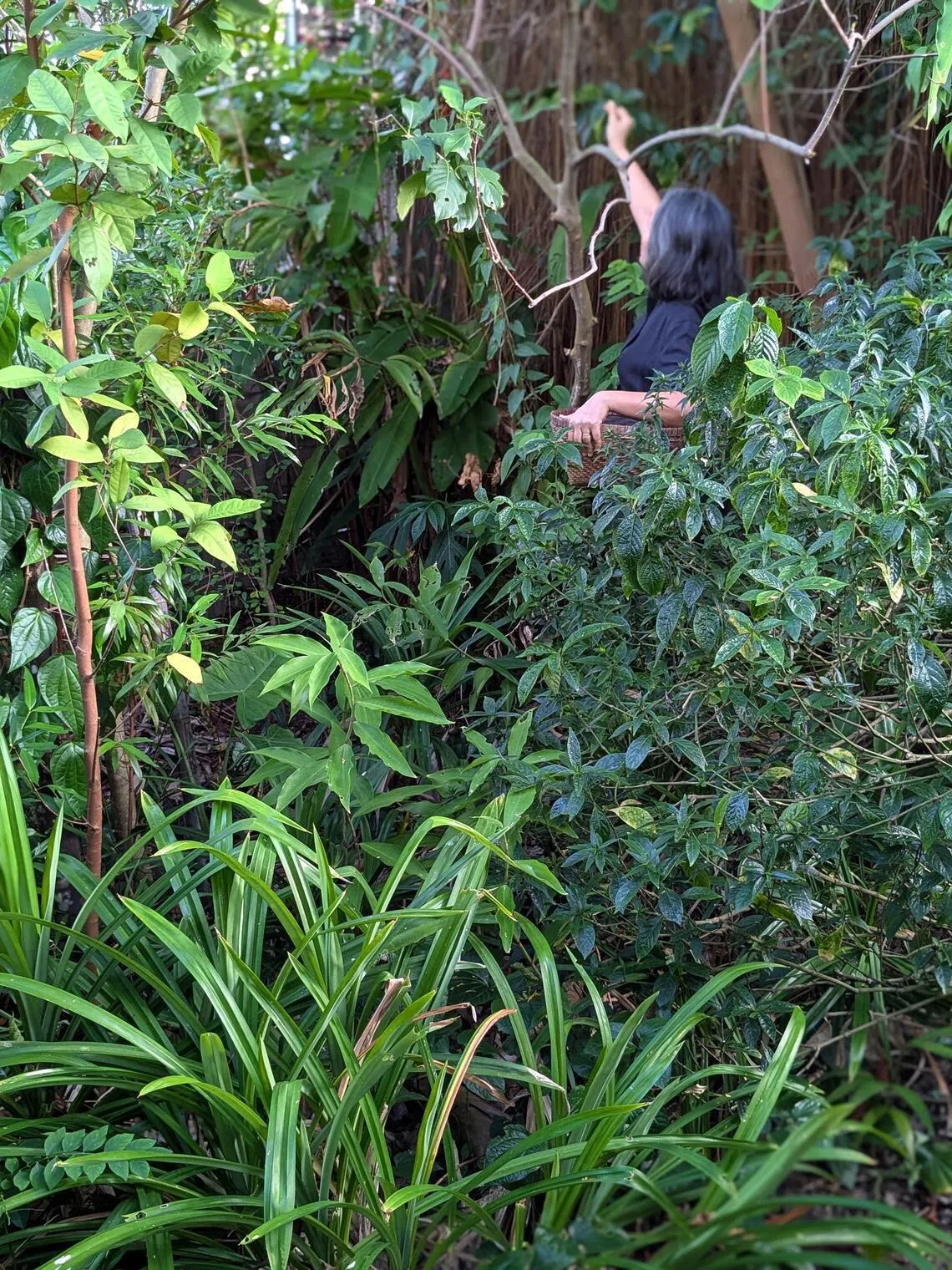
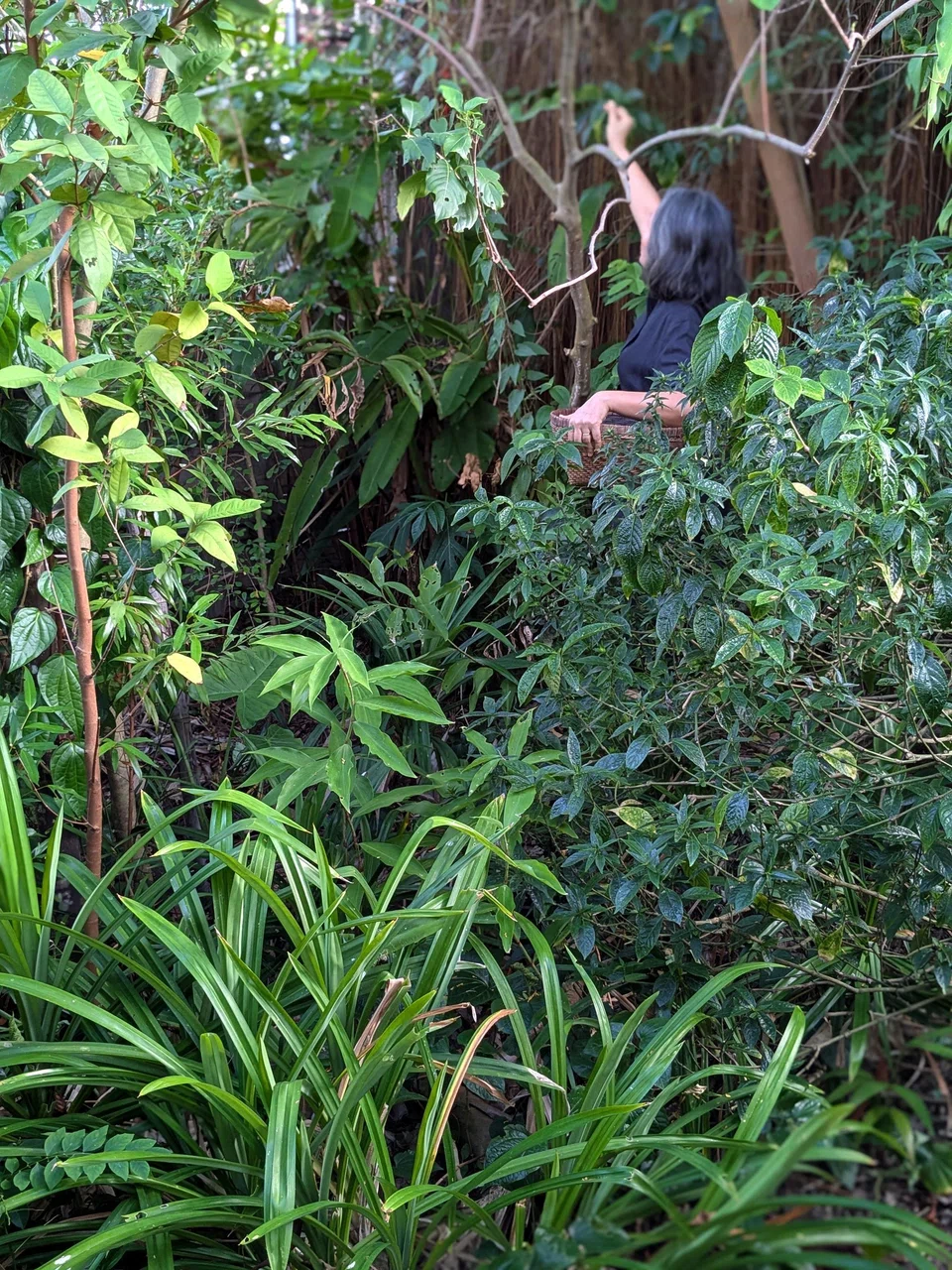
So far, they have hosted families, friends, neighbours and even a Registry of Marriages event. A highlight of their visits would be a tour of the couple’s lush gardens that cover the front yard and rooftop terrace. Planters edging the house also double as windows.
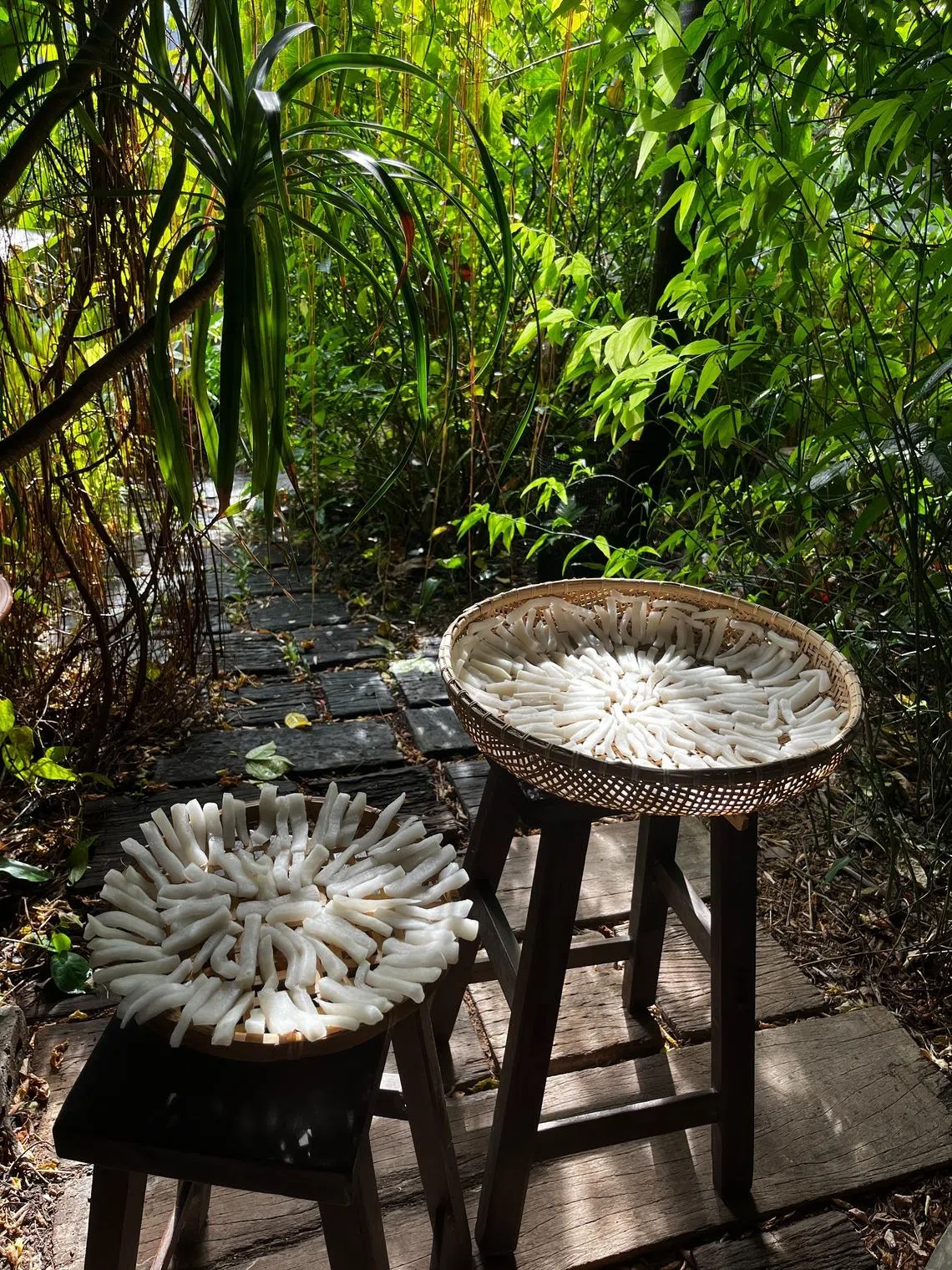
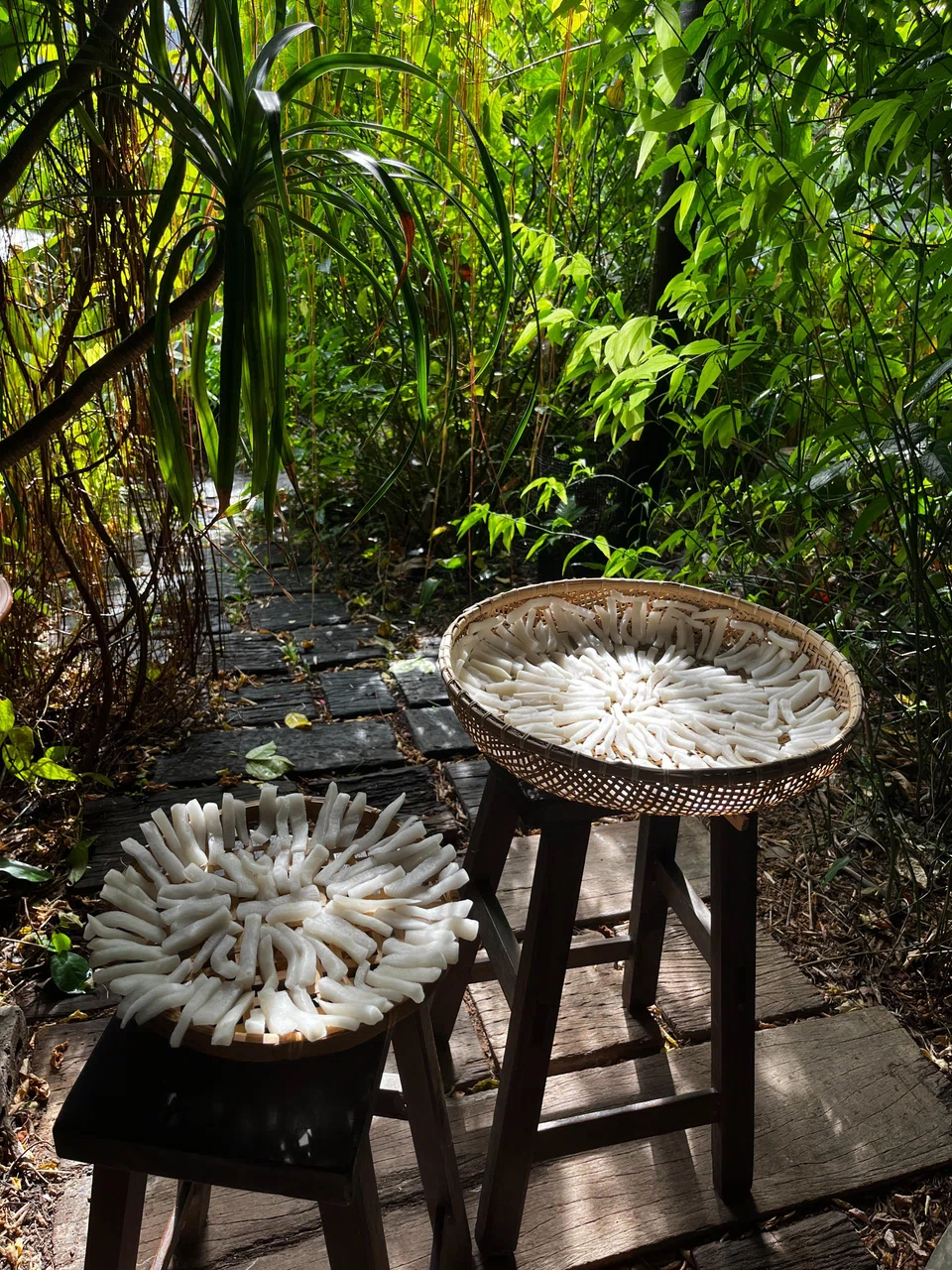
The couple grows their own herbs, along with other plants that are used in the menu. Lemongrass and the breadfruit tree’s fan-like leaves are collected and dried for kombucha infusions. Wild petai seeds are used to make sambal.
The duo live – and eat – to nature’s rhythms. Emylia describes herself as an observer of the natural world, “spending much time in the kitchen working with wild yeast and bacteria”. On the other hand, Minh is “keeper of the wild gardens in his home”, tending to the “growth and decay with equal care and attention”.
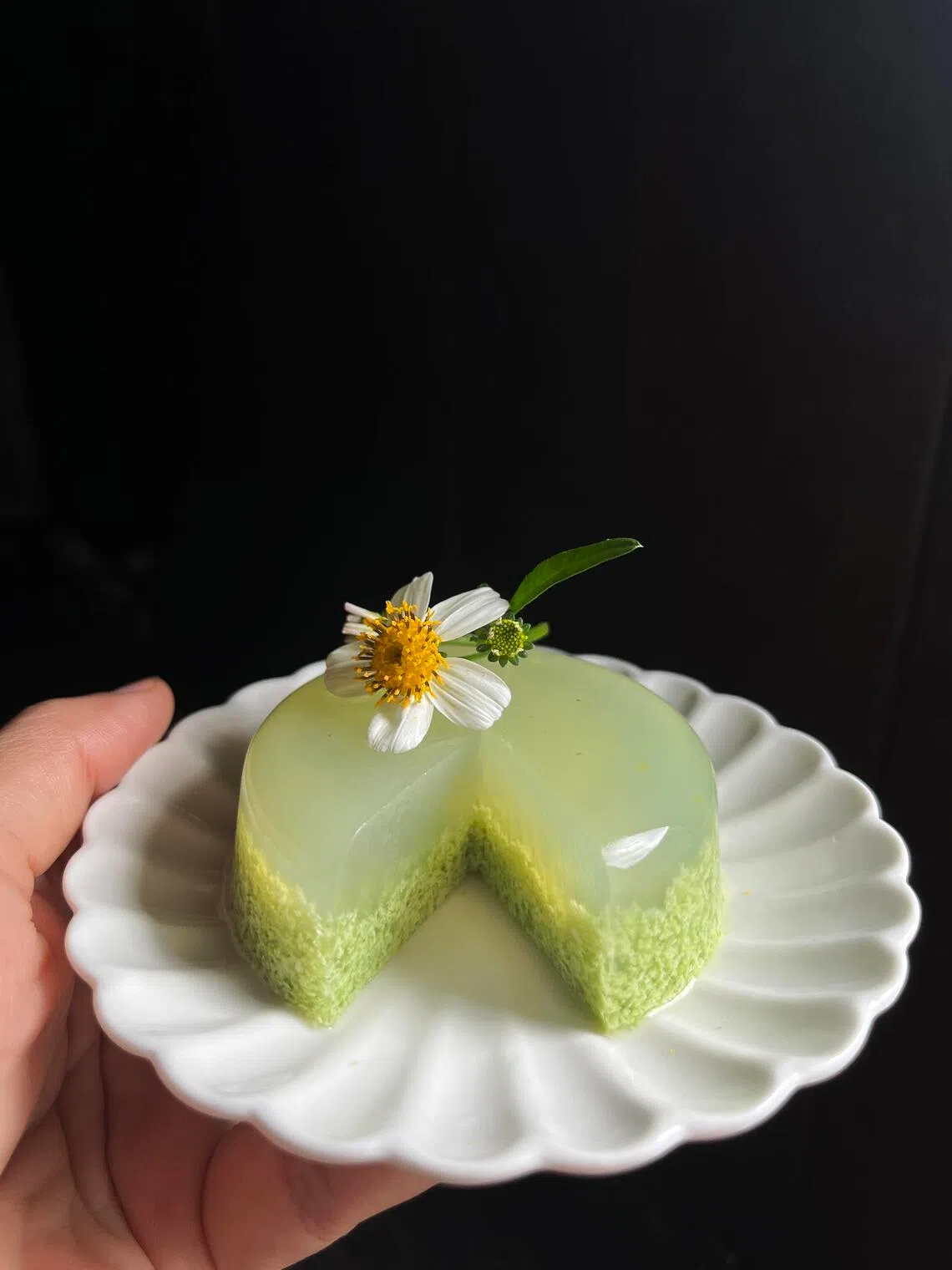
Naturally, some of the home dining conversations pivot to this topic, which the couple happily entertain so that visitors become conscious about where food comes from, and how it is grown and harvested – “Things we take for granted in modern society,” says Minh.
“It is within this environment that we – as custodians – host guests through the evolving home dining experience foregrounding slowness and ecological conscience,” observes Emylia.
By Luo Jingmei
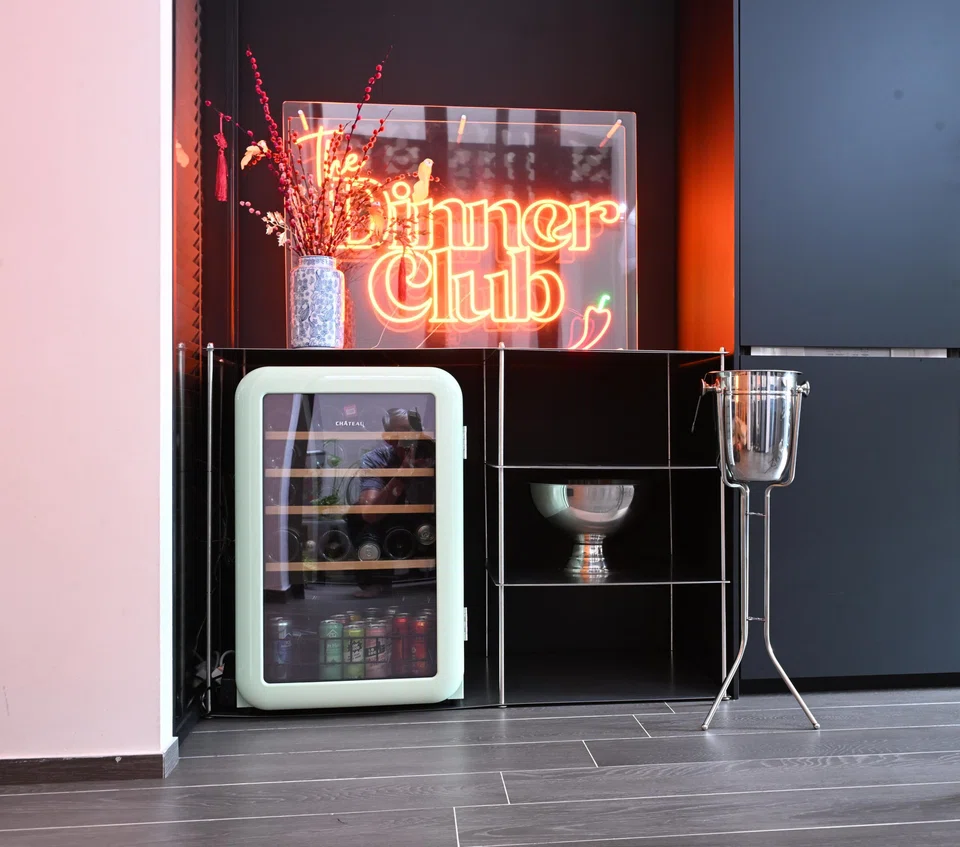
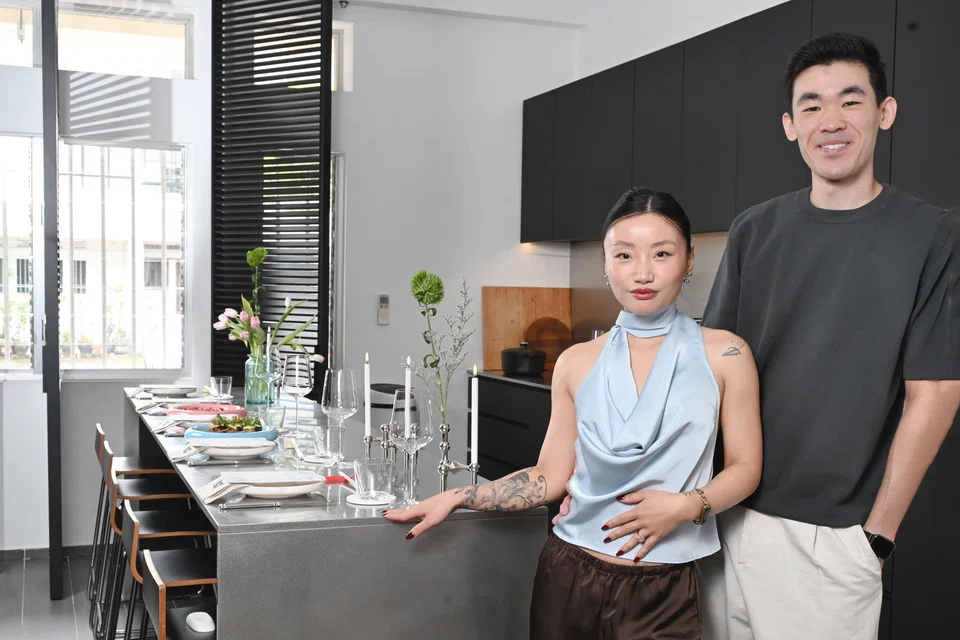
The Dinner Club
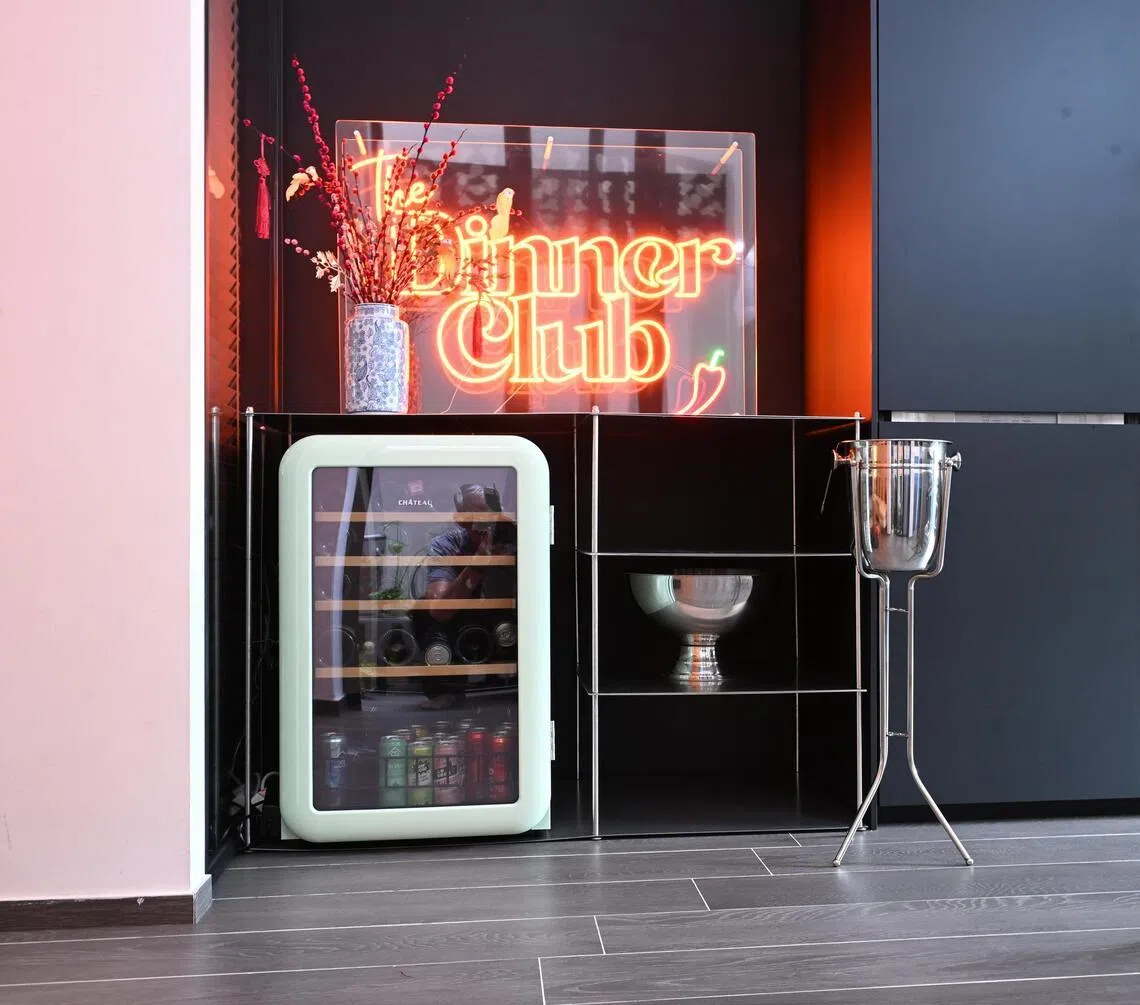
“I wanted to cook for people I would see again,” says Stefan Kam on why he left his job as head chef of Somma in November 2025 to set up The Dinner Club with his wife, Wendy Wang.
“In a restaurant, the relationship ends when the guest walks out the door,” he adds. “You give everything you have to a service, and the next day you do it again for a completely different room of people. The physical toll (of a restaurant) is real, but it wasn’t the exhaustion that wore me down – it was the anonymity of it all.”
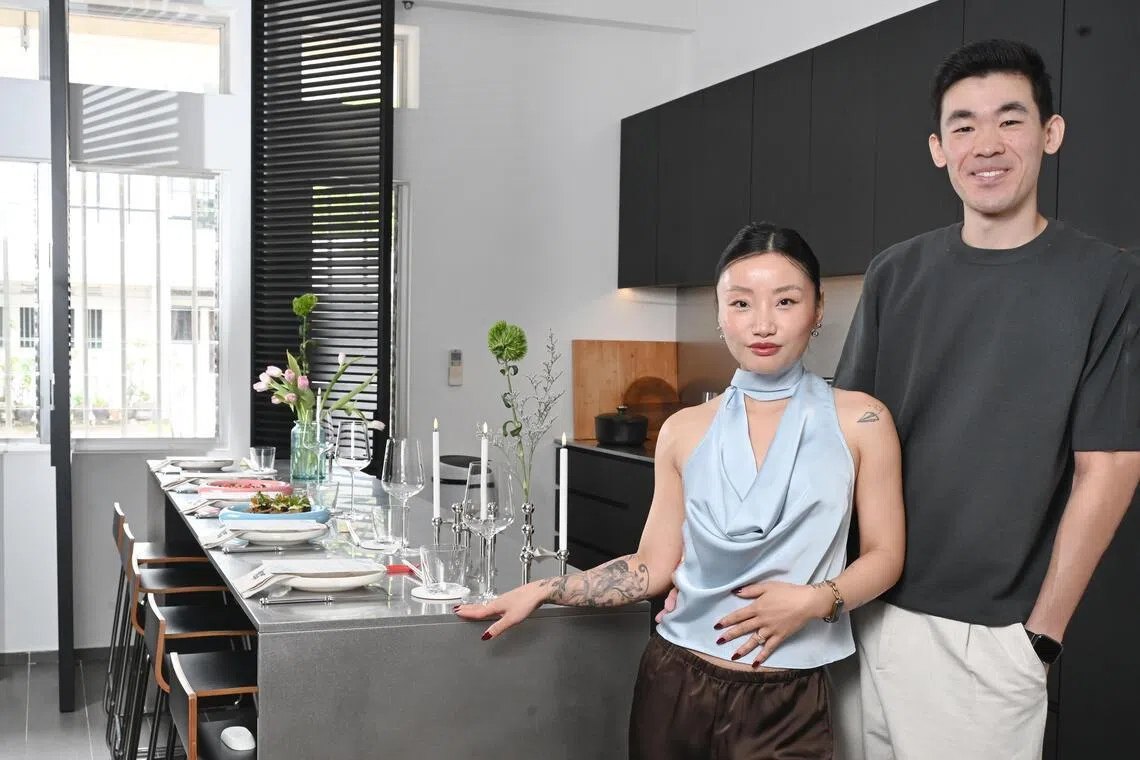
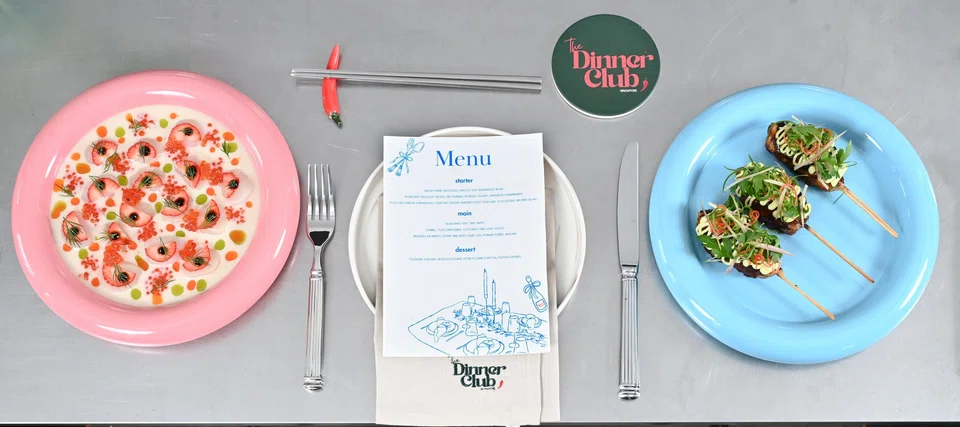
The Dinner Club started as a conventional home dining set-up, but unlike a fixed menu that most home dining chefs offer, “Stefan builds each menu around the people coming, not the other way around,” says Wang, who moved to Singapore with Kam in 2021 to build up her media agency’s Asia-Pacific operations.
The couple previously lived in Amsterdam, where the Chinese-Indonesian Kam was born and raised. He spent 15 years in Michelin-starred restaurants in Europe, including de Librije in Zwolle and Alchemist in Copenhagen. Before Somma, he had stints at Tippling Club and Table65. Shanghai-born Wang moved to the Netherlands at a young age, building her career in social media and community building.
In Singapore, they found themselves facing a familiar urban paradox: a city dense with people, yet curiously difficult to belong in. The Dinner Club was conceived because of that. “We played to our strengths,” says Wang. “Stefan cooked. I hosted. We invited strangers. We wanted to offer something that felt more like being invited into a home, where the conversation mattered as much as the food.”
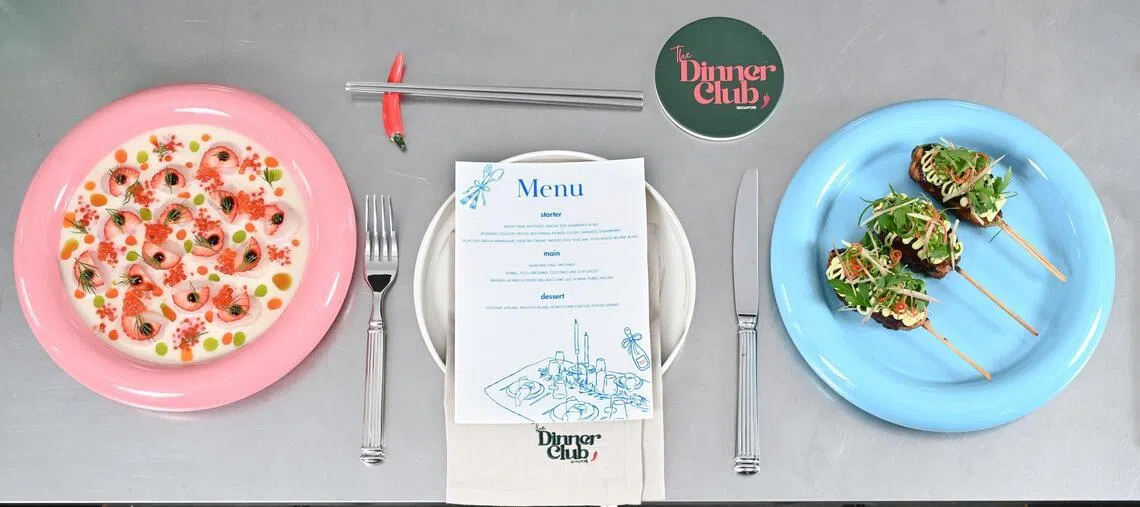
Besides their own home in Tiong Bahru, The Dinner Club takes place in private homes, yachts and borrowed venues – adapting to the host, guests and the moment. For instance, at a recent wine dinner for 12 aboard a yacht, Kam built the menu around the host’s cellar.
Alongside private bookings, the pair run a monthly, loosely structured “secret” wine bar: one evening, 25 to 30 guests, no formal agenda. “Strangers sit down next to each other and, by the end of the night, they are making plans,” Kam says.
Wang recalls one memorable dinner when their client was entertaining American friends who were visiting Asia for the first time. “Stefan designed eight courses as an edible introduction to the continent. Each dish was built around a country we felt they had to experience, such as Japan, Korea and Singapore, but filtered through Stefan’s European training. By the end of the evening, one of the guests said it was the best introduction to Asia they could have imagined.”
Their concept has also opened unexpected doors. The pair now collaborates with restaurants and F&B groups in Singapore and abroad on pop-ups and menu development. “We work with Singapore restaurants such as Artichoke, Two Men Bagel (House), Casa Cicheti, Pralet and Revolution Wine Bistro,” shares Kam.
Wang is quick to position the concept as a parallel offering rather than a competitor to restaurants. Private dining has, in recent years, drawn scrutiny from some operators, particularly around regulation and competition.
“Restaurateurs carry enormous overhead, and they see private dining operating in a different lane,” she concedes. But her view is that the two serve different needs. “The guest is not choosing between us and a reservation somewhere. They are choosing an entirely different kind of evening.”
Kam, for his part, is unequivocal about standards. “The same ones I held in every professional kitchen,” he says, citing ingredient sourcing, food safety and transparency. “Just because the setting is intimate, does not make the responsibility smaller. If anything, it makes it more personal.”
The couple are already looking beyond Singapore. “We want to build The Dinner Club in cities we love, like Amsterdam, Lisbon, New York.”
Kam feels that the last few years reshuffled what people value in a night out. “There is a growing appetite for personal and intentional experiences, not just something technically impressive. Private dining sits right in the middle of that shift.”
He adds, “The food will always be the reason people say yes. But what we have learnt is that what they are actually hungry for is connection.”
By Amy Van
Decoding Asia newsletter: your guide to navigating Asia in a new global order. Sign up here to get Decoding Asia newsletter. Delivered to your inbox. Free.
Share with us your feedback on BT's products and services