

Progressive Asian food in the CBD
Ace Tan moves from nature reserve to the city to bring his unique style of cooking closer to diners
NEW RESTAURANT Asin 38 Carpenter Street, #01-01 Singapore 059917 Tel: 9722-9638 Open for dinner only Wed to Sun: 6 pm to 10.30 pm
IF HE weren’t a chef, Ace Tan might have been an itinerant hawker.
In the past decade, he’s racked up more relocations than an illegal durian seller has carparks to set up shop in. We tracked him from Tanjong Pagar to Sentosa, lost him in Seoul, and found him briefly in an industrial park.
We cornered him up a hill, but now he’s slipped down to the Central Business District at Carpenter Street – where parking spaces are rarer than a Komodo dragon in Singapore’s nature reserve.
If we had to choose, we’d pick ASU – where Tan’s cabinet of culinary curiosities found a home in the mystical, forested isolation of Labrador Hill. It was such a pretty place, we didn’t even mind that it was called “progressive Asian cuisine”. Out in the wild, nobody can hear you pontificate.
The cooking – a divination of Chinese tradition and South-east Asian food shopping – kept you thinking even as you enjoyed just eating it.
Asin – a play on “Asian” – is ASU version 2, swapping greenery for hot asphalt. It’s also Indonesian for salty or “ah-sin”, but here it gets a Western twang as “ae-sin” – or “Ace-in”, get it?
Either way, the food lives up to its name: occasionally salty, but still very much an ace.
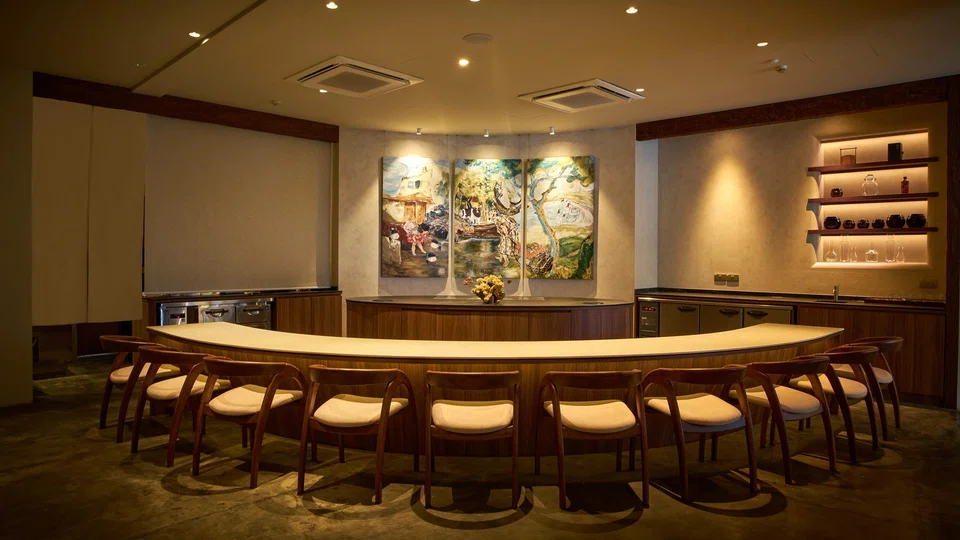
Even without greenery, Asin evokes a cocoon-like calm with muted earth tones, warm lighting and clean lines. There’s a large, three-panelled artwork on one wall – a vivid landscape of cows, chickens and ducks, jumping fish and shellfish in a net – basically what your dinner ingredients looked like when they were alive.

Don’t let that discourage you.
Pricing is unchanged from before, at S$188 for the tasting menu with optional supplements that are hard to resist. Seasonal eating is key, and right now, summer is on the table.
Tan’s cuisine is rooted in his Chinese identity with flashes of Japanese and Korean influence, and an insatiable curiosity about South-east Asian ingredients – the more obscure, the better.
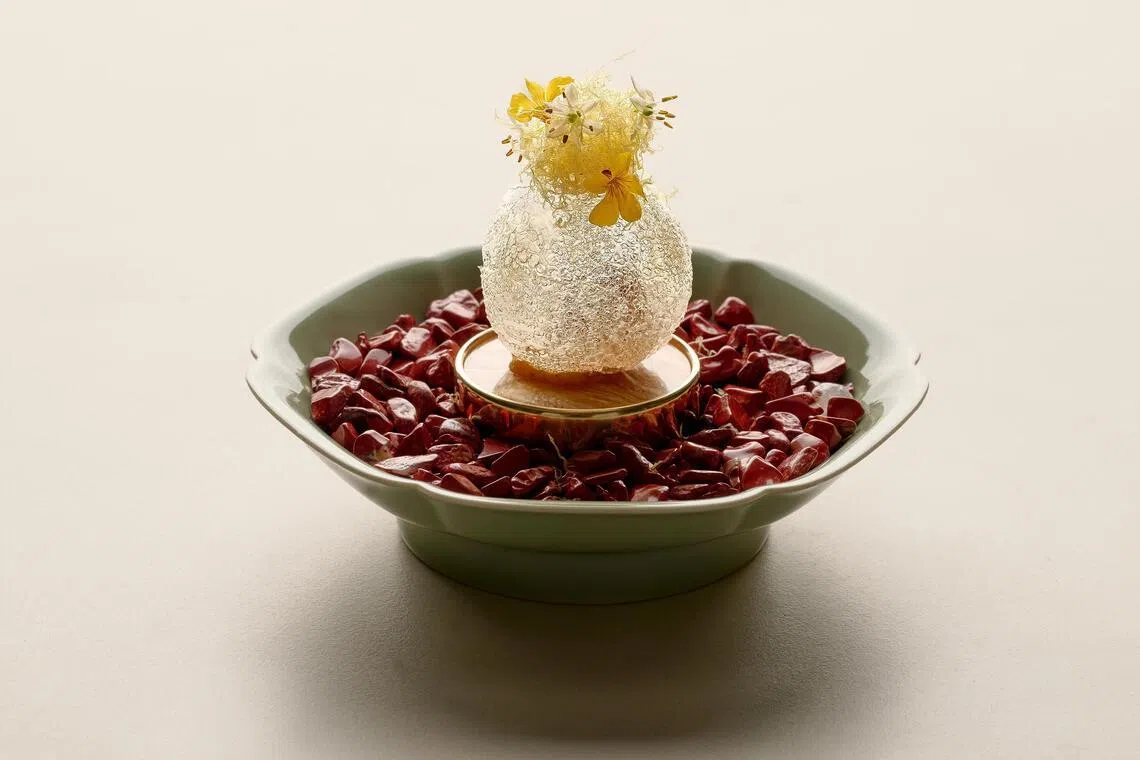
Because he has so many ingredients to play with, he rarely repeats a dish unless it’s his signature oyster omelette – the one where orh luak is trapped in a translucent orb and forced to do some “Who am I, really?” soul searching.
The current version has the same fragile shell, filled with a chewy oyster mixture and garnished with wispy egg floss. It works on its own but barely resembles the real thing. And it’s rather salty.
Ngoh hiang (an S$18 supplement) is deep-fried yuba filled with a whole prawn and five spice-scented pork and water chestnut – in a briny sauce of simmered prawn shells and wild ginger that lifts it out of hawkerland.
It’s the kind of fancy roll a chef might make after watching his grandma – and getting smacked if she saw such travesty. But this is a tribute to Tan’s own grandma, so he gets a pass.
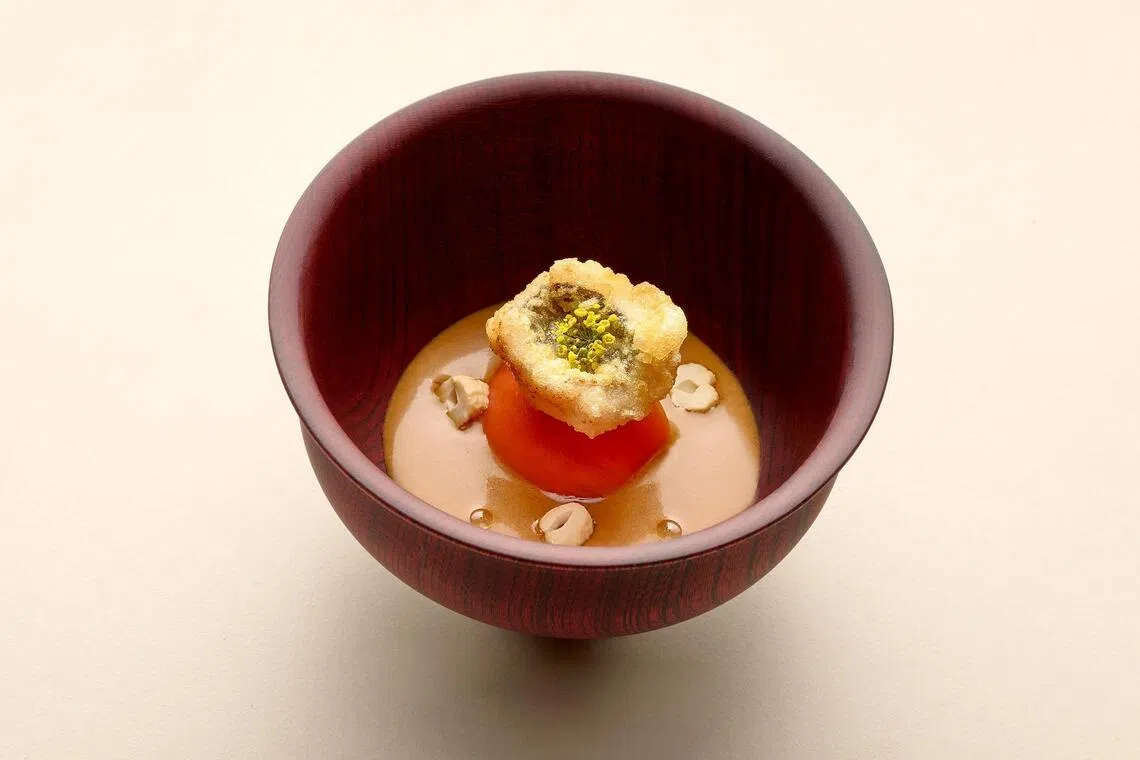
Not everything hits a home run. But, when it does, we want to applaud. Take the assam hamo – an unlikely trio of crunchy pike conger tempura, hollowed-out Japanese tomato filled with its own wobbly jelly, and chewy Job’s tears singing perfect harmony with a sweet-tangy tamarind sauce.
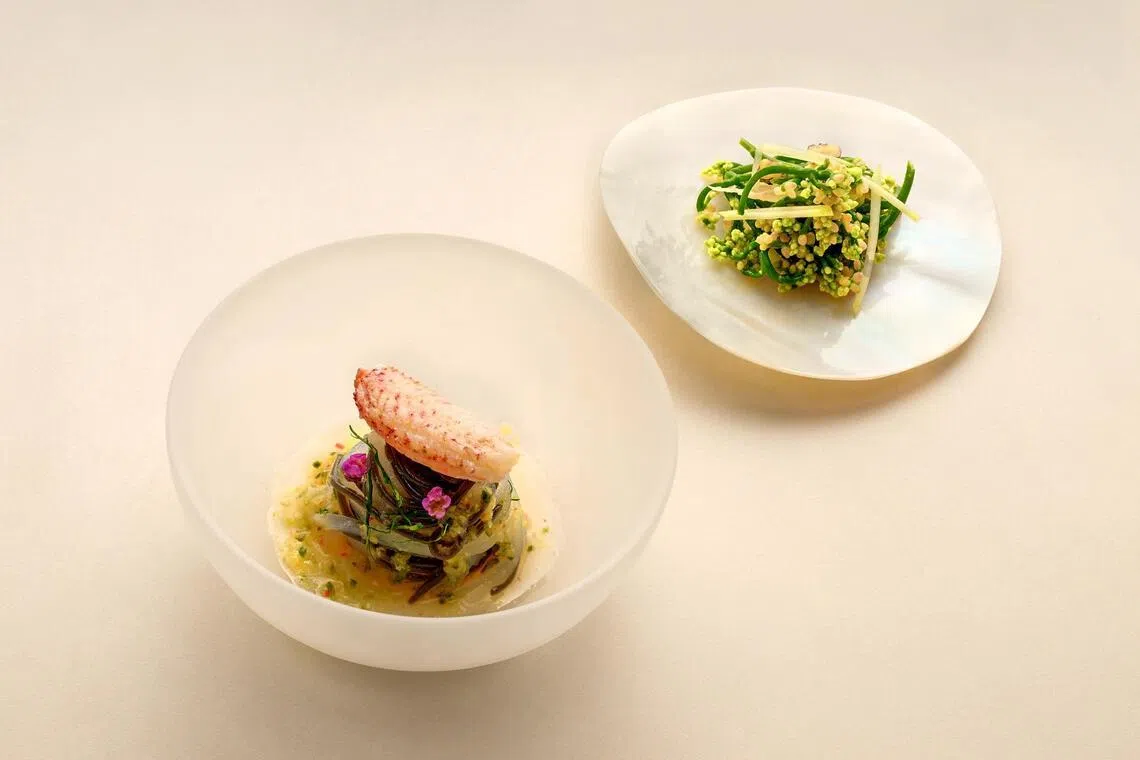
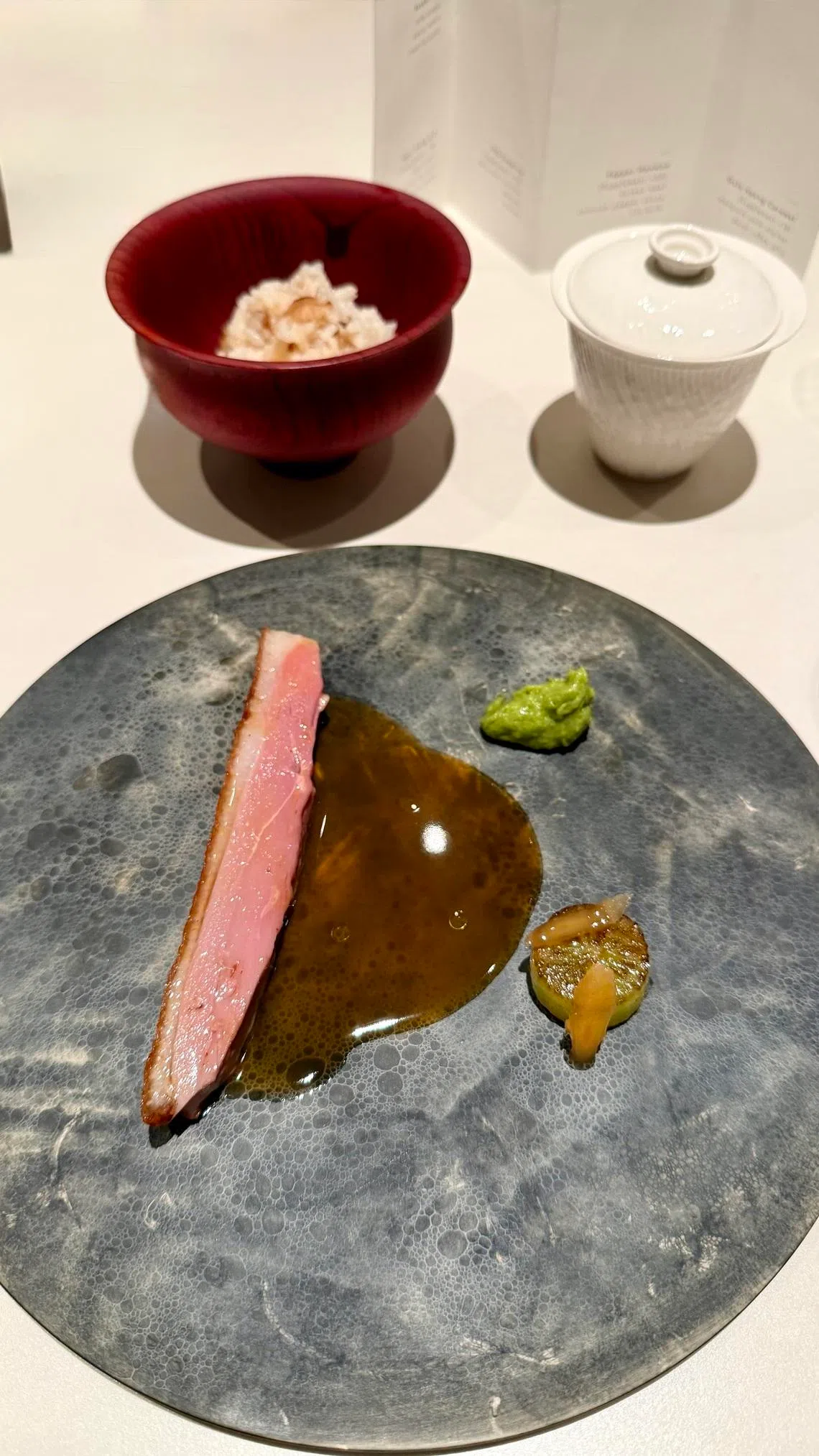
And how about the slippery yum pu ma fern noodle and crab meat, tossed in a garlicky nuoc cham sauce that captures a Thai klong-like funkiness in the best way? Or low-temperature cooked duck breast with a glassy, crackling skin few fowl can achieve?
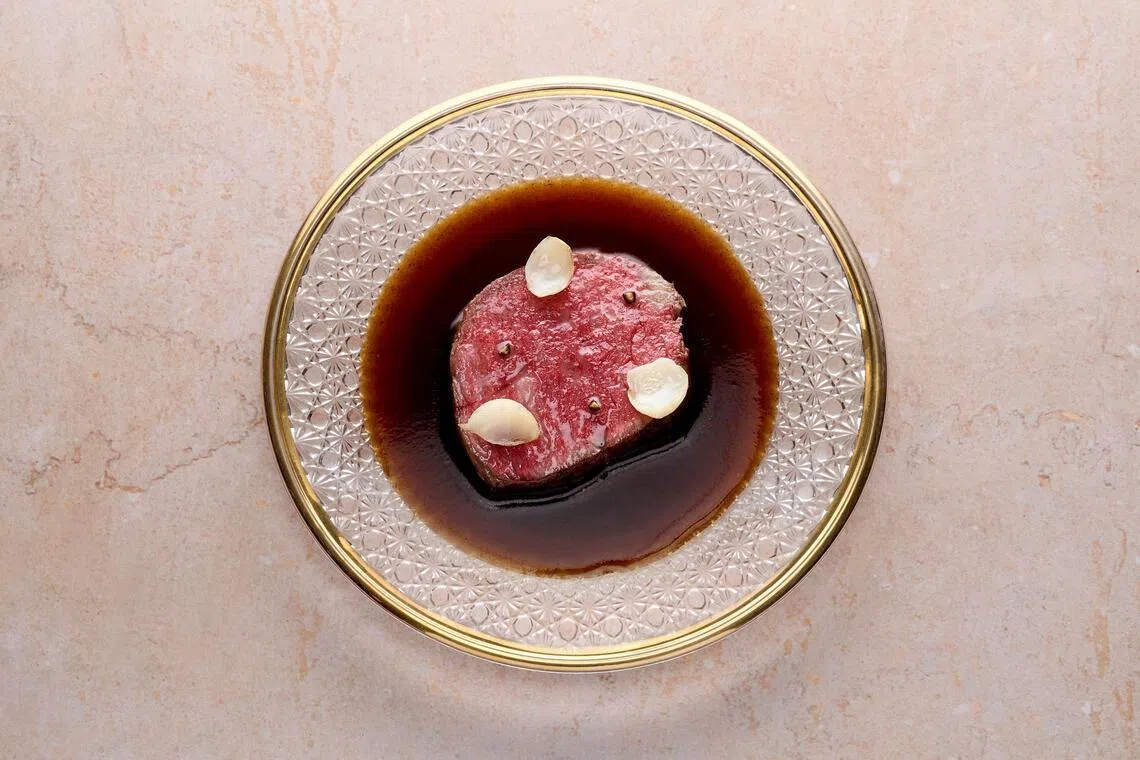
The Hanwoo tenderloin (S$55) lives up to its name: buttery soft, crusted with blitzed mushroom powder and elevated by a Sarawak pepper sauce that knows not to steal its thunder.
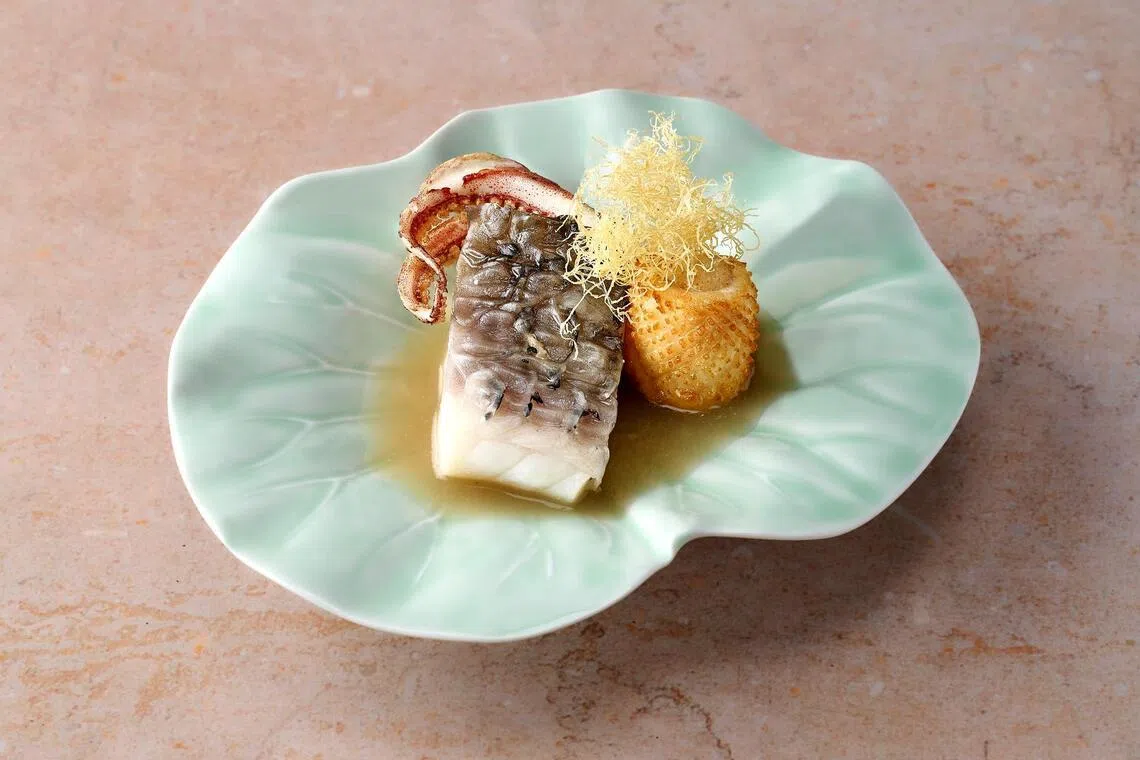
Even on the flip side, it’s more niggle than fault. The black emperor fish can’t quite shed its muddy river-bank inner nature, even with an inspired sauce made from buah kulim, tamarind’s jungle cousin.
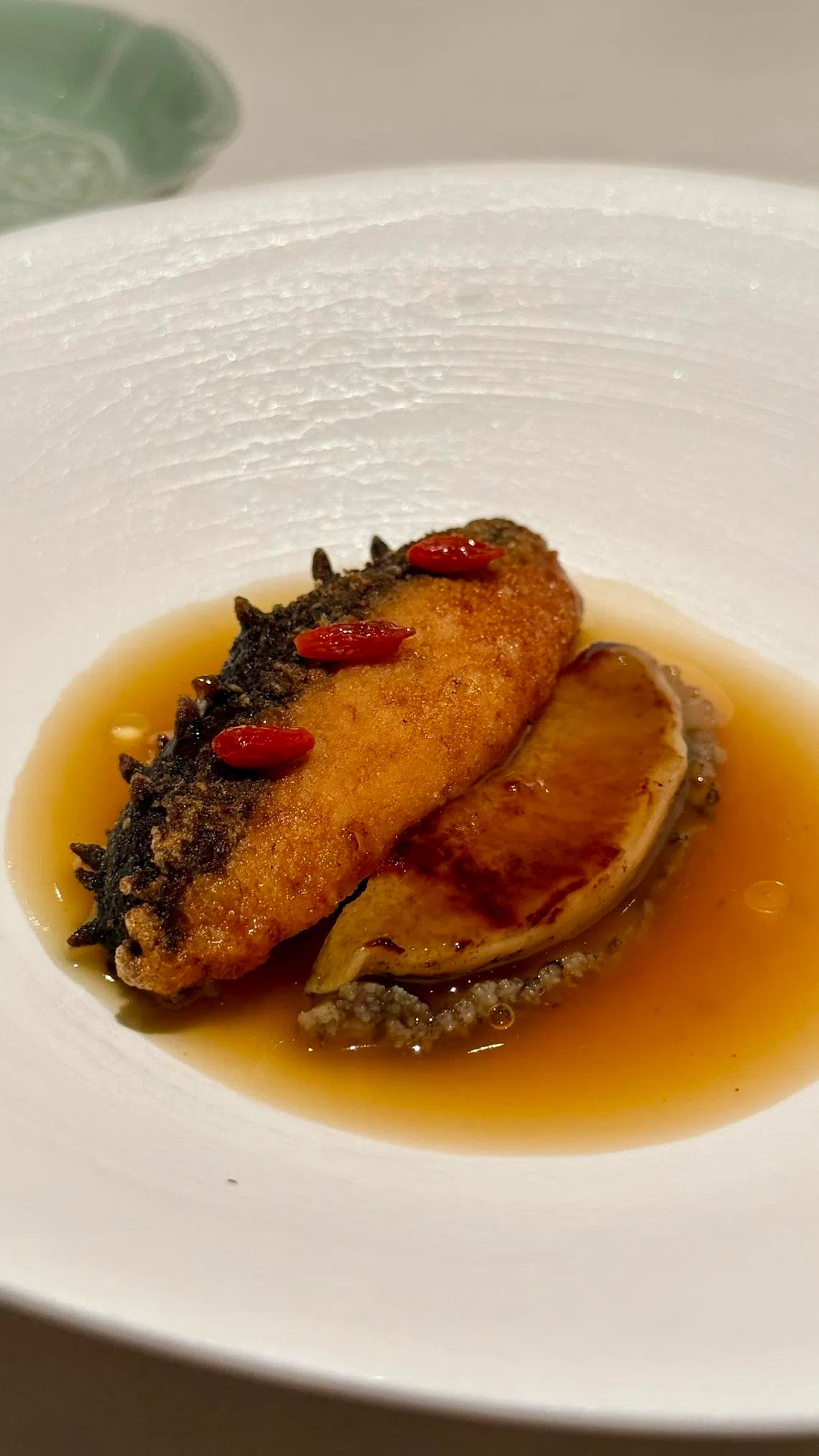
An FTQ dumpling (S$35) of sea cucumber stuffed with scallop and fish maw in brown sauce has Buddha Jumps Over the Wall aspirations, but an intensely seasoned abalone on the side thwarts it.
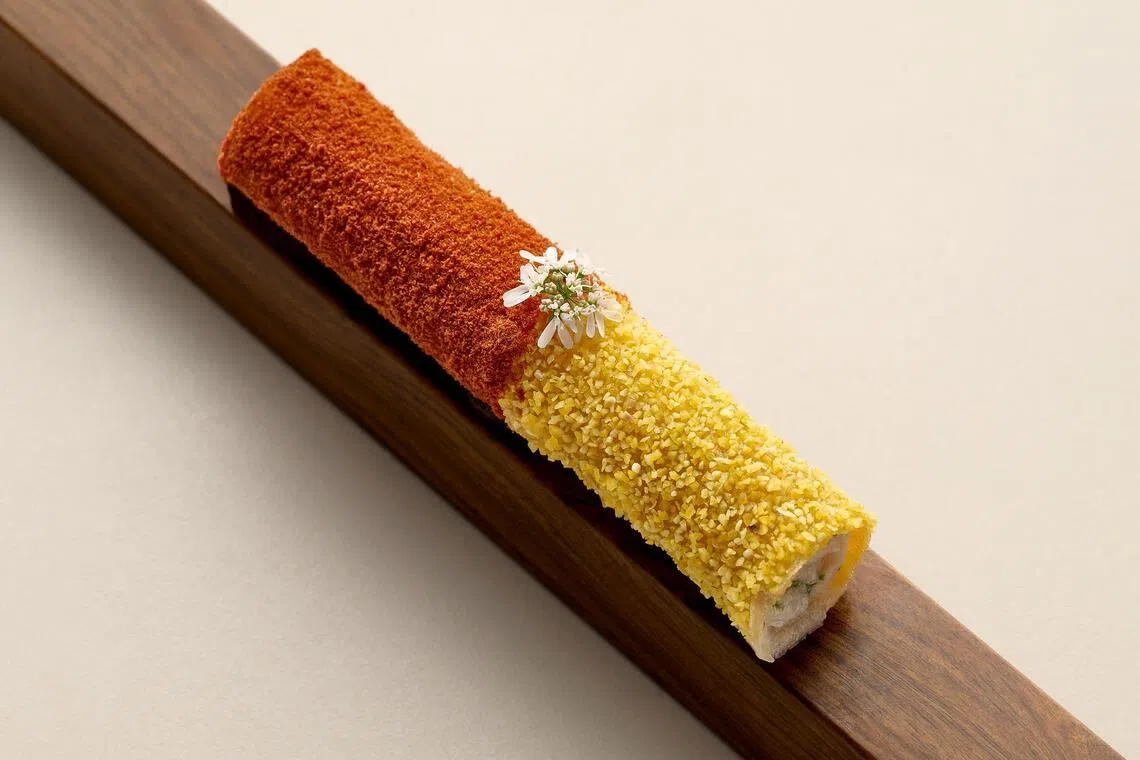
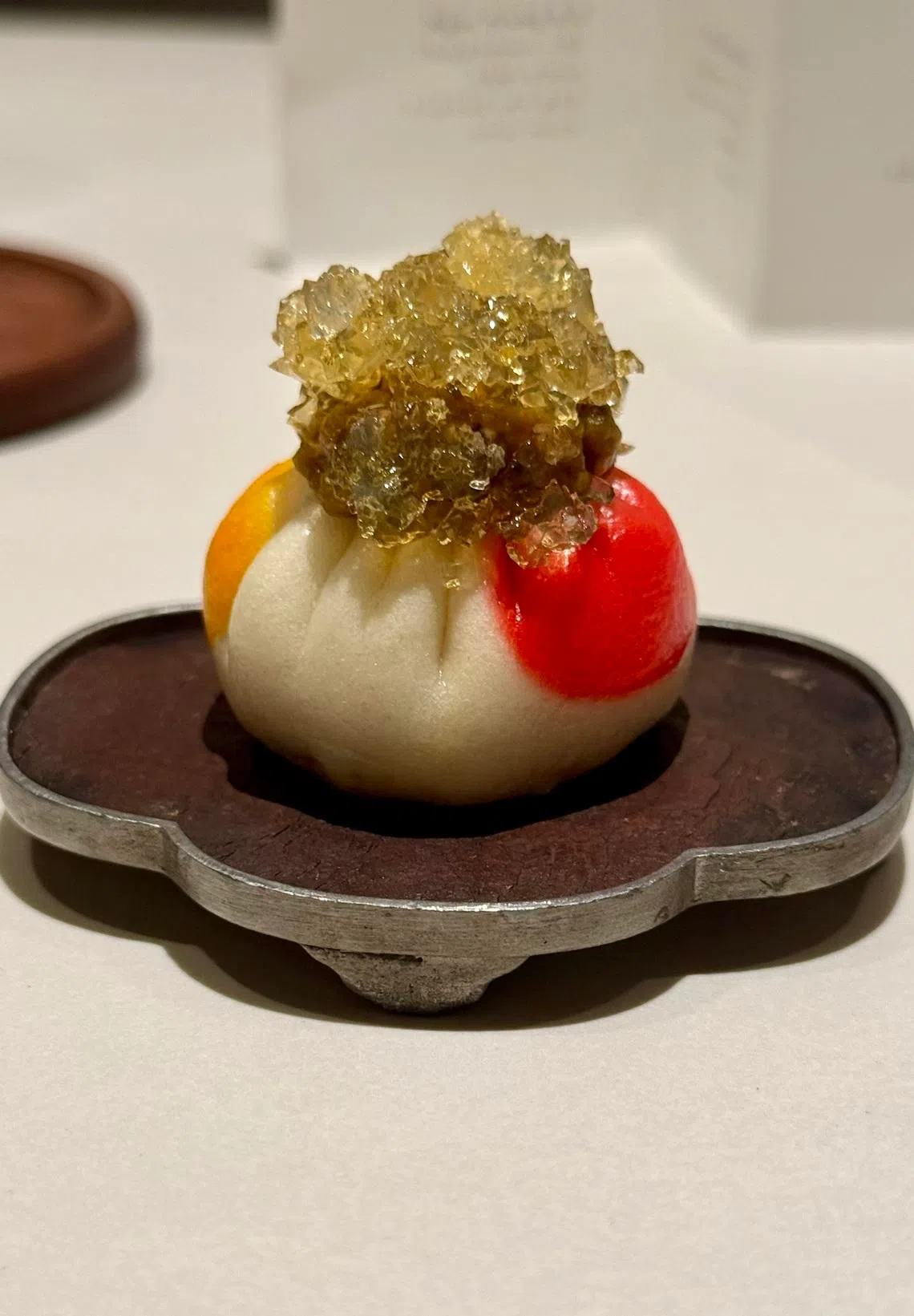
The surprise spring roll and luffa bun are just too pretty to eat, but don’t make you sit up.
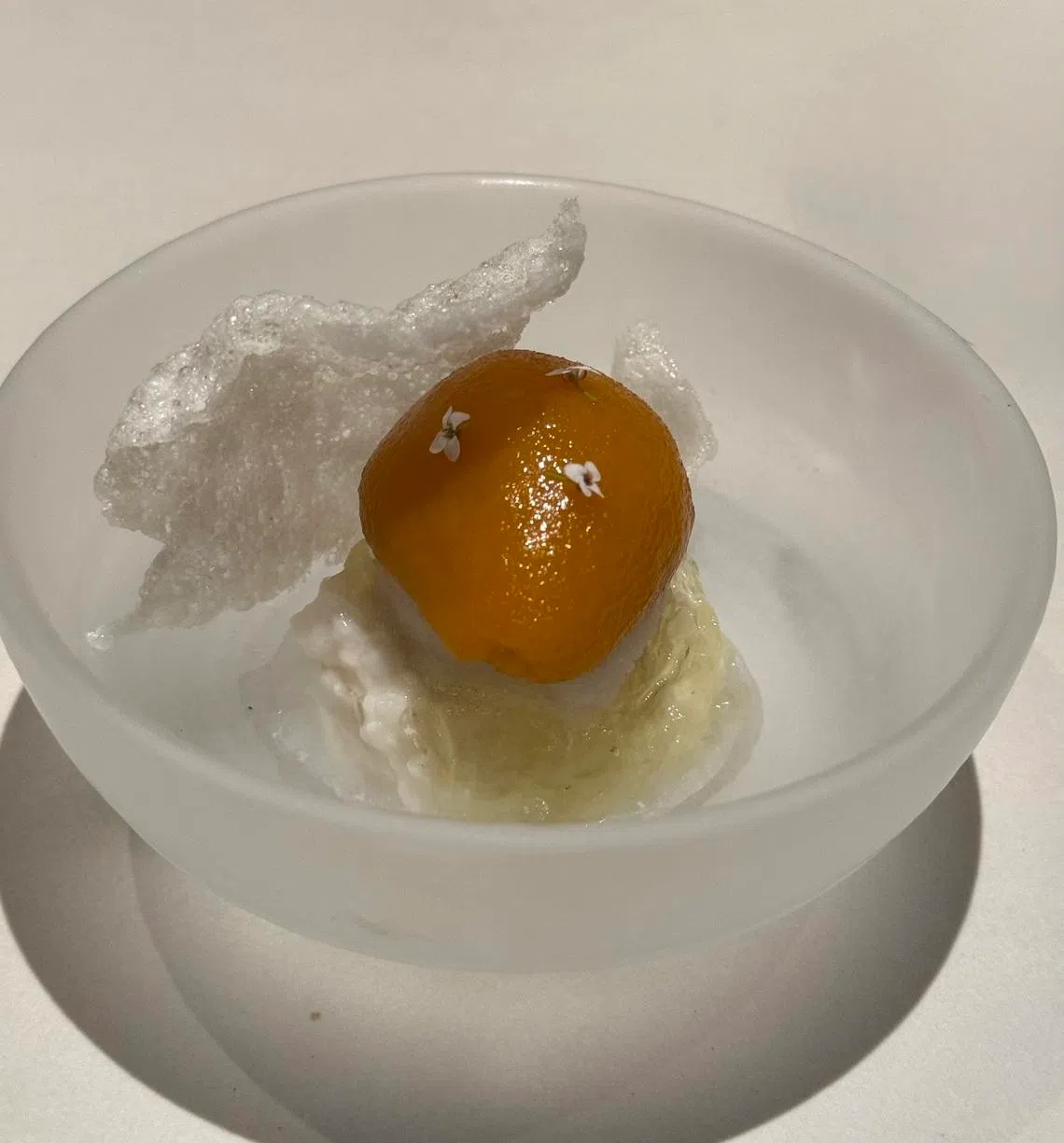
Dessert is no-contest good. Loquat poached in chrysanthemum with tapioca, wild bird’s nest and fermented coconut-glutinous rice is weirdly delicious.
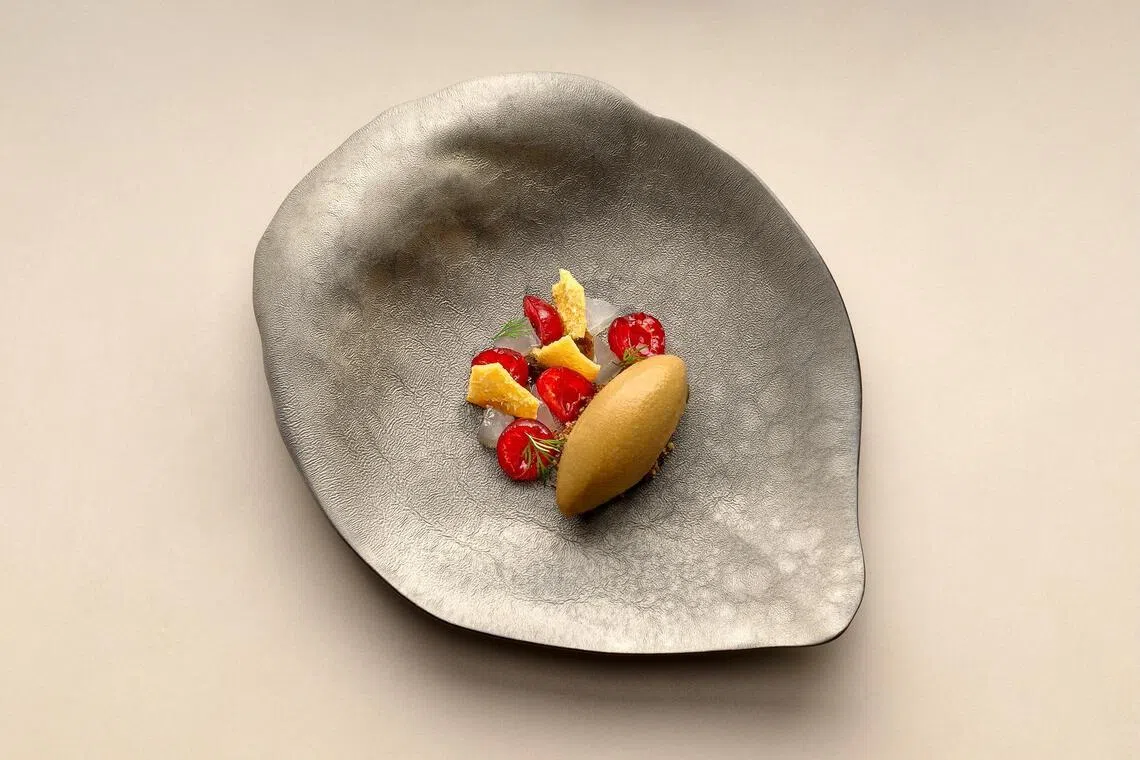
So is the gula apong (same-same, but different from gula Melaka) ice cream with attap seeds and coffee jelly.
Names and locations may change, but Tan’s cuisine has been consistently evolving for the better. You hope Asin is now his forever home, but wherever he is, he’s still an ace in the deck.
Rating: 7.5
Decoding Asia newsletter: your guide to navigating Asia in a new global order. Sign up here to get Decoding Asia newsletter. Delivered to your inbox. Free.
Copyright SPH Media. All rights reserved.
TRENDING NOW

Government to bring forward raising of retirement age, give employers more financial support to create flexi-load jobs

If Europe goes to war, the fallout will be felt in East Asia

Indonesia stocks suffer worst plunge in nearly 30 years as MSCI proposes standalone status

Vietnam’s northern provinces, not Hanoi or Ho Chi Minh City, are powering near 10% GDP growth

