Robot salads and designer Korean fare at Hyundai’s Na Oh restaurant
Celebrity chef Corey Lee’s debut in Singapore is part theme park, part fine dining, and worth the trek out to Jurong
NEW RESTAURANT
Na Oh 2 Bulim Link Level 3, HMGICS Singapore 649674 Tel: 6263 1548 Open for lunch and dinner Wed to Sun: 11:30 am to 2 pm; 6 pm to 7:30 pm
SOMEHOW, being told to “go to Jurong and eat Korean food” sounds about as appealing as “it’s your turn to go service the car at Kampong Ubi”. It feels like an imposition, creates some resentment and more importantly, doesn’t sound fun at all.
And let’s not even get started on that quintessential Singaporean refrain “but it’s so fa-aar”.
If you can go to Jewel or Changi Airport to eat fishball noodles with no intention of flying anywhere, you can go to a car showroom in a Jurong industrial estate that serves robot-farmed salads and Korean cold noodles by a Michelin-acclaimed celebrity chef from San Francisco. At least once, anyway.
Much of the buzz about Benu’s Corey Lee setting up shop in Singapore hasn’t so much been about yet another foreign chef invading our shores but more about why Jurong and why Hyundai – the Korean car group that set up a futuristic R&D centre and hired Lee to run what looks literally like a fancy staff cafeteria.
We think he may have drunk the same water that feeds the eerily perfect romaine lettuce, kale, ice plants and other vegetables that grow in the sprawling, artificially lit “smart” farm that starts from the ground floor and up to the third floor where Na Oh presides.
Like him, we’re mesmerised, if also alarmed, at the sight. Forget urban farms with its organic mess of decomposition and misshapen zucchinis feeding off each other like nature intended. These are immaculately formed leaves sprouting from individual pods, lush and bountiful without the slightest hint of decay. A couple of robots cruise by instead of human farmers, although there is the assuring sight of one person harvesting the lettuce that will go into your salad later.
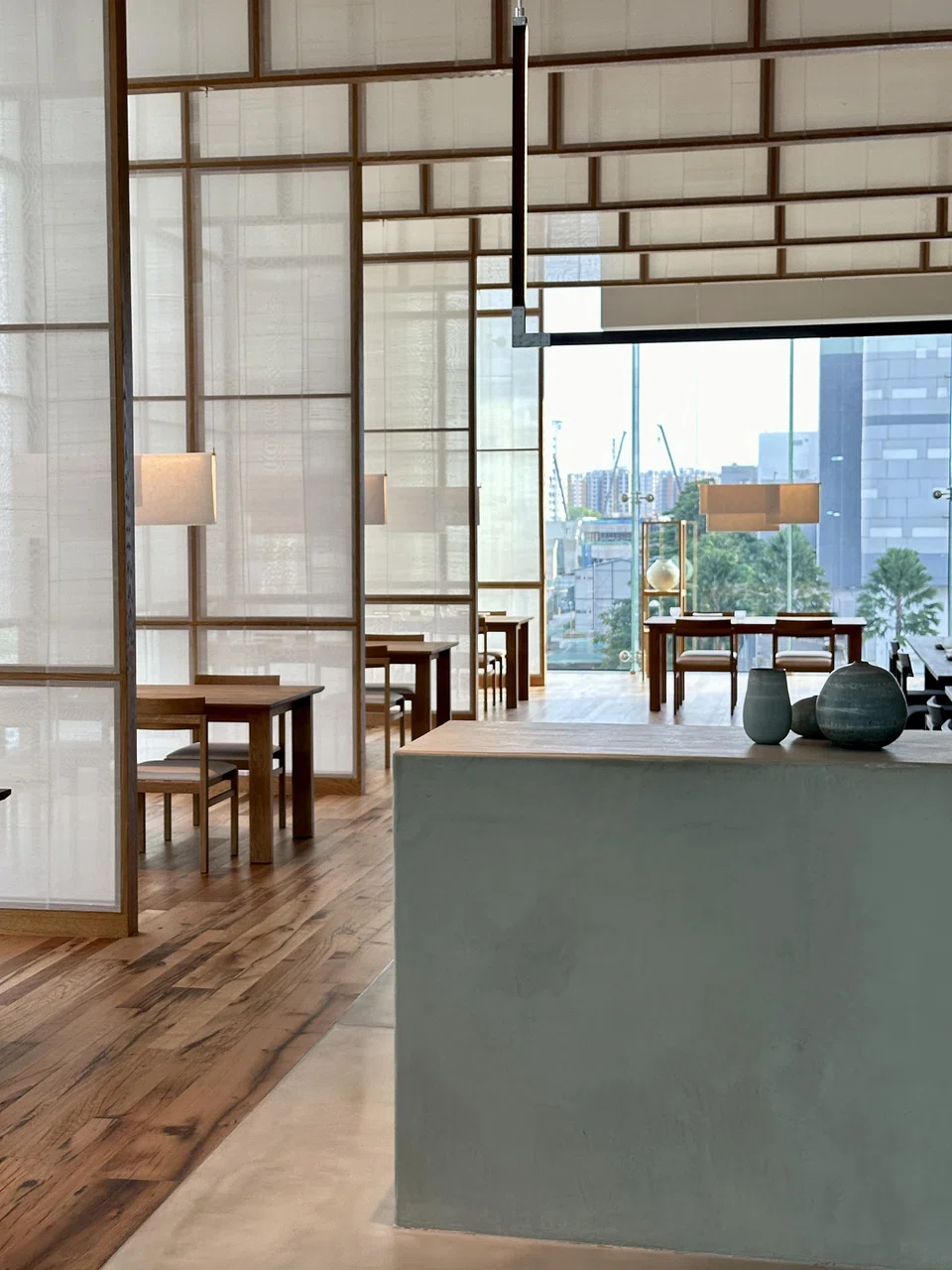
Meanwhile, the cold - literally – bright-light-and-steel sterile ambience is slightly warmed by the pale wood and translucent cloth screens of Na Oh’s minimalist design. Large clay pots at the entrance, by the way, are no art installation but filled with Lee’s own soy sauce.
There are only three fixed-price menus on offer at S$78 - almost a bargain although some may argue you need to compensate for the hardship of coming all the way here. Each set features three appetisers, a main course and dessert. You only get to choose the main course – grilled butterfish, Pyongyang cold noodles, or ginseng chicken soup – and dessert.
Nothing you can’t get in Tanjong Pagar, but in Lee’s hands – as executed by his kitchen team – there is a level of refinement that puts Na Oh in a different league than an ajumma-run pocha. You won’t get that robust, one-note heartiness you equate with such classic Korean fare, but you do get an artfully presented version that is subtle and clean to the point of understatement.
We can see how that might split diners down the middle between those who have strong feelings about how such dishes should taste, and those who buy into the whole package of artisanal servingware, offbeat surroundings and a fresh approach to Korean fine dining that can’t be traced back to Sun Kim.
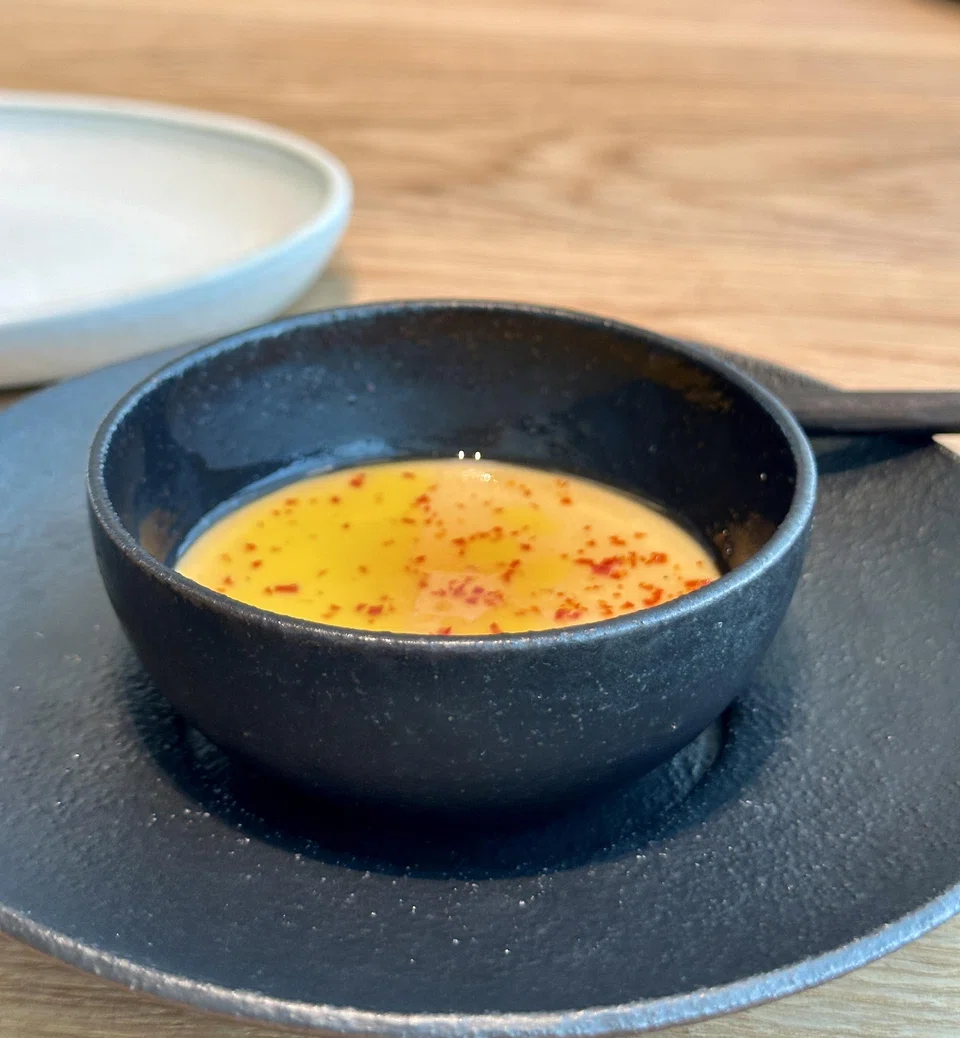
Each set starts off with cold silken homemade tofu, wobbly with a layer of aged soya sauce on top almost like caramel custard, sprinkled with chilli powder. It’s almost plain, yet the sauce works its magic with its mellow saltiness with a slightly sweet finish.
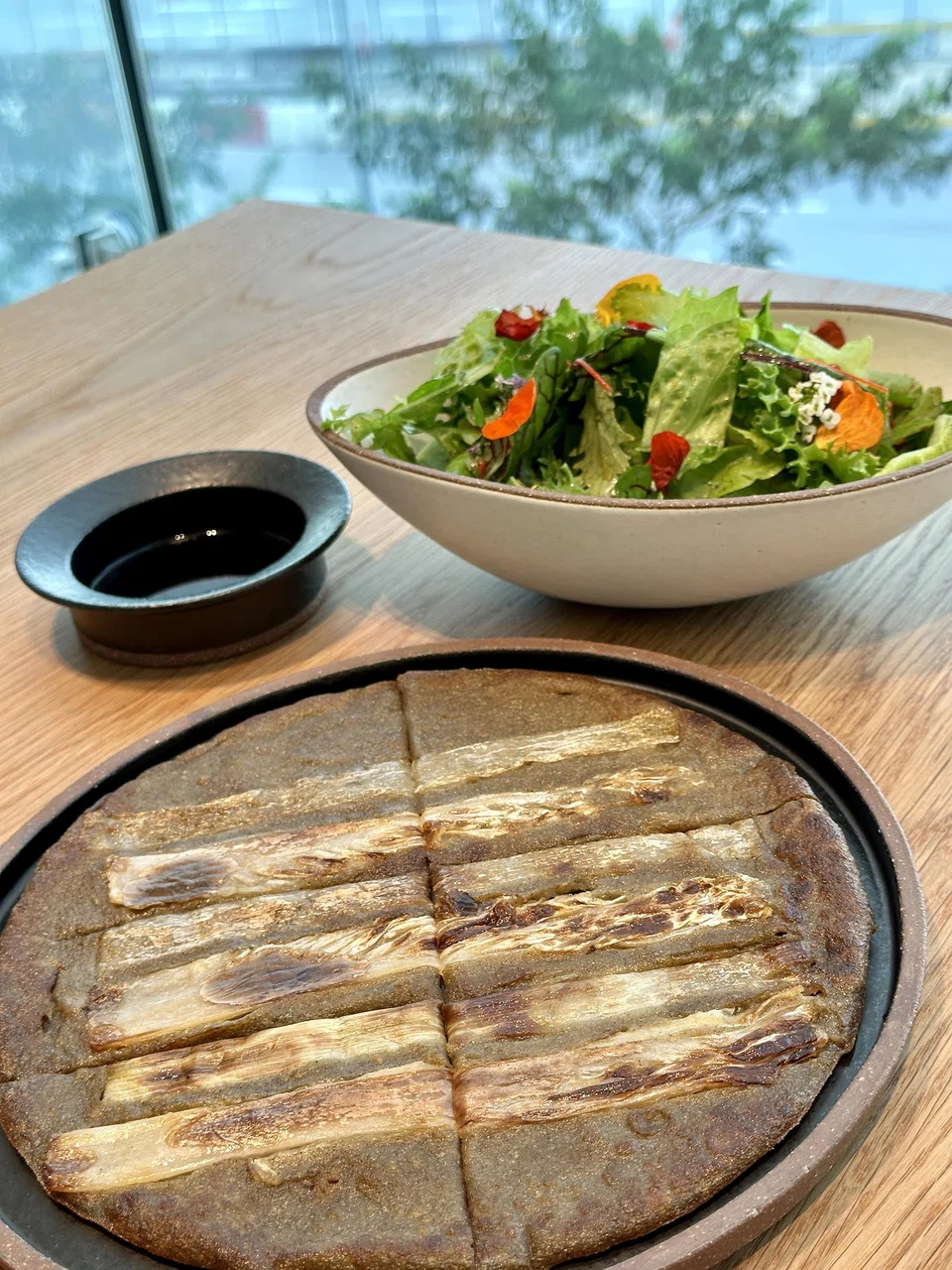
Buckwheat jeon stands out as thin, crisp pancake with a hint of earthiness and softened leeks that you dip into a sweet sauce on its own or wrap it with a green salad of leaves harvested that same morning.
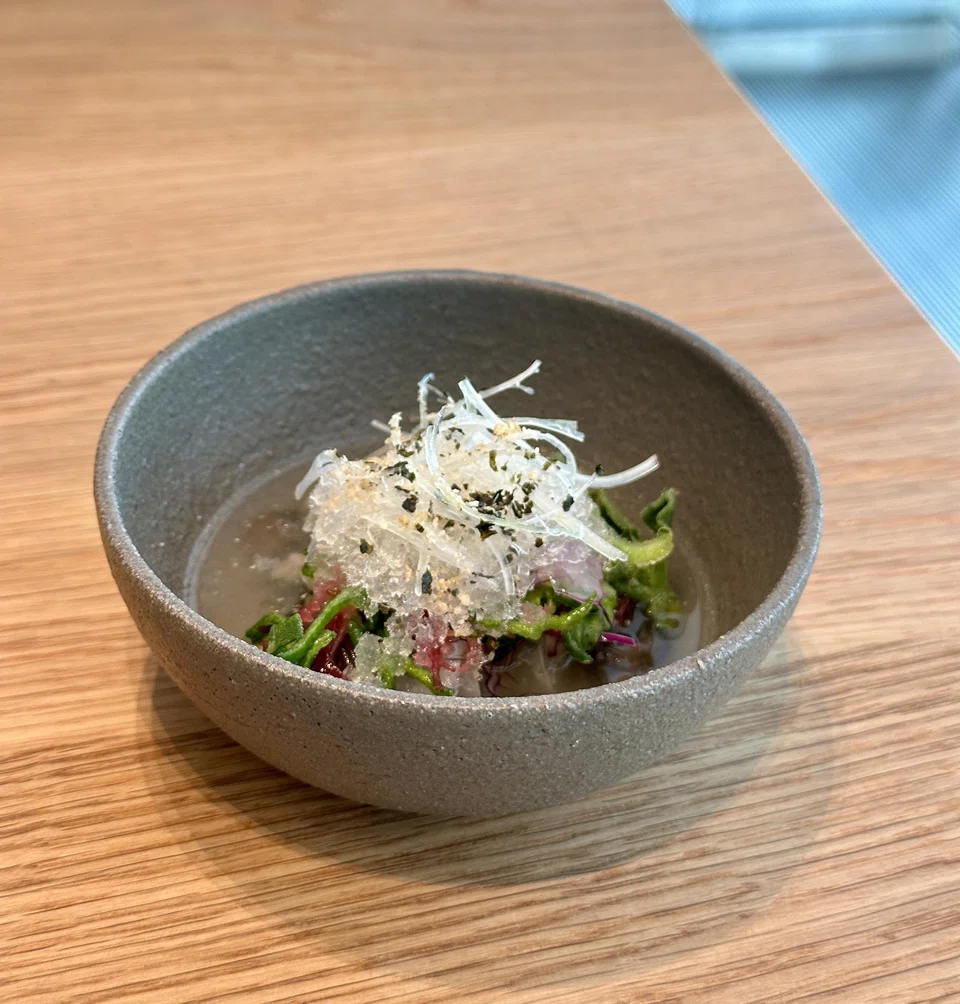
Mulhwe takes a bit of getting used to. Refreshing raw fish rolled around cucumber strips sits in an icy cold broth seasoned with water kimchi but without the chilli and raw onion kick we’re familiar with. Odd soup aside, there’s lots of crunchy seaweed, ice plant (from the farm) and sliced raw sea cucumber for good measure.
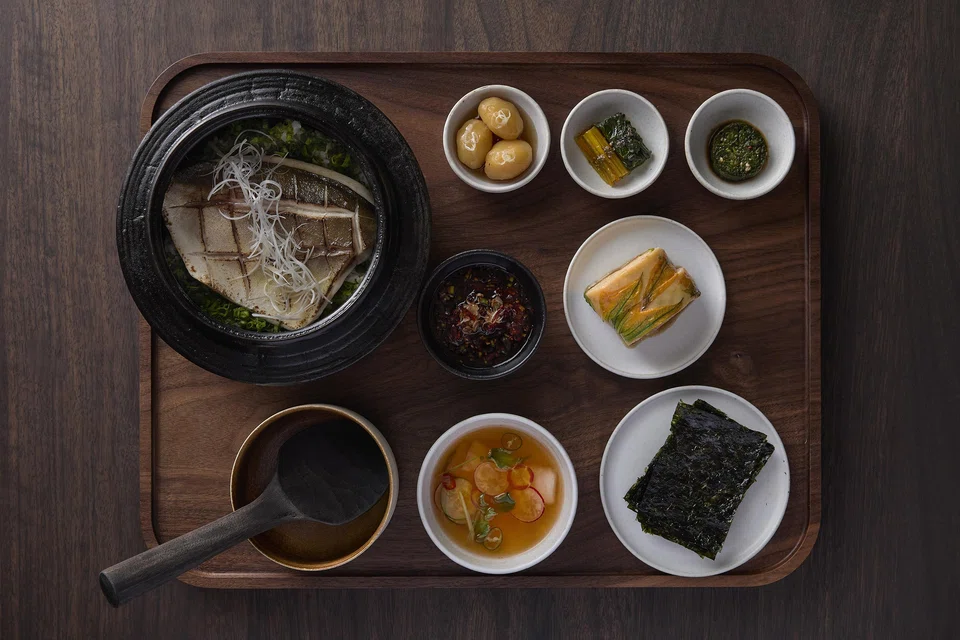
Of the three main dishes – beautifully presented on large wooden trays – the butterfish works best with tender fleshy grilled fillets over a hot pot of Korean short-grain rice with a crisp charred bottom for crunch, and a chilli garlic dip to bring it to life. A layered omelette roll, seaweed and assorted banchan make this a well-fleshed out set.
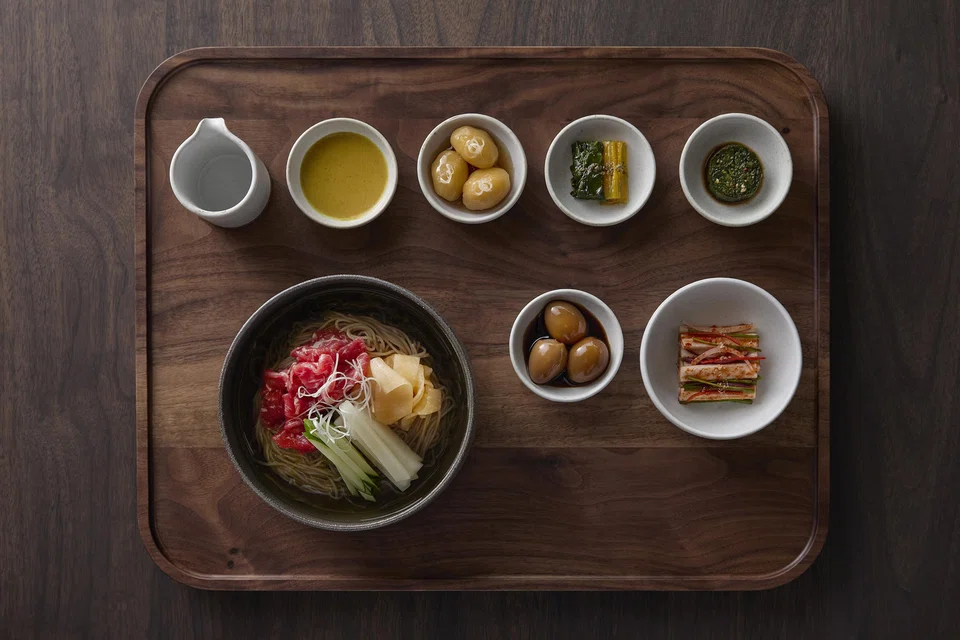
Pyongyang noodles would be perfect if the thin buckwheat noodles had a bit more chew, otherwise the clear cold broth has a distinctive beefiness, and the marbled raw slices of beef loin look exactly like Japanese fake food samples with their impossibly pretty pink hue. They’re also super fresh and good quality.
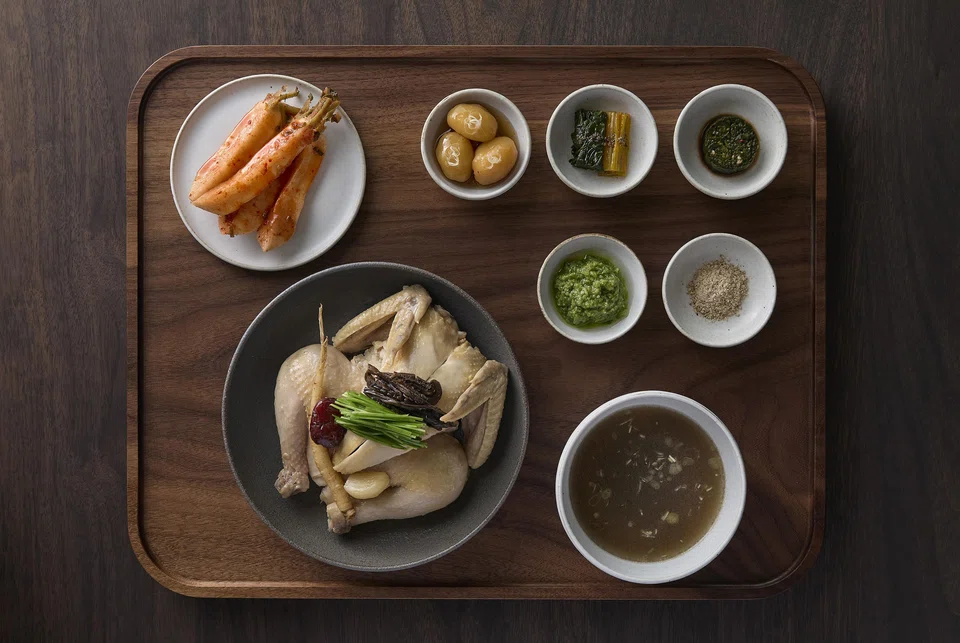
The ginseng chicken soup is light on the ginseng but strong in old-fashioned hearty goodness, even if the rice it’s been stuffed with is too mushy to be enjoyed. But the meat falls off the bone and you dip it in Chinese-style green onion and ginger sauce.
Dessert is a bingsu of fresh strawberries and makgeoli ice – mix it all up and it comes together like strawberry bandung ice.
Service is friendly in a practised way, with staff who can recite ingredients on cue but can’t bring you a cooler for your makgeoli even though they bring it for some other guests. They’re well schooled but aren’t prepared for curve balls which might cause a glitch in their programming.
But it’s only been two weeks so there’s still time. Meanwhile, see Na Oh for what it is – part theme park, part restaurant and enjoy it just for how it breaks the mould of fine dining and puts Korean food in a new light. It needs a bigger menu to justify a return visit but otherwise, making the trek out to Jurong is more fun than you might think.
Rating: 7
Decoding Asia newsletter: your guide to navigating Asia in a new global order. Sign up here to get Decoding Asia newsletter. Delivered to your inbox. Free.
Copyright SPH Media. All rights reserved.