

Taiwanese tales at Iru Den
Chef Javier Low explores the potential of Taiwanese ingredients in his modern-Japanese cuisine
Restaurant Revisit
Iru Den, 27 Scotts Road, Singapore 228222. Tel: 8923-1127
A PIECE of shrivelled radish and a mother-in-law. Talk about inspiration striking in the unlikeliest of circumstances. Iru Den chef Javier Low, faced with the cripplingly high costs of Japanese ingredients and other things, found his epiphany right at his marital doorstep in Taiwan – in what looks like a match made in cai po heaven.
With his Taiwanese wife Emily by his side – and her mother’s homemade preserved radish – he now flaunts shrimp from Yilai, kampachi from Penghu and Pacific saury from Kaohsiung, in the same way he might once have lauded ingredients from Hokkaido, Aomori or Chiba. That was not so long ago, when he still served a Japanese-centric menu at prices that exceeded S$300 per head – our mental threshold.
Now that his prices have come down to more digestible levels – S$128 (six courses), S$188 (seven courses) and S$258 (10 courses) – it seemed ripe for a revisit to the table of the chef we first saw as a determined 20-something in 2018, operating a one-man-show in Orchard Plaza.
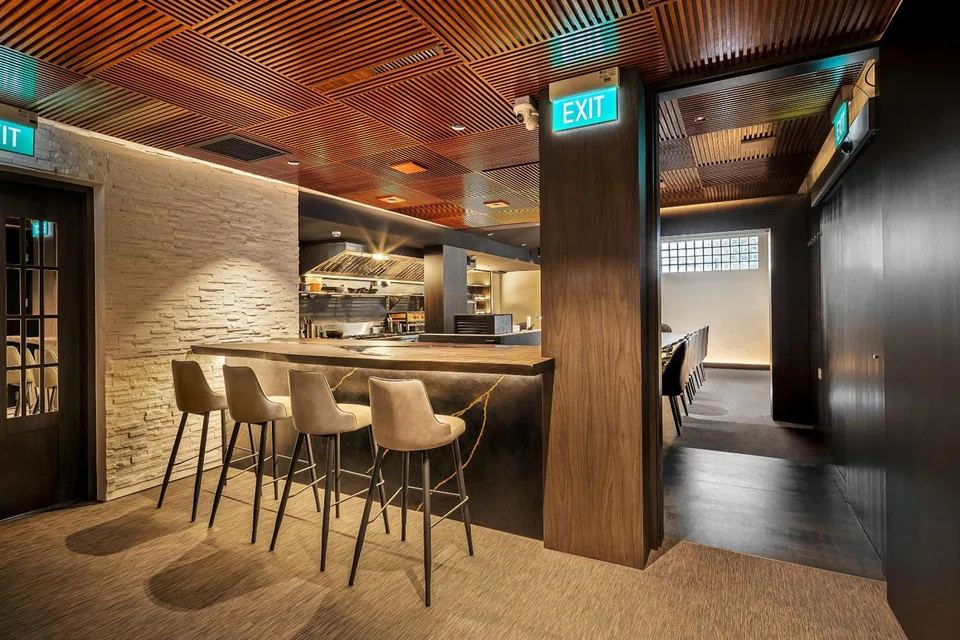
Iru Den’s current location, in a black-and-white bungalow along Scotts Road, seems to suit Low: it is a cosy hideaway, dark interiors lit by strategic spotlights, counter seating that’s wrapped around the kitchen where he and his small but efficient team work seamlessly in well-rehearsed action.
Dining here feels super comfortable, thanks to a hospitable team including Emily, who rattles off the provenance of each ingredient to great detail. The food is safe, dependable and intriguing for its novel Taiwanese approach, but doesn’t push it far enough to make a strong impression. While there are promising moments, there’s still a strong Japanese accent, even with the swop in ingredients.
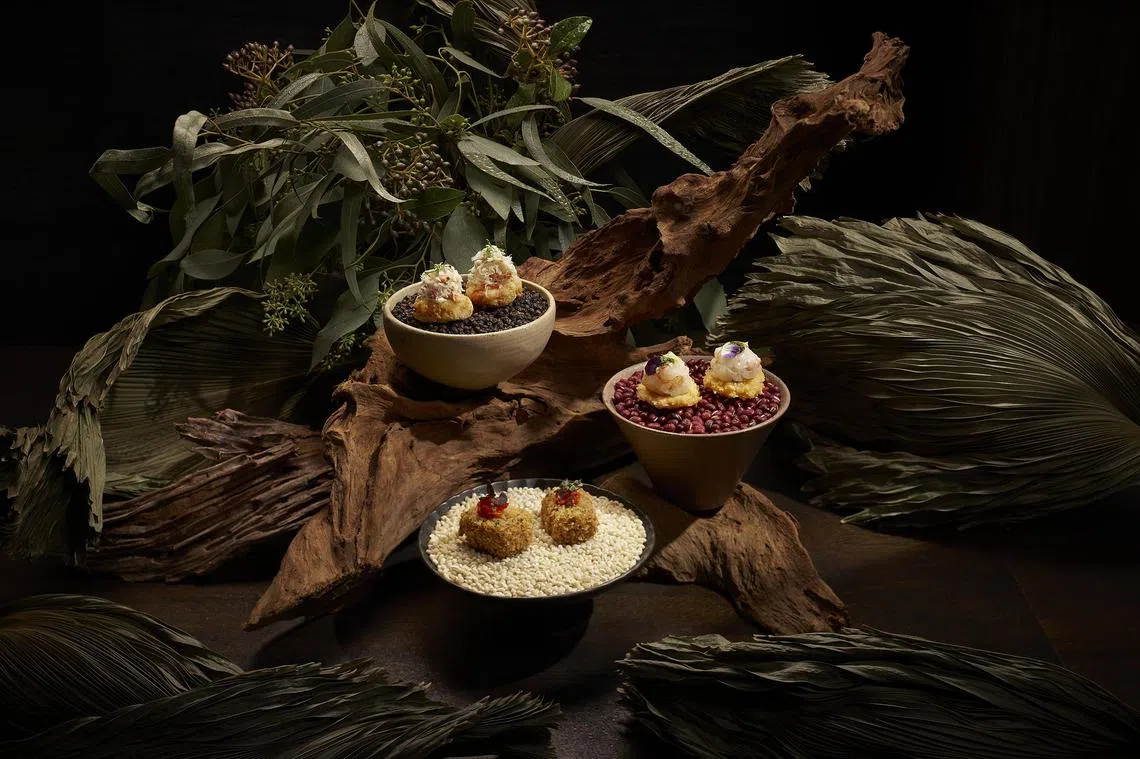
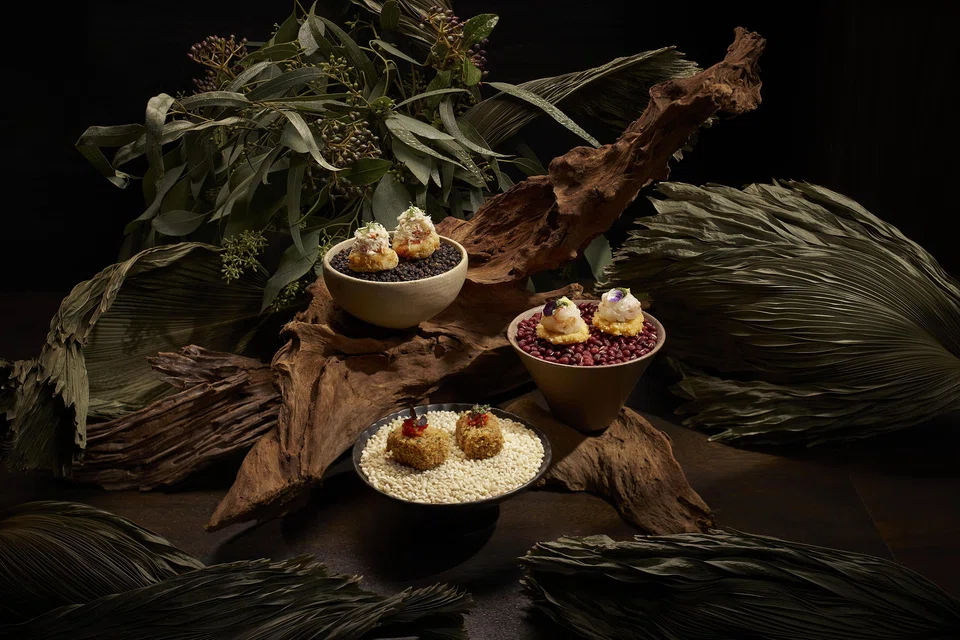
We pick the S$188 menu, which starts with a trio of snacks – straightforward bites but made with good produce. Chopped raw shrimp on top of a crumbed fried prawn cake, a similar-themed fried crab cake topped with fresh Hokkaido crab meat, and confit duck croquette topped with a dab of fermented Taiwanese chilli relish on top, which gives it a nice perk.
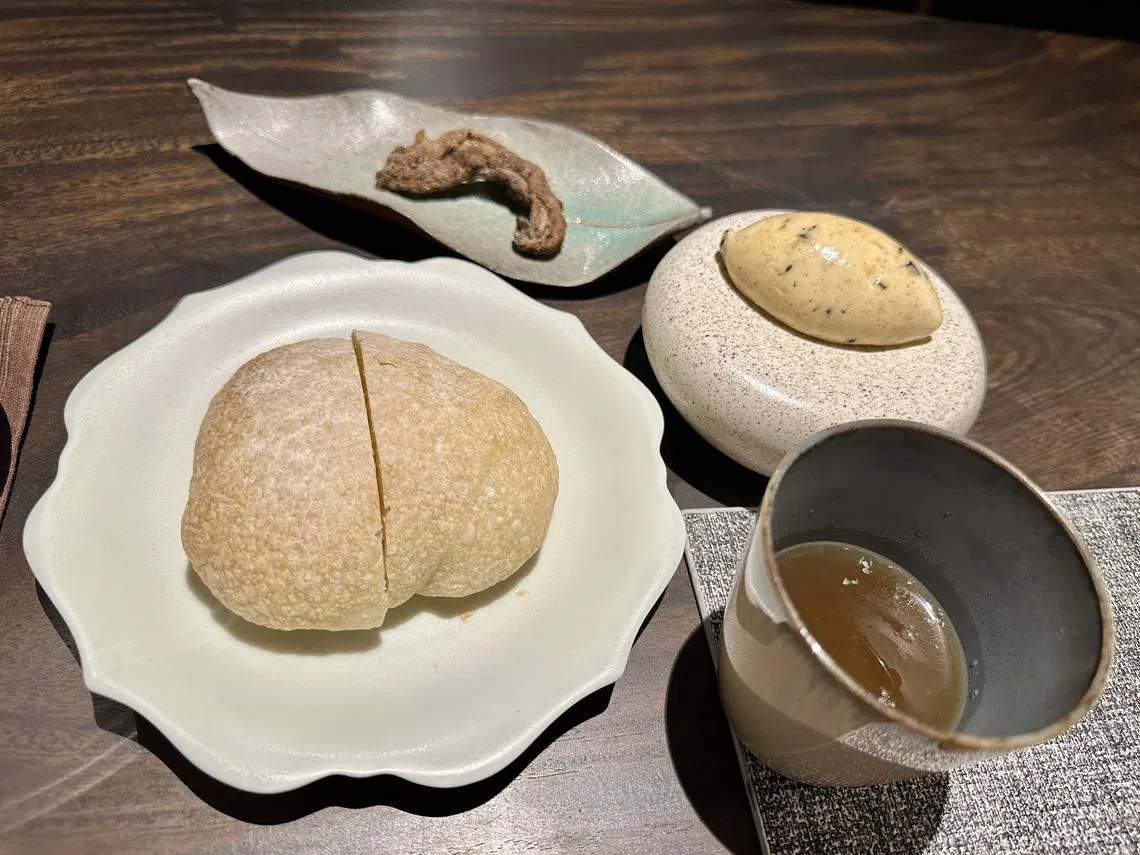
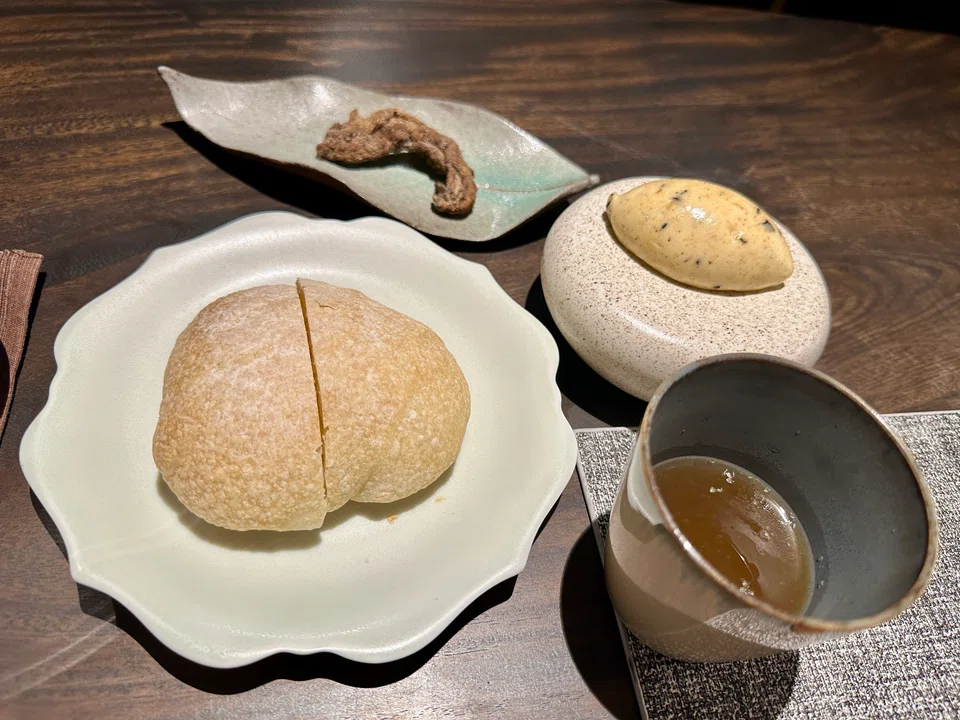
All nice enough, but our eyes are fixated on mum-in-law’s preserved radish and the deep dive into Taiwanese food culture it promises. Looking like some unearthly thing your cat might proudly lay on your pillow, the aged radish sits like a prized display beside homemade ciabatta and cai po butter. There should be more radish in the butter for a definitive flavour, but at least the ciabatta is warm and chewy. And there’s a little cup of piping hot chicken broth brewed with the radish, for a salty but rich, earthy depth that hits the spot.
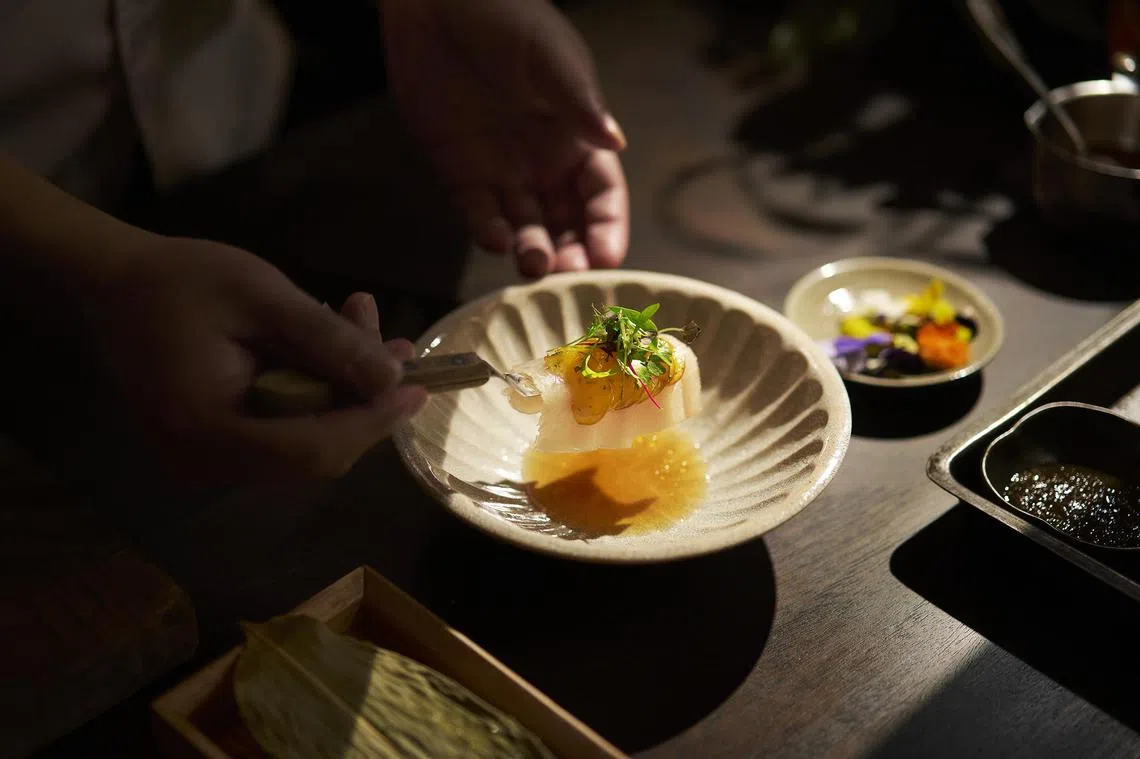
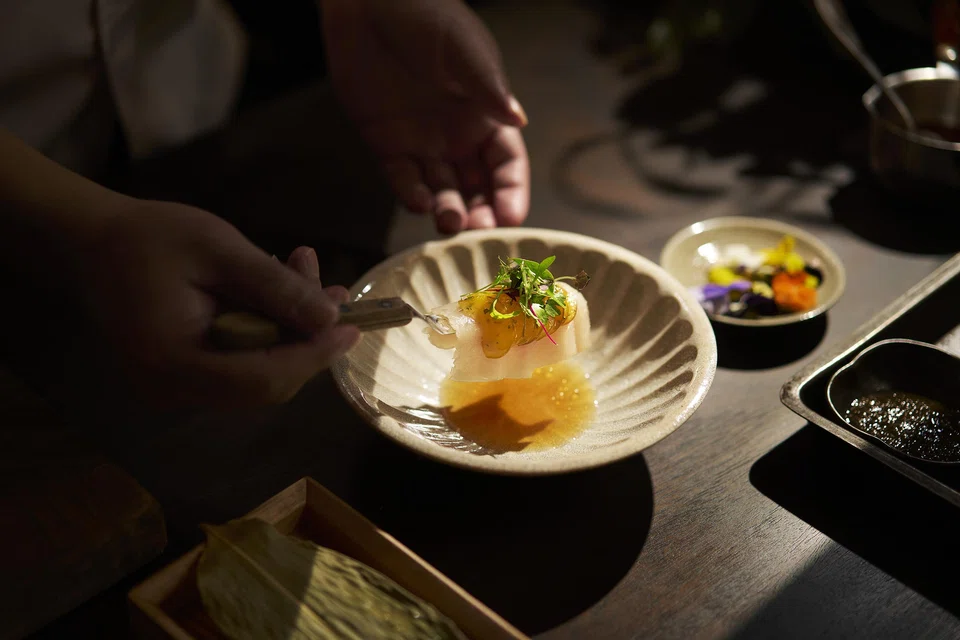
The Taiwanese kampachi (amberjack) doesn’t have the same sweetness as its Japanese counterpart, so Low gives it a boost with a light smokiness and acidity from thinly sliced plums and verjus.
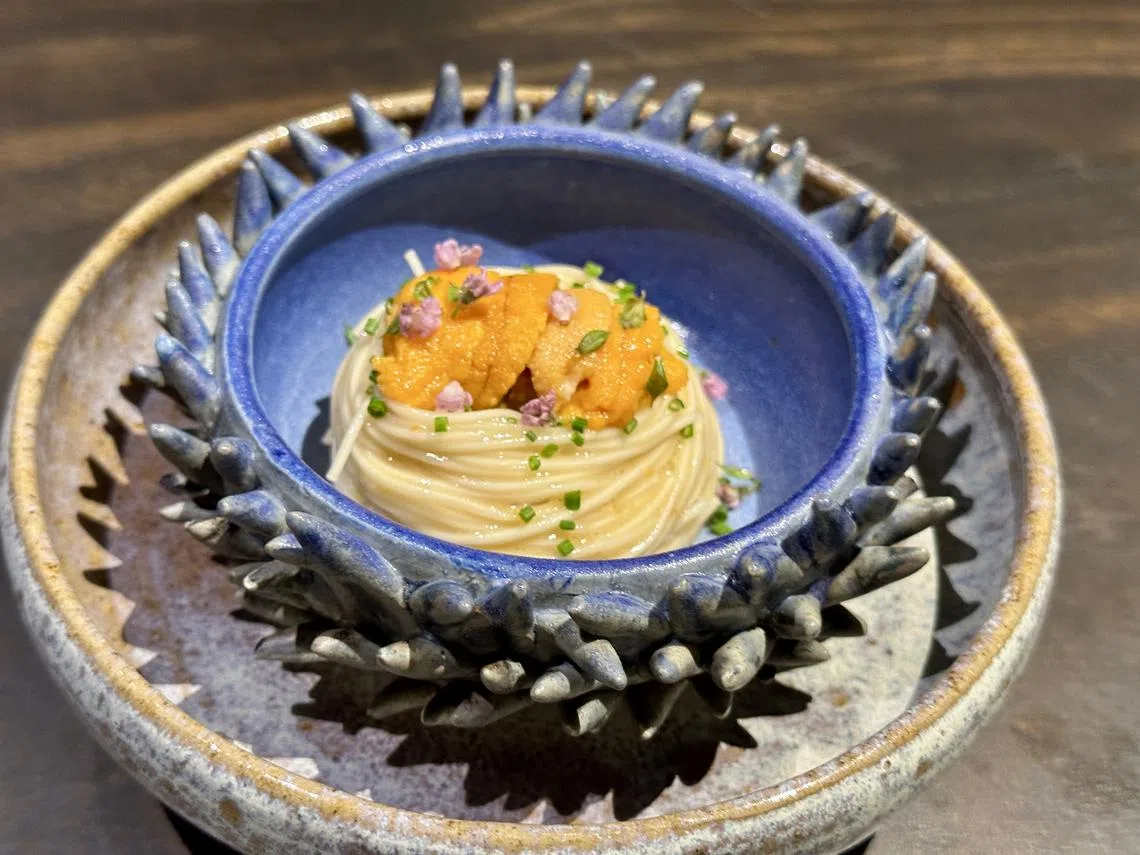
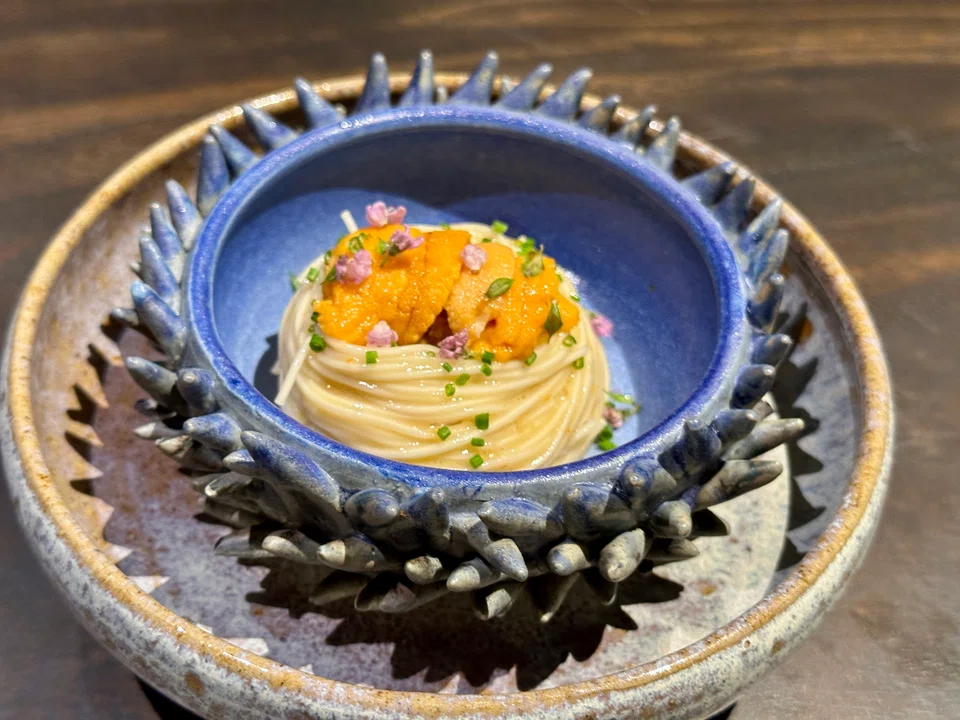
It doesn’t have a lot of oomph, but Low’s classic cold somen, tossed in a light vinegar dressing with wasabi leaves and Hokkaido uni – not Taiwanese, as he almost sheepishly admits – makes up for it, with its contrast of creamy sea urchin, al dente noodles and bite of vinegar/wasabi.
So far so tame, but it’s the amadai (costing S$22 more) that shows a flash of Taiwanese-inspired originality the meal could use more of. Milky, flaky flesh against crisp-fried crunchy skin is perfect in a thickened dashi enhanced with butter and finished off with chive oil and green chilli relish, not unlike yuzukosho.
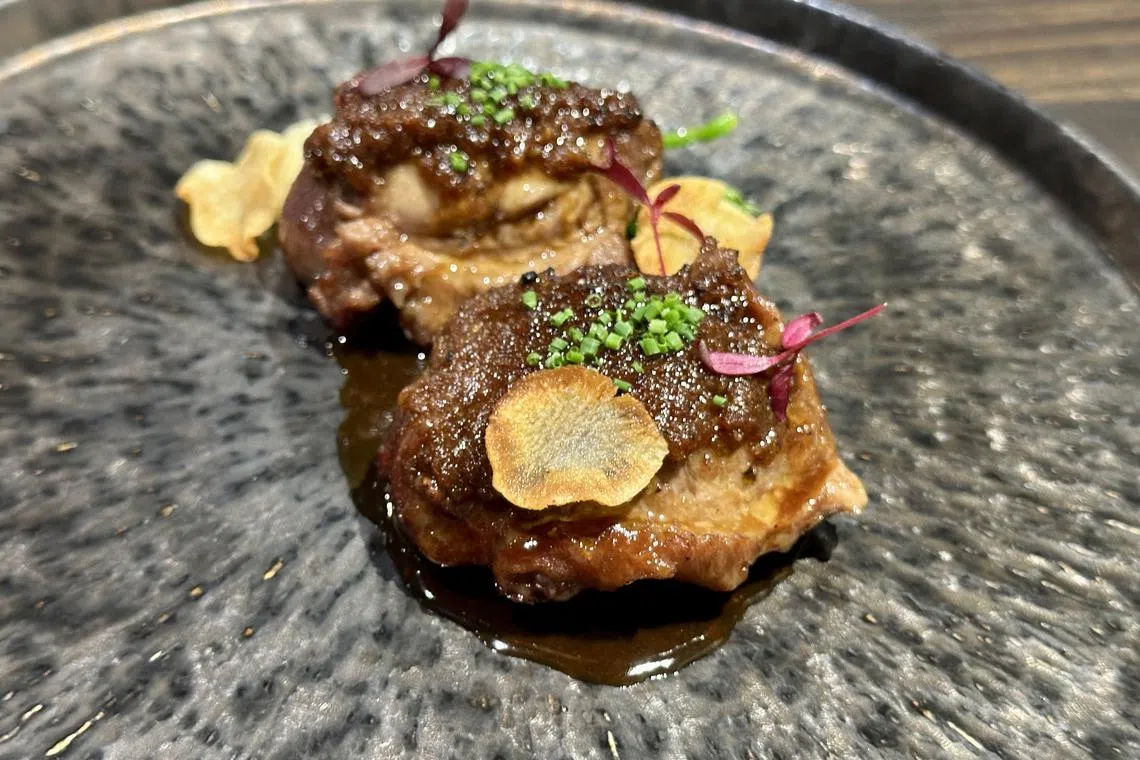
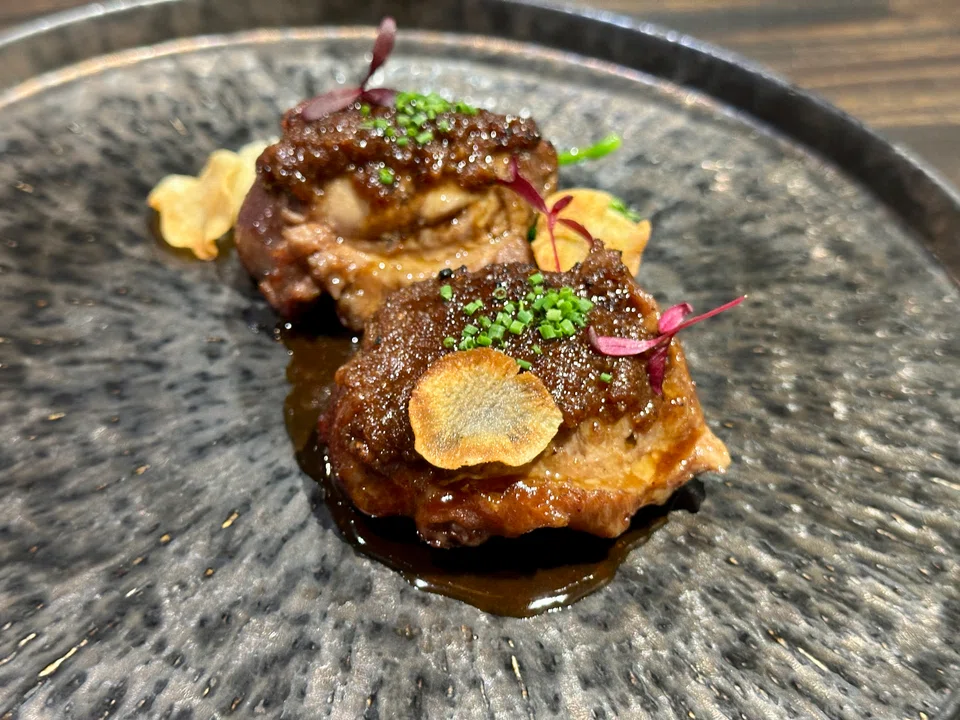
And while braised Iberico pork cheek in a grainy satay-like Sa Cha sauce with garlic puree and slippery vegetables has the right inclination, the rich gelatinous pork and heavy-duty sauce is a bit of an overkill.
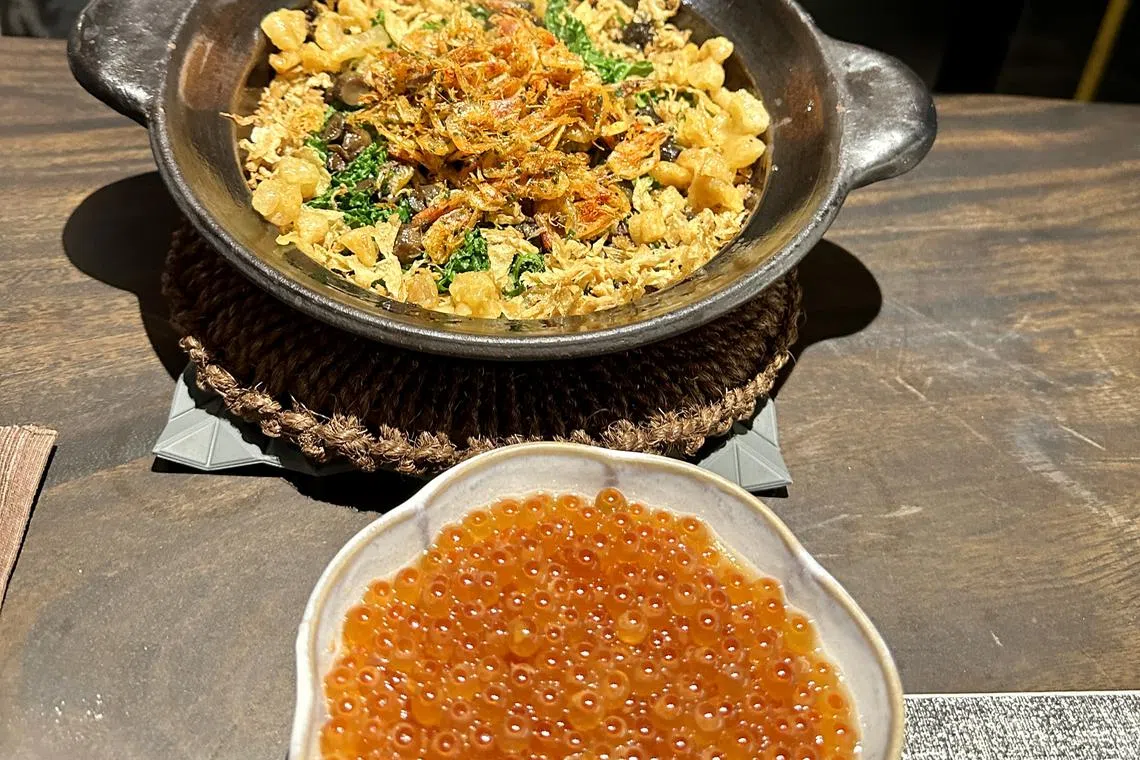
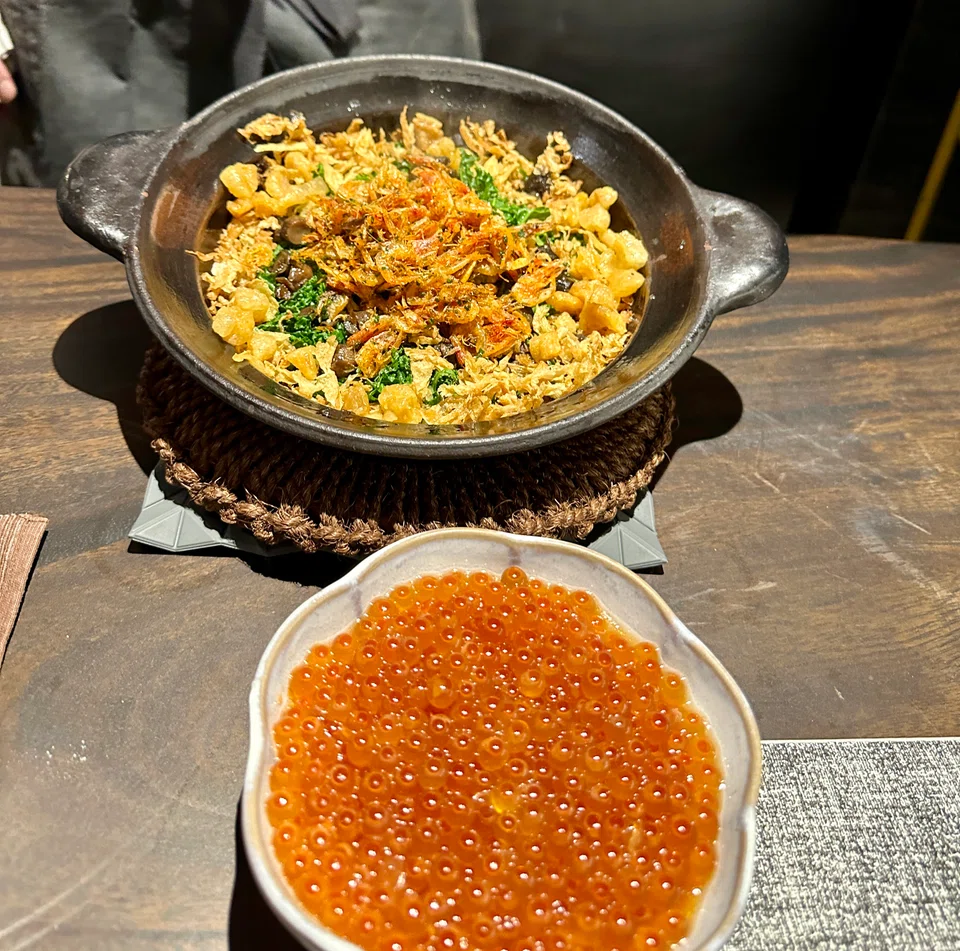
The main event, donabe, smells and looks amazing with a heavy shower of Taiwanese sakura ebi, mushrooms and fried nuggets of pork lard that dare you to resist them. If it went easier on the salt and the lard bits were crunchier, we’d defy all health advice for this. Those with a high sodium threshold – go for it, especially with the added ikura.
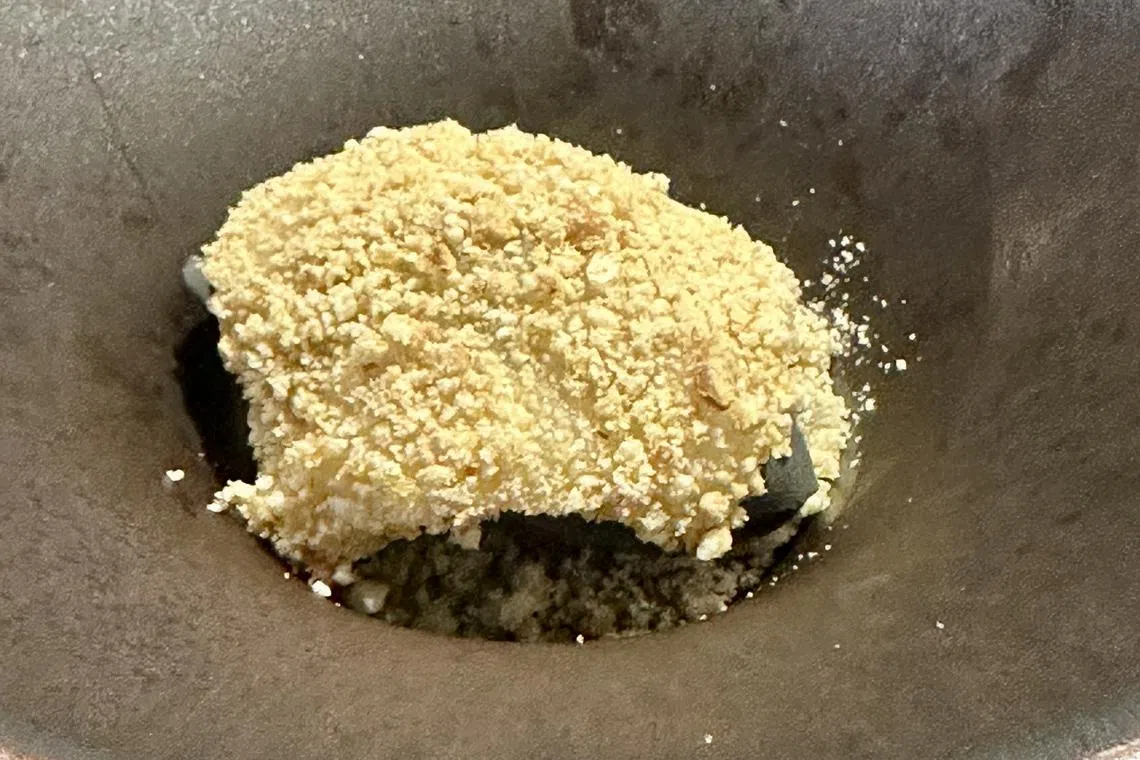
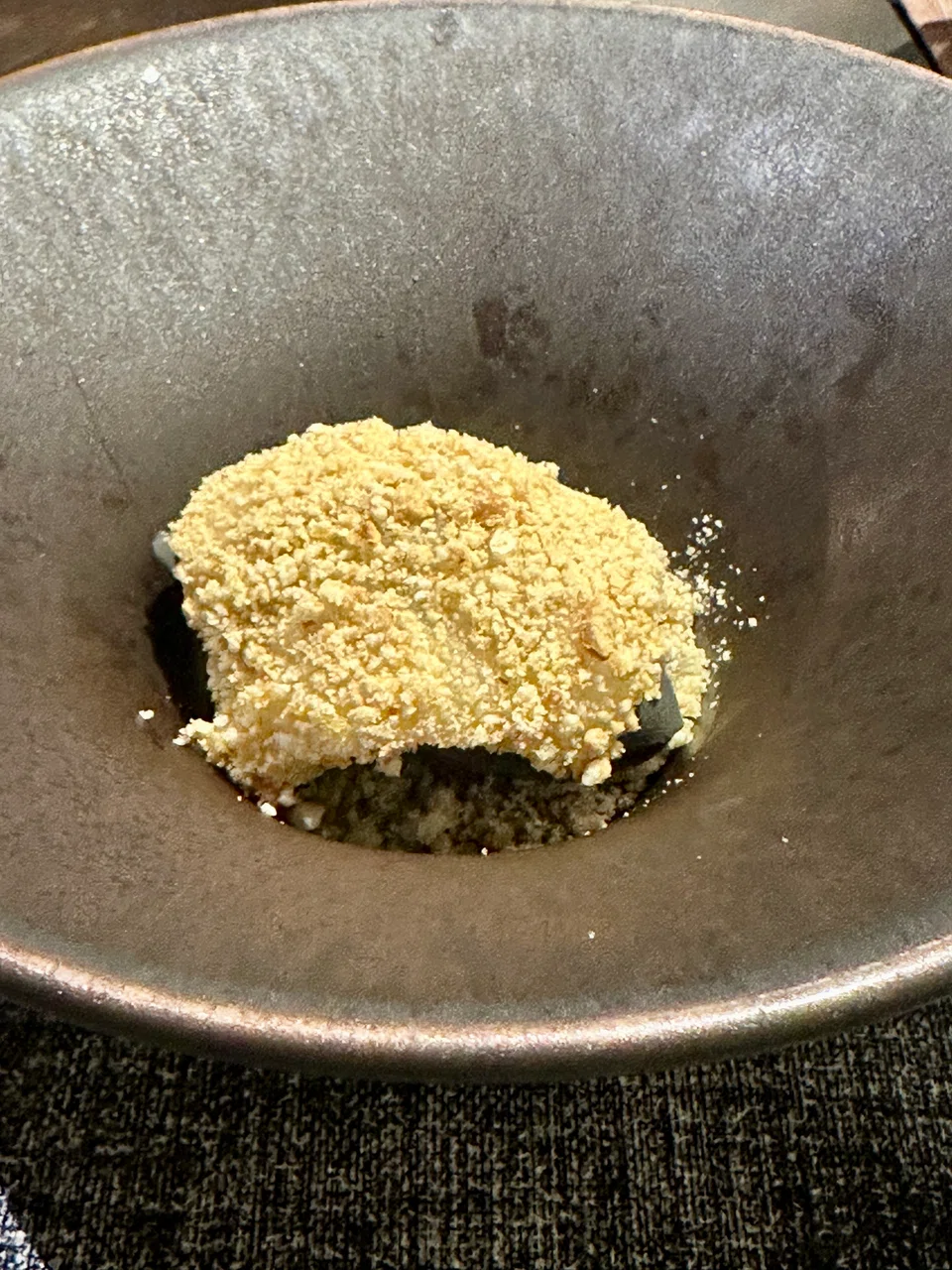
Coming to our rescue is dessert, featuring the childhood comfort of muah chee. A lovely stretchy glutinous rice blob is coated with crushed peanuts and draped over black sesame ice cream, with just the right level of chewiness. Ending off are miso financiers, piping hot, fluffy and rich.
Eating at Iru Den isn’t about being wowed, but about being in your comfort zone, where the sincerity of Low and his wife count as much as the food. The Taiwanese story is a strong one that the couple can build on. We await the next chapter.
Rating: 6.5
Decoding Asia newsletter: your guide to navigating Asia in a new global order. Sign up here to get Decoding Asia newsletter. Delivered to your inbox. Free.
Copyright SPH Media. All rights reserved.
TRENDING NOW

He built the Vingroup empire. Now South-east Asia’s richest man is handing some key roles to his sons

China’s Pinglu Canal likely to benefit Singapore, other South-east Asia ports in the long term
Suntec Reit to increase Singapore focus, sell three Australia properties

Despite the de-dollarisation debate, demand for dollar liquidity in Asia is growing

