Tokyo’s luxury sushi spots go casual with budget-friendly spinoffs
 Add BT as a preferred source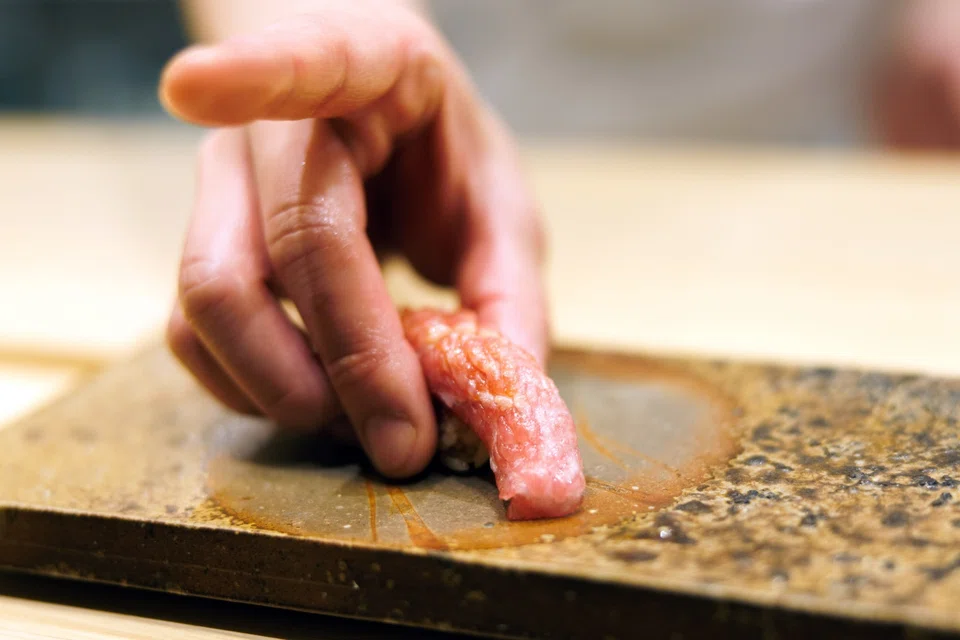
DeeperDive is a beta AI feature. Refer to full articles for the facts.
WHEN Michelin published its 2023 guide for Tokyo last November, the city got good news – that despite Japan’s strict pandemic measures, it held on to its title as the dining capital of the world. Tokyo has 200 Michelin-starred restaurants, the most of any city, including a dozen with three stars.
The latest Michelin list, as usual, contains several high-end sushi restaurants, where meals can easily cost up to 50,000 yen (S$505) per person, and where chefs train for years before becoming masters.
What is notable, however, is the inclusion of places that offer sushi in unconventional ways, such as reasonably priced offshoots of high-end counters.
The model is well-established in the US; for instance, the wildly popular Sugarfish in New York and Los Angeles was founded by famed sushi chef Kazunori Nozawa in 2008. Lunch sets can be had for under US$30 there.
But the trend is still relatively new among sushi restaurants in Japan. It started partly because of pandemic-related restrictions, which hit business travel and expense-account dining. Operators began opening less-expensive places that younger local diners could frequent.
Another budding trend in Tokyo is the standing sushi restaurant. While common at soba restaurants near train stations, the eating-while-standing style has also been embraced by ramen spots and steakhouses looking for high customer turnover. It’s also something of a throwback to sushi’s early days during the Edo period, when it was primarily a fast-food snack served in street stalls on Tokyo’s waterfront. But the latest versions are slightly more extravagant.
Navigate Asia in
a new global order
Get the insights delivered to your inbox.
Below are six compelling new sushi experiences around Tokyo.
Sushi Yuu Tsubasa
This restaurant, which opened in Ebisu in July 2021, is the brainchild of chefs who trained at the original Sushi Yuu in the entertainment district of Roppongi. It serves a so-called omakase, a multi-course menu decided by the chef, that includes around 10 pieces of sushi such as silky purinmaki, or monkfish liver, plus small dishes, for only 13,200 yen. What makes Sushi Yuu Tsubasa stand out, though, is an all-you-can-drink menu that includes champagne and Japanese sake.
Sushi Umiji
This is an outpost of the traditional multi-course kaiseki restaurant Ginza Yamaji, where the omakase menu is 27,000 yen. At Umiji, the omakase starts at 5,800 yen, and includes eight pieces of sushi, such as kue (longtooth grouper), hokkigai (surf clam) and tai (sea bream). Customers also have the option of ordering individual pieces. The 10-seat spot is a three-minute walk from Azabu-juban Station.
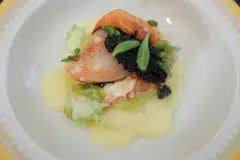

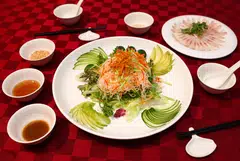
Touryumon Sushi Ginza Onodera Kaitensushi Ginza Onodera
Ginza Onodera is known for its high-end eponymous restaurants, with locations from New York and Honolulu to London. Now, the group has opened a couple of affordable places in Tokyo.
Touryumon in Ginza is a standing sushi spot that features some of the same fish served at the nearby Michelin-starred Sushi Ginza Onodera, where an omakase dinner starts at 25,000 yen. At Touryumon, customers order sushi by the piece; an average meal costs 6,000 to 8,000 yen. Its name translates loosely as “gateway to success”, and the restaurant is a training ground for the company’s younger chefs who have worked for at least three years.
The norm in Japan’s traditional world of sushi is for a chef to train for a minimum of 10 years before being allowed to make it, something viewers of the 2011 documentary, Jiro Dreams of Sushi, will know. Among the selections are chu-toro, o-toro and uni, as well as options like kohada, or gizzard shad.
While kaitenzushi, or conveyor belt sushi, is more common format among cheaper sushi restaurants, Ginza Onodera’s version in Omotesando is more upscale and boasts high-quality tuna. The menu is also stocked with popular pieces: chu-toro, maguro, salmon and anago, or braised sea eel.
Tachigui Sushi Tonari
Listed on Michelin’s Bib Gourmand section for moderately priced restaurants, this standing sushi restaurant opened last year in Azabu-juban, near Roppongi, and is an offshoot of the big-budget Azabujuban Hatano Yoshiki, where the omakase lunch costs 18,700 yen. Customers can order an omakase for 6,600 yen or ask for individual pieces via a digital screen with pictures and explanations. Customers, who are allotted one hour to dine, can book places at the restaurant through the Line app.
Tachiguizushi Akira
This is another standing spot with a Bib Gourmand, and comes from the owner of the referral-only Sushi Shoryu. While an introduction is needed for a seat at Shoryu’s nine-seat counter, anyone can eat at Tachiguizushi Akira – as long as they are willing to wait. Akira does not take reservations, and there is often a line. While waiting their turn, customers can fill out order sheets from a menu that includes iwashi (sardines) and hirame (Japanese flounder), for 440 and 490 yen, respectively. BLOOMBERG
Decoding Asia newsletter: your guide to navigating Asia in a new global order. Sign up here to get Decoding Asia newsletter. Delivered to your inbox. Free.
Share with us your feedback on BT's products and services