

Traditional Hokkien cuisine comes to Takashimaya
Linkus brings authentic Minnan cooking and culture into a shopping centre setting
NEW RESTAURANT
Linkus #04-22 Takashimaya Shopping Centre Ngee Ann City 391 Orchard Road Singapore 238872 Tel: 8972 7999 Open daily: 11 am to 10 pm
[SINGAPORE] There’s a new shop called Linkus in Takashimaya. It sounds like the name of a telco store, but it’s not where you can renew your mobile plan or complain about your spotty router connection.
Thanks to the wonders of literal Chinese translation, Linkus is a restaurant. In China, it goes by the prettier name Lin Jia. If it were a girl, it would be a fair maiden from Minnan, dispatched to Singapore to show local Hokkiens exactly what food from the motherland tastes like.
But she’s no demure damsel. Lin Jia (“a neighbour’s house”) is yet another big F&B name from China swooping into town, armed with big money, chutzpah and a culinary culture way older than ours.
One thing’s for sure: they know what they’re doing.
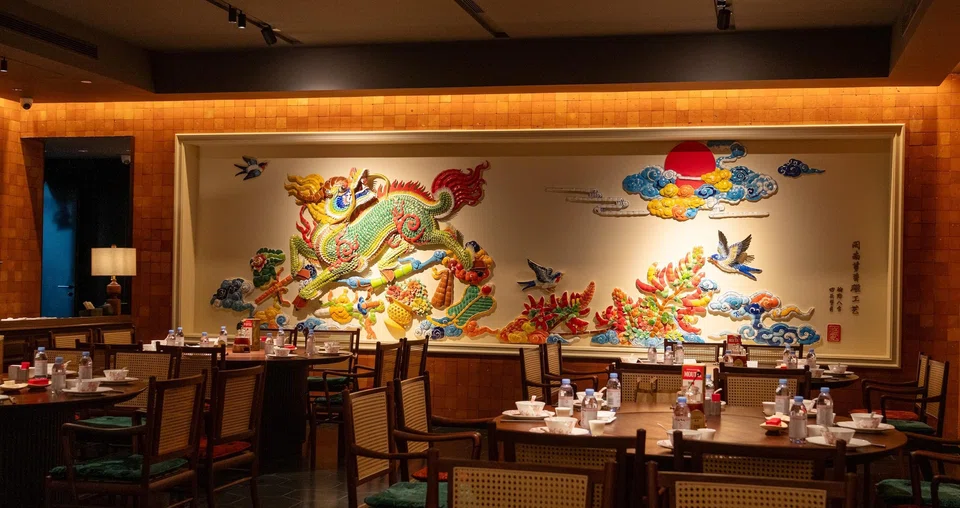
Linkus started out in Suntec City and branched out into Takashimaya soon after. The setup is familiar – traditional decor, huge dining areas and simmering claypots of herbal-scented broth at the entrance to entice you in. The DNA is obvious from the ornate dragon mural across one wall, suited staff with lilting accents and the requisite membership offers.
If you’re ready for a relationship commitment, prepay five times of your first bill and get that meal free. Not sure if you’re ready to get that cosy with your Minnan neighbour? That’s okay. They’ll give you a voucher for certain dishes that you had, so your free gift-loving self will return.
Would we return without being bribed? We just might. There’s the usual disconnect of taste buds – Minnan food’s light-handed seasoning and simplicity may be too clean for some – but Linkus offers an accessible middle ground with authentic classics more likely to appeal to the local palate.

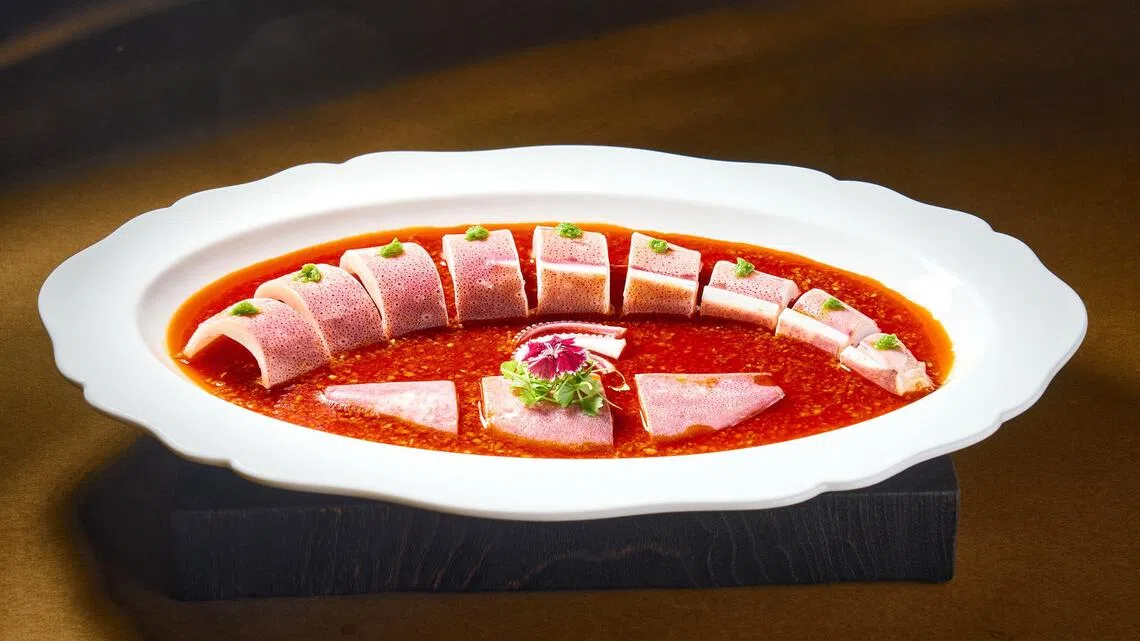
We kick off with the now-familiar squid in chilli oil (S$49.90) – arranged in a crescent shape over a pool of deep-red chilli oil, amped up with preserved soybeans and an underlying mala tingle. The most assertive dish of the evening, it’s less dangerous than it looks – just spicy enough to elevate the firm yet yielding squid. Our China-born server betrays her years in Singapore when she calls it “sotong” – a surprisingly relatable moment.
She and her colleagues are model servers – fast, efficient and knowledgeable. She plays safe, recommending mostly signature dishes which pass muster even if they’re not always home runs.
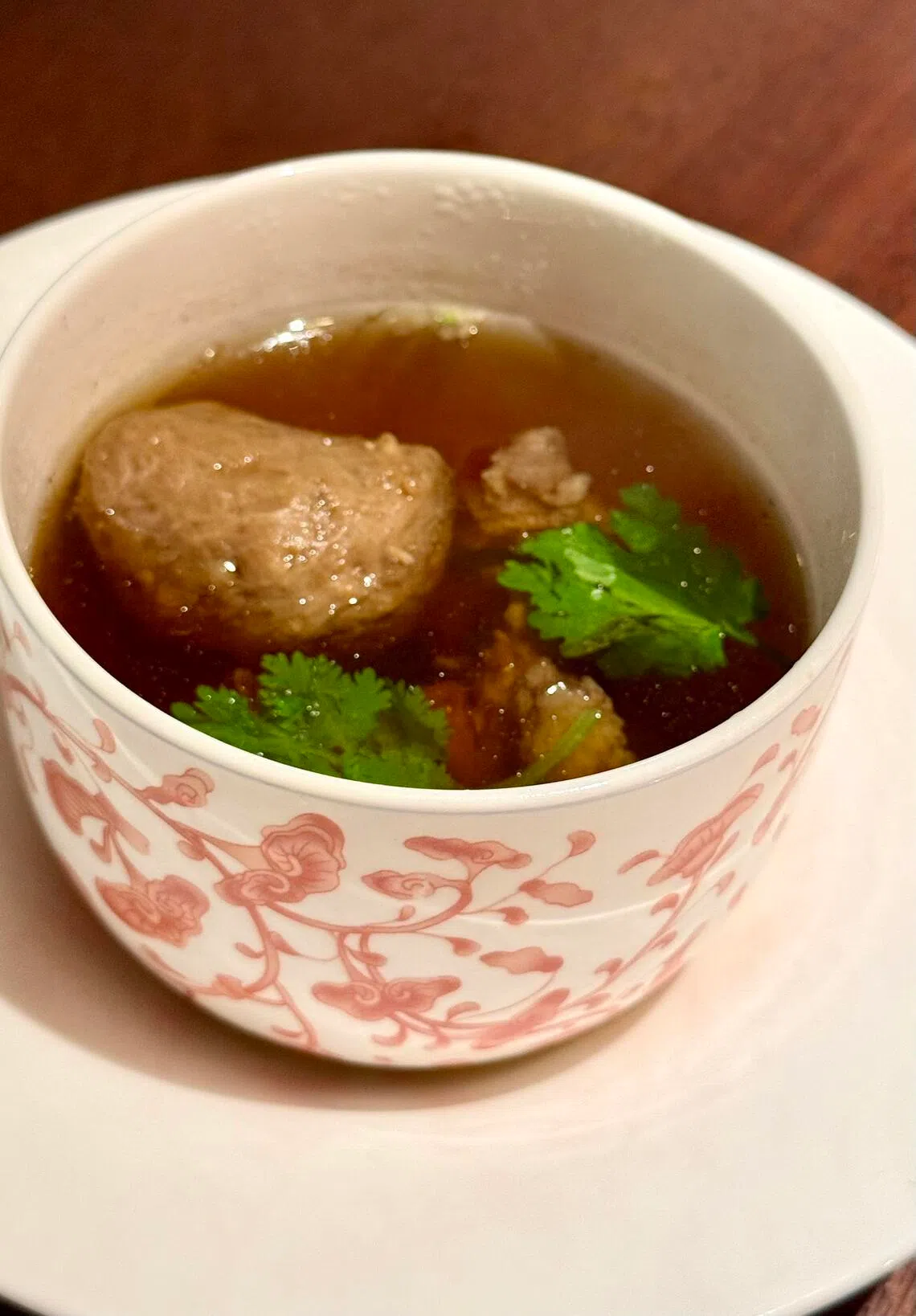
Soups, however, are the real stars. They’re not the delicate, double-boiled variety but robust, heartwarming broths that would win a long service award for simmering.
Quanzhou Intangible Cultural Heritage Beef Soup (S$9.90 per serving) sounds like it should be in a museum next to a freeze-dried woolly mammoth. But it’s a heady, meaty brew with a herbal lift, filled with a springy bakso-like beef ball and gelatinous chunks of shin.
It outshines the more humbly described free-range local pork soup (S$12.90), but it’s no less intense in all its deep porky goodness.
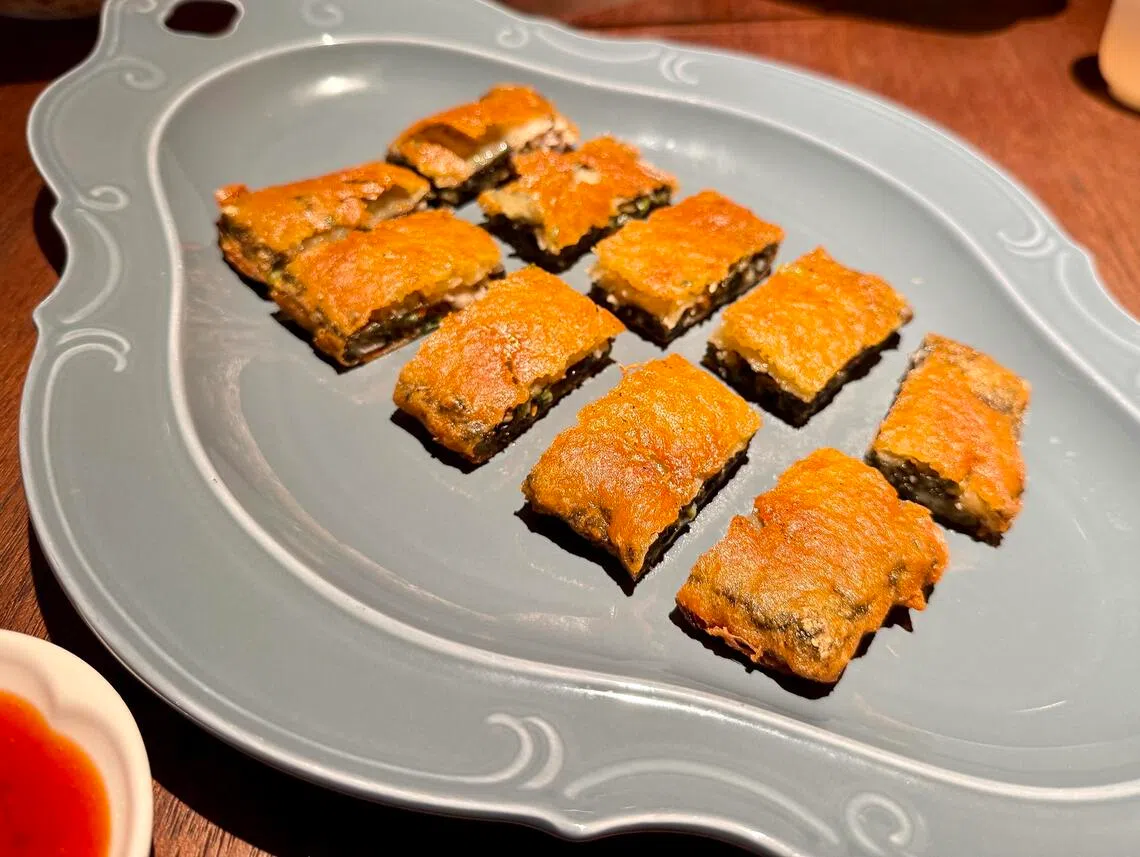
For a taste of oyster omelette without calling it orh luak, there is pan-fried oyster and seaweed pancake (S$35.90) – which is crispy and has some oyster and too much seaweed, but not much personality.
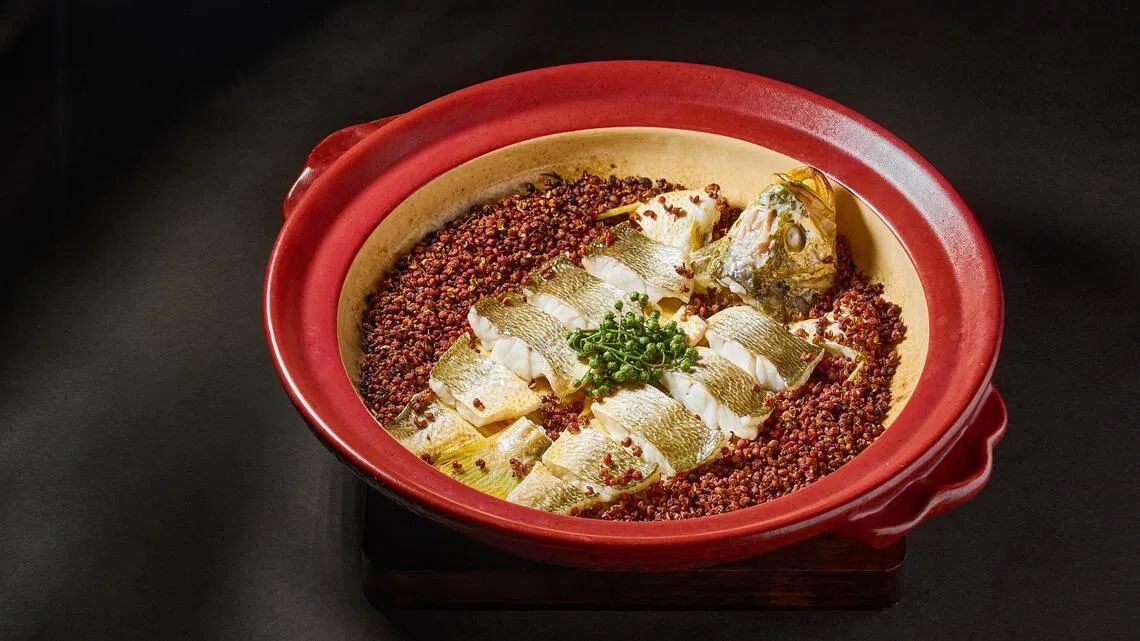
For showmanship, you can’t beat the spectacle of a yellow croaker steamed in the heat of a clay vessel filled with pungent dried Sichuan peppercorns (S$55). It assaults your nostrils before you get to enjoy the milky-fleshed pieces of this imported prized fish. There’s a latent smokiness and tingle on the tongue but it’s more understated than it looks.
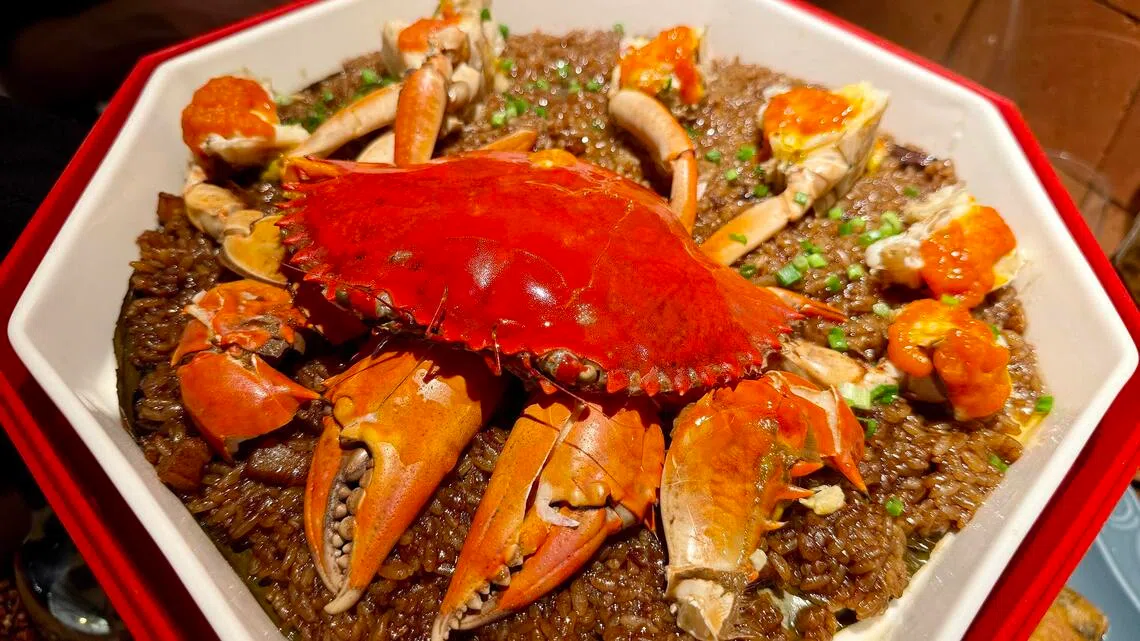
Mud crab steamed on a bed of glutinous rice (from S$89) is best savoured slowly, to get the most out of the deep orange roe and sweet, if skimpy, flesh. The sticky rice is lighter than usual, so it doesn’t weigh you down.
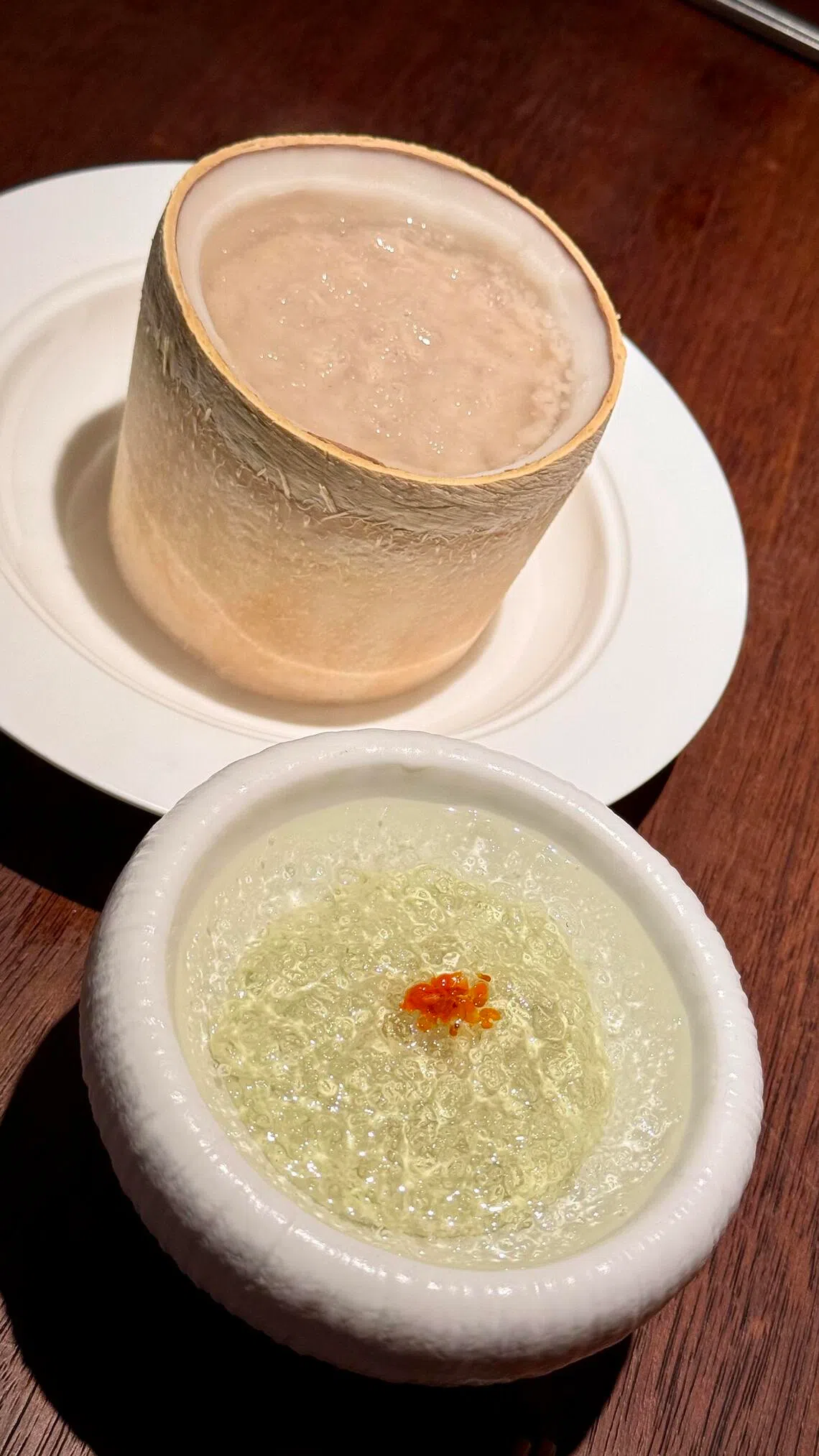
The best comes last – taro paste with bird’s nest (S$25.90). This silken puree of hot orh nee boasts a whiff of lard, and is topped with bird’s nest in a coconut shell so you can scoop up fragrant mouthfuls with velvety coconut flesh. Well worth the price and a must-have.
Avocado with snow swallow (S$9.90) is a fancy name for creamy avocado mixed with fermented milk on a clear jelly base. The tanginess is a bit of an acquired taste, but it grows on you after a while.
And so does Linkus, with its solid introduction to a traditional cuisine that packs culture into dinner. Like its name suggests, Lin Jia is a neighbour’s home you wouldn’t mind being invited back to.
Rating: 7
Decoding Asia newsletter: your guide to navigating Asia in a new global order. Sign up here to get Decoding Asia newsletter. Delivered to your inbox. Free.
Copyright SPH Media. All rights reserved.
TRENDING NOW

LTA proposes combining car COE categories, adding rebate-surcharge system

StarHub to acquire MyRepublic’s mobile business amid ongoing telco consolidation

DBS, OCBC, UOB rout lops billions off STI as inflation, rate concerns spook investors

Grab CEO’s wife Chloe Tong on life with Anthony Tan and finding her purpose

