

Willin Low makes mod-Sin comeback at Casa Mori
The new Dempsey restaurant offers homey surroundings and comforting Singaporean-Spanish cooking
NEW RESTAURANT
Casa Mori 11 Dempsey Road, #01-17 Singapore 249673 Tel: 8993-6049 Open for lunch and dinner Tues to Fri: 11.30 am to 2.30 pm; 5.30 pm to 10.30 pm. All day on Sat & Sun: 11 am to 10 pm
[SINGAPORE] Imagine if someone said: “I’m sick of Spanish croqueta. That cloying bechamel, ham bits and fried crust. Have some imagination. Fill it with curry. Potatoes. Chicken. Don’t forget the egg.”
Imagine if Willin Low planted this thought into Jose Alonso’s subconscious, who then wakes with an inexplicable urge to open a curry puff shop. But he can’t. He’s Spanish. Singaporeans might sneer at his culturally appropriated empanadas instead.
So he tells Low: “You do it. The curry puff. And I want satay. Hokkien mee. And chicken rice. But don’t call it Spanish zi char. Call it a cross-cultural collaboration.”
Of course, this is exactly not how Casa Mori came to be. But when you put a Spanish chef and the man who invented mod-Sin cuisine into the same kitchen, you know the croqueta will never be the same again.
The name itself is a tribute to Alonso’s home, and Low’s preferred abode: a forest in Japan. Fittingly, Casa Mori sits in Dempsey, amid greenery and colonial-era architecture.
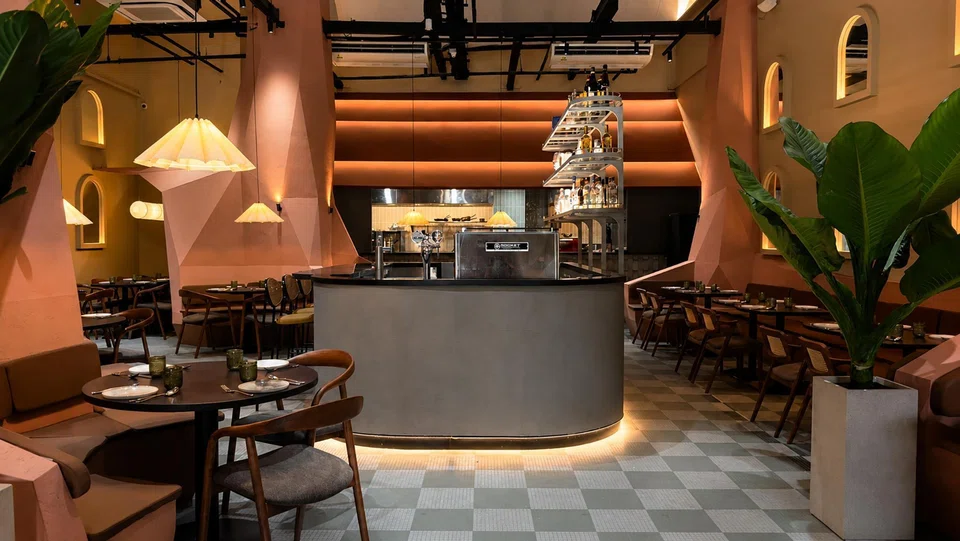
It’s bigger than it looks from the outside, with very high ceilings and Mediterranean-hued interiors roomy enough for even tables for two to have enough personal space.
There are uniform window-shaped mirrors on one wall, and massive terracotta-coloured columns that seem to support the whole structure.
At certain angles, it looks like the inside of a giant clay oven, outfitted with a full bar and soft lighting.
It’s almost as warm. You barely feel the air-conditioning, which explains the swirling fans overhead. When we ask, an apologetic server can only offer to increase the fan speed.
But we’re soon distracted by the food, dominated by Low’s free-wheeling culinary riffs that are mostly Asian, slightly Mediterranean and Spanish only when he remembers. It’s not food that tries to make any statement, or meet any criteria.
It’s fun, imaginative; not everything lands, but that’s beside the point. This is a hang-out place with food, not a platform to debate the future of Singapore’s culinary identity.
Plus, it’s nice to see Low back in action, even if he’s not in the kitchen full time. We’re told that he does cook personally when he’s in town, but most of the time it’s the resident team that runs the show.
Whether his presence has an impact or not, the food is largely hit-or-miss. We can’t help wishing that Low would just skip the fusion and do the real thing, because the authenticity underneath the gimmickry is what we’d love to see more of.
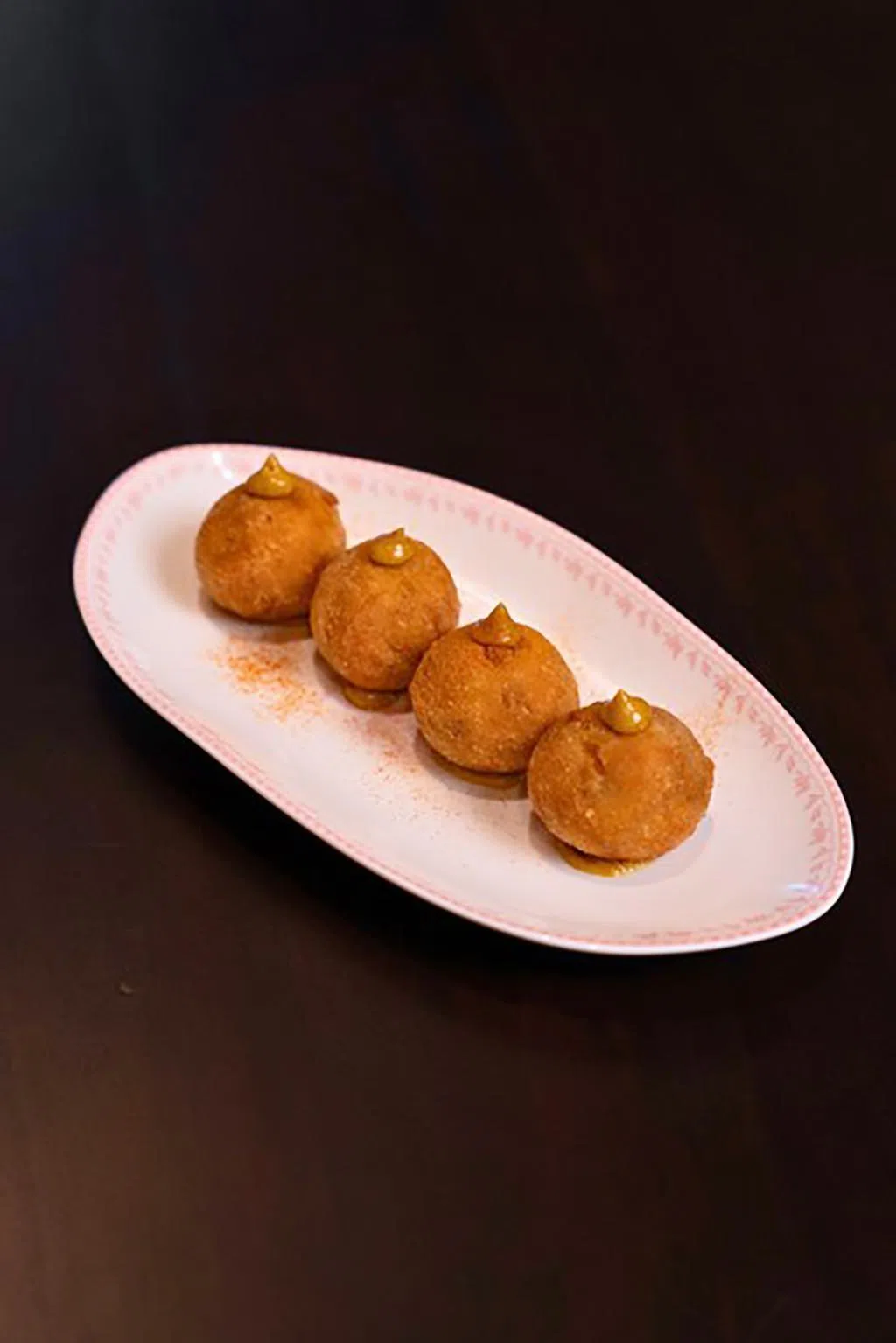
The best thing about “kalipoquetas” (S$16) is the name, a genius play on curry pop and croqueta. The curried potato filling has the right fragrance and spice to rival Old Chang Kee, although it’s been almost pureed to resemble bechamel, and wrapped in deep-fried batter. Nice, but they forgot the egg.
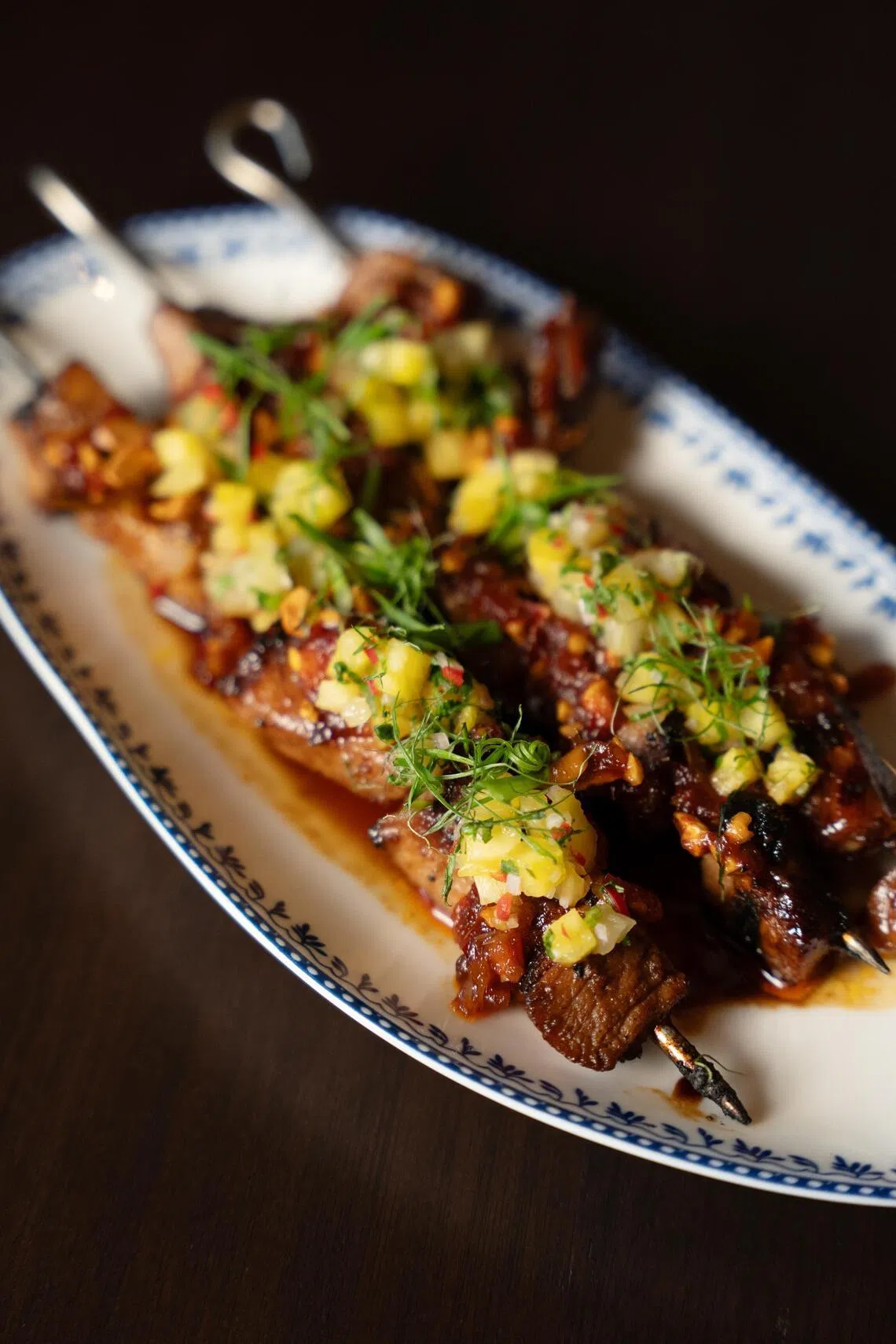
Iberico secreto satay (S$24) could easily qualify for Singapore Airlines’ business class if not for its jarring sticky-sweet kicap manis glaze that overpowers the juicy, fatty pork.
Pineapple bits and random peanuts can’t compensate for good old peanut sauce. Make it real satay and we’d be back for seconds.
Same for the crab-meat otak terrine (S$26), which has all the right spices but an oddly mushy texture, spread on hard toast.
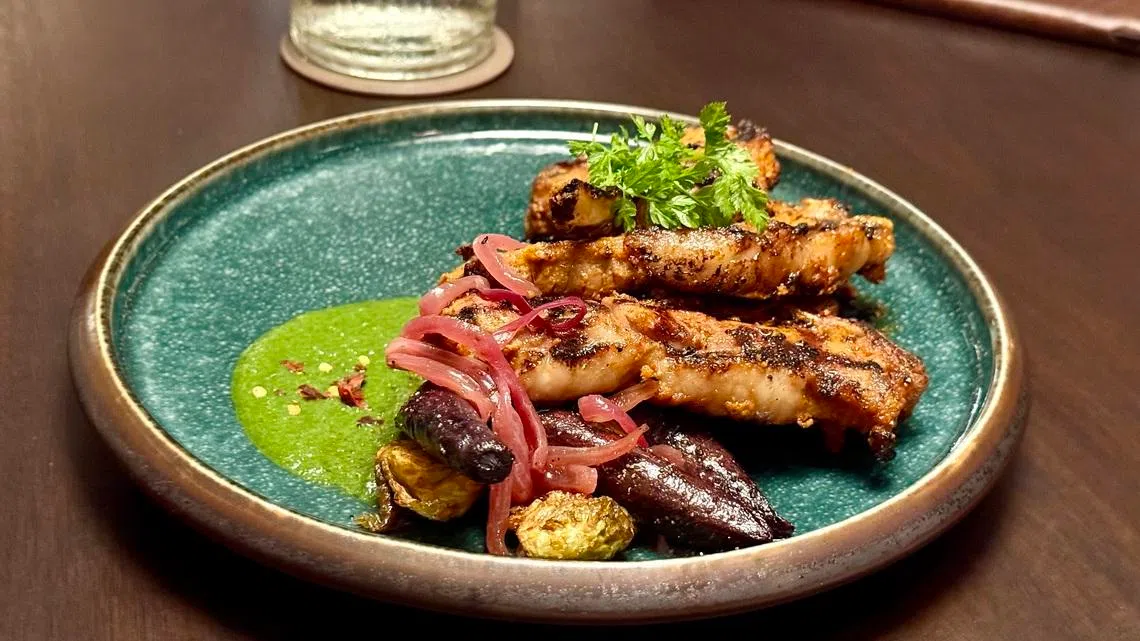
It gets better. Tandoori lamb rack (S$36) is smoky, rich in its spicy yogurt marinade, with sweet pickled red onions that cut through the heft. Charred brussels sprouts hold their own too.
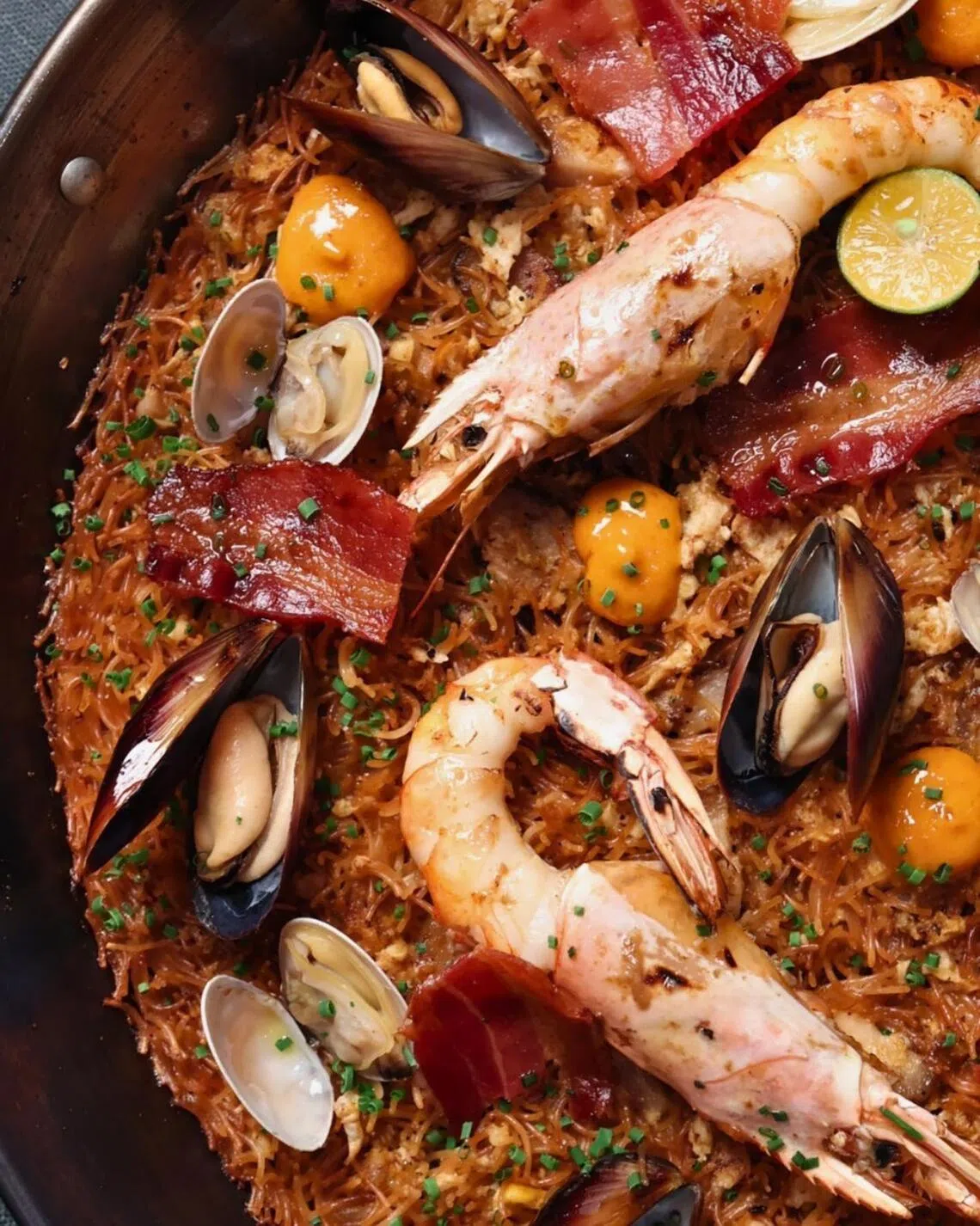
The highlight is Hokkien mee fideua (S$58) – soaked in prawn broth but still fluffy and nicely charred, sitting pretty in a paella pan with just-cooked prawns and shellfish.
Don’t dismiss the kaya that comes with the mochi churros (S$16). Usually an afterthought, this creamy pandan-scented bliss is an equal match for the perfectly fried dough sticks with a chewy mochi centre. The chocolate sauce is also worth a dip.
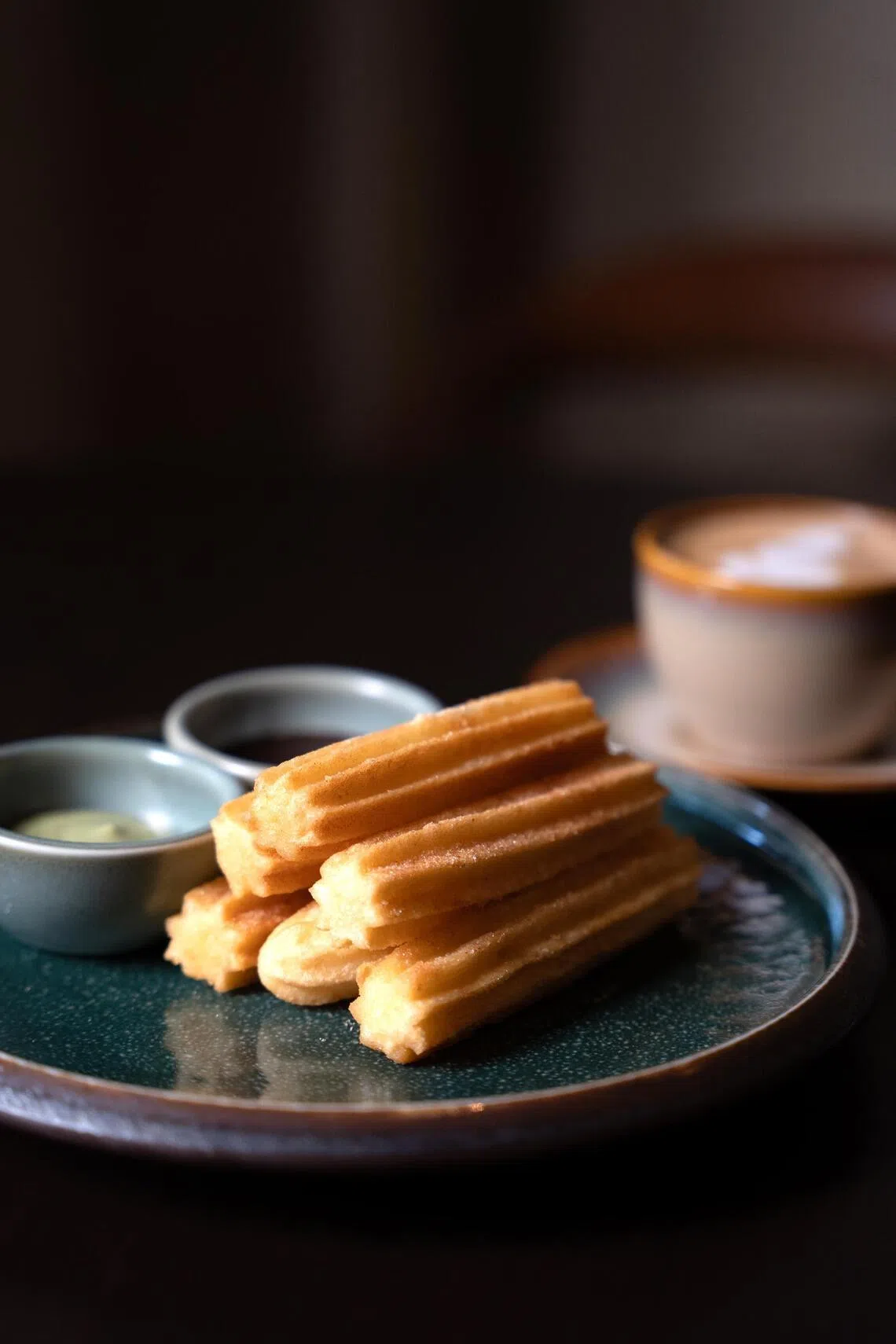
The black sesame cheesecake (S$16) is a basic Basque version but with a bitter edge that’s an acquired taste. The coconut ice cream on the side is good enough on its own, or with any leftover churros.
Mod-Sin food has evolved over the years, so nothing at Casa Mori feels particularly new. But it has warmth, the Willin Low connection, and serves its purpose – as a place you can feel at home in.
Rating 6.5
Decoding Asia newsletter: your guide to navigating Asia in a new global order. Sign up here to get Decoding Asia newsletter. Delivered to your inbox. Free.
Copyright SPH Media. All rights reserved.
TRENDING NOW

Government to bring forward raising of retirement age, give employers more financial support to create flexi-load jobs

If Europe goes to war, the fallout will be felt in East Asia

Indonesia stocks suffer worst plunge in nearly 30 years as MSCI proposes standalone status

Vietnam’s northern provinces, not Hanoi or Ho Chi Minh City, are powering near 10% GDP growth

