

Young sushi chef, zen vibe at Takahashi
The new Mohamed Sultan eatery is the Singapore offshoot of its Tokyo flagship
NEW RESTAURANT
Takahashi Singapore 4 Mohamed Sultan Road Singapore 238955 Tel: 8877 0501 Open for lunch and dinner Mon to Sun except Tue (closed): 12 pm to 3 pm; 7 pm to 10:30 pm
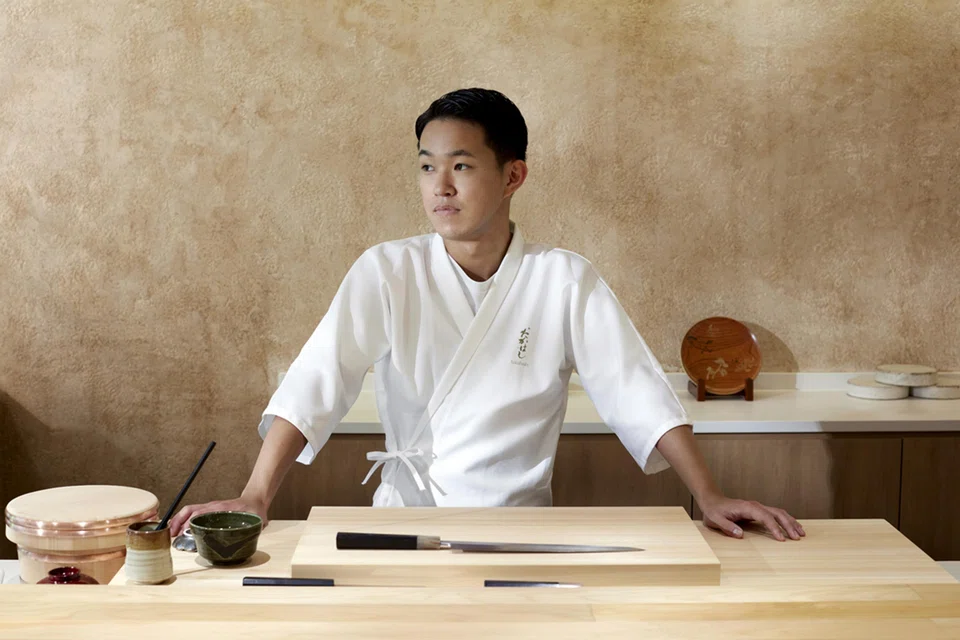
THE first thing you notice when you sit down at Takahashi – apart from the mini zen garden in front of you that you can’t wait to play with – is the chef. He’s very young. So young that you sit there expecting the real chef to show up. So young that you don’t know if you should order from him or adopt him. So young that you can’t help thinking, “there are tuna older than him”.
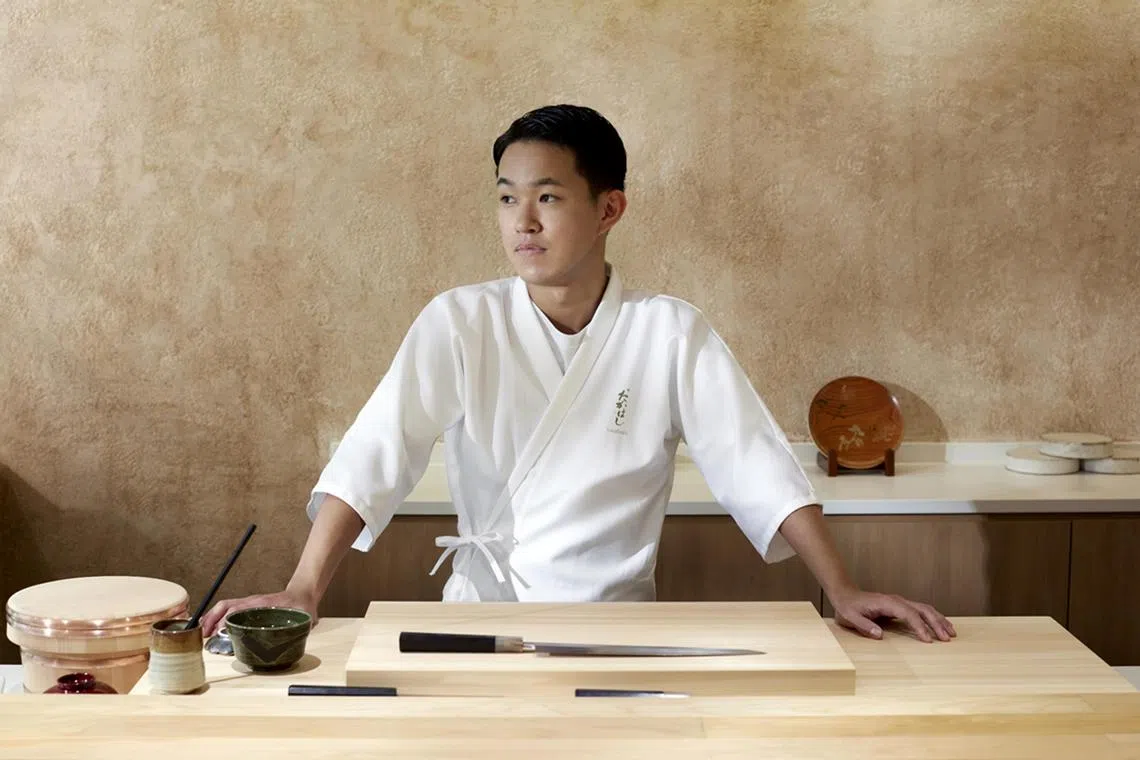
The boy, uh, chef, is 24 years old. His name is Rinto Sasagawa and youthful as he is, he’s chalked up a relatively decent eight years at the original Takahashi in Ginza, Tokyo. In any traditional sushi restaurant in Japan, that might put him somewhere between making rice and peeling freshly boiled prawns with his bare hands for the sushi master. But in a major break for any young chef, he is here helming Takahashi’s Singapore outlet as the envoy and protege of its also relatively young chef-owner Jun Takahashi.
Takahashi brings with it some lofty claims. We are told it is very popular in Tokyo. We’re also told that Takahashi himself worked at Sushi Saito, back when it still had three Michelin stars. This was before the latter gave them up to become a members-only restaurant because it was just too popular. As in really popular, not because it told people so.
Still, working in a three-Michelin-starred restaurant doesn’t mean your own restaurant absorbs Michelin-ness by osmosis. Nor does it teleport to Mohamed Sultan where, like every other sushi restaurant in town, Takahashi has to fight for the attention of Japan-trotting Singaporeans.
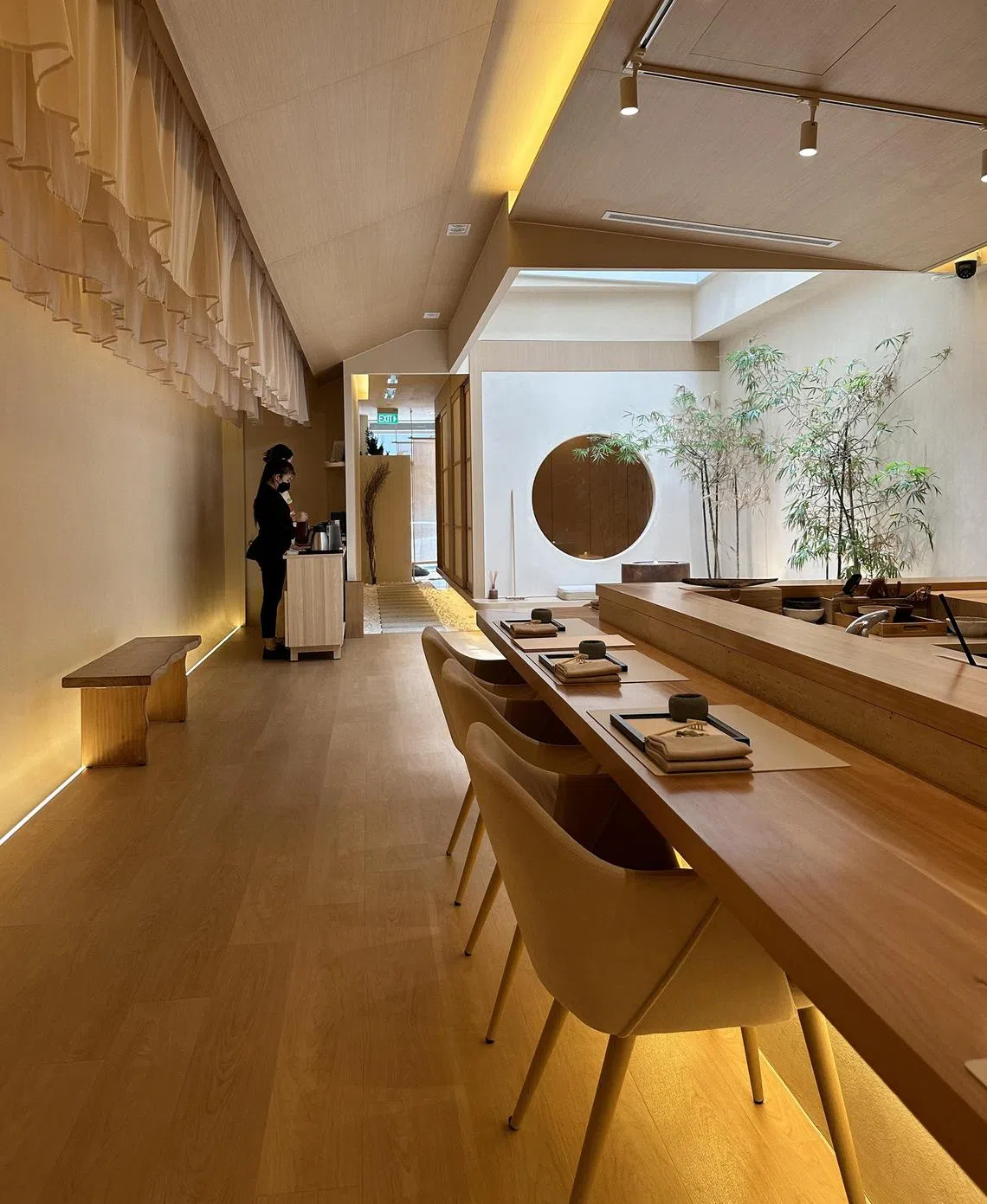
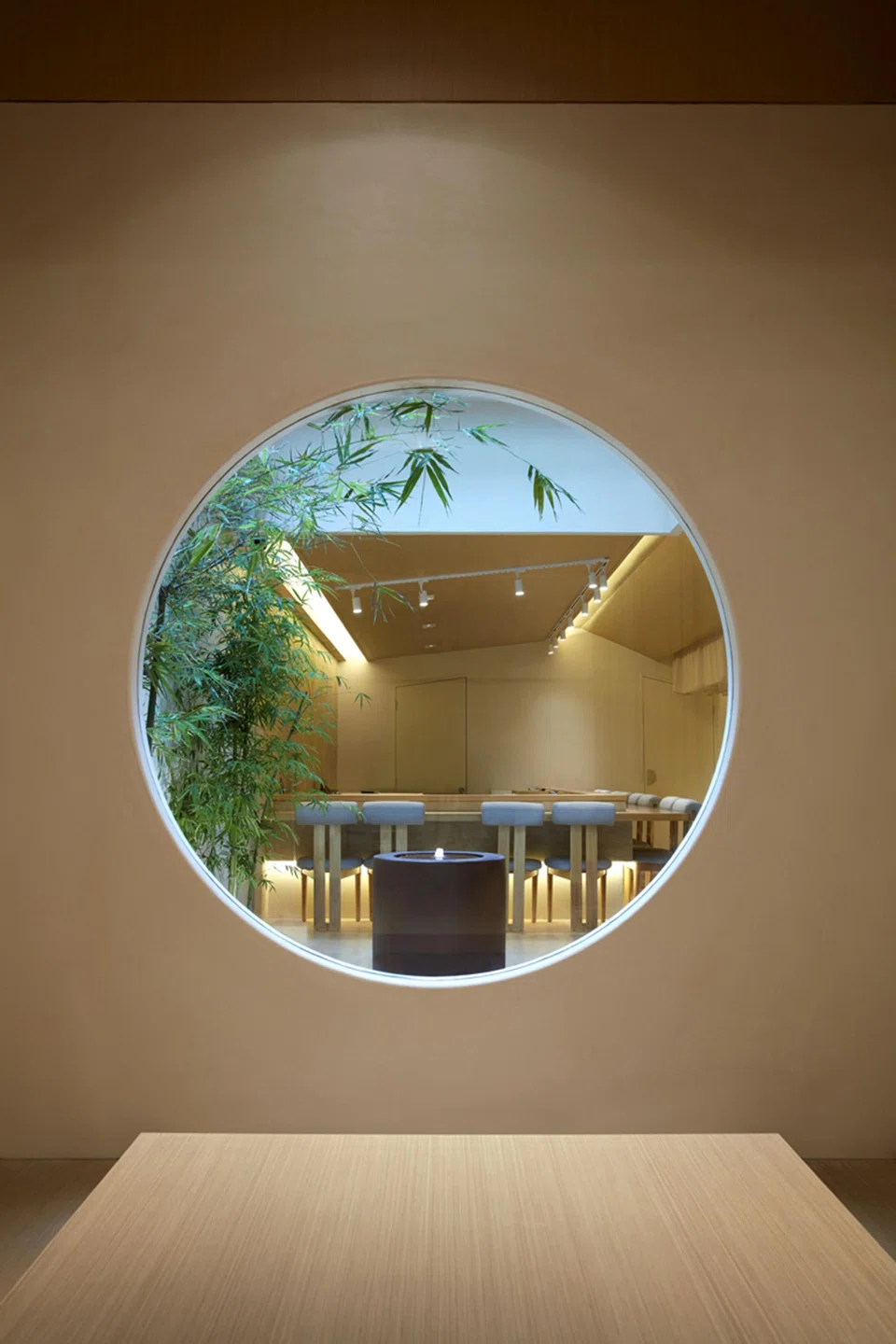
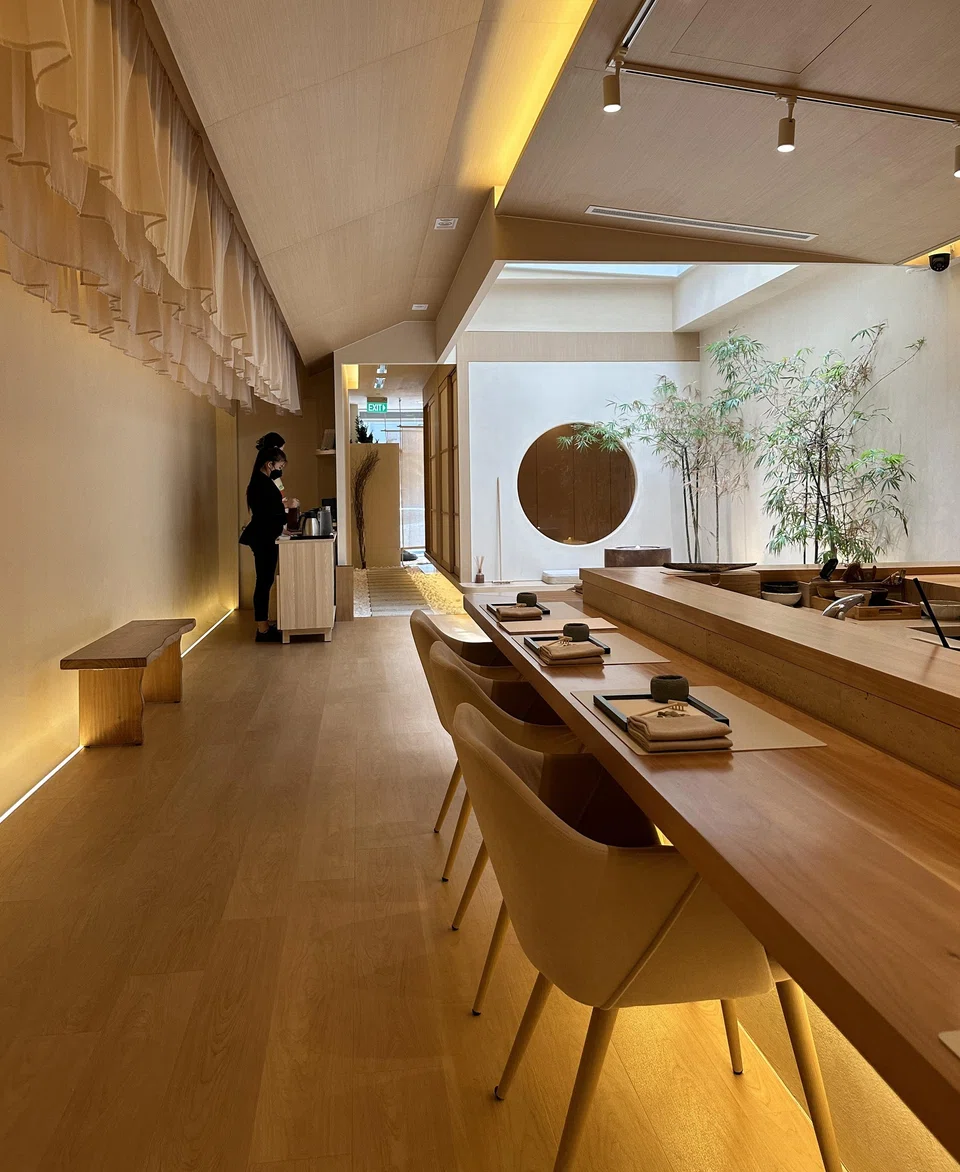
Visually, though, it has us at “zen garden”. Step inside and you’re hit with the full force of – nothing. It’s serene, calming, all blond wood and free of noise both real and mental. There’s a proper zen garden, and a baby one at each counter seat, with your own little bamboo rake to scratch out patterns in the sand.
It is forcibly taken away from you so you can do what you came here to do – eat. Lunch is priced at S$180, S$220 and S$250. Dinner is S$320 or S$420, up to S$480 and beyond. We take the S$220 lunch menu, which isn’t a lot of food for the money. Just right for light eaters, but a sandwich short of a proper meal for anyone else.
But the ambience is really quite nice and so is Sasagawa, who has the sweet demeanour of a diligent, well-mannered student that all teachers – or master chefs – would love. He’s learned well and executes to the letter; he doesn’t have the presence of a senior chef nor the sophistication of skill that comes with experience, not just work ethic, but the food is perfectly adequate.

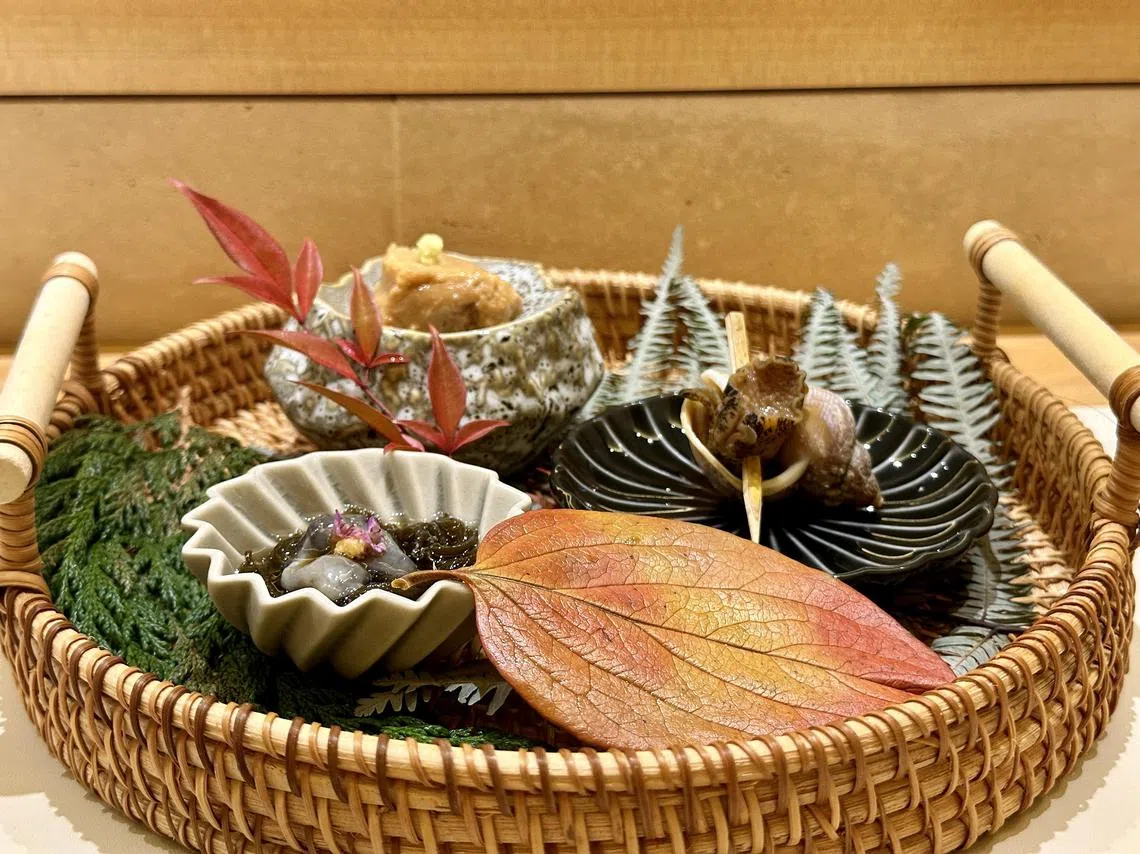
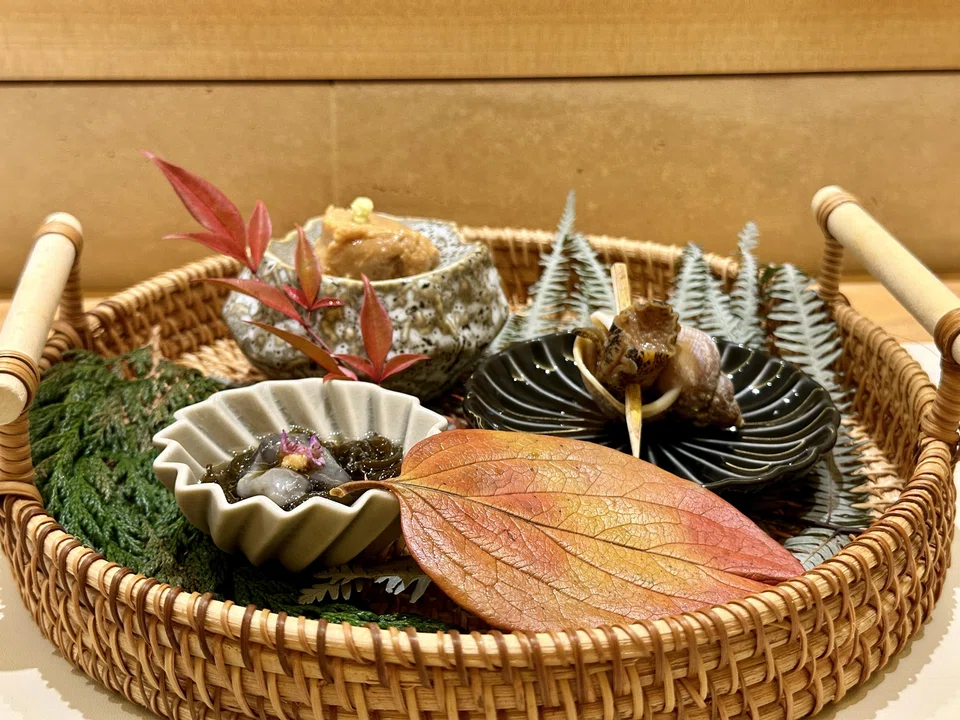
You start off with a tray of appetisers: slippery mozuku or seaweed from Okinawa; a stubborn tsubagai or whelk that when finally pried from its shell yields a fleshy, bouncy shellfish; and ankimo marinated in a caramel sauce French gastrique style, aged for two weeks and slow-cooked for a creamy, custardy texture. It’s a house signature and deserves to be.
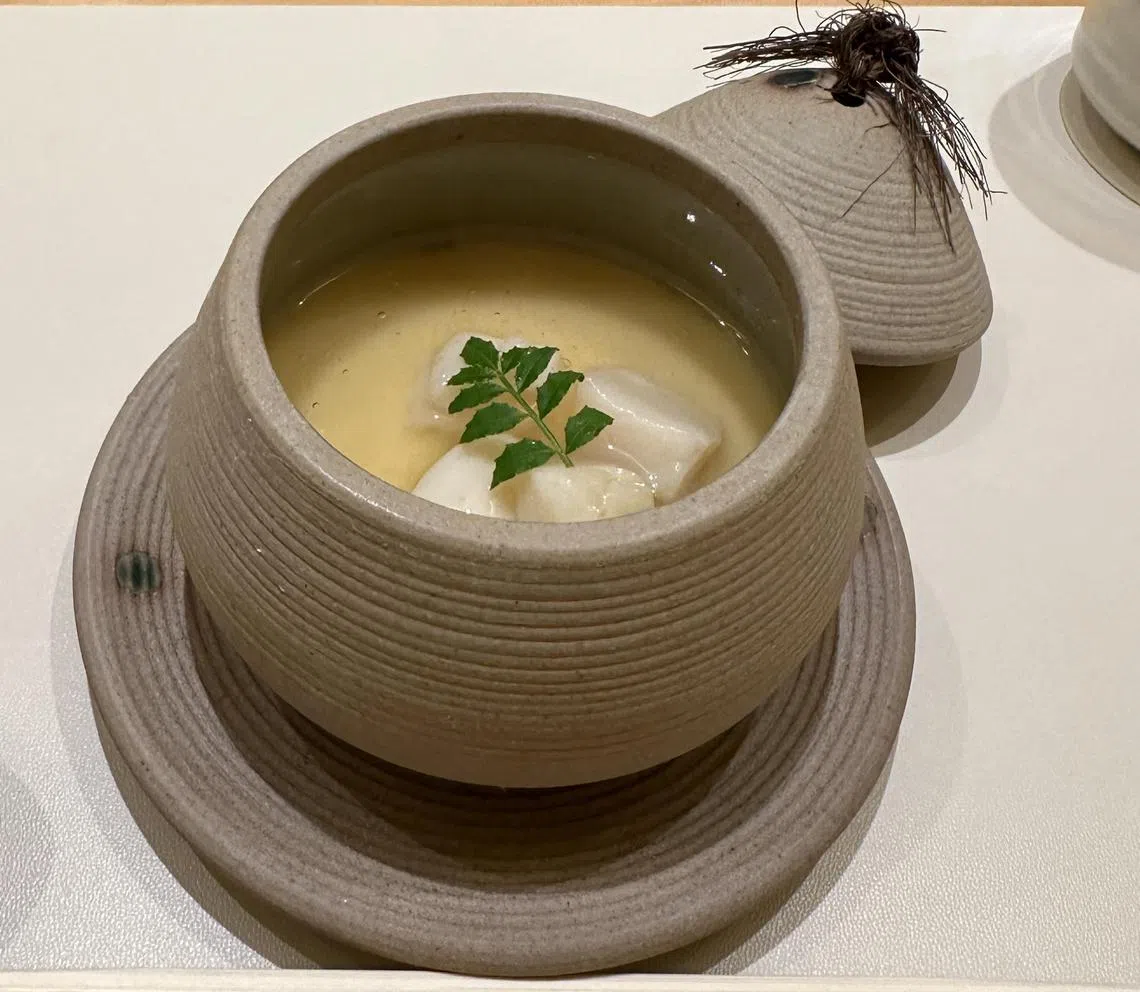
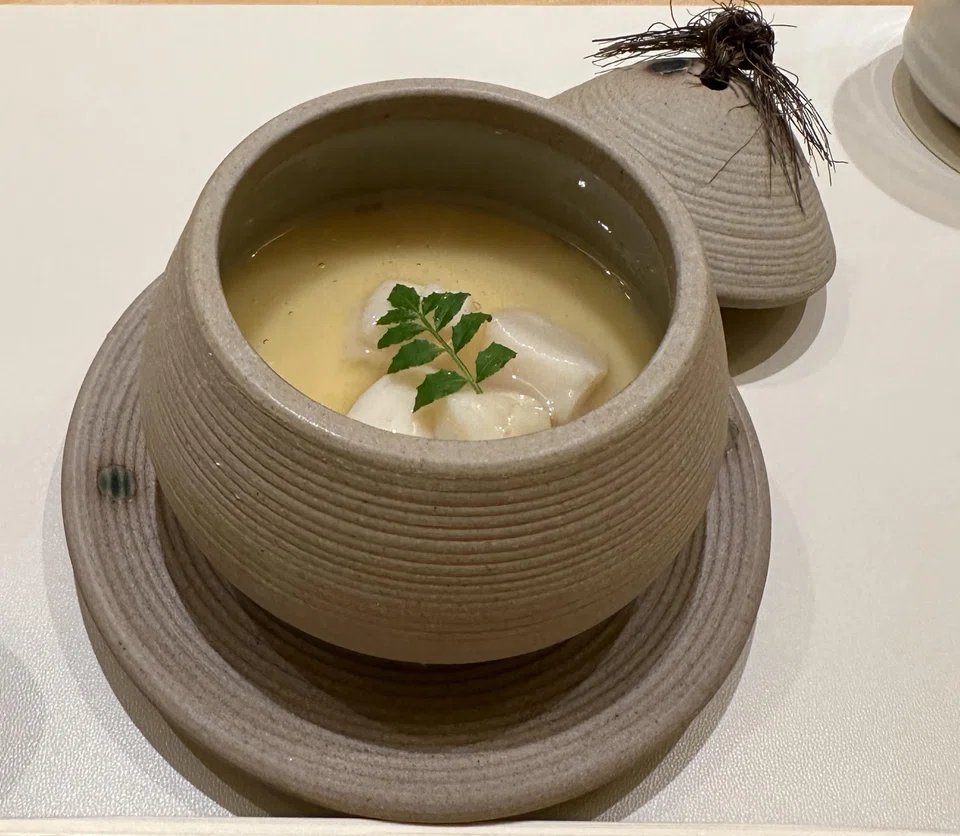
Then there is chawanmushi, which is foolproof with solid pieces of scallop embedded in wobbly, dashi-enriched egg custard.
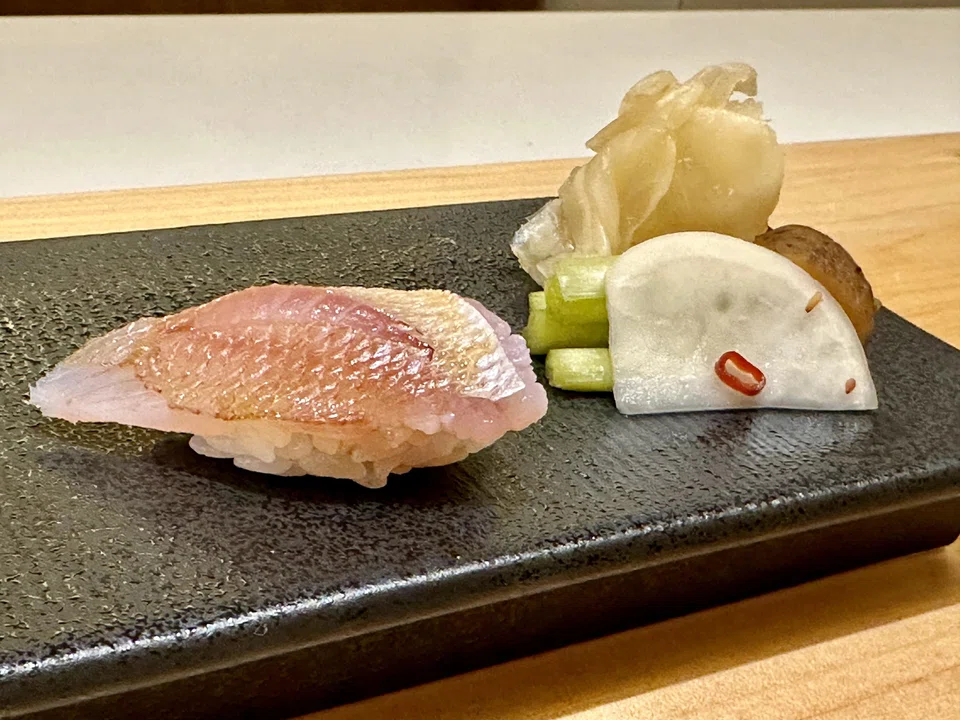
While slices of sawara or Spanish mackerel are left to be slowly infused with the smoke from sakura wood embers, Sasagawa wastes no time in doling out our allotment of seven pieces of sushi. While ageing fish is a common practice, timing varies according to the chef. Here, ishidai or stone perch is aged for four days and has a bit of bounce in the texture. The sushi in general isn’t the prettiest or most precisely cut, and the quality isn’t that premium, but decent enough.
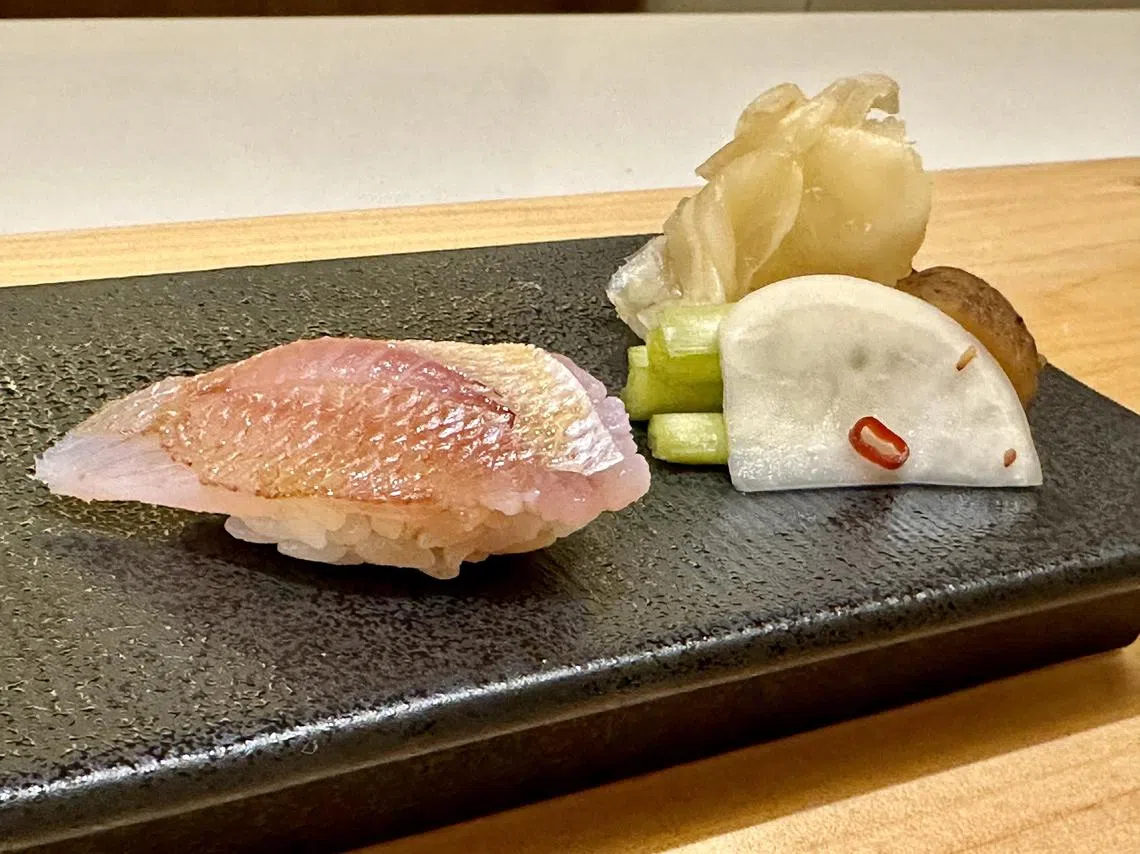
The six-day aged sawara has a pleasant smokiness and “aged” flavour to it, and we like how Sasagawa explains that eating sea bream or kasugodai at this time has special meaning as it heralds the coming of spring. But this being the middle of winter in Japan, something might have been lost in translation. We like the thought though.
There are flashes of welcome playfulness as Sasagawa and his assistant chef ham it up while serving the food, but he is serious about his work. From the warm temperature of the rice to “melt” the fat of otoro, to blanching akami tuna such that it looks like bonito when sliced, there are little touches that are well thought out.
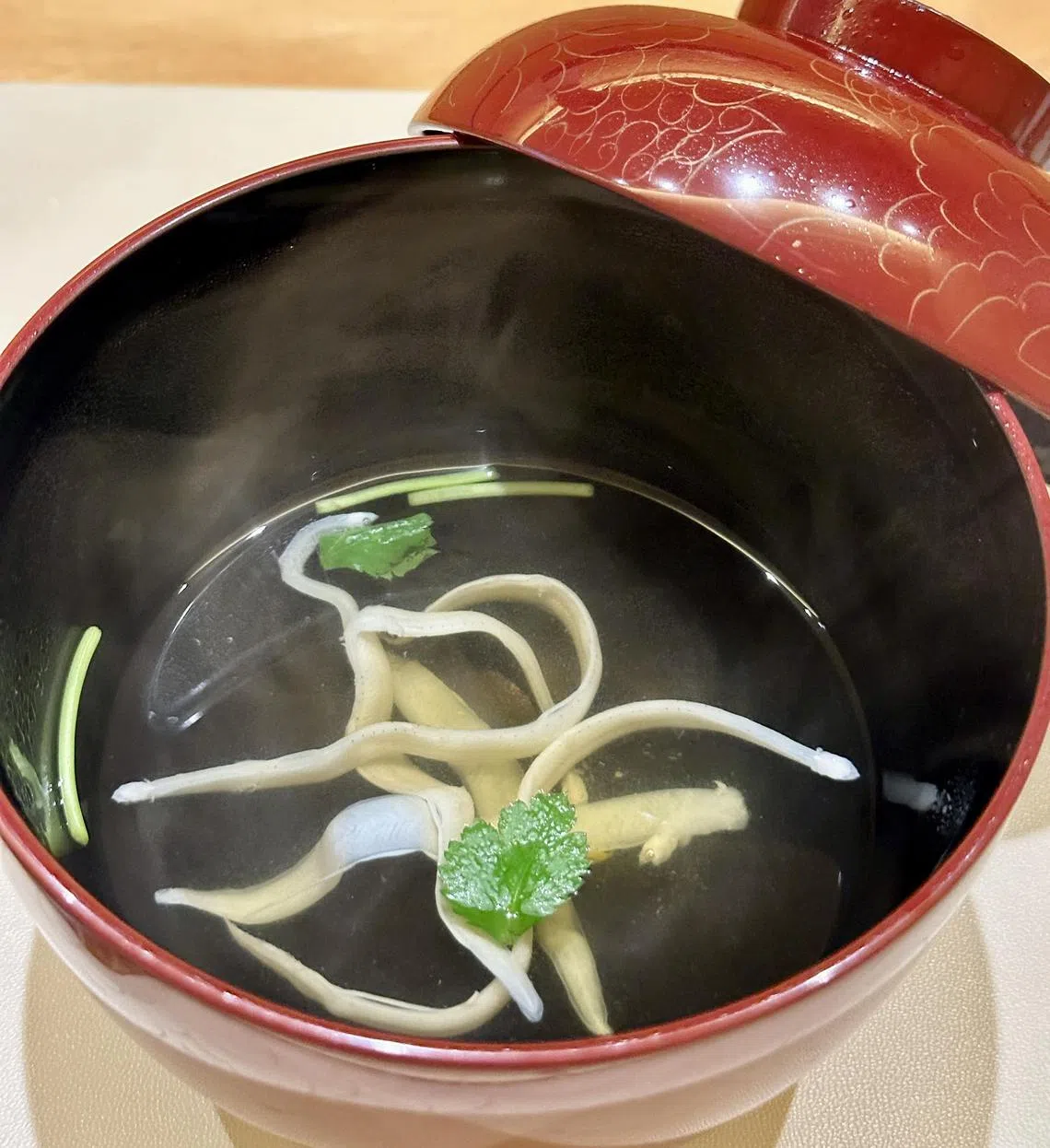
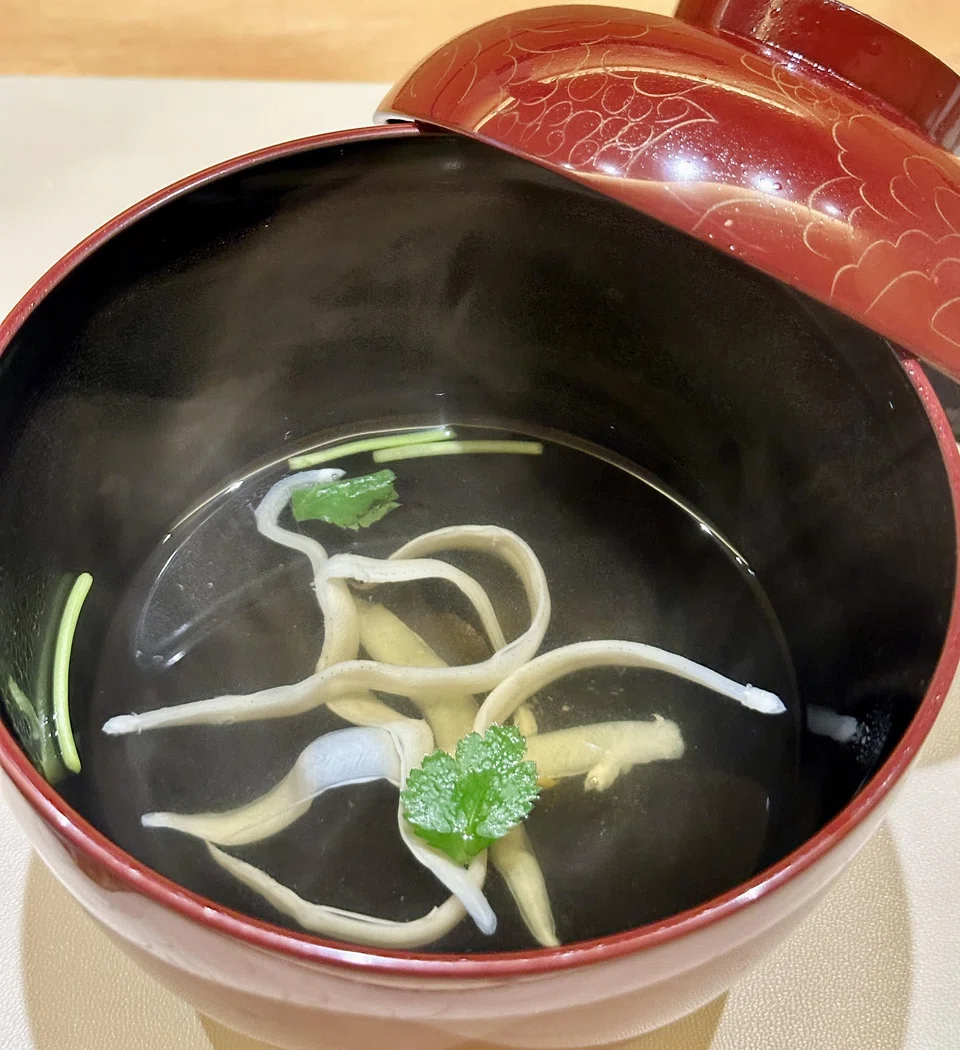
There’s also bincho grilled anago pepped up with sansho pepper and wrapped in nori, and his signature dish – a tiny bowl of rice topped with uni, ankimo custard and minced pickles. And finally, a clear dashi with slippery baby eels that feel like slinky noodles.
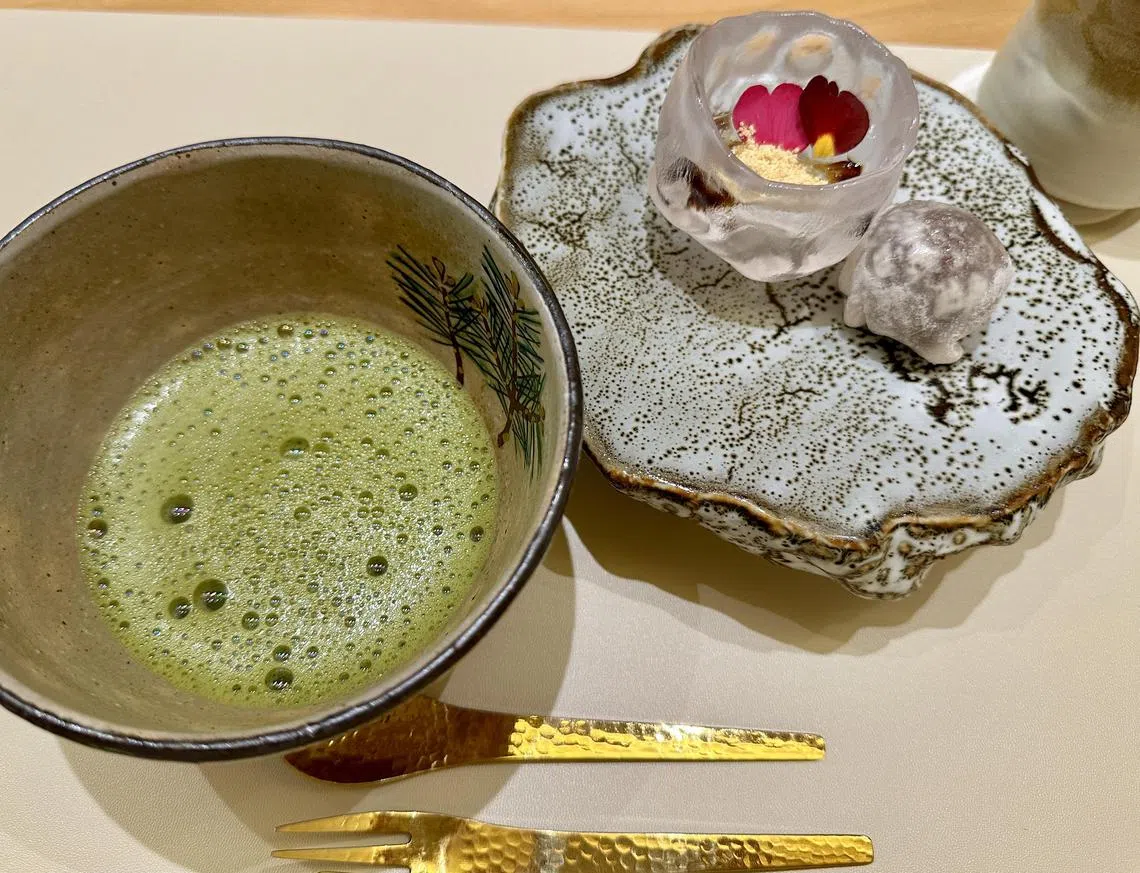
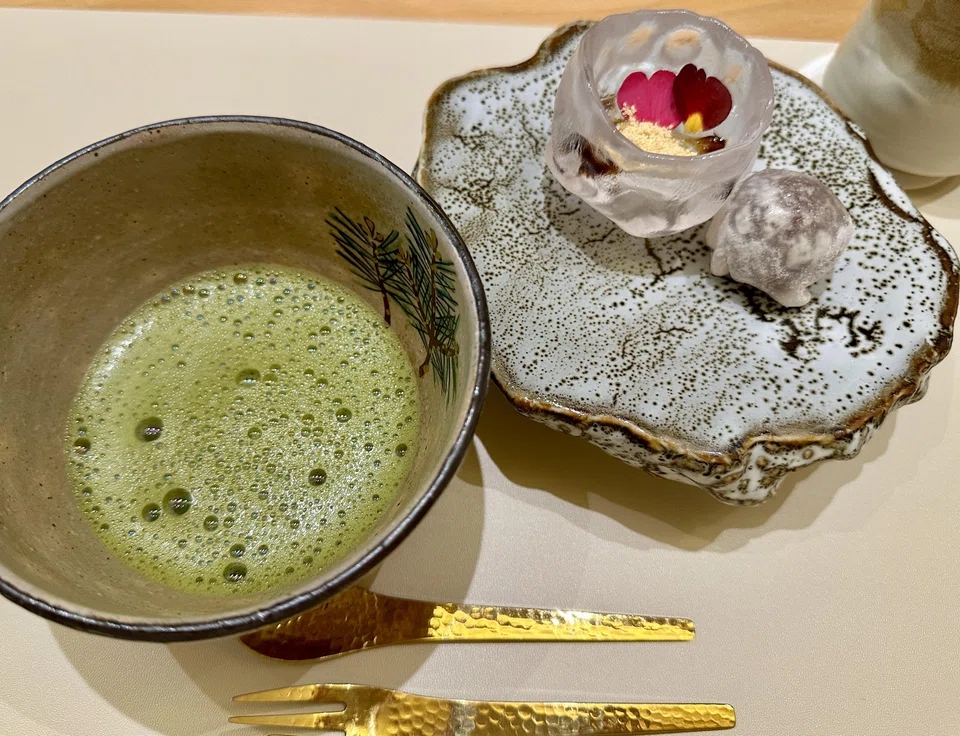
To end off, there’s the requisite not-too-sweet egg custard, and a proper dessert of clear warabi mochi and strawberry stuffed daifuku – washed down with matcha in a quickie tea ceremony.
It’s not the best value, it’s not the best in ingredients, but the youthful energy of Sasagawa, the lovely ambience and warm service staff make Takahashi a place you can just zen out in.
Rating: 6.5
Decoding Asia newsletter: your guide to navigating Asia in a new global order. Sign up here to get Decoding Asia newsletter. Delivered to your inbox. Free.
Copyright SPH Media. All rights reserved.






